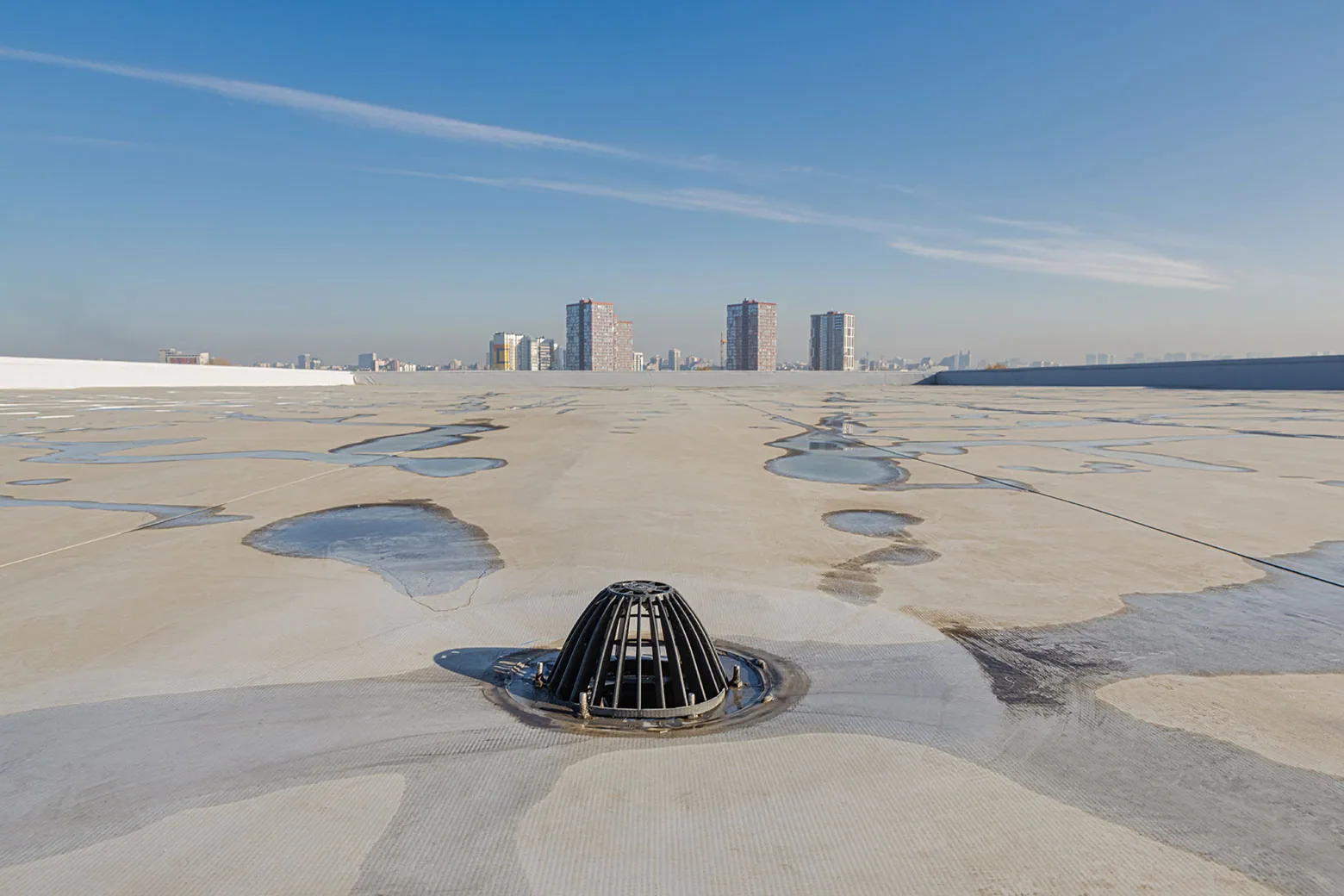
How long did the water remain, and which roof zone held it? That pair of observations helps a property manager distinguish a temporary wet surface from a drainage condition that needs correction. We map the low area, photograph its edges, and inspect the path toward drains, scuppers, and overflow points. In Moreno Valley, CA, winter rainstorms are part of regional field planning. A pond observed after rain still needs a site-specific record before a repair scope can identify why it remained.
The SR-60 Business Park Area and Centerpointe Business Park are broad employment districts. Their commercial setting makes access planning relevant, but each building's drainage geometry needs its own survey. We inspect the actual roof, note prior repairs, and mark the water boundary. That record supports a decision to clear, repair, test, or review the assembly.
Water line: establish the observed condition
A pond has a boundary, depth, and duration. We record those details using a scale or fixed roof reference where practical, then mark the location relative to drains, curbs, and roof edges. Rainfall timing changes what a photograph shows. We record the time and conditions when repeat observations matter.
Debris at an outlet can slow drainage, while a blocked leader or damaged drain connection may prevent water from leaving the roof. A shallow low spot can also retain water even when the drain is open. We check both the path and the outlet before assigning the repair. A drain and scupper inspection can separate cleaning or connection work from a change to the roof plane. The chosen boundary follows that finding, not simply the dark surface. If wind has moved material into the outlet, a wind-related roof check should identify the separate condition.
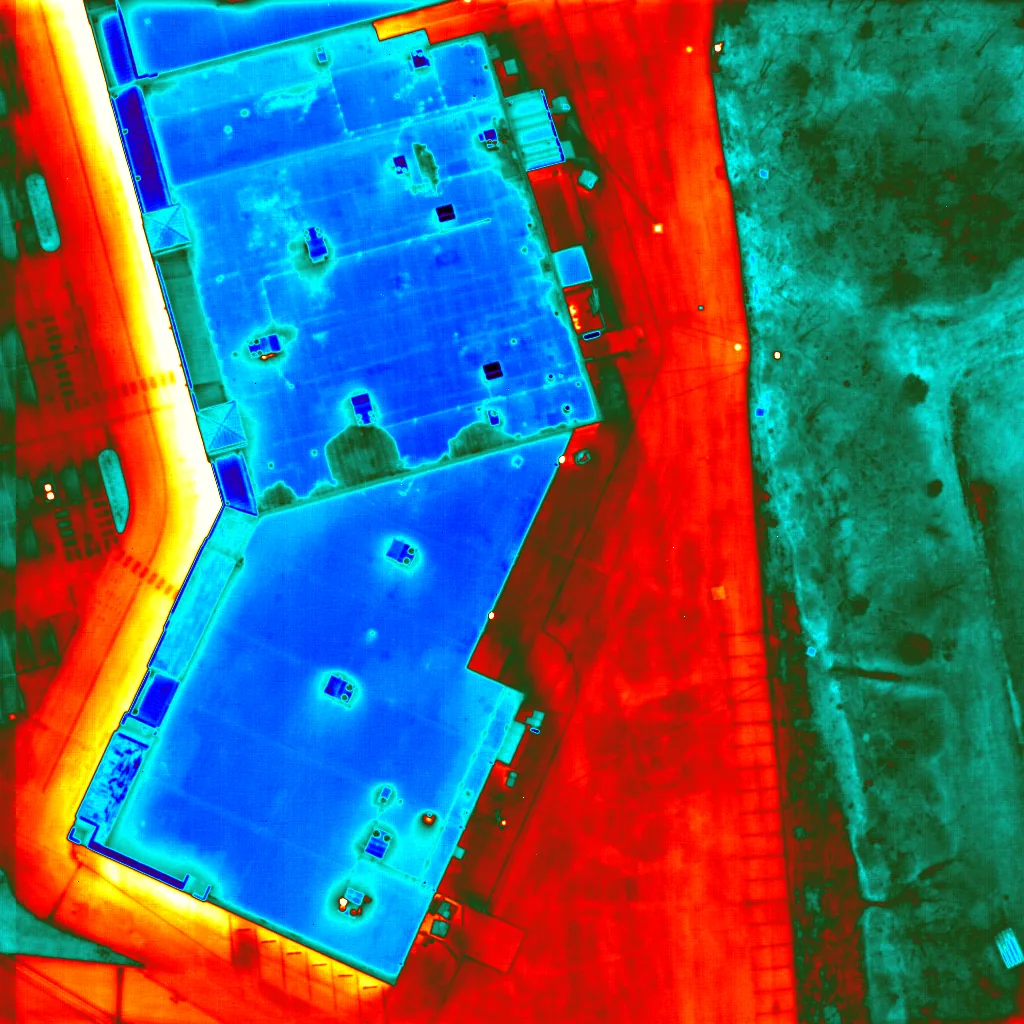
Inside, a stain or ceiling tile mark provides a second location to compare, not a direct map of the roof defect. We match the reported room to the roof plan, then inspect nearby laps and penetrations. If the water path remains unclear, an infrared moisture survey may help define affected insulation when conditions are suitable.
Outlet path: inspect the details
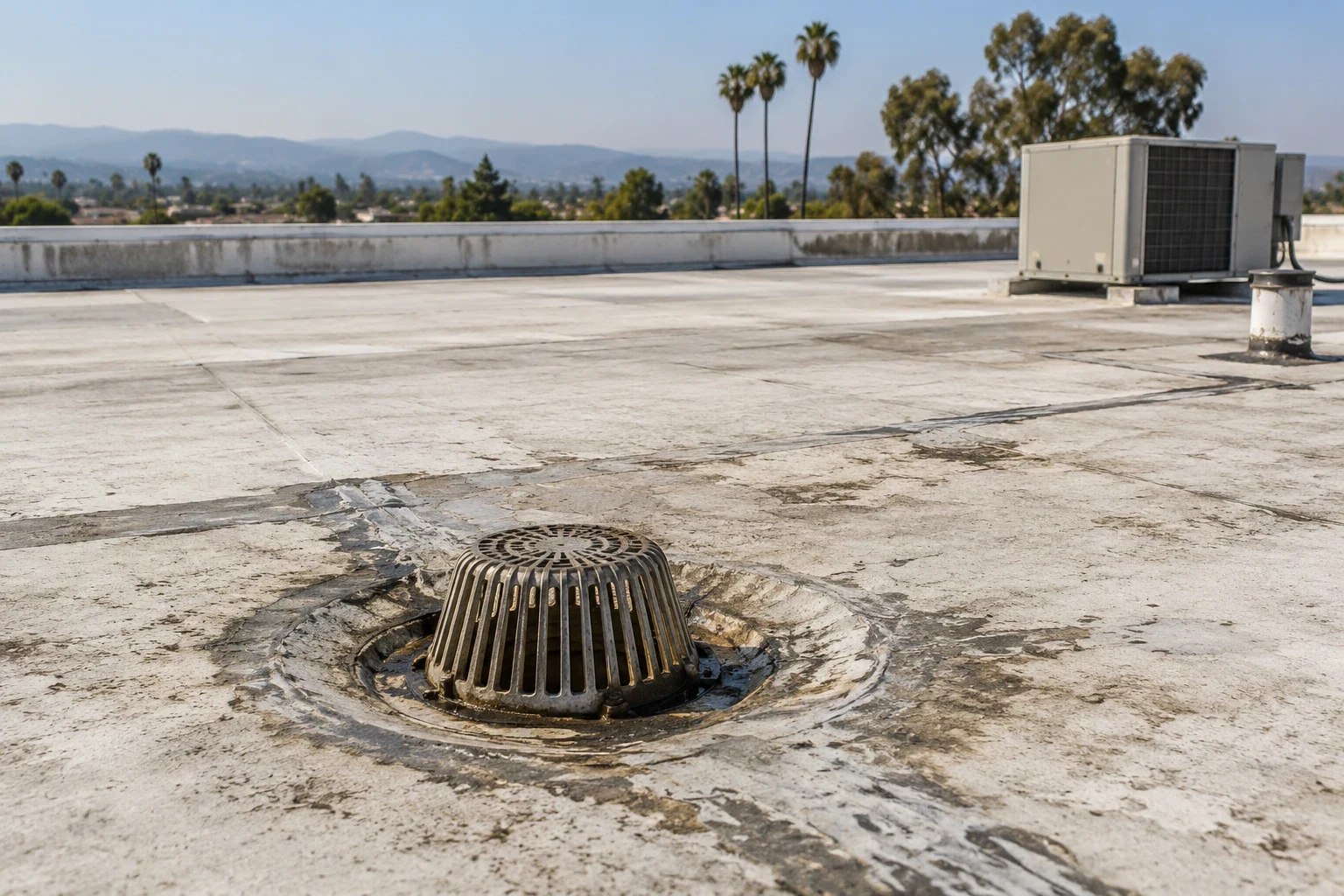
Water must cross several interfaces before it reaches a drain: field membrane, drain bowl, clamping or attachment detail, and connecting pipe or leader. We inspect those points for open laps, failed sealant, corrosion, movement, or debris. A roof drain can appear clear while a downstream restriction remains. We identify plumbing evaluation separately and photograph the roof connection.
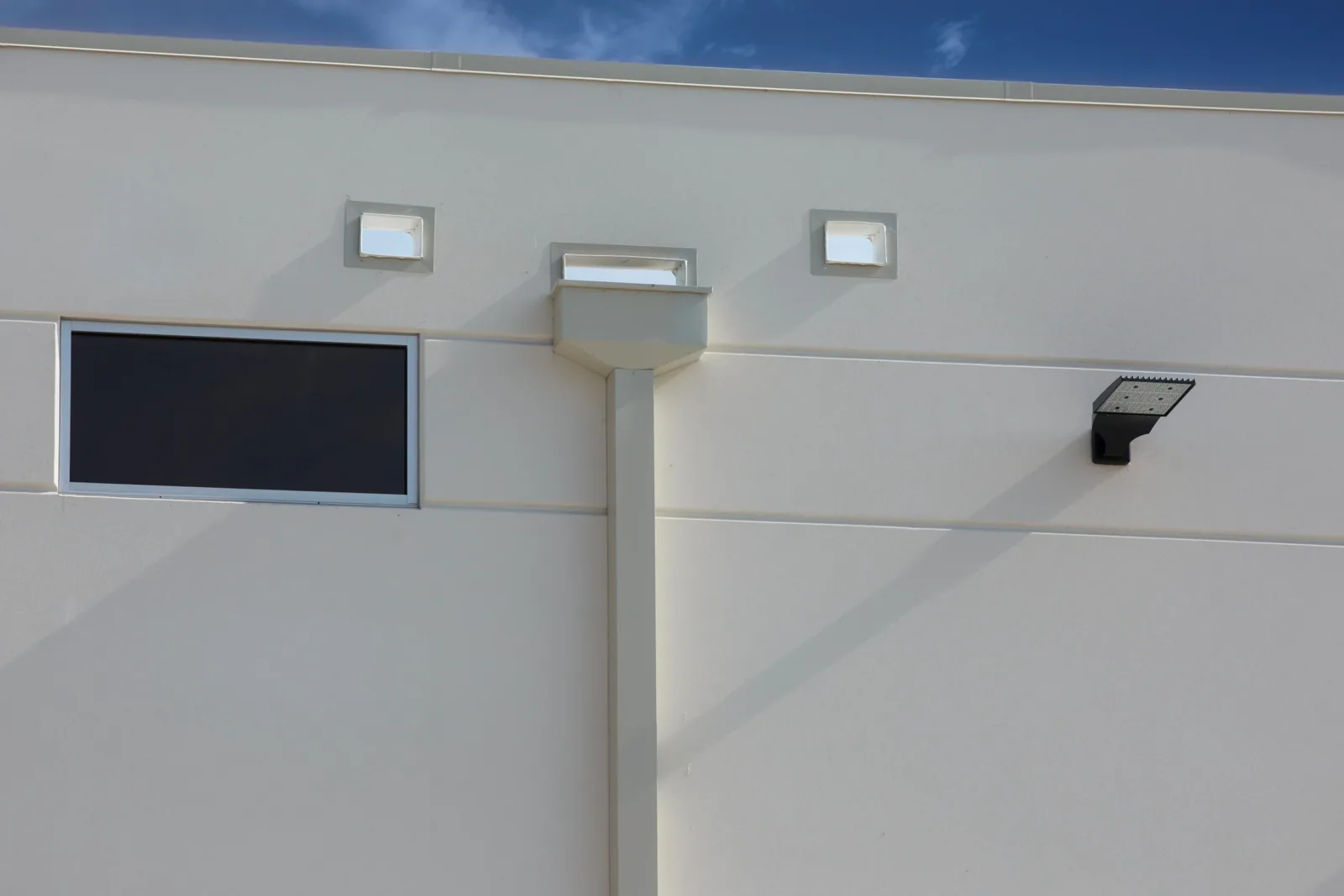
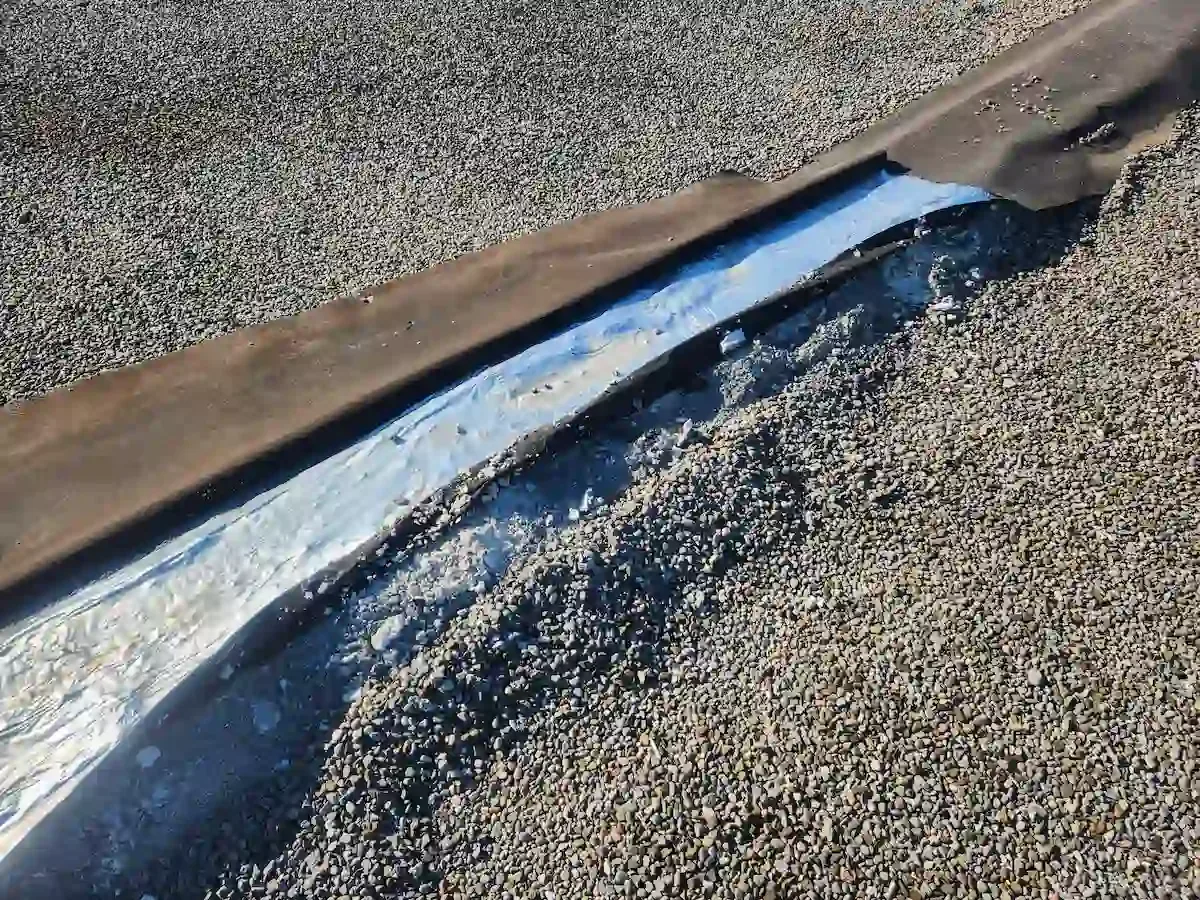
At a scupper, the opening through the parapet must remain clear and the membrane transition must shed water into it. A damaged metal sleeve or low membrane termination can leave water at the wall even when the opening itself is unobstructed. We document the elevation and connection we can observe. If metal replacement is required, edge metal and coping service can be included with the waterproofing detail. For an adjacent split, the seam repair scope needs to address its own opening rather than rely on drainage work to conceal it.
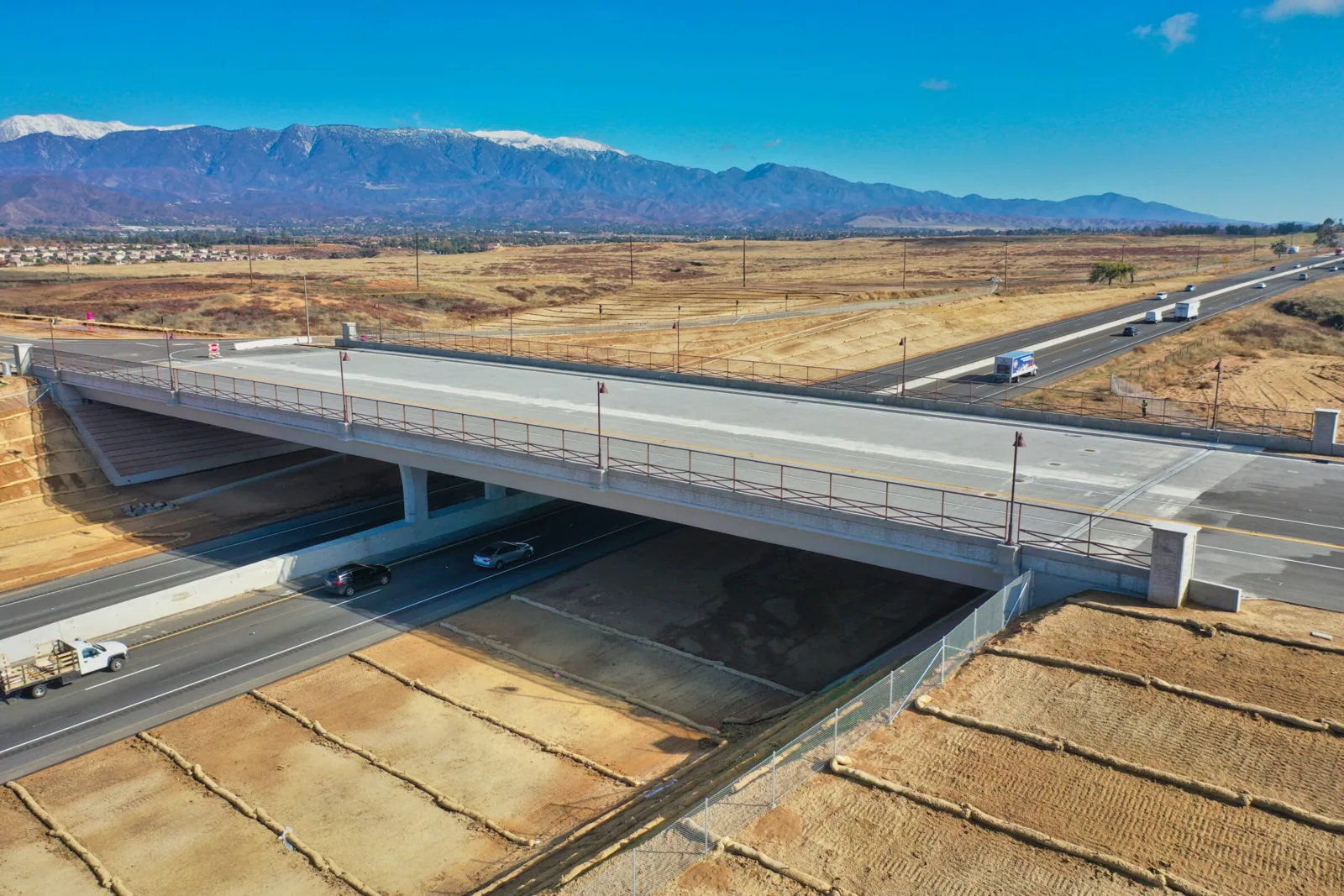
Moreno Valley sits at the SR-60 and I-215 junction, and the City lists employment properties across several business areas. We plan staging against the loading schedule and keep tools clear of active routes below.
Roof plane: separate ponding from deflection
A roof can hold water because an outlet is obstructed, the membrane or insulation is uneven, a structural member has moved, or the original drainage layout has a low point. Those causes call for different work. We inspect the visible surface and compare it with available roof plans, repair records, and nearby elevations. A roof opening is proposed only when it would change the decision and the manager approves its location and restoration.
Adding material over a low area does not automatically change its drainage path. A cover-board or insulation scope may require measured elevations and a reviewed design to create a suitable plane. Drain locations, overflow capacity, parapet height, and equipment curbs all affect the result. A design professional evaluates deck questions before any change to the roof plane.
We compare a local correction with broader work only after identifying how far the condition extends. Where the assembly remains sound and the obstruction is limited, clearing or replacing a detail may resolve the problem. Where wet insulation or repeated low areas are found, localized work could leave the cause in place. The condition map shows the tested area and moisture extent, informing whether to investigate further or compare broader roof work.
Work window: keep drainage available
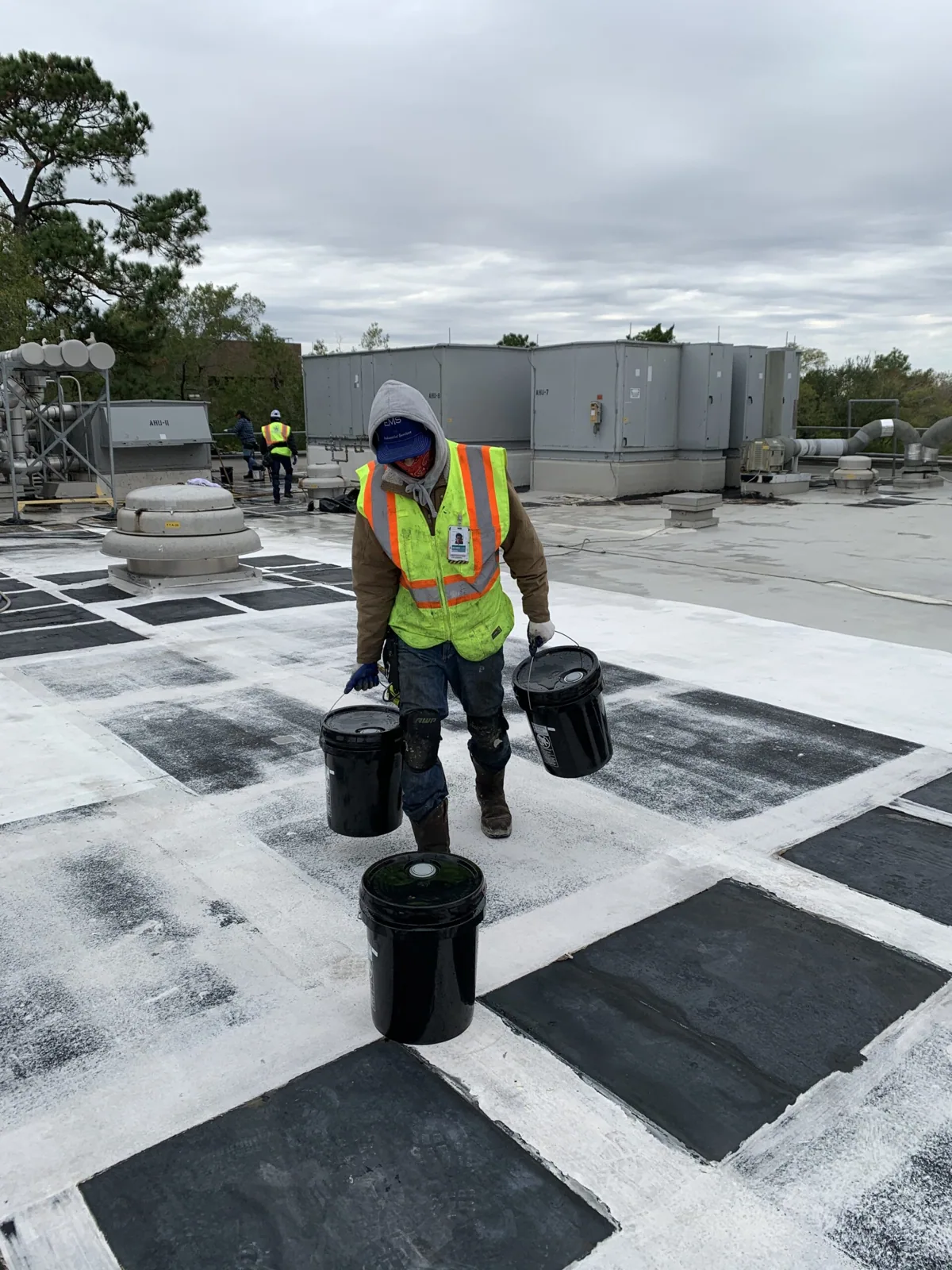
Opening a drain or low roof section can temporarily change where water travels. We plan the order so the outlet remains usable where possible, and set a protected stopping point if a detail cannot be finished during one visit. The work plan notes forecast conditions, the area being opened, and what protection covers before the crew leaves. Regional winter rainstorms can affect the timing of exposed work; summer heat also affects roof-surface conditions in the Inland Empire.
When a building remains occupied, the manager may need to protect rooms, equipment, and exterior receiving areas below. We identify which drains are active, whether an overflow route must remain clear, and how the work zone can be reached without crossing restricted space. Centerpointe and the SR-60 Business Park Area are names for broad city employment areas, not assumptions about an individual property's layout. The property plan governs staging and roof travel.
Cost and duration change with drain count, repair perimeter, membrane type, access equipment, and the amount of wet material that must be removed. A simple outlet correction differs from rebuilding insulation or changing roof geometry. We list those activities separately and identify any concealed condition that could change the work. If testing or a design review is needed first, that step has its own purpose and approval rather than appearing as an unexplained allowance.
Closeout record: confirm the route
After the repair, we record the components touched, the roof zone, and the path from the field into the drain or scupper. Close photographs show the finished connection; a follow-up check can verify drainage under suitable conditions. The work record also names any area not opened or tested, so future inspection can distinguish a repaired detail from a low spot that remains under observation.
If ponding remains after a localized repair, we measure again against the original marks rather than declaring success from a dry roof on one visit. A manager can compare the new boundary with the prior record. The condition report retains images with the roof-zone index. For an active leak while permanent drainage work is pending, emergency response can address immediate exposure at any hour, including holidays and weekends.
A periodic inspection should check the corrected drain connection, nearby laps, and any roof area that was left in place. The interval follows the detail and the building's operating needs, not a generic calendar promise. We give the property manager the repair boundary, open items, and recommended next check in plain terms, allowing maintenance staff to route follow-up without reconstructing the scope from old messages.
Commercial Roofing Questions
Does a pond after rain mean the roof must be replaced?
No. We first locate the low area and determine whether an outlet, local buildup, or broader assembly condition is involved. The repair boundary follows the evidence.
Can a roof drain be cleared without repairing the membrane?
Yes, when blockage is the observed issue and the drain connection remains sound. We inspect the bowl and surrounding membrane so the work order separates clearing from waterproofing correction.
What if water is still visible after the crew finishes?
We compare the boundary and depth with the original record under similar conditions. If water remains, we document it and identify whether further measurement or design review would change the next scope.
How can I tell if the roof plane is part of the problem?
We survey the low area, outlet elevations, and adjacent surface, then compare available plans and prior repairs. Structural questions go to the appropriate design professional before slope changes are approved.
Will adding insulation solve standing water?
Only a measured and properly reviewed assembly can change drainage geometry. The proposal must account for drain height, overflow route, parapets, curbs, and the intended finished elevation.
Commercial Roofing Moreno Valley handles commercial roof repair, replacement, inspections, coatings and maintenance across Moreno Valley, Riverside and the Inland Empire. Request a roof assessment or call 555-555-5555.
Related Roofing Work
Document the low area and outlet
Send the roof plan, drain locations, photos after rain, leak reports, recent work orders, and access limits. We will mark the pond boundary, inspect the outlet path, and define the repair or testing needed for approval.
Request a Roof Assessment555-555-5555