A Jurupa Valley roof request should start with the exact property and access route, then the condition that needs a decision. The City identifies I-15 and SR-60 access, heavy rail, and a Metrolink station in its transportation network. It also lists Costco, Walmart, FedEx, and UPS operations in the Mira Loma Industrial complex. These are citywide logistics facts, not evidence that a particular roof has a loading conflict, a certain membrane, or a known defect. We confirm those details with the site contact and roof inspection.
Our condition map marks the inspected area and ties photographs to the roof plan, work order, and next approval. Moreno Valley, CA is in the Inland Empire forecast area, where regional heat, winter rain, and Santa Ana winds affect safe timing for exposed work. Those patterns guide field planning; they do not establish damage or design loads for a Jurupa Valley building. Temporary protection and the daily stopping point are set for the actual roof and forecast window.
Site access: confirm the route before mobilization
Access planning begins with a site-specific walk through the approved entrance, staging area, and path to the roof. We ask whether deliveries, rail-side controls, vehicle lanes, or operating hours affect the route. The City's transportation and business context makes those useful questions, but we do not assume any one constraint applies to a property. The manager or facility contact confirms the route and who can authorize a change before equipment or roofing materials arrive.
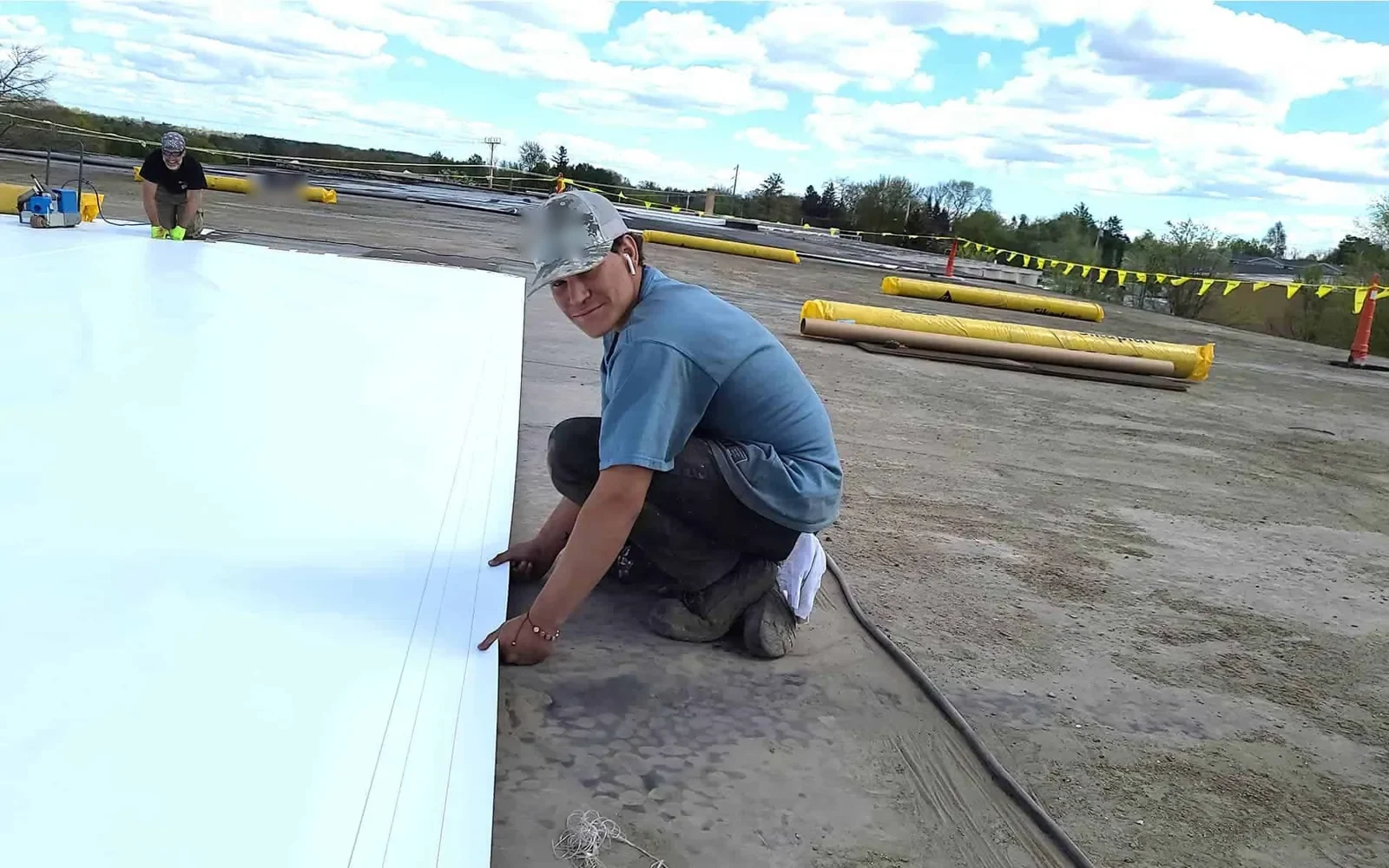
On a multi-zone roof, we mark access points and the order of work so the crew does not cross completed areas unnecessarily. A phased roofing sequence can show which zone is active, what must be protected below, and where materials may be staged. The work record should note any operating restriction, the contact who provided it, and the daily boundary that can be sealed before work stops.
Each property gets its own roof-zone index. A Colton inspection or a Corona repair cannot inherit Jurupa Valley access information, even if one manager coordinates multiple locations. We attach the access note to the building plan and keep separate approvals for each roof so the correct contact receives the next decision.
Inspection findings: locate the condition that needs action
For a leak, we compare the interior report with seams, drains, penetrations, and transitions in the roof area above it. A wet ceiling can be several feet from the entry point, so the first reported location is a reference, not a repair boundary. We photograph the suspected detail, mark it on the roof plan, and state whether the condition is visible or needs additional testing.
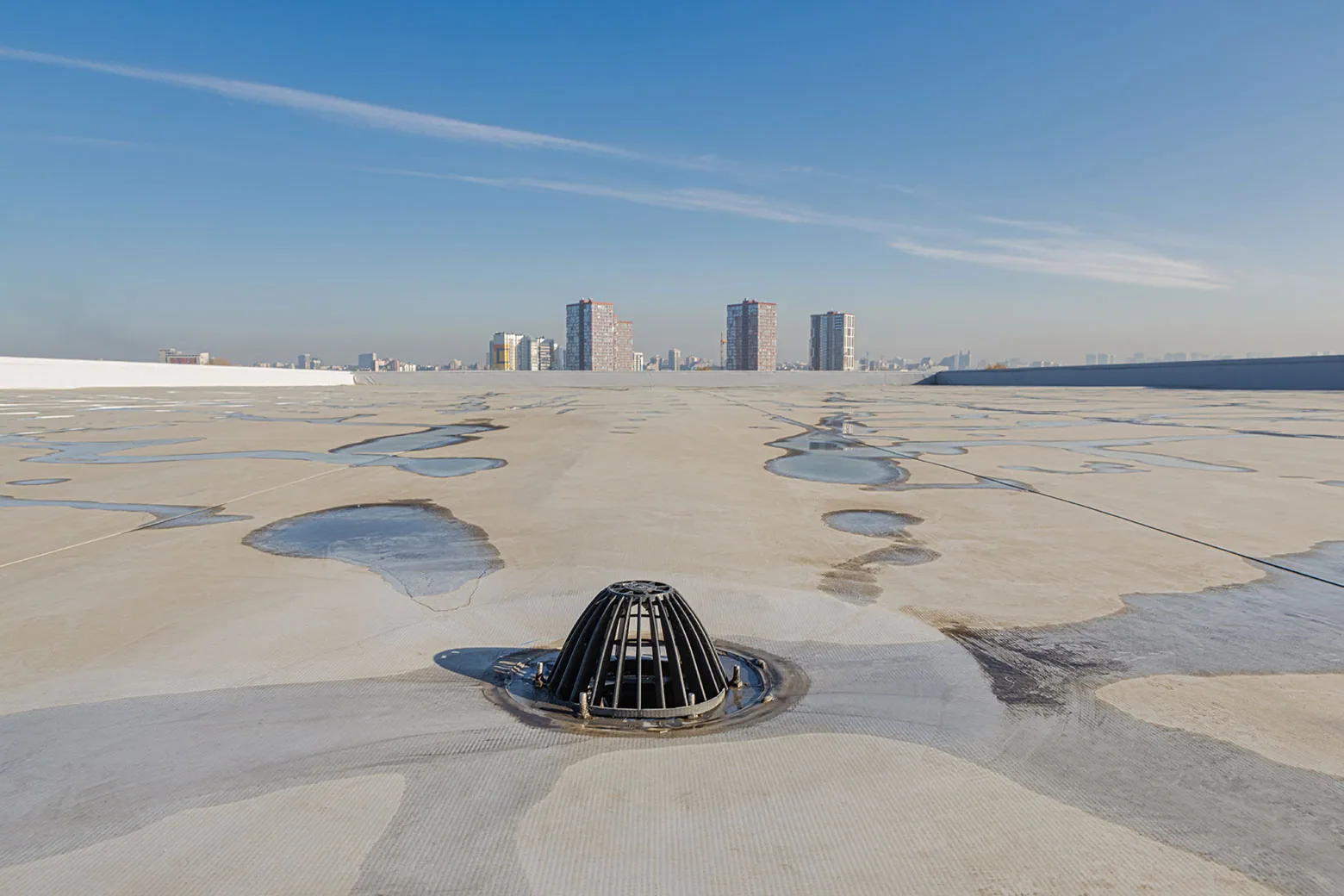
Where the membrane has blistered or lifted, we examine the nearby edge and substrate before specifying a patch. Where water is standing, we separate a clogged outlet from a low area or failed flashing. An inspection record supports that distinction. If suspected moisture extends beneath the surface, a targeted infrared moisture survey can guide confirmation points before removal limits are approved.
The result should tell the manager what is known, where the evidence sits, and what would change the scope. We avoid treating a retail, logistics, or industrial label as proof of a roof type. Even when a city lists major operations in Mira Loma, each building's materials, access, and repair history still need field confirmation.
Drainage control: keep the water route visible
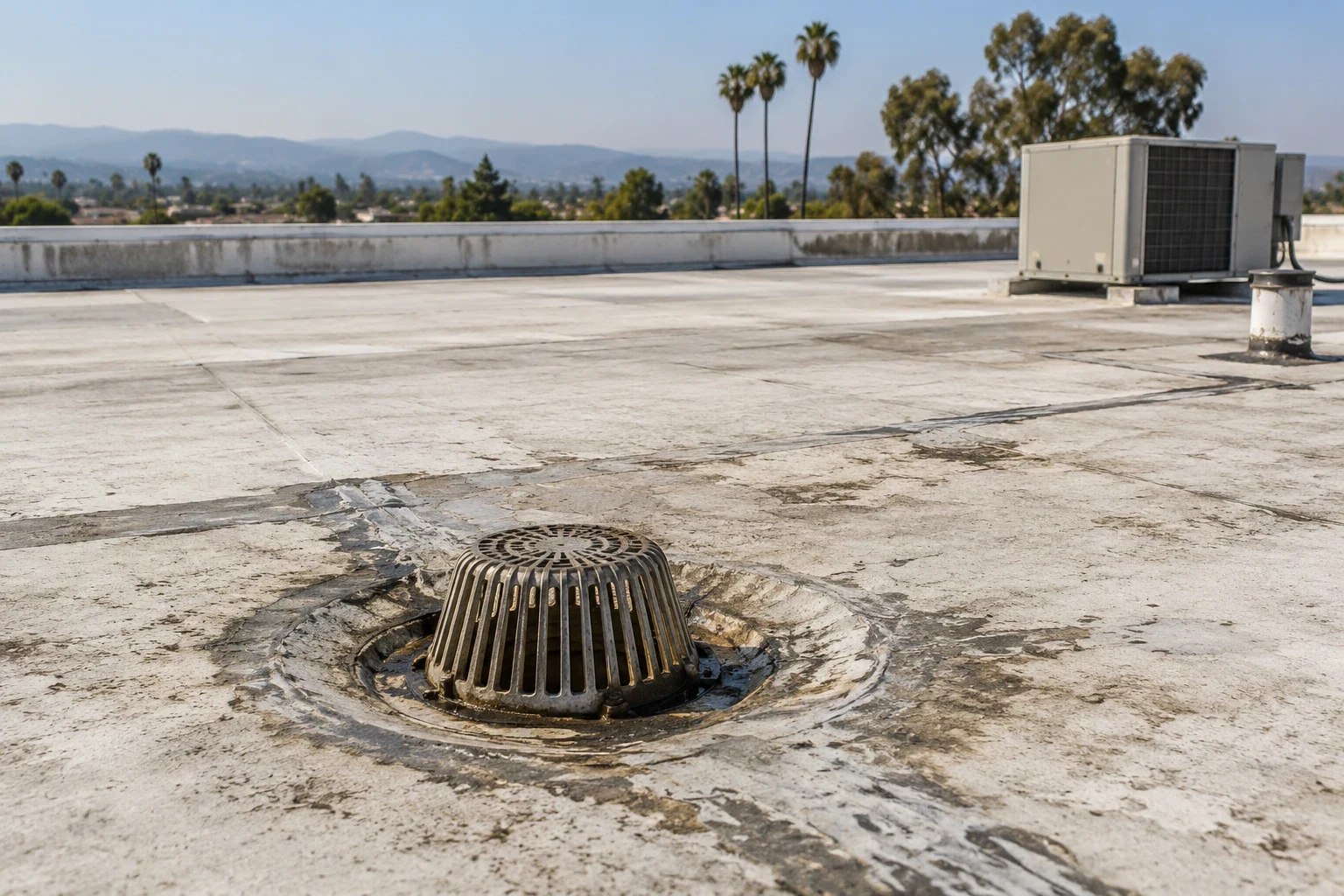
A drain report should identify the outlet, roof area that feeds it, and whether the fitting is open and secure. We remove debris only when authorized, inspect the clamping ring and nearby membrane, and note signs of ponding or back-up. If water remains after the outlet is clear, the roof plane and low points need separate review. That record helps an owner decide between maintenance, a detail repair, and a measured slope correction.
Jurupa Valley's highway and rail network is not a roof drainage fact. We use it only to frame site access and project logistics. For the roof itself, a drain and scupper review records each outlet's condition, while a ponding-water assessment looks at the roof plane and water path. Photos should show the outlet and adjacent field together, not the fitting alone.
Winter rainstorms in the region make a clear discharge path and a safe repair sequence worth checking before the wet season. They do not prove that a specific building has ponding or leakage. We identify the observation that supports the work and note whether the next check should follow cleaning, a repair, or a broader drainage assessment.
Authorization: define the limits before opening materials
The initial estimate should state the marked work area, materials, access needs, and the condition that would require a scope change. If the roof is opened and wet insulation or damaged deck appears, we stop at the agreed decision point, document what is exposed, and submit the added quantity for approval. The owner can review the evidence before the removal boundary expands.
A roof condition report preserves photos, test results, repair limits, and unresolved items in one approval packet. For several properties, multi-site tracking can maintain separate condition maps and work-order trails while giving the portfolio manager a consolidated view. Each entry still names its own building, roof zone, authorization, and follow-up check.
If the comparison moves from repair to replacement, the scope should show removal limits, insulation, membrane, drainage, penetrations, edge details, and closeout requirements. A replacement proposal gives the owner those quantities and interfaces for review. We document assumptions instead of treating a general business complex listing as evidence about an individual building's construction.
Follow-up: retain the evidence for the next visit
After the repair, we record what changed, which roof zone was completed, and what remains open. The closeout set includes the marked plan, labeled photographs, material description, approvals, and any temporary protection removed or retained. If another test or repair is pending, we assign a next action and identify the responsible contact rather than burying it in a general note.
The inspection interval should reflect the repair and the finding that needs another look. A follow-up may verify a seam after weather exposure, confirm that the drain is discharging, or check a previous moisture boundary. We state the purpose of the visit and keep the observation tied to the same roof-zone reference. That continuity is useful when maintenance staff or building contacts change.
Send the building plan, recent work orders, leak locations, access route, and approval path when requesting work in Jurupa Valley. We will identify the roof area, document the finding, and return a scope the manager can route for a specific decision.
Commercial Roofing Questions
Does the Mira Loma Industrial complex roster describe our roof?
No. It provides city commercial context only. We inspect the assigned building to confirm its materials, condition, and access needs.
Should highway or rail access affect the roofing estimate?
Only if the site confirms an access or staging requirement. We record the route and any operating constraint before pricing mobilization.
What if a leak location does not match the roof defect?
We trace the reported area to nearby details and mark the observed condition. Testing can be added if the entry point or moisture extent remains unclear.
How is a roof opened safely during repair?
The scope sets a defined area, a dry-in method, and an approval point for concealed conditions before removal proceeds.
What evidence supports a follow-up check?
The closeout record identifies the completed zone, photos, repair materials, open item, and the condition the next visit should verify.
Commercial Roofing Moreno Valley handles commercial roof repair, replacement, inspections, coatings and maintenance across Moreno Valley, Riverside and the Inland Empire. Request a roof assessment or call 555-555-5555.
Related Roofing Work
Connect site access with a marked roof scope
Share the building plan, recent work orders, leak locations, access route, and approval path. We will document the roof zone and the next supported action.
Request a Roof Assessment555-555-5555