

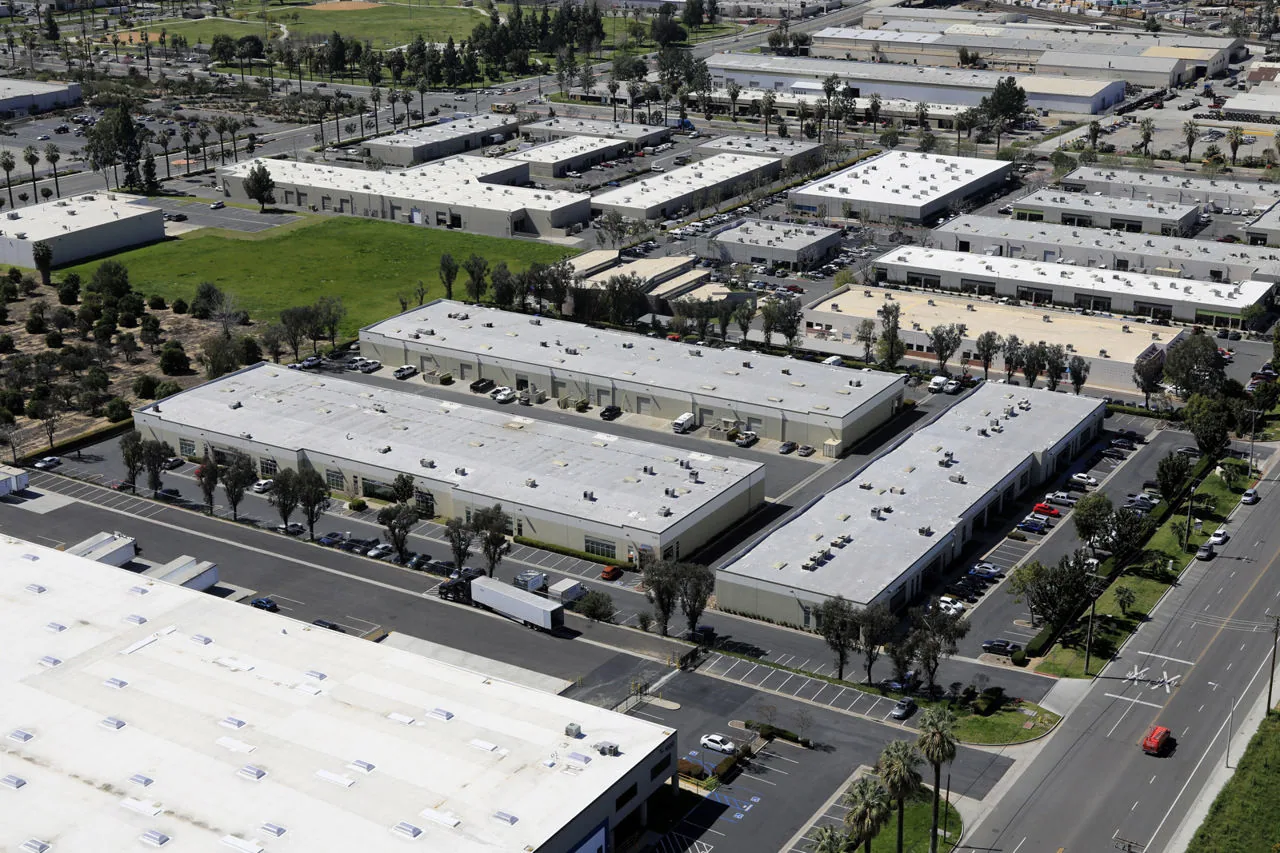
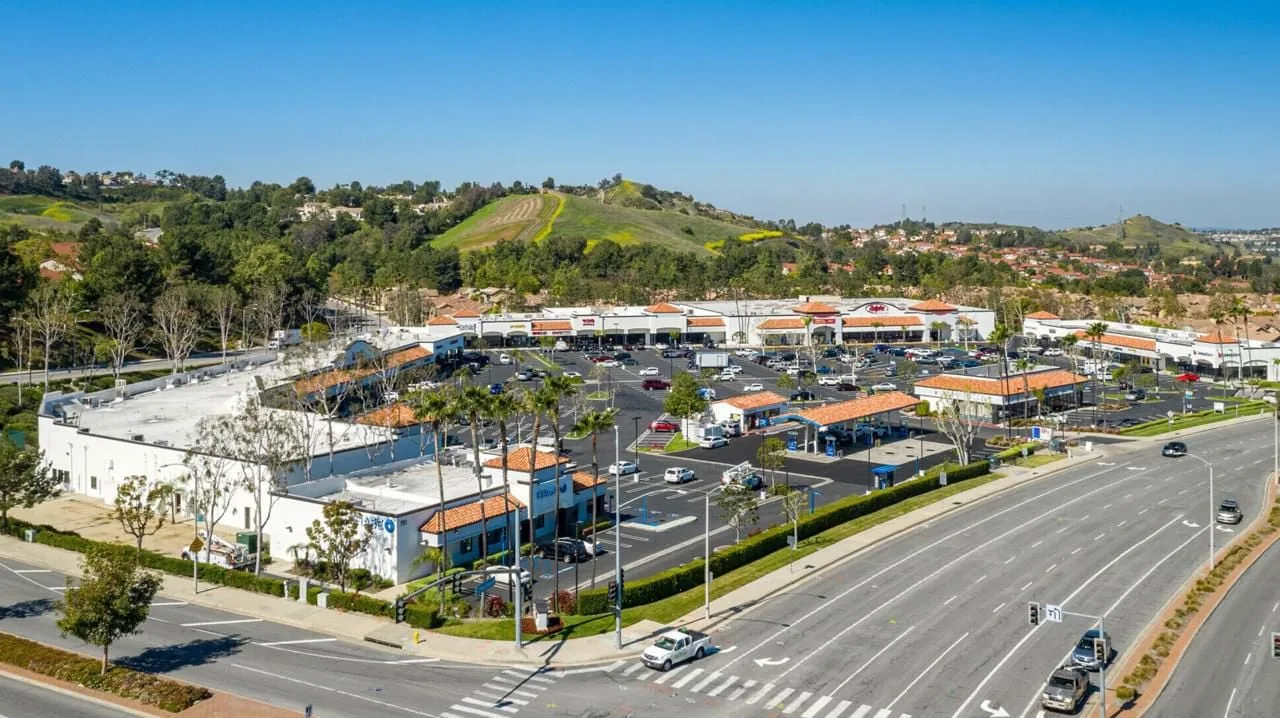
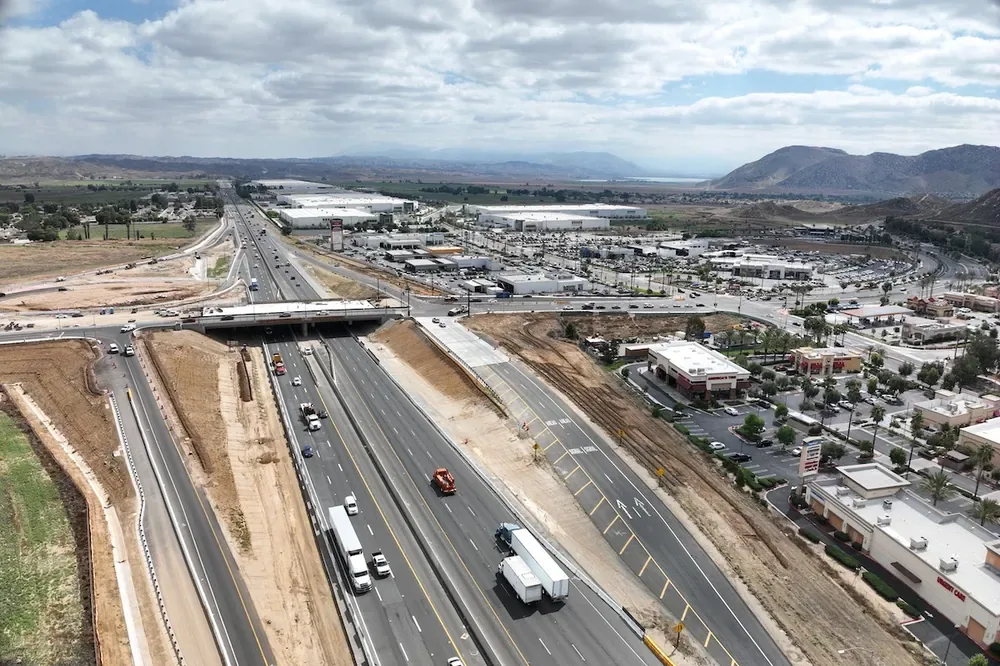
Which Riverside roof needs a repair decision, and what local context changes the work plan? Riverside Downtown includes institutional, office, and commercial development beside SR-60 and SR-91. The city's Sycamore Canyon area includes industrial and office uses along I-215, while Hunter Industrial Park is a northeast Riverside neighborhood with technology firms, industrial buildings, and commercial offices. That range calls for building-specific inspection records rather than one citywide assumption. We identify the property, mark the authorized roof area, and connect each observation to its work order and approval.
For an office or commercial building, an active leak may affect tenants, shared space, or equipment below. An industrial roof may have a different access route or operating window. Those conditions are confirmed with the property manager before a crew is scheduled. Each report states what was inspected, which zone remains open, and what test or repair would answer the owner's question. The work record supports the next decision without treating one Riverside district's roof as evidence about another.
City area map: give each building its own condition record
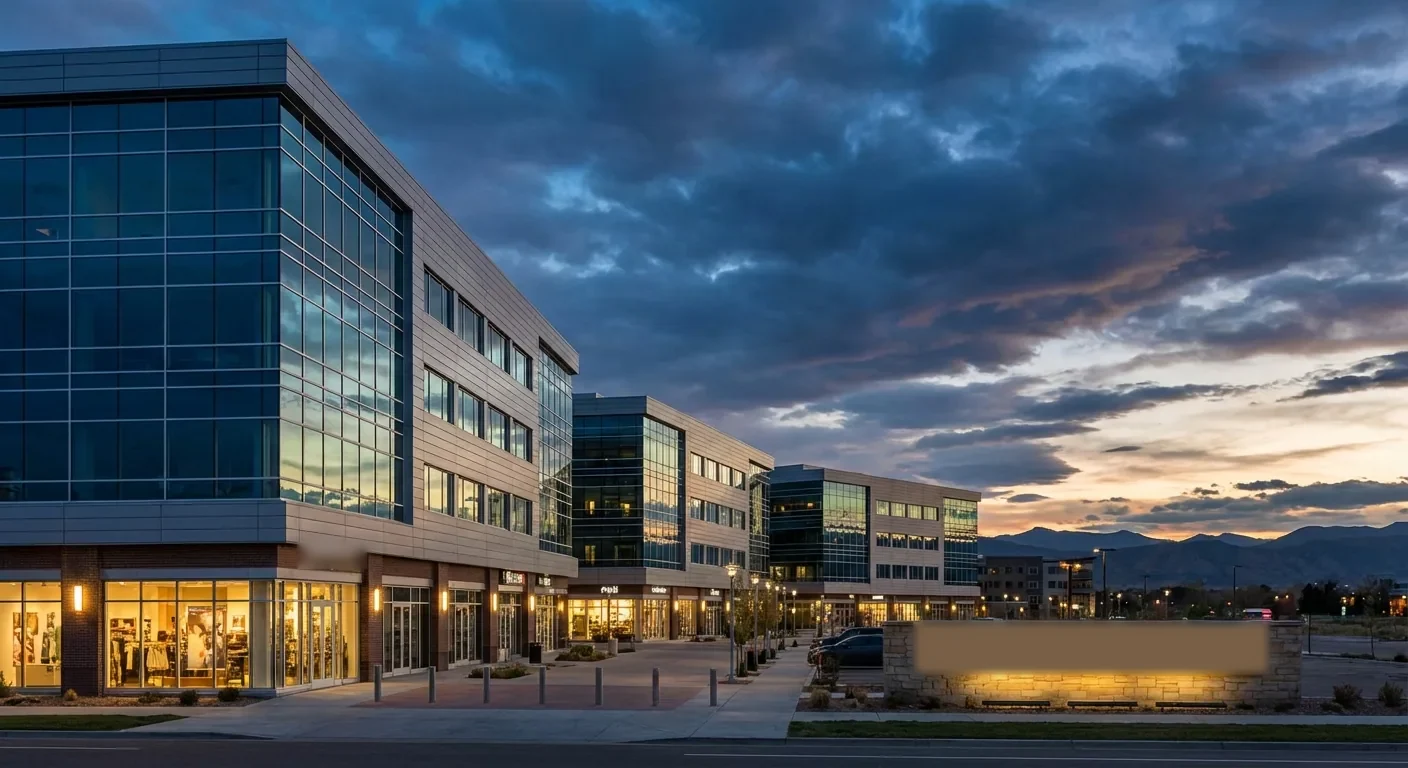
Riverside Downtown, Sycamore Canyon, and Hunter Industrial Park are distinct geographic contexts named in city materials. Downtown development beside SR-60 and SR-91 includes institutional, office, and commercial uses. Sycamore Canyon pairs industrial and office uses with the I-215 corridor. Hunter is identified as predominantly industrial and commercial-office development, with a smaller residential area. These descriptions help orient a service request; they do not confirm a specific roof system, tenant schedule, or maintenance history.
At intake, we record the building identifier, current manager, roof plan, reported water or membrane issue, prior repairs, and approval contact. If a portfolio includes several properties, each gets a separate roof-zone index and photograph set. We mark access limits and omitted areas so a manager can distinguish a complete review from a return visit. A city address is not enough to set a repair quantity when additions, roof elevations, and separate occupants may change the boundary.
The route can include the Hunter Industrial Park or Sycamore Canyon as separate service areas. A Downtown commercial building also needs its own record. Similarly, Moreno Beach Drive Corridor work has separate findings even when one manager oversees properties in both cities. We use a shared report format, not a shared roof diagnosis.
Inspection method: trace the leak, seam, or drainage question
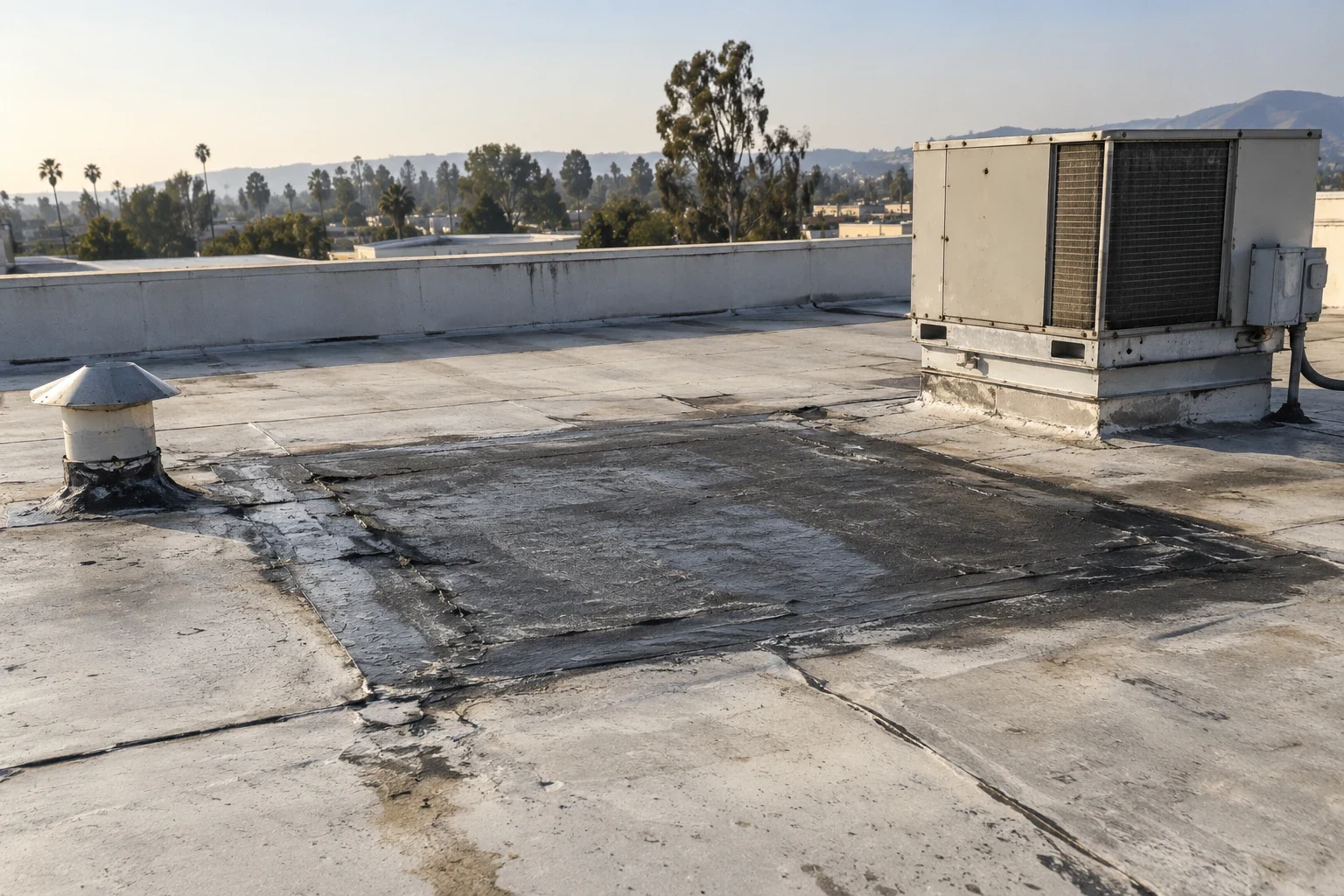
We begin with the reported condition and the next decision the owner must make: stop active water, understand a repeat leak, compare repair with renewal, or document condition for a capital review. The walk checks accessible seams, flashing, curbs, penetrations, drains, scuppers, edge transitions, and previous patches within the approved boundary. Each photograph corresponds to a plan mark. If water appears inside an office, retail, or industrial space, we compare the room with roof details above and nearby rather than assigning cause to the closest visible defect.
The report separates a confirmed opening from a possible water path and from hidden moisture that requires more evidence. If the system is not established in available records, we note what is visible and what is unresolved. A test or opening is proposed when it could change the repair boundary or capital recommendation. We identify the location, disruption, and authorization needed before disturbing a roof layer. Inaccessible equipment areas or tenant-controlled rooms remain listed as limits, not treated as inspected.
A commercial roof inspection can create a condition baseline or address a defined repair question. For a recurring leak, leak investigation compares the current report with earlier repairs and adjacent details. A commercial office roof review can organize access and interior coordination, while a warehouse roof assessment can focus the inspection on the specific industrial building and its equipment or drainage zones.
Access and weather: protect occupants and exposed work
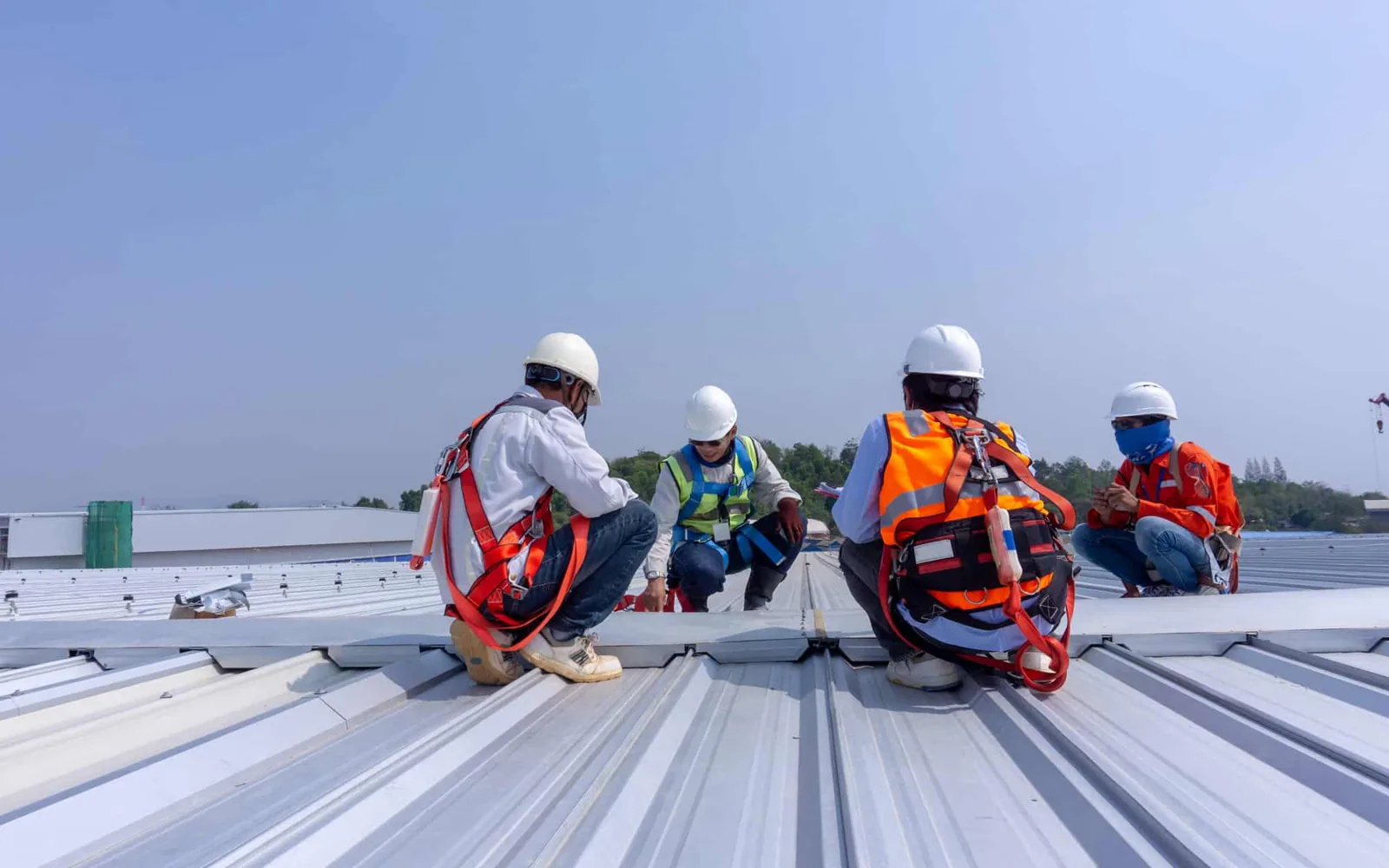
The property contact confirms roof entry, escort rules, fall-protection arrangements, staging, work hours, and any equipment shutdown. For an occupied building, the manager identifies interior areas that need protection and who can arrange access. For industrial work, the operator identifies the approved route and any restricted operating period. We record these details with the schedule so a scope does not assume unrestricted access. If the repair needs a ceiling opening or work near sensitive equipment, that requirement is stated before authorization.
Field scheduling should follow current conditions rather than assume a dry work window from the calendar. In the Moreno Valley forecast area, the National Weather Service identifies heat as a work-planning consideration, and its Southern California guide describes winter rainstorms and Santa Ana winds. Those are market-level planning conditions, not evidence of damage or design loads at an individual Riverside property. The crew checks the local forecast and roof conditions, then records the protection and sequence chosen.
When active water needs immediate attention, emergency roof response can document temporary protection apart from the permanent correction. A larger project on an occupied office or industrial property can use phased reroofing to define access control, daily dry-in, and closeout. If weather interrupts a shift, the variance log identifies work completed, protection left in place, and the next secure step.
Where the owner manages different property types, coordinate the work window with both the roof contact and the person responsible for the space below. An equipment shutdown, tenant notice, or interior protection measure can change crew sequencing. We list those dependencies with the marked roof section so the owner knows which approval remains before repair proceeds.
Repair path: define the evidence, cost, and approval
The approval packet names the property and roof zone, condition observed, proposed preparation, material, repair extent, exclusions, and follow-up check. Cost and duration can depend on access, height, equipment coordination, tenant protection, removal depth, compatibility, disposal, and moisture extent. We identify relevant cost drivers and note where a concealed condition could change the quantity. The owner can then compare a targeted repair with a test or replacement scope using a documented boundary.
A recover is suitable only when the existing substrate, moisture condition, edge height, drainage, attachment, and project requirements support an added layer. Replacement may require removal, deck or insulation review, and phased protection. The recover evaluation states whether retaining the assembly is supported; a replacement scope sets out removal and rebuild steps. If field conditions exceed the approved scope, work pauses for a marked change and approval rather than hiding new quantities in closeout.
After work, the record holds the final boundary, photographs, materials installed, approved changes, and any limitation that remains. A follow-up check can compare the same seam, drain, or penetration with the initial observation. Keep Downtown, Sycamore Canyon, and Hunter files distinct so future managers can see which building was reviewed and which approval remains open. A citywide register can summarize status, but each repair remains tied to its property.
Commercial Roofing Questions
Does the Downtown, Sycamore Canyon, or Hunter context establish my roof condition?
No. Those are broad geographic and development descriptions. We inspect the specific building and record the roof zones reached, visible findings, access limits, and next test or correction.
Can a Riverside inspection include more than one property?
Yes, when each property contact authorizes access. We keep separate condition maps, findings, estimates, and closeout records so one roof does not stand in for another.
What should I send for an industrial or office roof review?
Provide the roof plan, reported leak locations, prior work orders, equipment or tenant restrictions, access contact, and approval path. We use those details to set the inspection boundary and work window.
How do you determine whether a recover is appropriate?
We review substrate, moisture evidence, drainage, edge height, attachment, and project requirements. The report states what supports retention and what additional test could change the recommendation.
Commercial Roofing Moreno Valley handles commercial roof repair, replacement, inspections, coatings and maintenance across Moreno Valley, Riverside and the Inland Empire. Request a roof assessment or call 555-555-5555.
Related Roofing Work
Tie the Riverside roof request to a building and decision
Send the property identifier, roof plan, leak report, prior repairs, access limits, and approval contact. We will return a marked condition record and defined next step.
Request a Roof Assessment555-555-5555