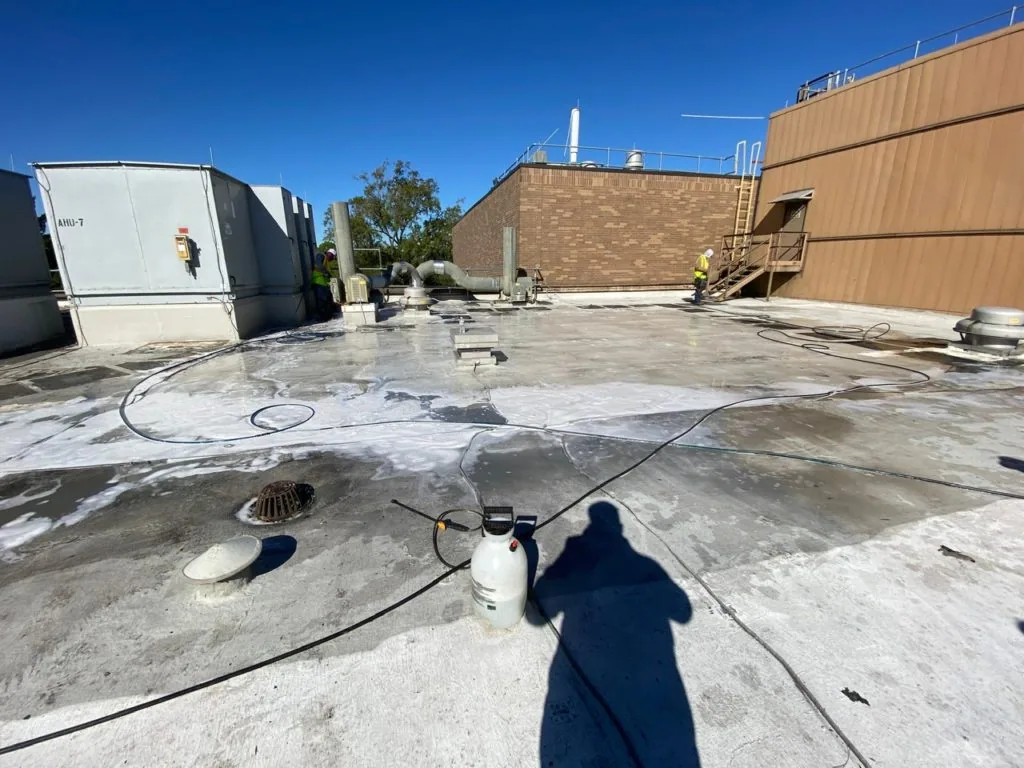
An urgent call starts with where the water is appearing and who can arrange safe entry. Commercial Roofing Moreno Valley provides emergency roof repair in Moreno Valley, CA, and assesses the immediate measure the conditions allow. We explain the roofing task and the next repair needed. Electrical equipment, an unstable ceiling or another interior hazard may also require the facility's qualified personnel. The manager can coordinate that response while we assess the roof access and reported entry.
We receive calls overnight, on weekends and during holidays. Attendance and roof work are coordinated with the available crew, weather and building access. Tell us what is happening now, which spaces are affected and what has already been done. We distinguish a temporary correction from the permanent repair it may need to follow. That gives the manager practical information for protecting operations without treating the first measure as a finished remedy for the whole roof.
Intake: locate the immediate exposure
The reporting contact identifies the building, affected room or operating area and the observed water position. We ask about the timing, recent roof or equipment work and any visible loose material. Photographs can help where the contact can obtain them safely, but nobody needs to enter an unsafe roof zone to complete the intake. The manager also identifies the person available to arrange entry and the path for an urgent approval if a roof task is feasible.
Water near electrical equipment or an unstable ceiling needs the facility's appropriate qualified response alongside the roofing call. We ask the manager to coordinate those interior controls rather than having a roofer accept an electrical or structural decision. Report changes in the water and affected area while that response is being arranged. Those observations help the crew decide where to examine the roof, without sending building personnel into an unsafe position to gather more information.
Access: assess the roof conditions
Rain, strong regional wind or an uncertain walking surface can prevent safe roof entry or material handling. We check the route and exposed work position before deciding what the crew can do. If the detail cannot be reached safely, we explain the limitation and the next practical opportunity to examine it. Protection is considered where the conditions permit. The manager should know what action is available now and what roof work requires safer access or different conditions.
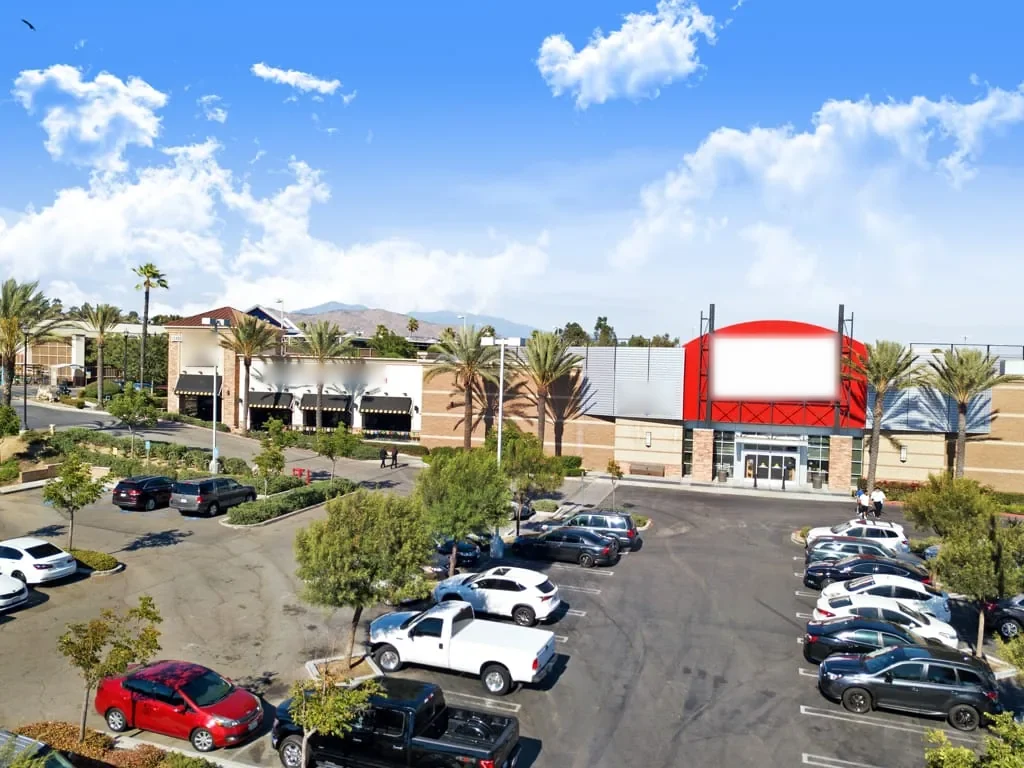
Towngate includes distinct retail and office premises, so a call from a Towngate commercial building needs the contact who controls entry and the rooms below the leak. The SR-60 Business Park Area has an industrial setting where yard movements can affect the approach. We confirm the actual building and route before arrival, then assess safe access at the property. The district helps direct those questions without replacing the roof examination.
Protection: select the usable measure
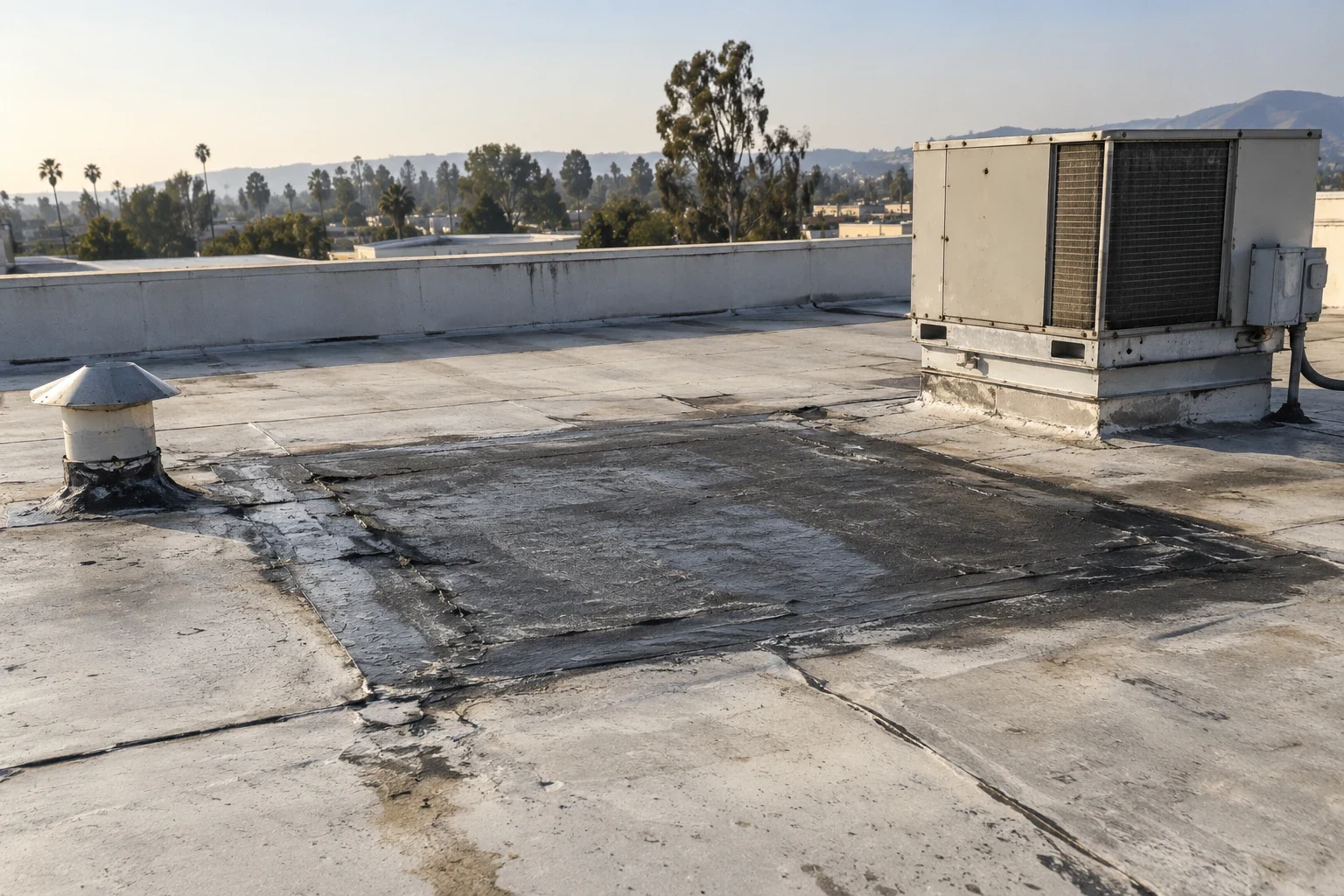
A suitable temporary correction can reduce an identified entry while another detail or receiving surface is prepared for permanent work. We identify the installed material and examine what can receive that measure under the present conditions. Temporary sheeting may be appropriate for some situations, but its placement needs a workable attachment and drainage plan. It cannot be assumed suitable for every geometry, and the crew avoids introducing another obstruction or unsupported load merely to cover the reported area.
We tell the manager where temporary protection was placed, what it addresses and what still needs repair. Its performance depends on the installed detail and the weather that follows, so a check and next construction step are arranged for the actual situation. Photographing the measure helps the next visit locate it and distinguish it from permanent roofing. If a sound final connection cannot yet be made, the remaining preparation and repair stay clear in the work description.
Diagnosis: distinguish the paths
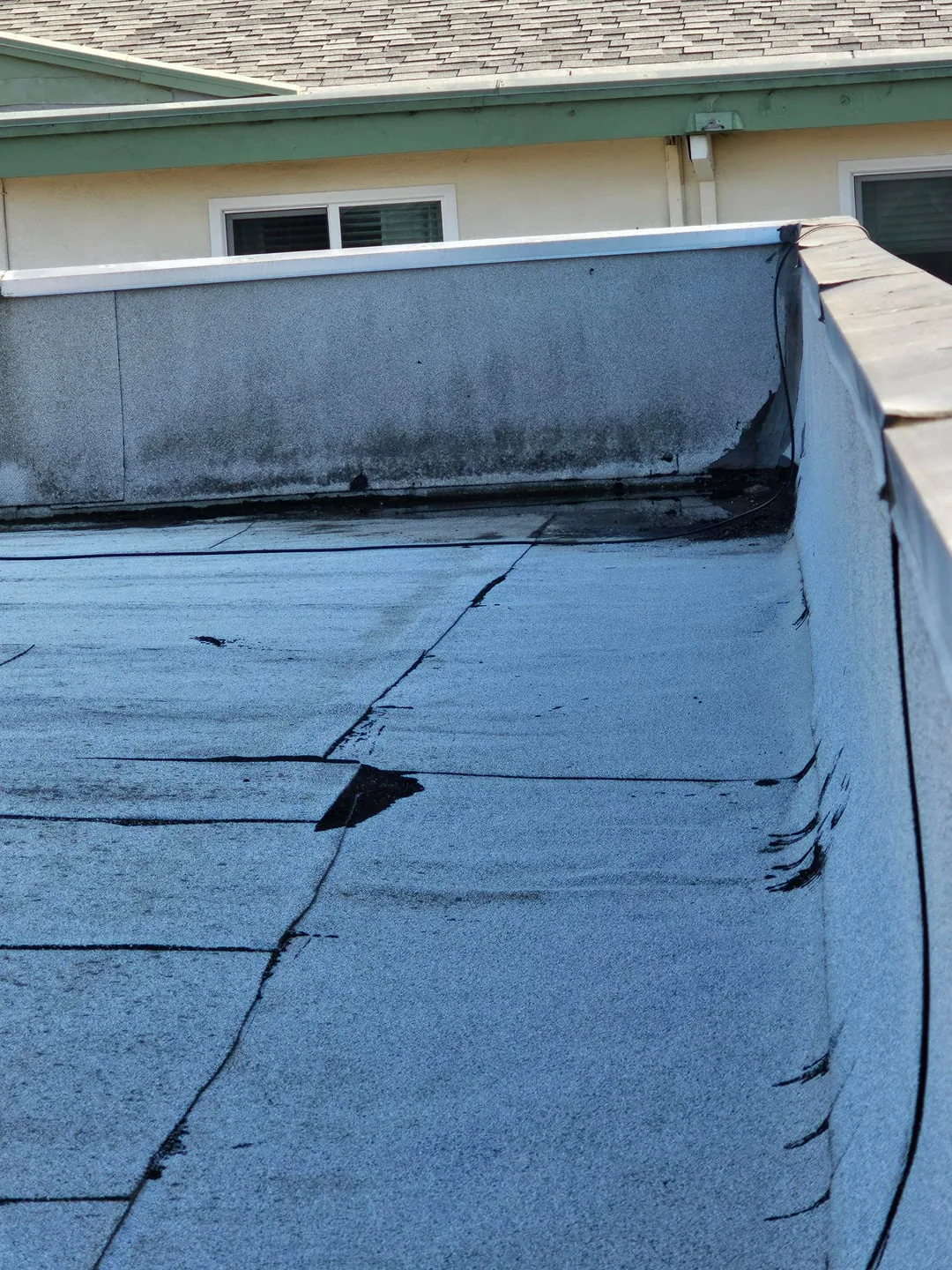
A visible opening near the water report may support roof correction without explaining every indoor symptom. We inspect accessible membrane, edges and adjoining components and compare them with the occurrence account. The record separates observed defects from a suspected route requiring further evaluation. A focused investigation of the active entry can follow the immediate measure where access or weather prevents a complete first examination. Its scope addresses the remaining construction question.
Water may enter through an equipment cabinet or wall joint even where nearby roof flashing is also damaged. A dry-day occurrence can raise that question without proving condensation or an equipment route. We explain the check needed from the appropriate technician or wall contractor. Repair of a failed flashing connection can then be coordinated with the upper component work, giving the manager a way to address both positions instead of assuming temporary symptom relief completed the remedy.
Services: coordinate the operating change
Rooftop intakes and equipment continue under the facility's agreed operating plan. If work requires an HVAC or electrical change, the qualified service contractor arranges its timing and restart with the manager. Roof access alone does not authorize covering an operating intake or switching off equipment. We explain the surfaces and room needed for the roofing detail, then coordinate the operation with the service team before relying on a shutdown that has not been arranged.
Drains and scuppers are examined for the condition observed, including debris or a failed membrane junction where accessible. Clearing a blockage is different from rebuilding the outlet or changing a low field's water route. We retain the appropriate review for a designed alteration, and a test is selected only where it is useful and suitable for the assembly. Permission and protection accompany that decision; introducing water or restricting discharge is not a general emergency investigation routine.
Permanent repair: prepare the connection
Once immediate protection is in place, we examine the surfaces needed for a permanent connection. Temporary treatment or an old incompatible patch may have to come off before the new repair can join sound material. The estimate for the permanent repair after emergency work includes that preparation and the finished detail. We show the area and any wall or equipment rebuilding needed first, so the manager can schedule the related work while access remains practical.
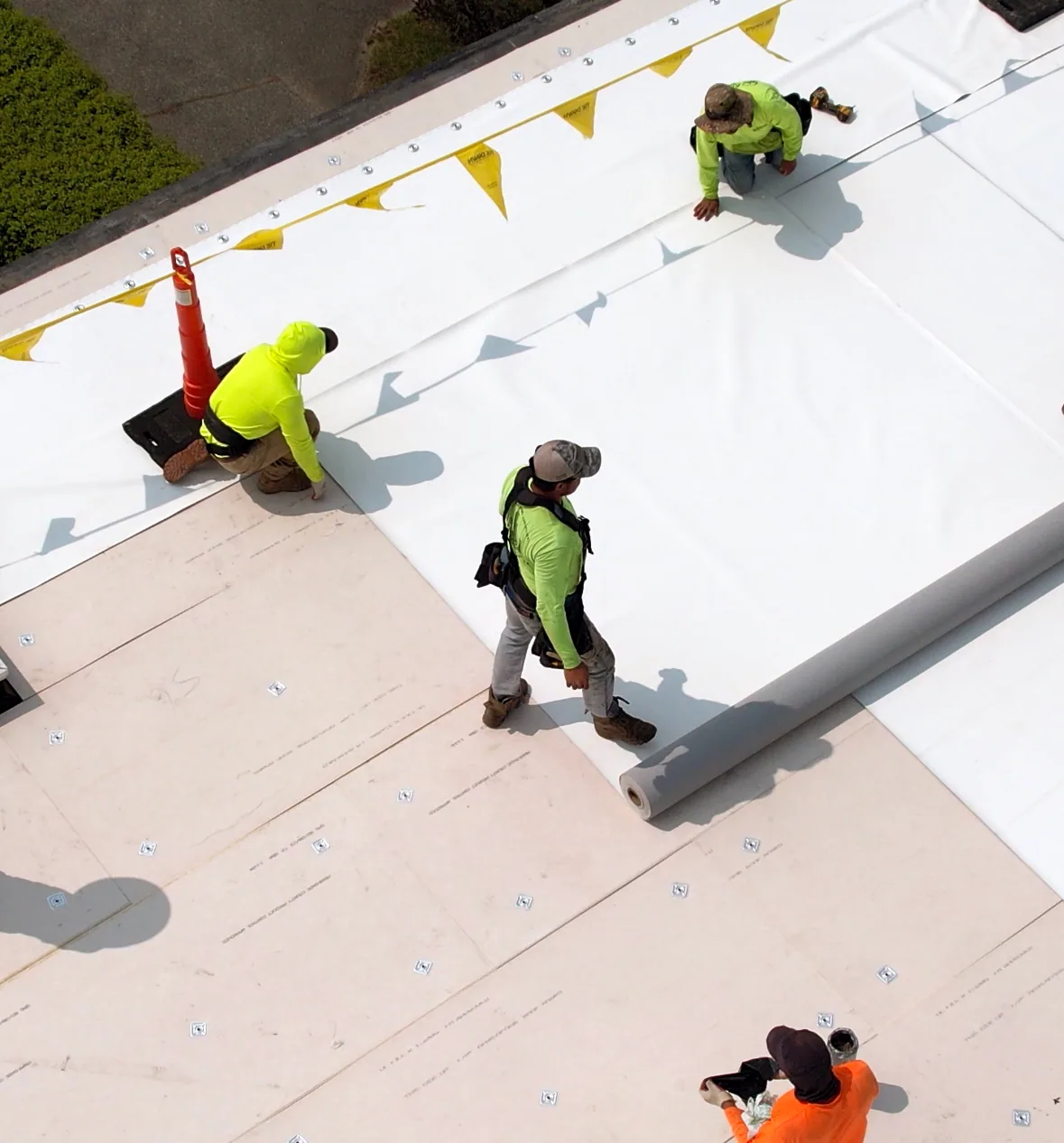
An installed PVC roof detail needs repair components and a joining method suitable for its actual system. Other membrane families use different procedures, so color alone does not determine the supplies. If hidden layers must be checked, we agree on a useful opening and its closure before sampling. The findings explain the local repair and any further investigation a wider roof option needs. The manager can approve the supported correction without assuming one sample settles the building's entire assembly.
Follow-up: check the protected area
After the emergency visit, we identify the condition found and the correction or protection left at that location. Photographs show the temporary measure separately from later permanent work. We arrange a check suited to the detail and conditions, and ask the operating contact to report another occurrence. A short period without a drip is useful to record, but an unresolved roof, wall or equipment question still needs its examination before the overall remedy is treated as complete.
Summer heat, winter rain and regional Santa Ana winds can change the next practical repair interval. We check actual surface conditions and product instructions before extending the work area. If the condition changes, we show the manager the new finding, repair needed and cost effect. The response history helps explain what happened and what to do next, while a temporary correction remains separate from a larger roof-condition assessment or a replacement decision that requires more evidence.
Commercial Roofing Questions
What information helps during an overnight water call?
Tell us the affected space, current water and safe entry contact. Include recent changes without sending personnel onto a hazardous roof to collect more information.
Can temporary sheeting fit every commercial roof opening?
A cover needs suitable placement, attachment and drainage. We examine what can be installed safely and explain the check and further repair it needs.
Does roof access authorize an equipment shutdown?
The qualified service team coordinates shutdown and restart. Permission to enter the roof does not independently authorize an electrical or mechanical operating change.
When does urgent protection become a permanent repair?
The roof must provide usable surfaces for the final repair and its checks. Temporary protection remains separate until the required preparation and connection are completed.
Commercial Roofing Moreno Valley handles commercial roof repair, replacement, inspections, coatings and maintenance across Moreno Valley, Riverside and the Inland Empire. Request a roof assessment or call 555-555-5555.
Related Roofing Work
Call with the water location
Identify the affected room, current water and person who can arrange entry. Share recent roof work and operating restrictions so we can discuss the feasible immediate action and follow-up repair.
Request a Roof Assessment555-555-5555