
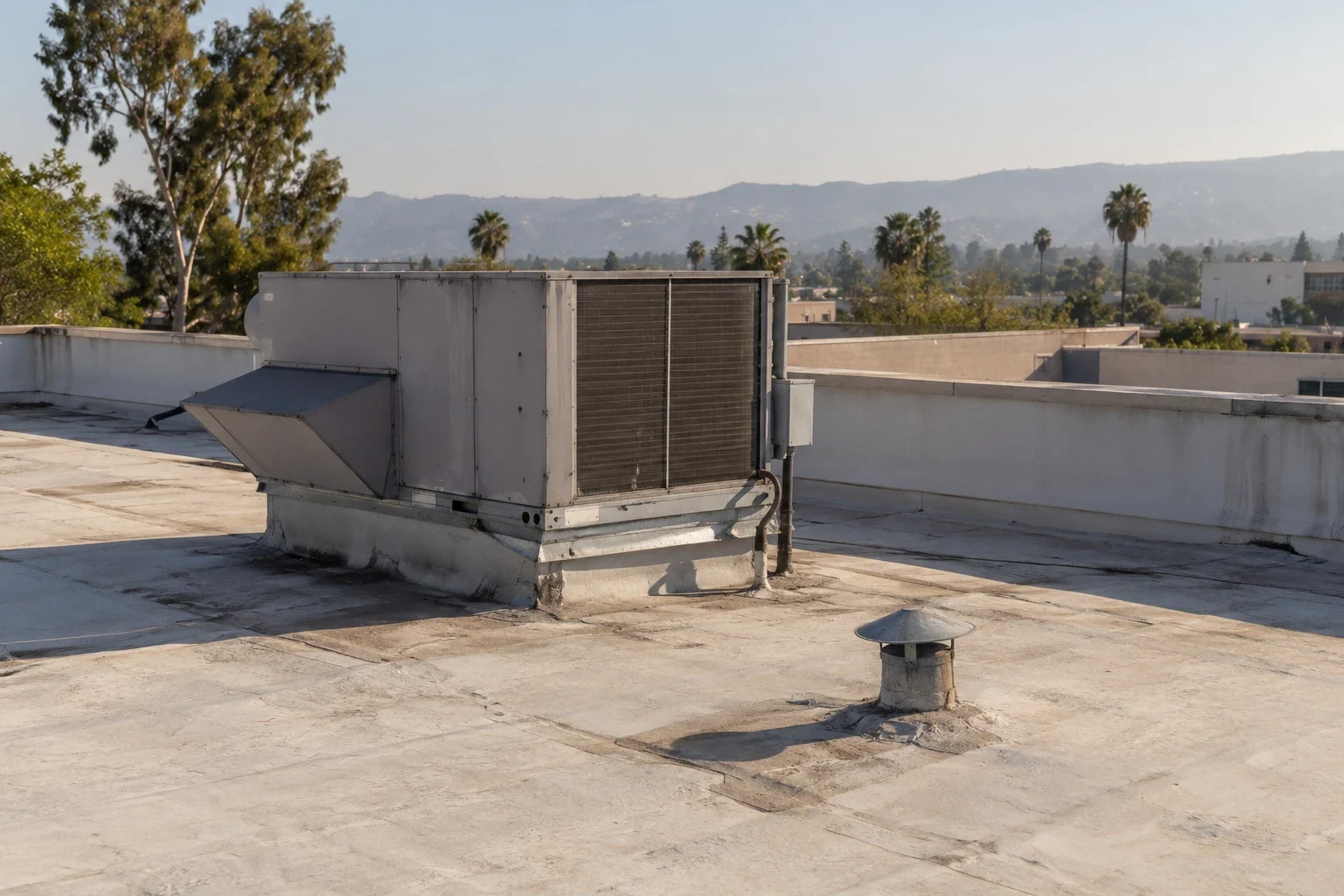
Which roof findings belong in the acquisition file, and which require a funded correction? For real estate investors and REITs in Moreno Valley, CA, that distinction affects due diligence, capital planning, tenant operations, and asset reporting. Commercial Roofing Moreno Valley records each inspected building, roof zone, observed condition, and next decision. The City inventory includes commercial shopping centers, industrial properties, and medical or office premises. Those categories point to a varied local portfolio, while the actual assembly and condition must be established at each asset.
Moreno Valley is at the SR-60 and I-215 junction, and the City separately maps Centerpointe Business Park, Moreno Valley Industrial Area, and SR-60 Business Park Area. Those locations can help organize a regional site visit. They do not make roofs or access arrangements interchangeable. We return a marked plan, photographs, repair assumptions, and unresolved test needs so an owner can compare assets on consistent fields without flattening their individual findings.
Acquisition review: separate observed condition from allowance
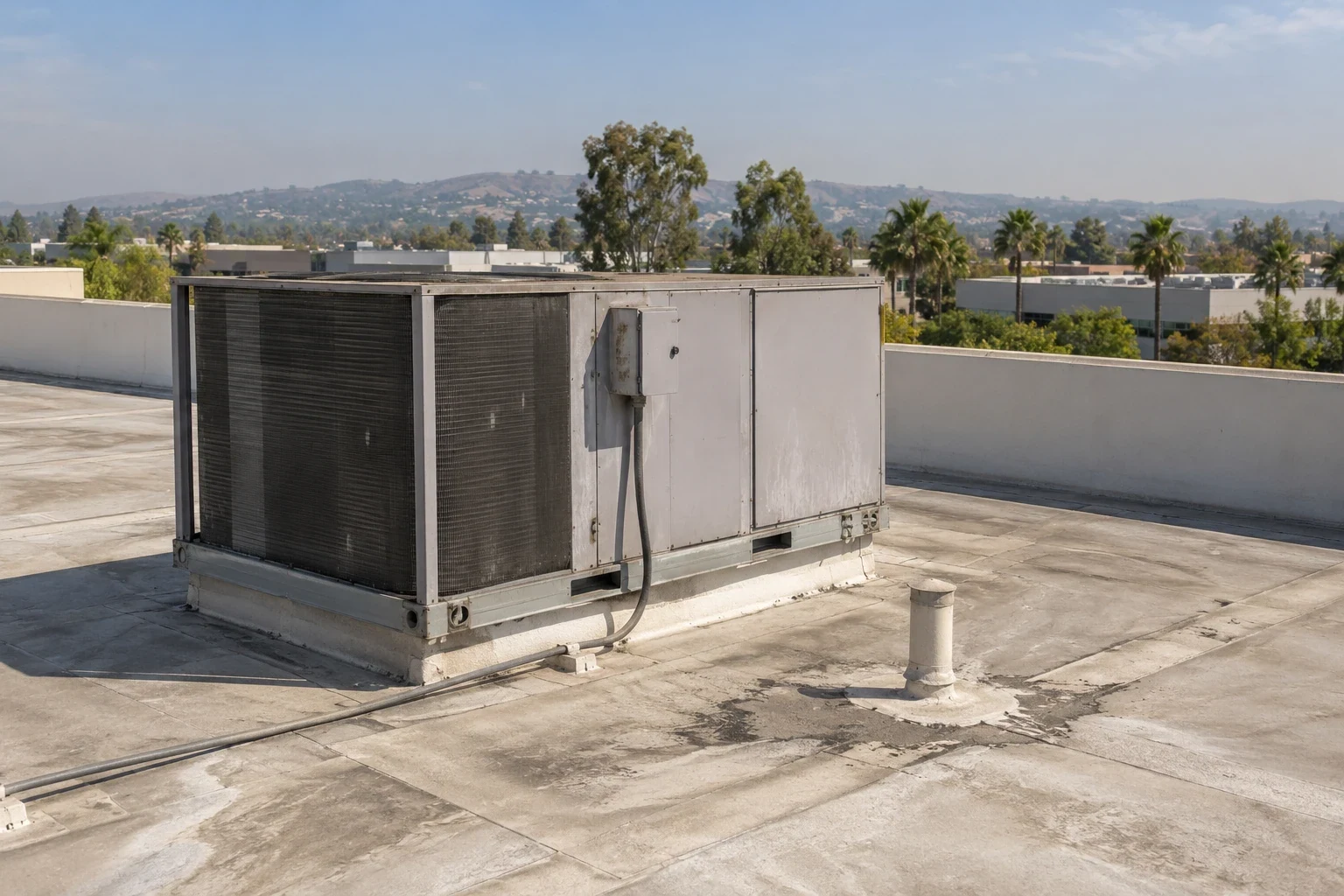
A purchase survey should identify the roof sections examined, records reviewed, access limits, and areas not reached. We document visible membrane or metal conditions, transitions, drains, curbs, previous repairs, and water reports. If the buyer needs a broad capital estimate, we distinguish an observed repair from a test or opening needed to confirm concealed layers. The report should not turn a visual finding into a remaining-life promise or unsupported roof-wide allowance.
For a property with several buildings, record each structure and assembly separately. An office component may have a different roof history from an adjoining loading or industrial building. The Moreno Valley property inventory spans those commercial types, and the approved diligence scope should match the actual asset list. A roof due-diligence survey can identify condition, immediate repair needs, and questions that remain subject to testing or design review.
Record access and removal assumptions before purchase, with a marked map for later comparison.
Capital plan: rank work by evidence and exposure
Capital planning starts with the location and consequence of each roof condition. Mark active water, repeated repairs, drainage concerns, and aging details separately from routine maintenance. A repair priority should identify the affected area, protection need, and decision deadline rather than rely on an unqualified condition score. We explain where the evidence supports immediate correction and where a moisture check or follow-up visit would improve the estimate.
A roof capital plan can group decision-ready scopes by building and fiscal period, while retaining the photos and assumptions behind each recommendation. Emergency response remains available at all hours, including holidays, when an active opening needs attention. That stabilization should be separated from permanent work and from future capital items in the asset record.
The City's 2021 major-employer table lists distribution operations, including Amazon, Skechers, ALDI, and Harbor Freight. The asset manager confirms receiving windows, gate controls, and tenant routes at each property.
Roof assembly: confirm the material before selecting a scope
Available roof plans and prior invoices can help identify the system, but field inspection confirms accessible conditions. Note membrane type, seams, edge metal, insulation information, slope, drains, curbs, and previous coatings or recover layers. If records conflict with what is visible, document the mismatch and select a test or opening that answers a defined question. A recover option depends on moisture, substrate, drainage, and compatibility, not only on a purchase deadline.
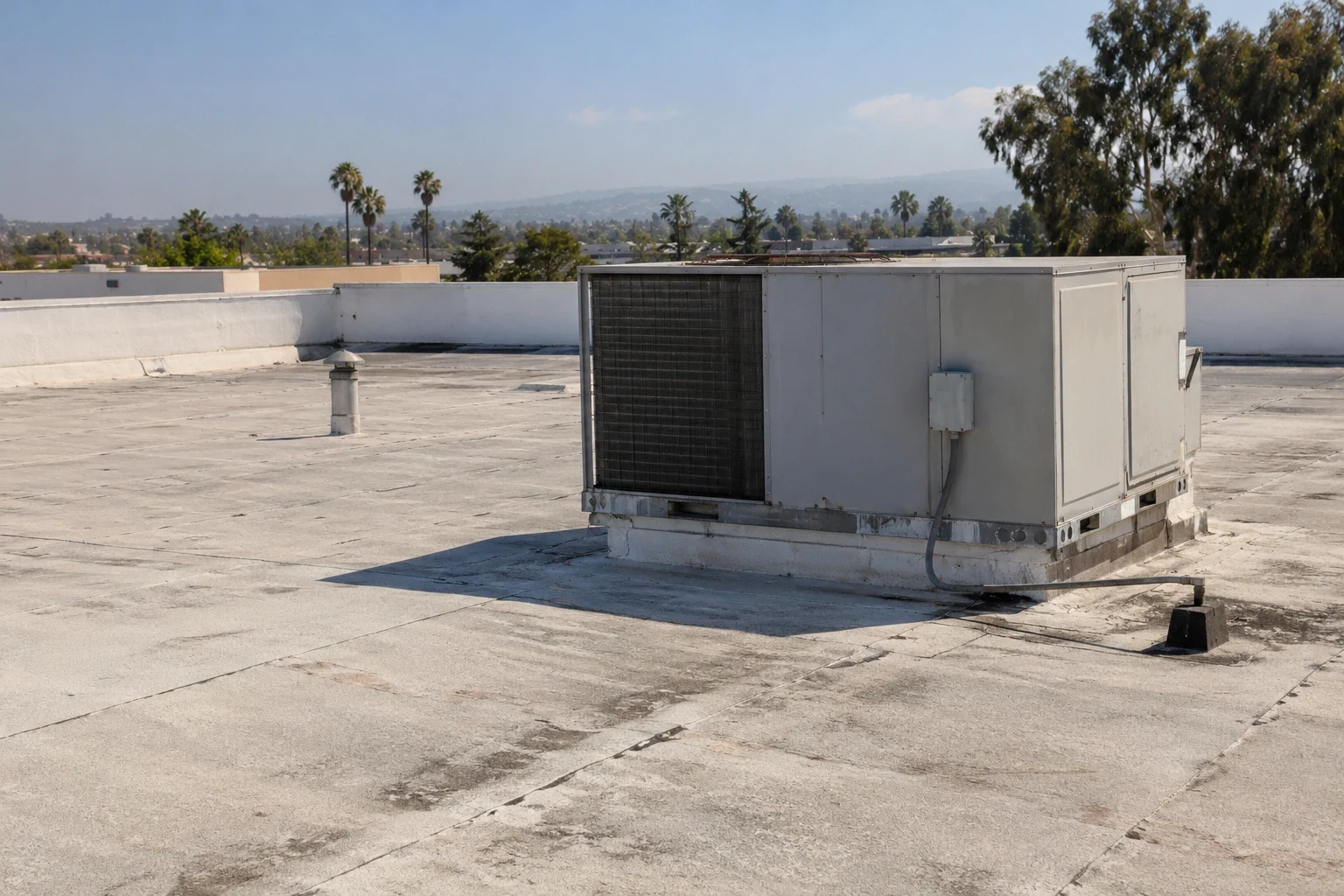
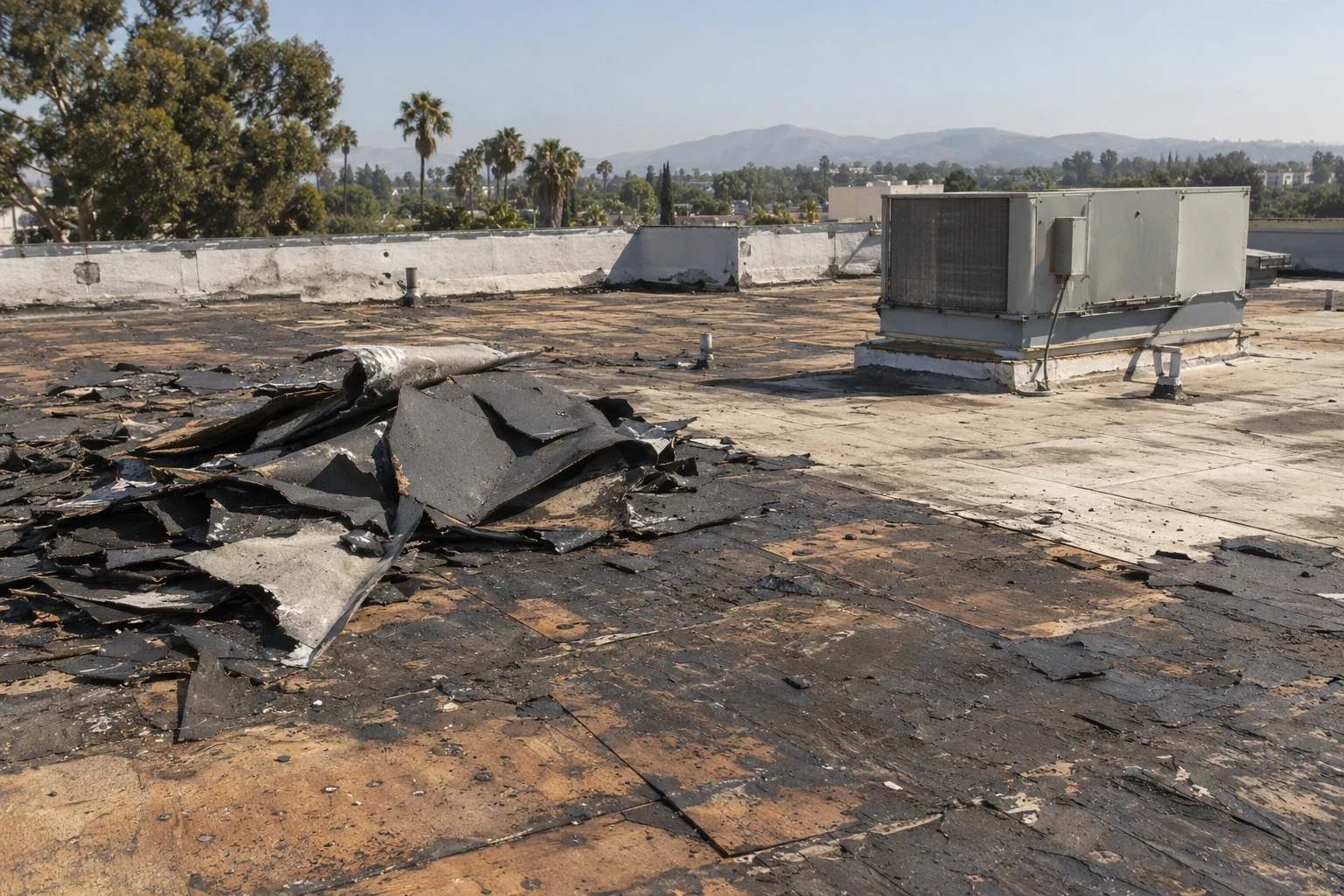
For repairs, the estimate should define preparation, compatible materials, seam or flashing work, roof zones, and closeout checks. A commercial inspection may support that decision, while moisture mapping can identify locations for confirmation. A replacement evaluation should identify removal assumptions and separate areas when the property contains additions or different systems.
Asset teams comparing bids should line up included sections, testing, access, interior protection, trade handoffs, and exclusions. The lowest number may omit a preparation task that is needed to leave a sound transition. We list assumptions and scope changes clearly so an owner can compare like work across assets.
Tenant risk: coordinate work without hiding its boundary
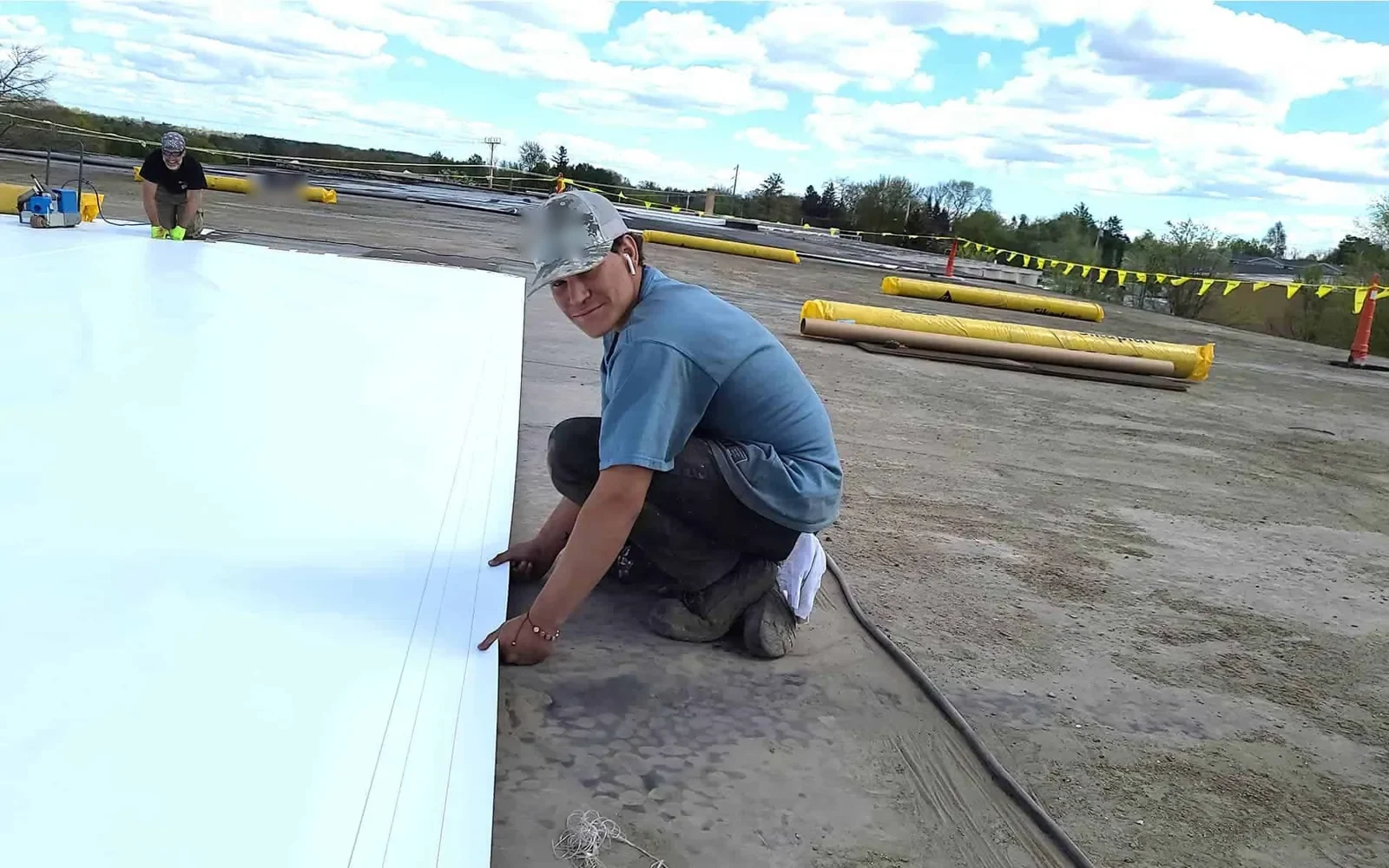
A roof scope may affect entrances, receiving lanes, tenant equipment, or occupied office areas. The asset manager confirms who can authorize entry, communicate a closure, and approve a change. Roofing marks the exterior work zone and identifies interior protection and task duration. If a tenant report leads to a repair, keep that location separate from unrelated roof work so lease coordination and closeout remain tied to the correct unit.
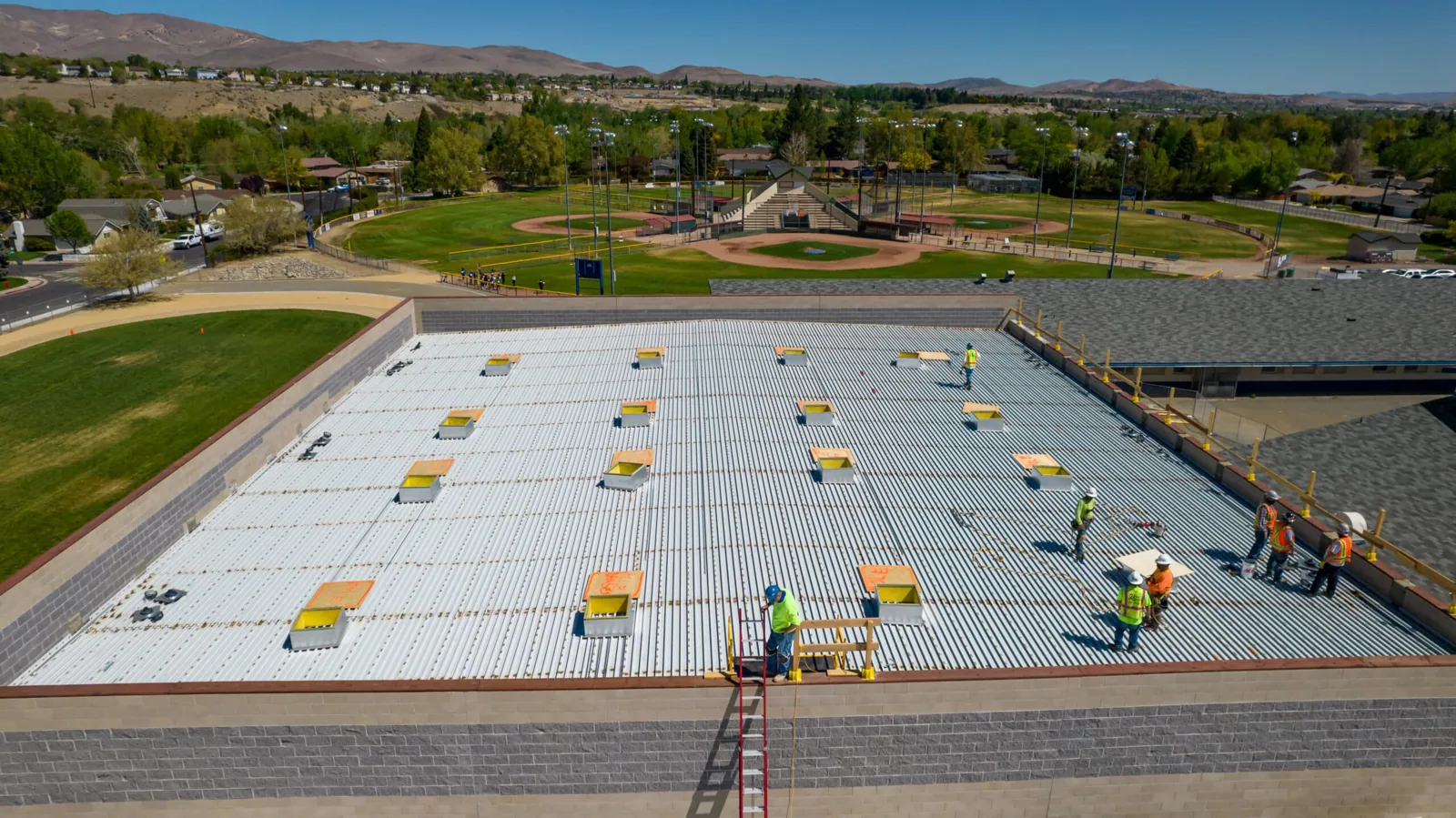
For occupied properties, phased reroofing can divide construction into sections with a defined stopping detail and protection plan. A property manager may coordinate notices and daily access, while investment staff tracks budget and scope. The property management team can receive the operating instructions, and the REIT asset lead can retain the approval packet and cost assumption.
When concealed deck or insulation conditions change the work, photograph the discovery and obtain approval before removal expands. A variance should state added labor, materials, access, schedule effect, and whether design input is needed. That preserves the original decision basis and gives ownership a clear request to approve.
Local timing: plan around Inland Empire conditions
Moreno Valley sits in the National Weather Service's Inland Empire forecast area. Summer heat can affect safe access and material handling; winter rain and regional Santa Ana winds can change protection and exposed-work timing. These are planning conditions, not evidence that an asset has a roof defect. The inspection, substrate state, and manufacturer instructions determine whether the selected task can proceed.
The city's commercial districts and the SR-60/I-215 connection provide regional context for grouping site visits. A route can reduce travel between properties only after each location confirms access and operational timing. Centerpointe's office and industrial context may require different property contacts or staging instructions within one portfolio. Use a site roster with current entry notes rather than assuming a common access window.
For assets in the Moreno Valley service area, provide the property list, building plans, known leaks, work history, and owner approval path. We will identify which roofs need a focused repair, additional testing, or a broader capital scope, then keep each recommendation connected to its evidence.
Asset reporting: preserve comparable fields
Portfolio reporting can track inspections completed, active leaks, estimates pending, authorized repairs, capital recommendations, and follow-up checks. Each status should link back to a marked plan and photo record at the property. A roof that could not be reached remains an incomplete inspection, not a green entry in an asset table. We identify access limits and the next visit needed to close that gap.
A photo-supported condition report keeps the technical finding available to investment and facilities teams. The building file should retain dates, materials where known, repair boundaries, approved changes, and unresolved risks. A general contractor may use that same record to coordinate an approved capital project, while the investor uses it to track budget and asset exposure.
Keep records current when ownership or facility contacts change. Send the roof plan, inspection purpose, access limits, and work orders. We will return comparable findings tied to each building.
Commercial Roofing Questions
Can a visual survey set a roof reserve for an acquisition?
It can document visible conditions, accessible areas, and repair recommendations. Concealed layers or moisture may require a test. We identify assumptions separately so the buyer can decide whether additional diligence is needed.
How can a REIT compare roofs across different property types?
Use consistent fields for assembly, inspected zones, active defects, access, repair scope, and open questions. Keep building evidence distinct; an industrial roof and medical-office roof are not interchangeable.
What changes a repair allowance after work begins?
Access, hidden moisture, substrate condition, roof layers, and trade interfaces can change preparation. We photograph the condition and submit a defined variance before extending the approved removal boundary.
Can capital work be phased across an occupied portfolio?
Yes, when the roof sections, tenant access, protection, and stopping details are identified. We schedule each property work area with its contact and report which phases are complete or pending.
Which files should stay with an asset after repair?
Retain the marked plan, photos, scope and approvals, completed details, materials where known, and remaining observations. Those records support future budgeting and diligence at the same roof zone.
Commercial Roofing Moreno Valley handles commercial roof repair, replacement, inspections, coatings and maintenance across Moreno Valley, Riverside and the Inland Empire. Request a roof assessment or call 555-555-5555.
Related Roofing Work
Request an investor roof assessment
Share the asset list, roof plans, acquisition or capital question, known leak locations, recent work, access limits, and approval path. We will return building-specific findings for the next decision.
Request a Roof Assessment555-555-5555