
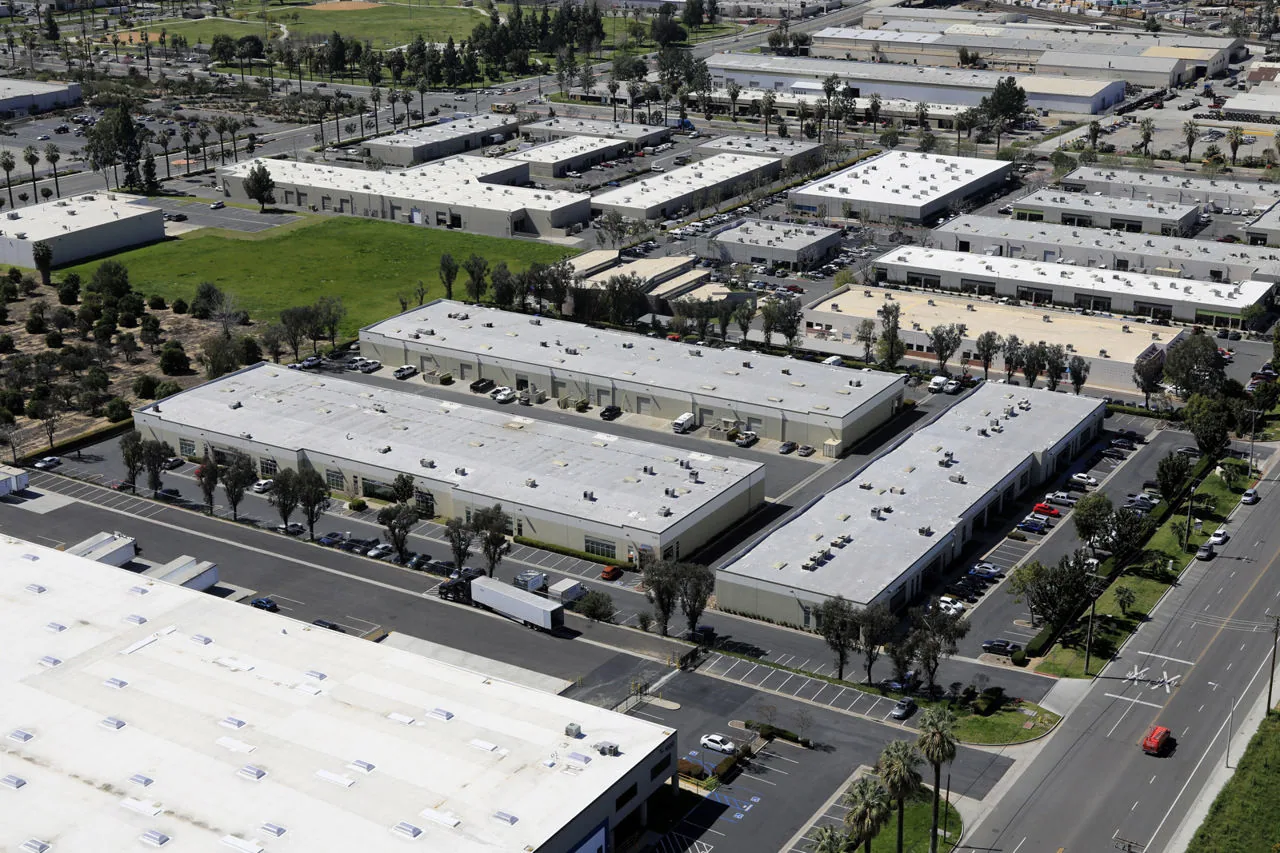
Which Hunter Industrial Park roof area needs a documented decision? The City describes Hunter as a broad northeast Riverside neighborhood beside I-215, with predominantly industrial and commercial-office development and a smaller residential area. The City's business examples include Bourns Engineering, Trademark Plastics, and Sabert. That mix grounds the area as a multi-property employment neighborhood, but each roof still requires its own inspection and approval record. We identify the building and roof zone, mark what was reached, and connect findings to a repair, test, or follow-up check.
Industrial, office, and nearby residential uses can require different access routes and protection below. We confirm the operating contact, escort rules, equipment limits, occupied areas, and time available before work begins. The report states which zones were reviewed and which remain open. Riverside and Moreno Valley share regional weather planning concerns, but the local roof conditions and property rules determine the work sequence at each Hunter building.
Neighborhood map: keep industrial and office findings property-specific
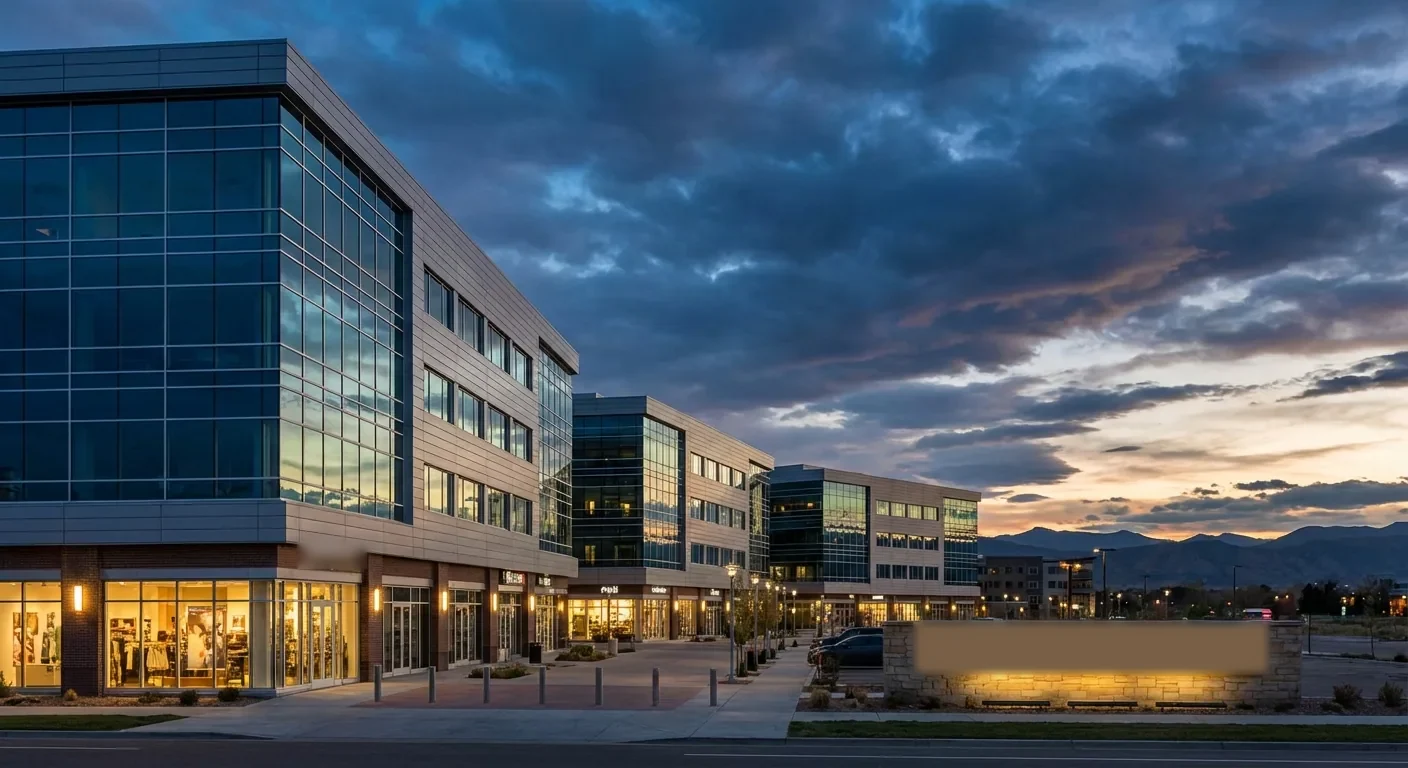
Hunter Industrial Park is a named neighborhood in northeast Riverside beside I-215. Its described development includes industrial buildings and commercial offices, with a smaller residential area. The City identifies Bourns Engineering, Trademark Plastics, and Sabert among businesses in the neighborhood. Those examples help distinguish Hunter from a single-campus location target. They do not establish a roof system, condition, operating schedule, or service relationship at any named business.
For an owner or property manager, the intake file should list the property identifier, current roof plan, reported leak location, previous work, access contact, and person authorized to approve a test. We maintain a separate condition map for each building, including roof elevations and additions when they are accessible. A photograph corresponds to a plan mark, and the work-order trail records the decision tied to it. If a roof hatch, equipment zone, or tenant-controlled room cannot be reached, the report carries that limit forward.
Riverside Downtown and the Sycamore Canyon area are other distinct parts of the city, while Riverside remains the broader municipal service area. The Sycamore Canyon industrial and office area can be tracked in the same portfolio, but Hunter's condition findings stay attached to Hunter properties. Shared regional routing does not combine a repair boundary or authorize access to another building.
Inspection record: move from symptom to repair boundary
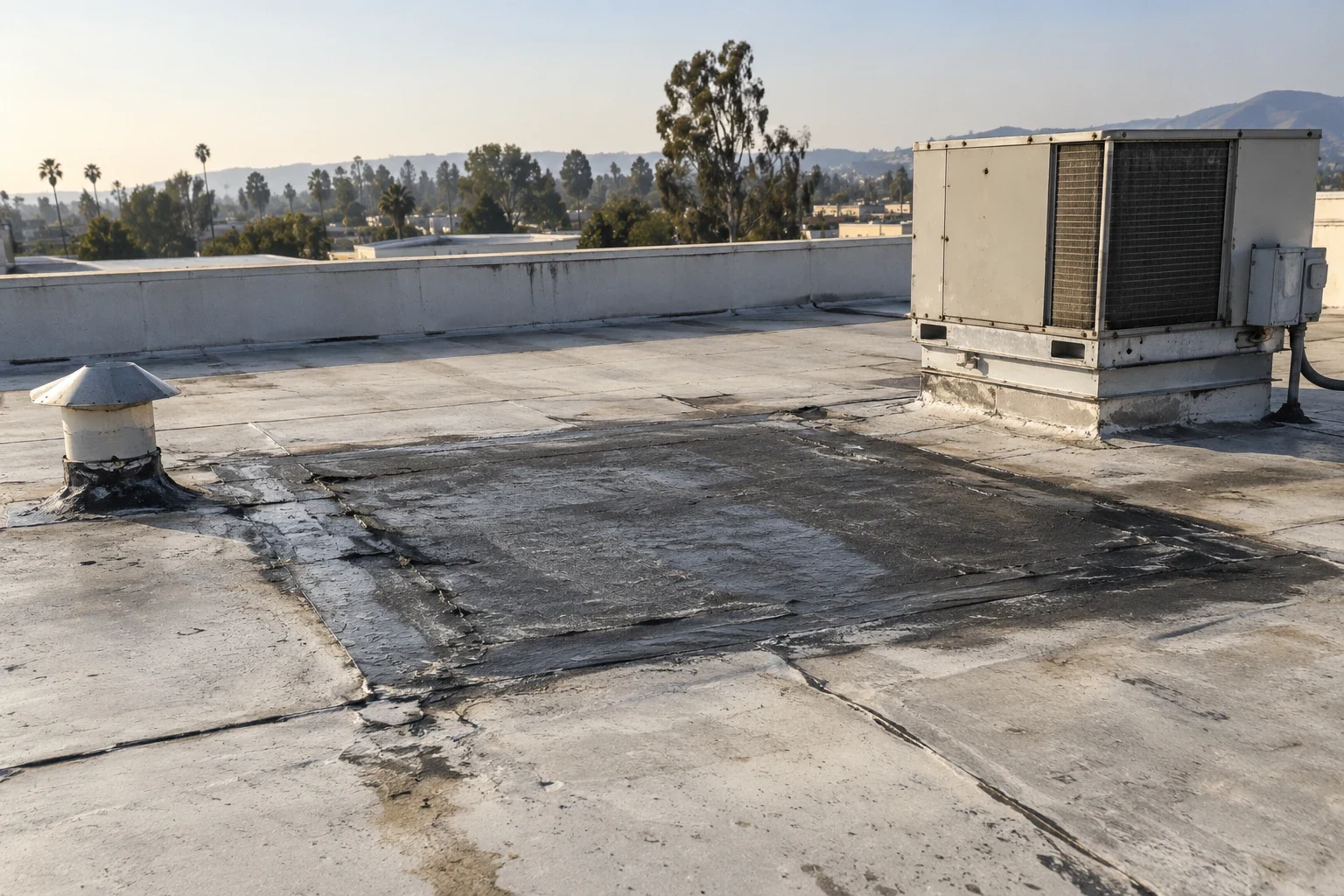
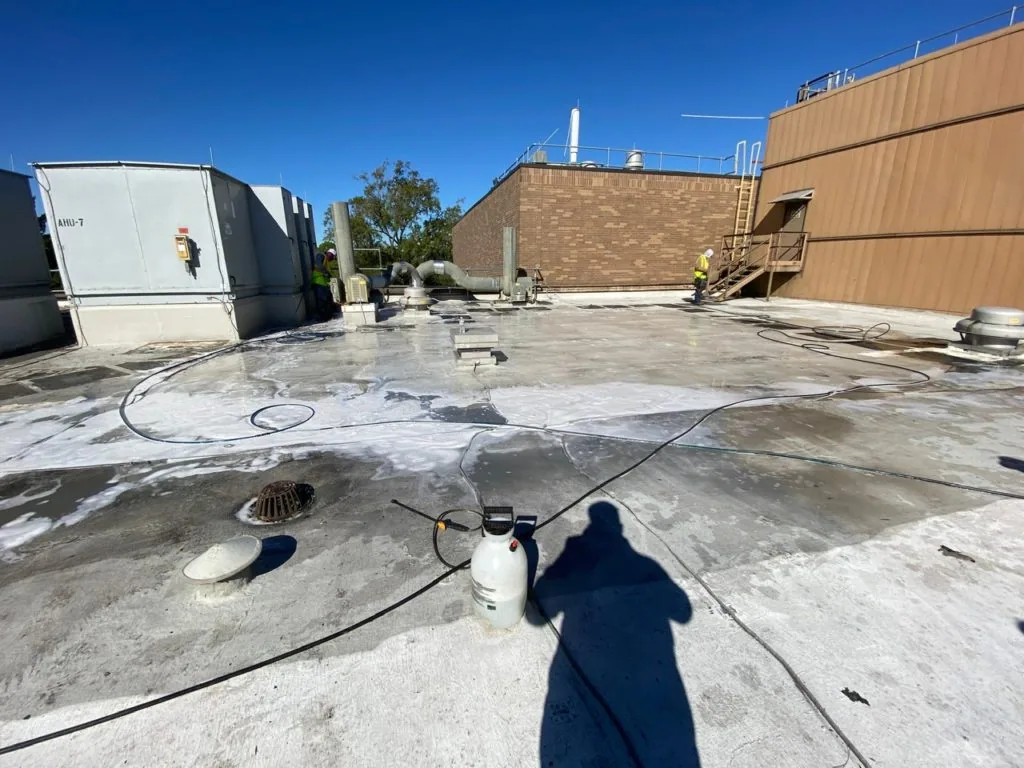
We begin with the operating question: is water active, has a leak returned after repair, does an owner need a condition baseline, or is a roof decision part of a capital plan? The inspector reviews accessible field seams, flashing, penetrations, curbs, drains, scuppers, edge details, and previous patches in the authorized area. If an interior stain is reported, we compare its room location with roof details above and nearby. Water can travel before appearing indoors, so the nearest visible defect is not treated as the source without support.
The inspection distinguishes confirmed defects from possible paths and hidden conditions that need additional evidence. If the system is not identified by records or visible details, we state what can be confirmed. A moisture survey, sample, or authorized opening is proposed when it could alter the repair boundary. We identify the test location, access needs, disruption, and person who can authorize it. Areas blocked by rooftop equipment or operating restrictions remain listed as uninspected, rather than disappearing into a general completion statement.
A commercial roof inspection can create a baseline or focus on a reported problem. A leak investigation can compare a current water path with prior work and nearby details. For owners responsible for a warehouse roof or commercial office roof, the work record shows which property, zone, and operating contact support the recommendation.
Site access: coordinate roof work with active operations
Before scheduling, the manager identifies the roof entry, escort, fall-protection requirements, equipment restrictions, staging point, and approved work hours. An industrial operator may have a restricted equipment zone or a delivery path that must stay open; an office contact may need notice before crews access rooms or common areas. We confirm these site-specific rules rather than infer them from the area's industrial character. The work plan also states what can be protected below and when the roof must be secured.
Moreno Valley is within the National Weather Service San Bernardino and Riverside County Valleys forecast area, where heat is a field-planning concern. The Southern California weather guide also documents winter rainstorms and Santa Ana winds. These market-level conditions affect planning for safe access and exposed work. They do not establish damage or design criteria for Hunter. The crew checks current conditions, identifies the dry-in method, and records any weather-related change to sequence or return timing.
If water requires immediate action, emergency roof response documents temporary protection separately from permanent repair. A recurring review through preventive roof maintenance can track drains, seams, penetrations, and prior repair areas on a defined inspection interval. The owner receives a clear list of work completed, concerns needing approval, and any zone that could not be checked.
When office and industrial uses sit within the same broad neighborhood, the manager identifies which entry, tenant, or equipment contact is affected by a repair. We reflect that information in the daily sequence and note when access is needed for inspection, testing, or closeout photographs. If the approved window does not allow the scope to be secured, the work order records the safe stopping point and planned return.
Scope and cost: compare work on confirmed conditions
The estimate names the building and marked roof area, preparation, materials, repair limit, exclusions, and closeout check. Cost and duration can depend on access, equipment coordination, operating hours, material compatibility, removal depth, interior protection, disposal, and moisture extent. We identify the drivers that apply to the inspected scope and explain which quantity could change after testing. The owner can review a local repair, added investigation, or capital project against the same condition record.
A recover requires a suitable substrate, controlled moisture, sufficient edge height, workable drainage, compatible attachment, and project approval. Replacement may involve removal, deck or insulation review, and a protection sequence that allows operations to continue where possible. A recover evaluation documents the limits of retaining an assembly; a replacement scope sets out removal and rebuild. Neither option should be selected from a neighborhood label or a single symptom alone.
Closeout names the final repair boundary, material installed, photographs, approved scope changes, and follow-up action. A later check can compare the same seam or penetration with the original observation. Keep Hunter's work orders separate from Riverside Downtown or Sycamore Canyon projects, even when one asset team reviews all three areas. A shared status register can report open items, while each approval packet remains tied to the building that was inspected.
Commercial Roofing Questions
Is Hunter Industrial Park a single industrial property?
No. The City describes it as a broad Riverside neighborhood with industrial and commercial-office development and a smaller residential area. Each building receives its own roof record.
Do the named businesses identify the roof systems in Hunter?
No. They are examples of businesses in the neighborhood. We verify the system and condition at the property included in the approved inspection.
Can an inspection fit around industrial operations?
We coordinate the approved access route, operating limits, equipment restrictions, and protection below with the property contact. The report lists any zone that could not be reached.
What should a manager review before approving repair?
Review the marked condition, proposed boundary, material, exclusions, access plan, and evidence needed for closeout. If hidden moisture could change the work, the packet identifies a test and approval step.
Commercial Roofing Moreno Valley handles commercial roof repair, replacement, inspections, coatings and maintenance across Moreno Valley, Riverside and the Inland Empire. Request a roof assessment or call 555-555-5555.
Related Roofing Work

Document the Hunter roof zone and next action
Send the property identifier, roof plan, reported leak, prior work orders, operating restrictions, and approval contact. We will return findings and a scope tied to the inspected building.
Request a Roof Assessment555-555-5555