
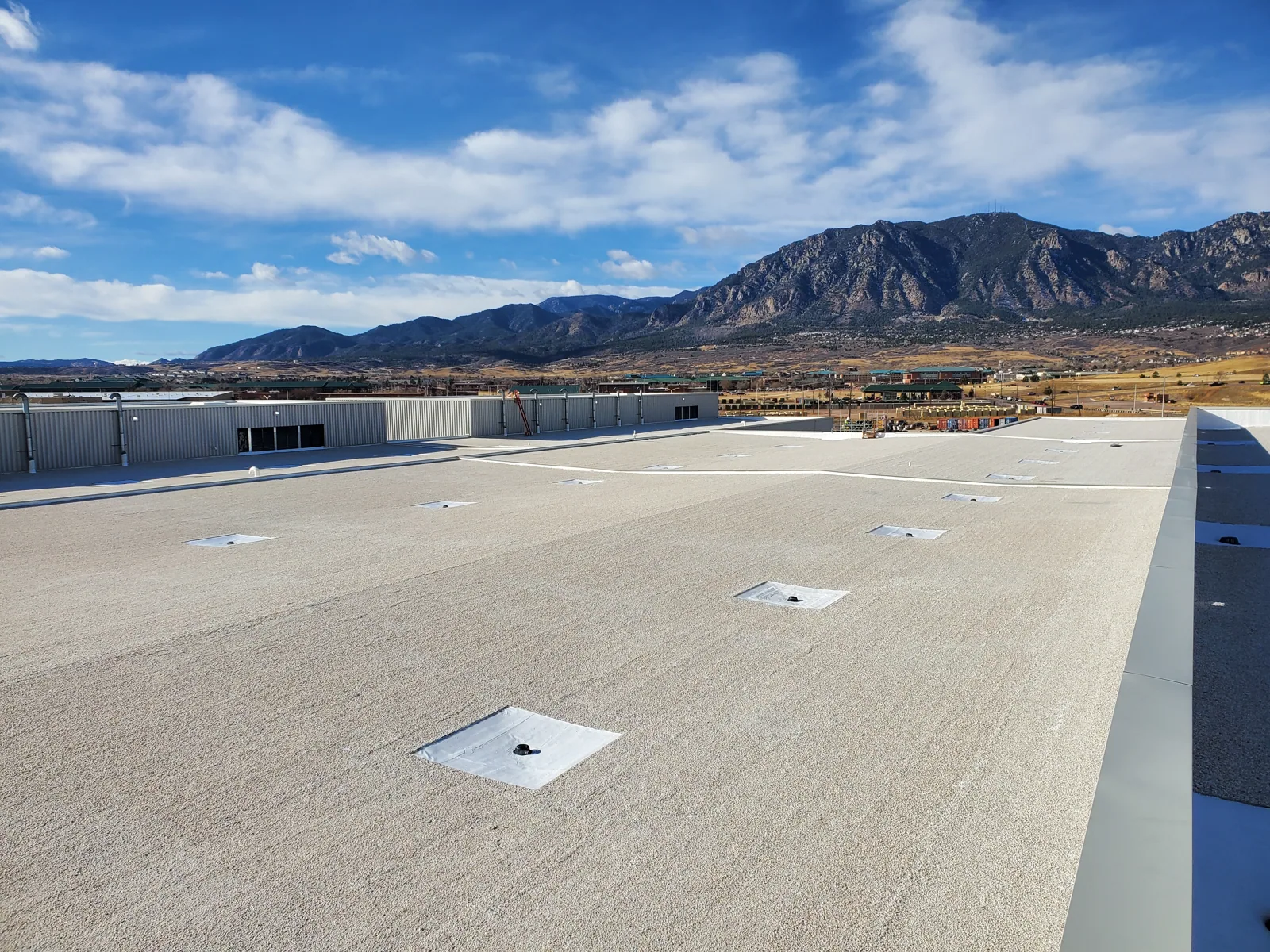
The built-up roof record should identify the layer that failed and where the next approval begins. Commercial Roofing Moreno Valley inspects BUR assemblies in Moreno Valley, CA, for splits, blisters, displaced aggregate, open flashing, and drainage concerns. Gravel or a cap sheet can conceal the condition below, so we connect each finding with an inspected area, photograph, and repair boundary. At Towngate, commercial and office premises sit within a broader multi-property district; in the Sycamore Canyon area of Riverside, industrial and office uses follow I-215. Those different building settings make access and material handling part of the scope.
Surface and ply stack:
Built-up roofing uses reinforcing plies set in bitumen, often with aggregate, a cap sheet, or a coating at the top. We inspect visible edges, blisters, splits, patches, drains, and changes in surface texture. Where a test opening is approved, we record the ply sequence and insulation condition, then restore the opening. That inspection can confirm whether a surface defect ends at the cap or reaches the layers below. The marked location helps a property manager decide whether testing should continue in a second zone.
Moreno Valley's commercial inventory includes industrial, shopping-center, medical, and office premises. A retail or medical property may need a protected entrance while gravel and debris are moved from the roof; an industrial facility may need a lift route away from operations. We identify those needs before selecting staging. A roof inspection can map accessible details and identify a core location if the layer count or moisture extent will affect the bid.
A core sample is most useful where a repair bid depends on knowing whether insulation is dry and how many layers are present. We pick a location outside a drain bowl, curb corner, and active travel lane, then photograph the surface before opening it. The report notes each ply, substrate, and visible moisture indication. If a second sample could change the boundary, the manager can approve that location separately instead of opening the whole field at once.
Aggregate and repair surface:
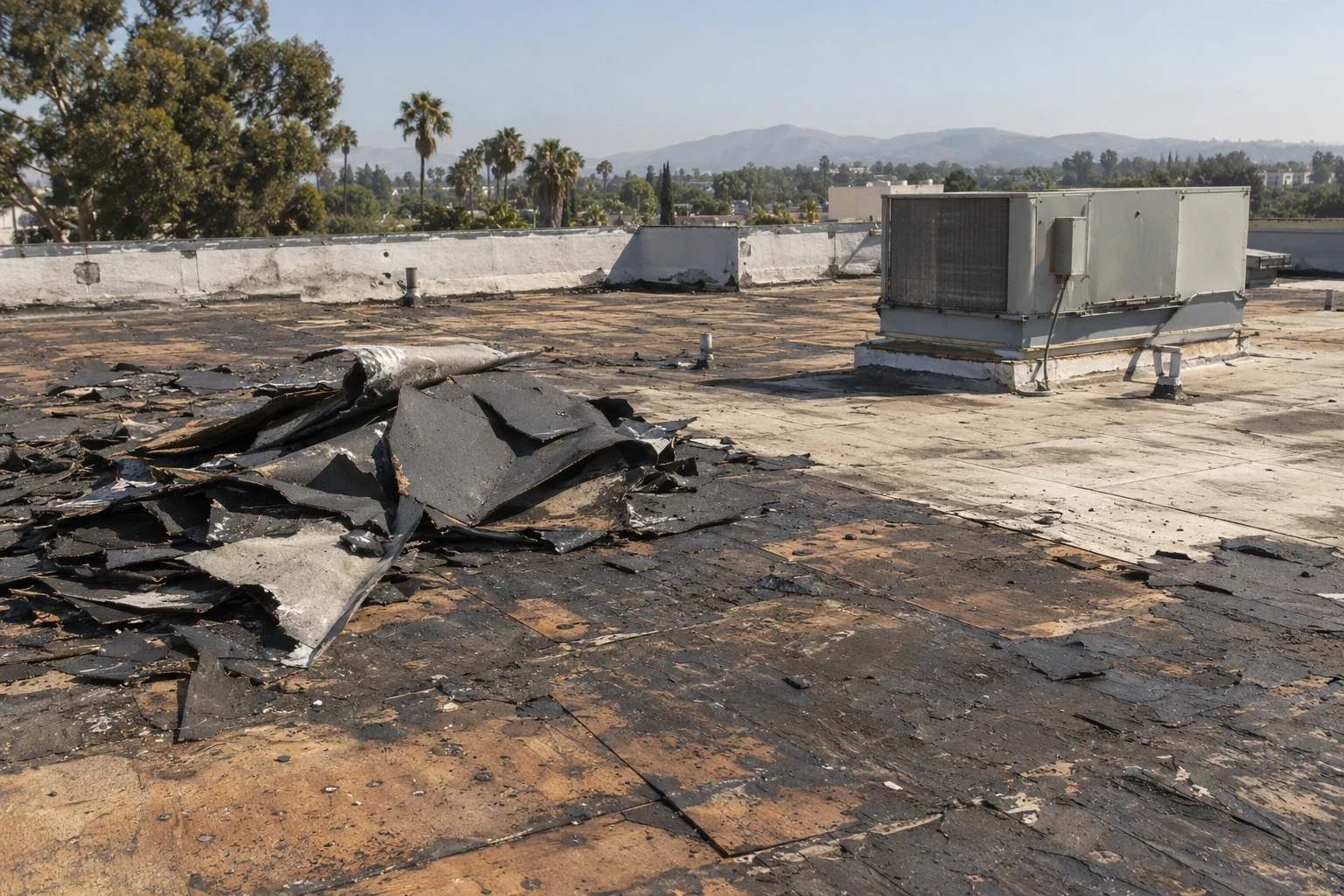
Aggregate protects a built-up field from weather and foot traffic, but stone can migrate into drains or collect at parapets. We check how firmly it is embedded, where the cap is exposed, and whether an earlier patch changed the surface height. A repair may require lifting or clearing aggregate, preparing the bitumen, and replacing compatible surfacing. The work record distinguishes material moved for access from aggregate removed because the underlying assembly needed repair.
At Towngate, the City inventories several separate retail and office properties in the wider planning area. For a roof with recurring service traffic, we mark paths near units, hatches, and drains and consider walk pads where they protect repaired areas. Preventive maintenance can record aggregate movement and drain condition across inspection intervals. A follow-up check after equipment work keeps loose stone or scrap from covering the same detail again.
Moisture and repair extent:
A blister can hold moisture or reflect weak adhesion between plies. We inspect the affected area and determine whether the bitumen and reinforcement remain bonded around it. A localized split may be repairable when the surrounding field is dry and stable. Repeated blisters, saturated insulation, or several layers of patch material can change the decision to recover or replacement. We mark the inspected boundary and identify the test result or additional opening that would justify extending it.
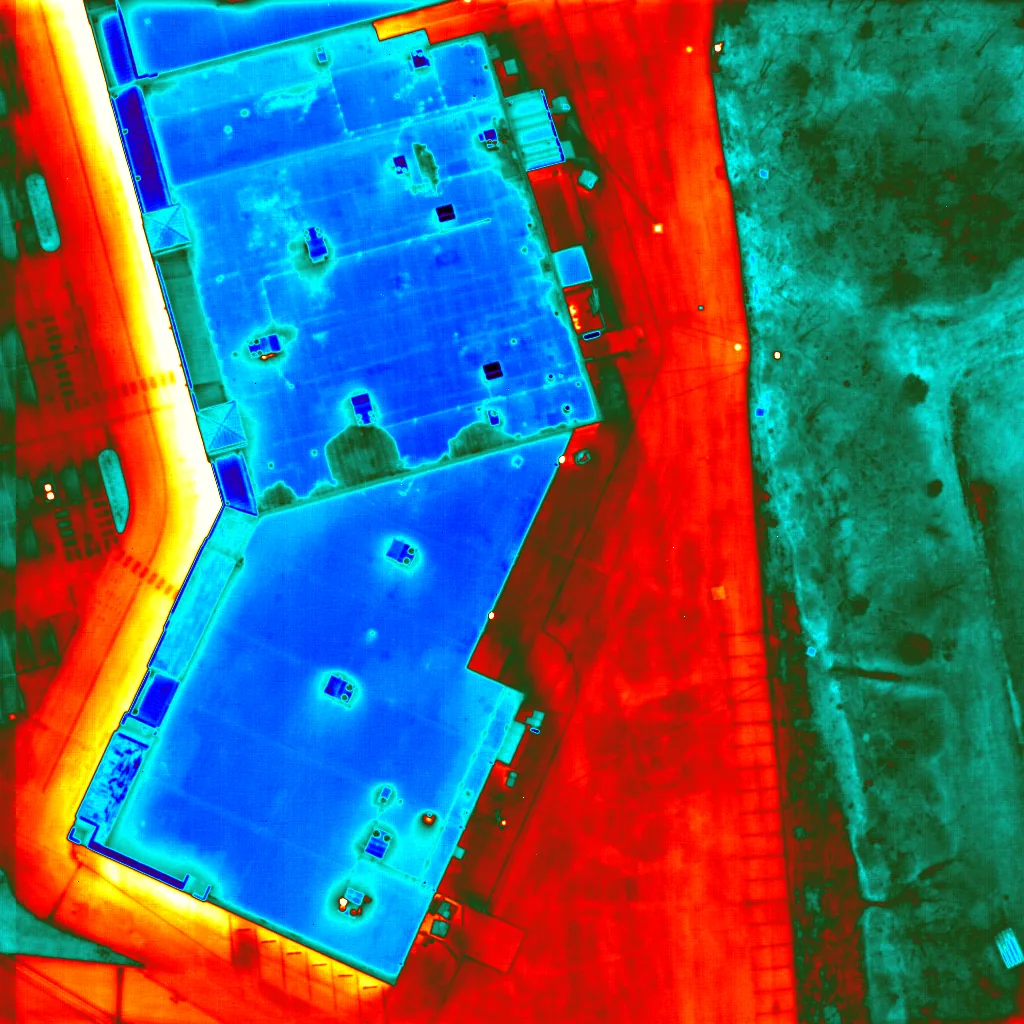
Southern California's weather guide documents winter rainstorms and summer heat. A built-up roof with an exposed opening needs an installation window that allows the repair to bond and the building to stay dry overnight. We stage repairs so each cut area is closed at shift end and record any section held for a weather return. Infrared moisture survey work can map a broad area for direct verification when the result will decide between patching and removing wet layers.
Aggregate affects both repair access and the amount of material handled. Where stone must be moved, we keep it clear of drains and return compatible surfacing after the membrane detail is closed. If the cap sheet is exposed over a wide area, the proposal states whether new cap material, coating, or another protection layer is included. The owner can see which surface work restores weather protection and which item addresses the underlying ply failure.
Flashing and drainage:
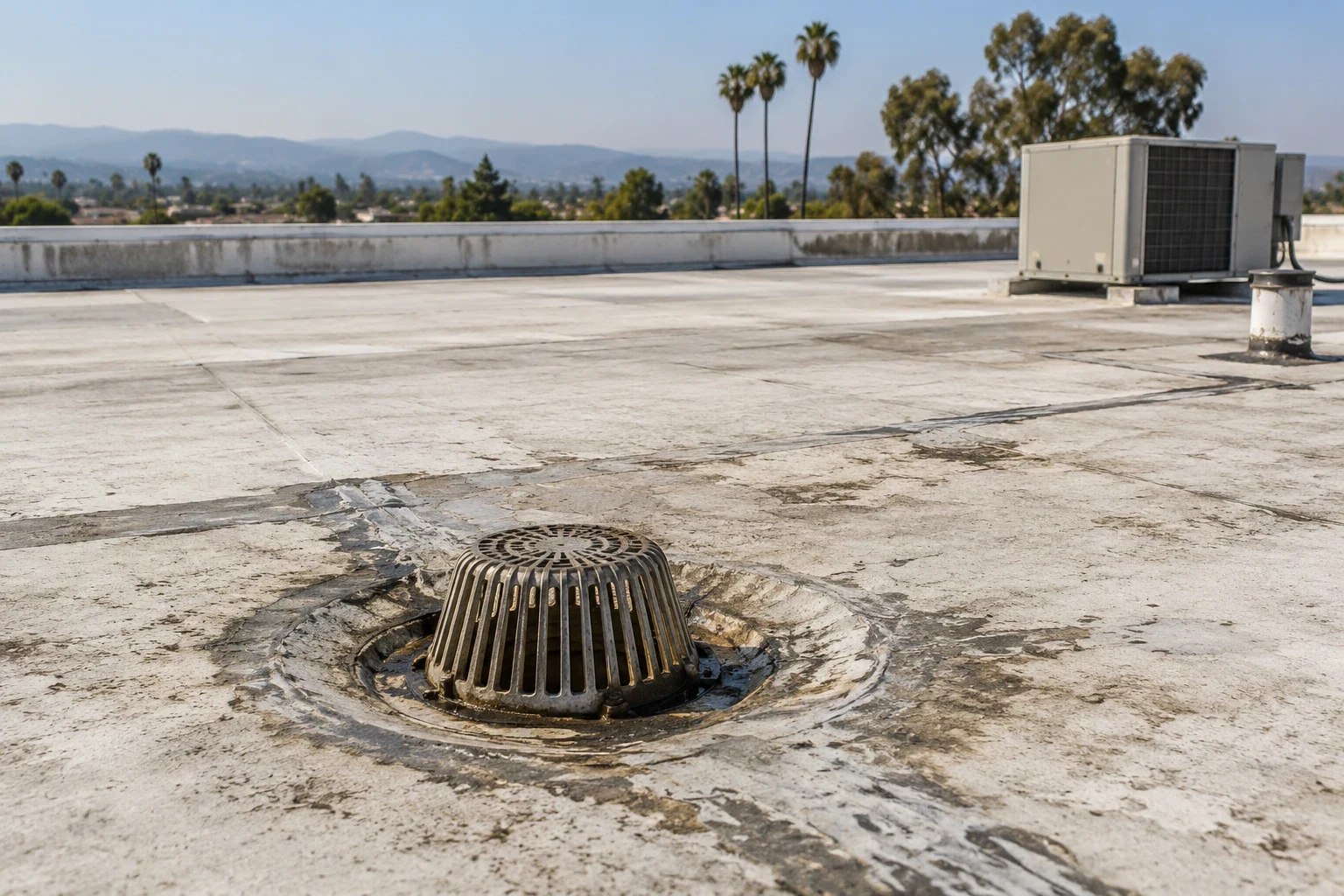
Parapets, curbs, expansion joints, and drains break the roof plane. We check base flashing, cant strips, counterflashing, clamping rings, and the substrate behind a loose termination. At the drain, the plies must fit the bowl without narrowing the water opening. A patch on the field cannot correct a failed curb or a blocked pipe. We mark the connection that needs work, then separate roofing details from plumbing or sheet-metal scope if those trades are required.
In Riverside's Sycamore Canyon project area, industrial and office development lies alongside I-215. For an occupied property there, a drain or curb repair may need a set-down zone that does not cross staff or delivery circulation. We plan access around that movement and protect the interior below the active work. Drain and scupper work and edge metal repairs can be included where the inspected assembly needs them.
Hot asphalt and torch application call for a planned fire-control method. Before mobilization, we identify the permitted method, fire watch, extinguishers, equipment intakes, and the area beneath the work. If building operations prohibit open flame or hot kettle placement, the product specification may require a cold-applied detail instead. That choice affects labor sequence, material staging, and weather protection, so the work order records the method before the crew begins.
Repair, recover, or rebuild:
A local repair fits when the plies remain bonded and dry around the defect. Recover may be possible when the assembly, drainage, edge height, and project requirements allow another layer. Replacement becomes more practical when moisture or repeated failures extend through the field. We compare options against the same roof-zone index and list which existing layers remain under each approach. The manager can then approve a defined repair or ask for testing before committing to wider removal.
Modified bitumen has a sheet-applied construction; modified-bitumen roofing uses different installation details than a built-up field. EPDM provides another roof-system comparison. A recover evaluation checks layer limits and edge conditions, while replacement planning defines tear-off and rebuild. Towngate-area service can be arranged around tenant access, loading, and the approval packet.
Budget and schedule depend on aggregate handling, number of roof layers, disposal access, test openings, and how much flashing or edge metal joins the repair. If insulation is wet, removal can extend beyond the visible blister. We list the inspected boundary and identify the allowance that needs confirmation after tear-off. The approval packet then separates known scope from concealed conditions and gives the property manager a point to review before work proceeds beyond the marked area.
Commercial Roofing Questions
Can gravel hide a built-up roof problem?
Yes. We clear or lift material at a marked spot and check the cap and plies beneath it. The observation determines whether the repair stops at the surface or continues into the assembly.
When should a built-up roof be cored?
A core is useful when layer count or insulation moisture changes the choice between repair, recover, and removal. We agree on the location and restore the opening after inspection.
How do you repair a blister?
We inspect bond and moisture around the raised area, then choose a repair that ties into sound plies. If similar blisters span several zones, we compare a broader scope.
Will new aggregate fix a damaged cap sheet?
Aggregate restores surface protection after the cap or underlying detail has been repaired. It does not replace the bitumen or reinforcement that carries the waterproofing.
What affects built-up roof replacement timing?
Tear-off volume, material staging, fire controls, weather protection, and drain or curb details set the sequence. We identify the access route and areas that need daily dry-in.
Commercial Roofing Moreno Valley handles commercial roof repair, replacement, inspections, coatings and maintenance across Moreno Valley, Riverside and the Inland Empire. Request a roof assessment or call 555-555-5555.
Related Roofing Work
Mark the built-up roof layers
Send roof plans, prior repairs, leak zones, access restrictions, and approval requirements. We will map the visible assembly, identify useful test locations, and separate surface, flashing, and layer work in the scope.
Request a Roof Assessment555-555-5555