A Redlands roof request needs a building identifier, a marked area, and an observation that can support the next work order. The City development inventory includes commercial, retail, hotel, and industrial project groups, while completed entries and proposals have different statuses. We inspect the property in front of us, record the roof zone, and match photographs to the plan before defining a repair boundary. That record gives the manager a basis for routing an approval without treating a citywide listing as evidence about one roof.
Redlands' completed commercial examples include packinghouse adaptive reuse and downtown parking with retail space. Those uses can frame a maintenance conversation, but the building's actual assembly and current condition come from inspection. Regional heat, winter rain, and Santa Ana winds affect safe scheduling around exposed roof work. Moreno Valley, CA is also within the Inland Empire forecast area, so we use those seasonal patterns as planning context, never as proof of damage or design load in Redlands.
Condition record: connect the report to a roof zone
A ceiling stain or active drip identifies a place inside the building, not automatically the roof opening above it. We compare the report with roof drains, seams, penetrations, edges, and prior patches in the corresponding area. On a property with separate additions or repair histories, the roof plan should identify which portion is under review. We record what is visible, which tests are appropriate, and what remains uncertain before pricing a permanent correction.
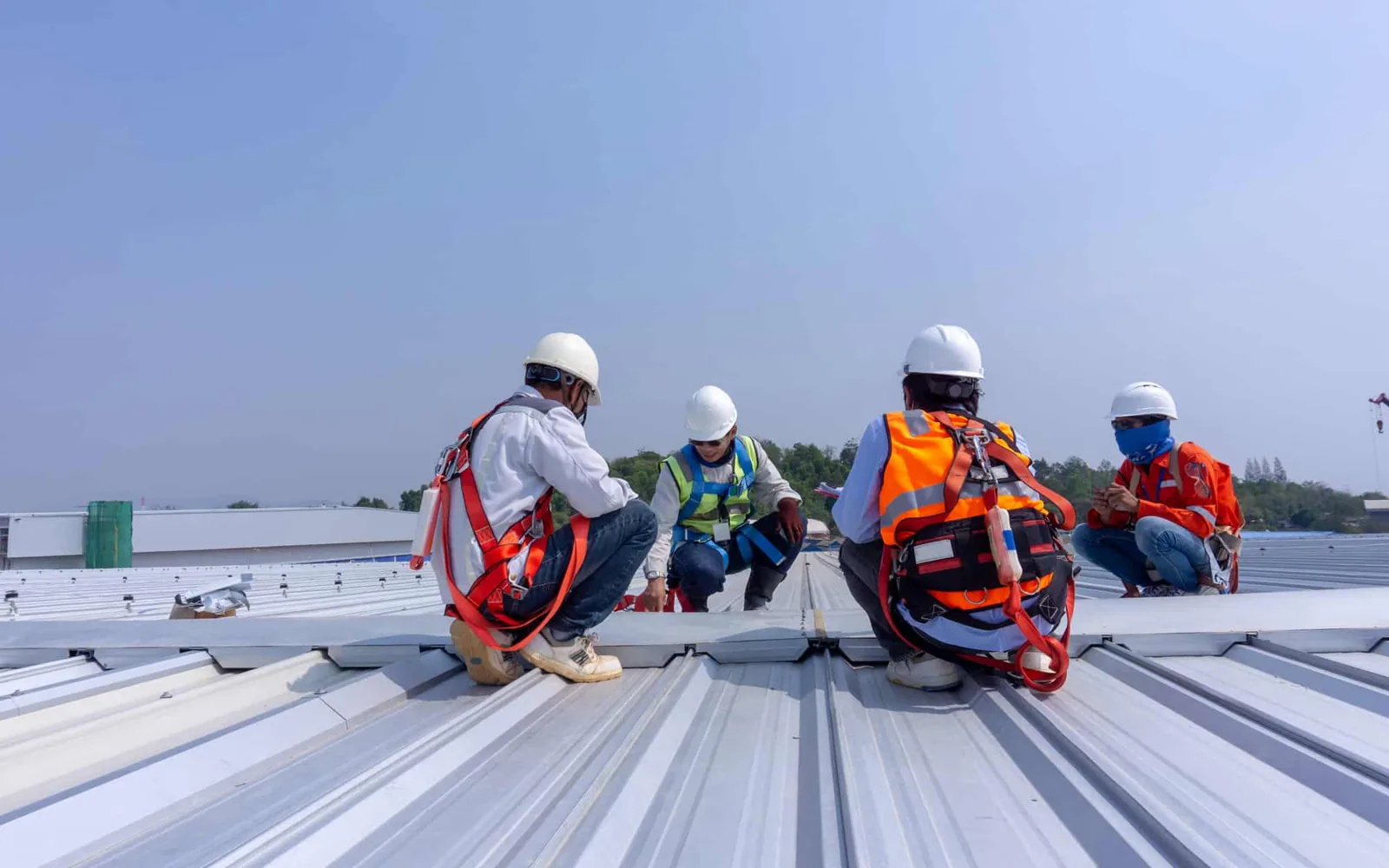
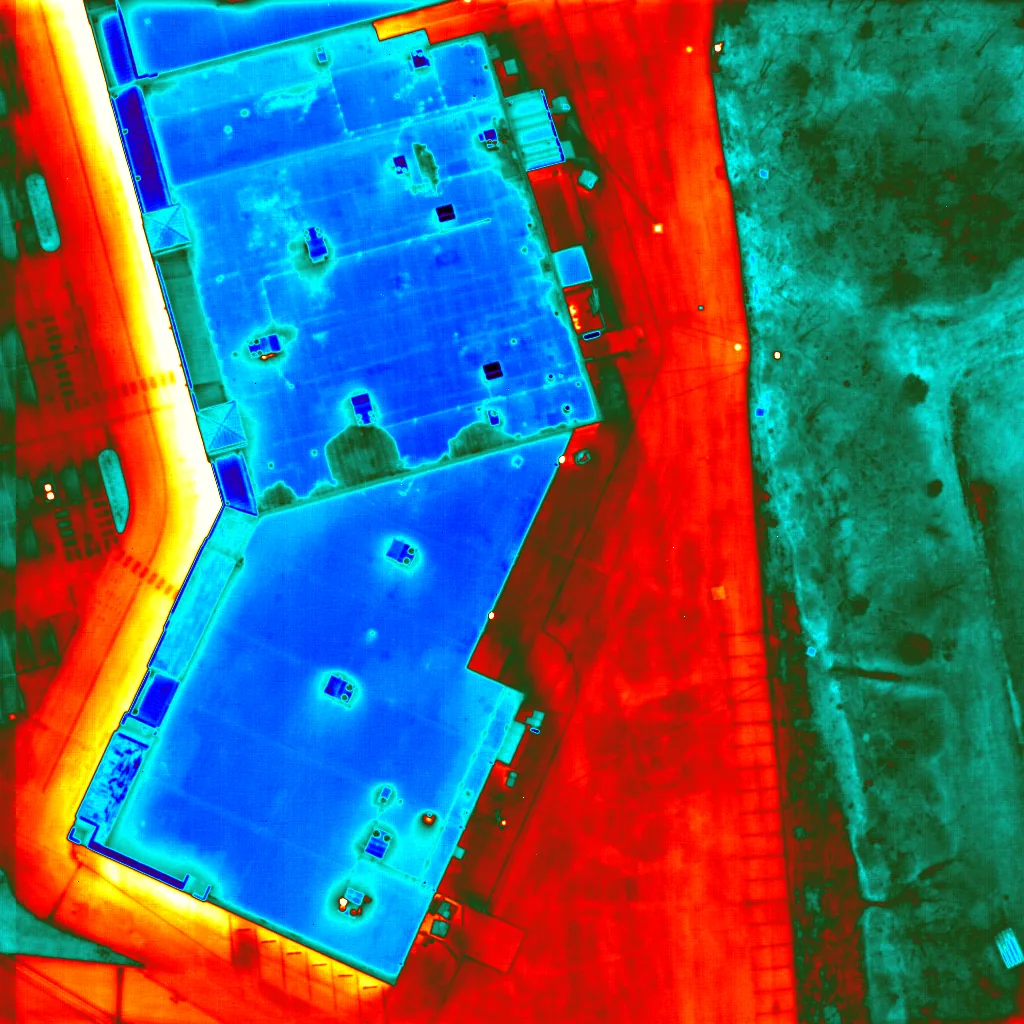
The first visit produces more than a list of defects. We mark each observation on a plan, label photographs by roof zone, and distinguish a confirmed repair need from an area that needs a closer moisture check. A commercial roof inspection can establish that baseline. If readings indicate wet insulation, a targeted infrared moisture survey can help define how far the affected material extends before removal limits are approved.
Redlands' inventory separates completed commercial projects from proposals such as shopping-center and dealership developments. We preserve that distinction in our own record: an announced or proposed project does not establish that construction is complete, and it says nothing about its eventual roof. For an existing property, the next approval should rest on its observed membrane, flashing, drainage, and moisture evidence, with any added investigation clearly identified.
Repair boundary: define what stays and what changes
A patch has a useful limit only when the surrounding material can support it. We check whether membrane edges are secure, seams remain bonded, and adjacent insulation or cover board is dry and firm. At a penetration or wall transition, the repair boundary may need to include flashing that no longer ties into the field membrane. The scope states which components are included and what condition would trigger a stop for owner review.
When a moisture concern sits beyond the visible symptom, the approval packet should identify the proposed check before work expands. We document test locations and results, then compare the marked area with the repair quantity. The owner can approve a defined allowance or request a separate scope change if opening the roof reveals additional wet material. A written roof condition report keeps the observation, photographs, repair limit, and follow-up recommendation together for the next budget decision.
Commercial work in Redlands can involve different property uses, including retail and industrial project categories listed by the City. We do not assume those buildings share a roof assembly. A Loma Linda property or a Colton assignment receives its own inspection record as well. Separate roof-zone indexes help a portfolio manager avoid transferring quantities, access notes, or repair conclusions between sites.
Weather sequence: protect open work and closeout
Heat, winter rain, and regional Santa Ana winds can affect when a roof can be opened and how temporary protection is sequenced. We review the forecast for the work window, identify the area that can be completed and sealed during the shift, and keep adjacent operations in view. The weather guide describes regional patterns; it does not tell us whether a Redlands roof suffered damage or what wind design a project requires. Those decisions come from observed conditions and the approved documents.
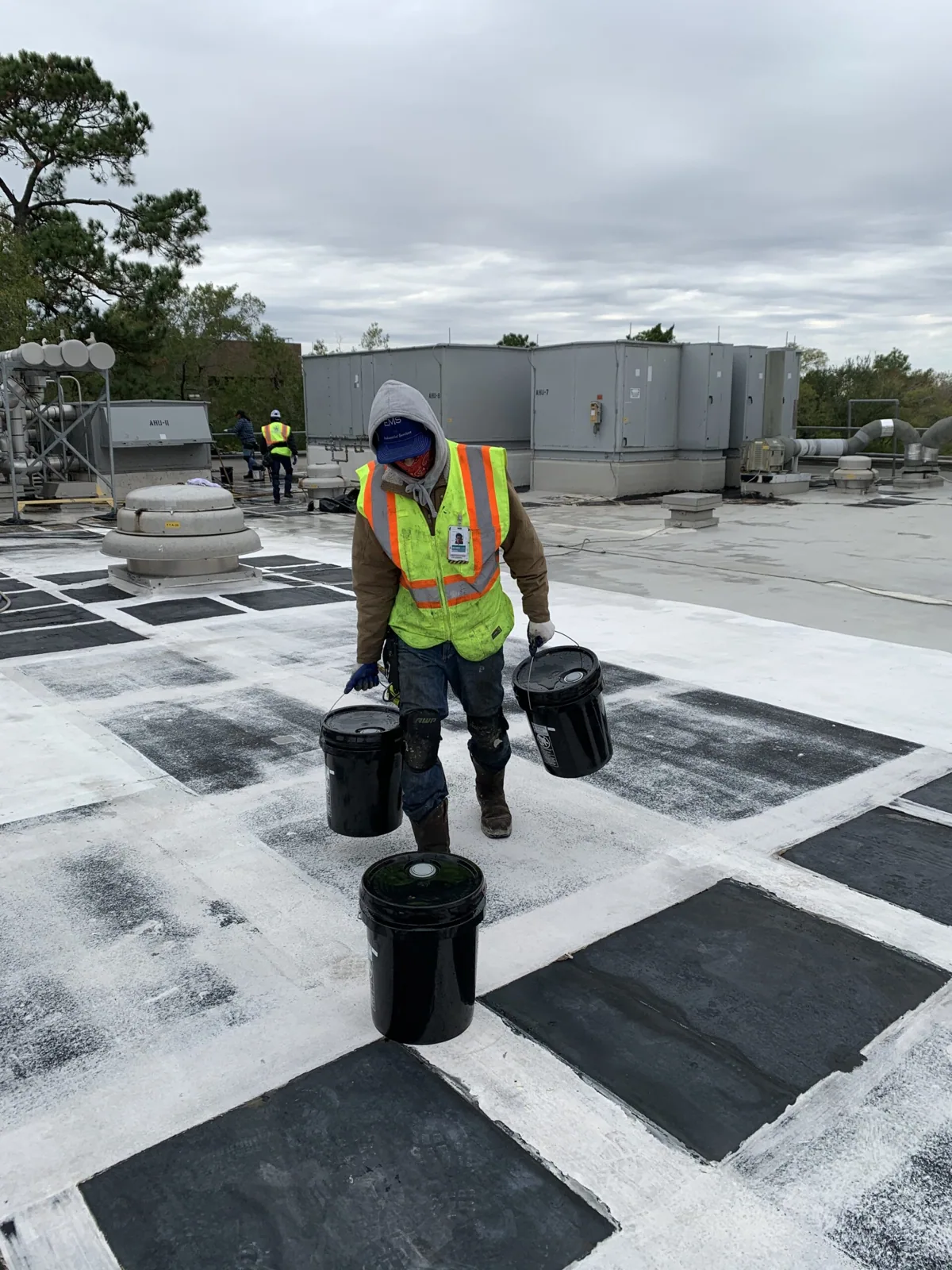
For a small repair, the sequence may be to remove only the failed material, prepare a sound boundary, install compatible components, and verify the tie-in before leaving the area. Broader work can require staged removal and a planned dry-in at each stopping point. A wind-related roof review focuses on lifted edges, displaced metal, loose flashings, and other visible changes without assuming that wind alone explains a leak.
We record the open area, temporary cover, completed repair, and any remaining exposure in the work record. If weather interrupts the planned scope, the manager should have a marked roof area and a clear follow-up action rather than a vague note that work is pending. This evidence supports access coordination and lets the next crew resume at the right roof zone.
Options: compare repair, restoration, and replacement
A repair is appropriate when the affected area is limited and the surrounding assembly can accept a compatible tie-in. A restoration or coating may be considered when the existing roof is suitable, adhesion and moisture conditions are acceptable, and details can be renewed as part of the work. Replacement is evaluated when deterioration, wet materials, failed transitions, or repeated repairs make a local correction unreliable. We document the condition and explain which findings support each option.
We also compare access, staging, removal, disposal, temporary protection, and the effect of occupied operations. These factors can change labor and duration even when the marked roof area is similar. The estimate should identify quantities, included details, exclusions, and approval points. If replacement is in view, a commercial roof replacement scope should show how drainage, edge metal, penetrations, and transitions will be addressed with the new system.
Keep the work-order trail with prior repairs, leak dates, roof plans, and any available maintenance records. A current TPO assembly review is useful only if the installed system is confirmed; we do not infer membrane type from a project listing or building use. When the roof construction is unclear, we inspect and document what is present before selecting materials or defining a warranty-related requirement.
Approval packet: keep the next decision specific
A manager can route work faster when the approval packet separates what we observed, what we recommend, and what still requires confirmation. We include the roof-zone mark, photo references, repair boundary, material scope, access requirements, and any test or owner decision that could change the quantity. If a project has multiple reviewers, we identify the approval point before exposing the roof so an unresolved change does not leave an open area without a decision.
For properties with a planned capital cycle, the inspection interval can be tied to the condition found, recent repairs, and seasonal exposure. The next check may confirm that a repaired seam remains secure or that a moisture question was resolved. We record the recommended timing and the condition to revisit, rather than assigning the same interval to every roof. Redlands' mix of completed and proposed commercial activity makes property-specific records especially important when a manager tracks several assets.
Share the roof plan, recent work orders, leak locations, access limits, and approval path when arranging an inspection. We will connect each finding to a marked area and give the owner a clear next action, whether that is a repair, a moisture test, or a broader assembly review.
Commercial Roofing Questions
Can a stain inside the building set the repair boundary?
No. We trace the reported area against roof details and moisture evidence, then mark the supported limit on the roof plan.
What does the Redlands development inventory tell us about a roof?
It provides commercial project context and status. A site inspection establishes the installed system, condition, access, and repair quantity.
When should we approve moisture testing?
Approve it when visible conditions do not establish the wet-material extent. We identify test locations and explain how results affect removal limits.
Can the work be split across roof zones?
Yes. We can define phase boundaries, dry-in points, and access needs so operations can continue while each approved area is completed and recorded.
What belongs in the closeout record?
Keep the roof-zone plan, labeled photographs, installed materials, completed repairs, open items, and the recommended follow-up check with the work order.
Commercial Roofing Moreno Valley handles commercial roof repair, replacement, inspections, coatings and maintenance across Moreno Valley, Riverside and the Inland Empire. Request a roof assessment or call 555-555-5555.
Related Roofing Work

Route a clear roof decision
Share the roof plan, recent work orders, leak locations, access limits, and approval path. We will document the marked area, observed condition, and next action in a practical scope.
Request a Roof Assessment555-555-5555