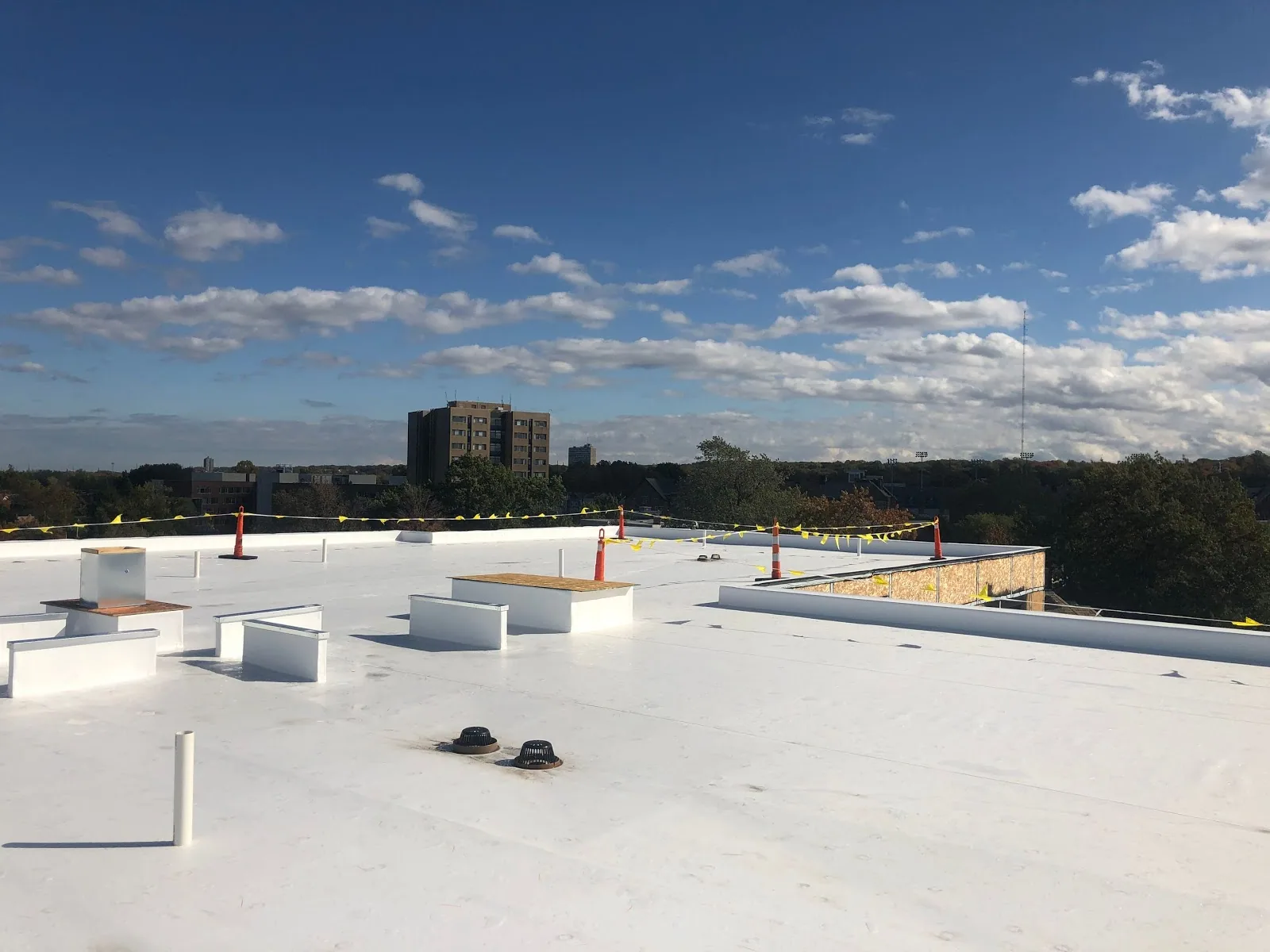
A repair estimate should show the damaged detail and the sound material the patch will join. Commercial Roofing Moreno Valley examines those positions during commercial roof repair in Moreno Valley, CA. We mark the defect, explain the preparation and show where the correction ends. An older patch or damaged curb can make the work larger than the visible opening. The manager can see why that additional preparation is needed before approving the repair.
Membrane holes, open seams, damaged flashings and selected metal-roof details can often be addressed within a local repair area. We choose the method for the installed material and its condition. Equipment damage, an open wall joint or a support problem may also need attention, and we explain which trade should handle it. The manager receives the roofing correction, the work needed before it and an appropriate check afterward, instead of a vague instruction to add more covering.
Material: identify the surface to repair
An older coating can hide the original sheet and interfere with a new patch. We compare the roof documents with the material on the building before choosing cleaners, adhesives or membrane pieces. Thermoplastic, rubber, bituminous and metal repairs use different preparation and joining methods. A color or invoice may help identify the roof, but we still check the repair surface. We explain which old treatment must come off and what usable material should remain beneath the new connection.
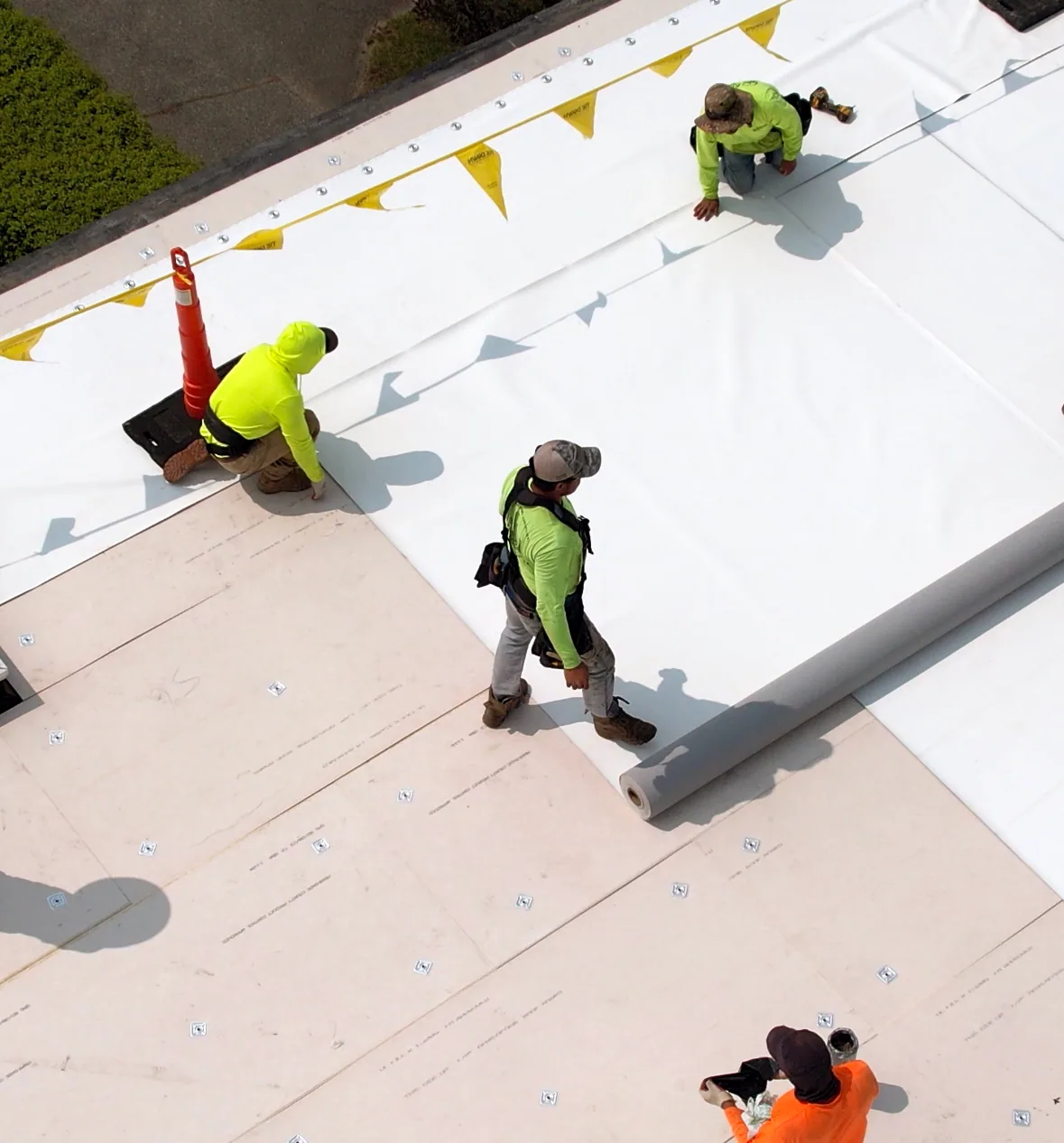
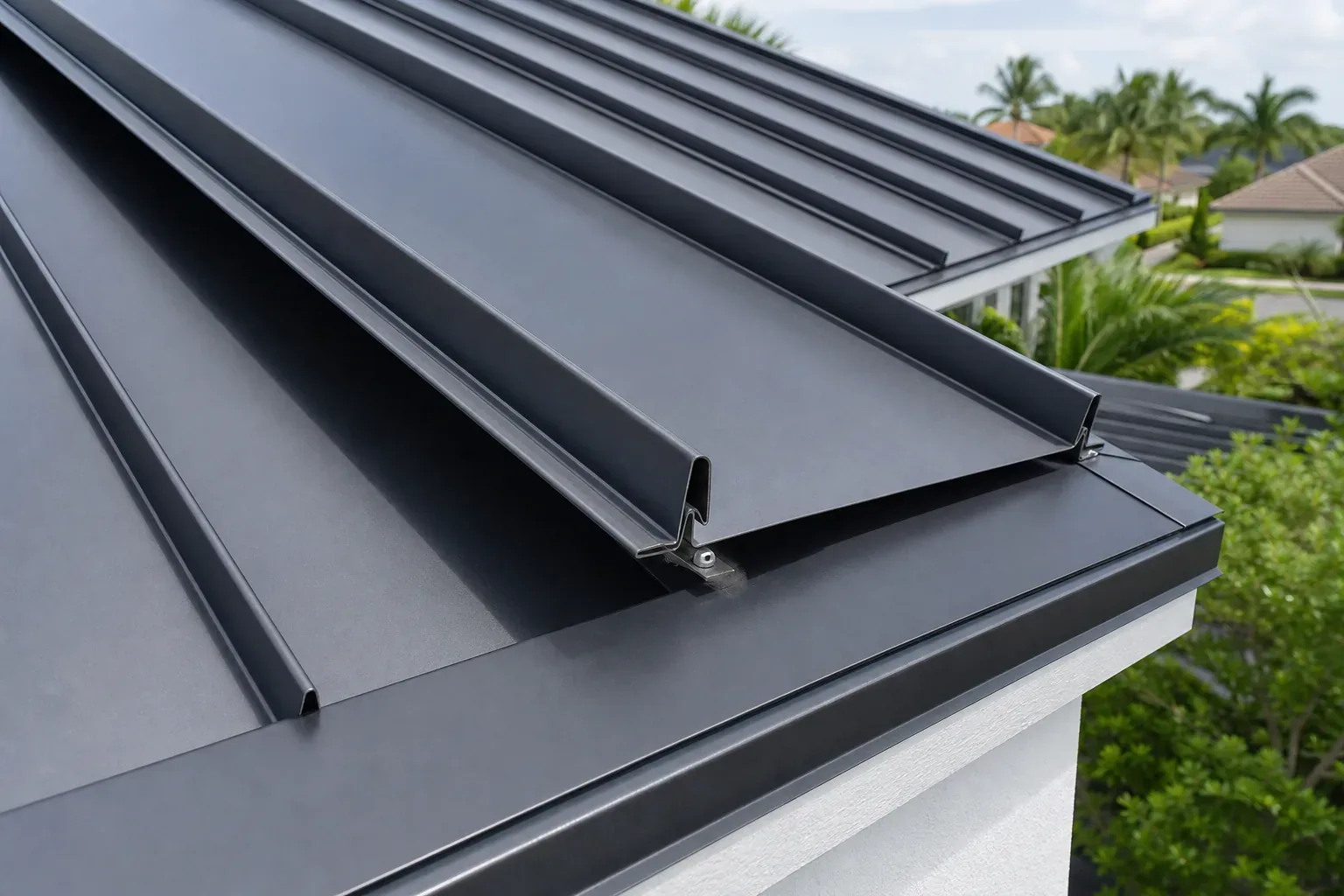
A PVC membrane repair needs suitable welding surfaces and procedures for the installed product. On a standing-seam metal roof, the panel, seam and movement detail need examination before sealant is selected. The repair material must fit both the roof and its physical detail. A loose support or unsuitable curb may need rebuilding first, and we explain that work before treating a compatible product as a complete repair.
Boundary: reach sound construction
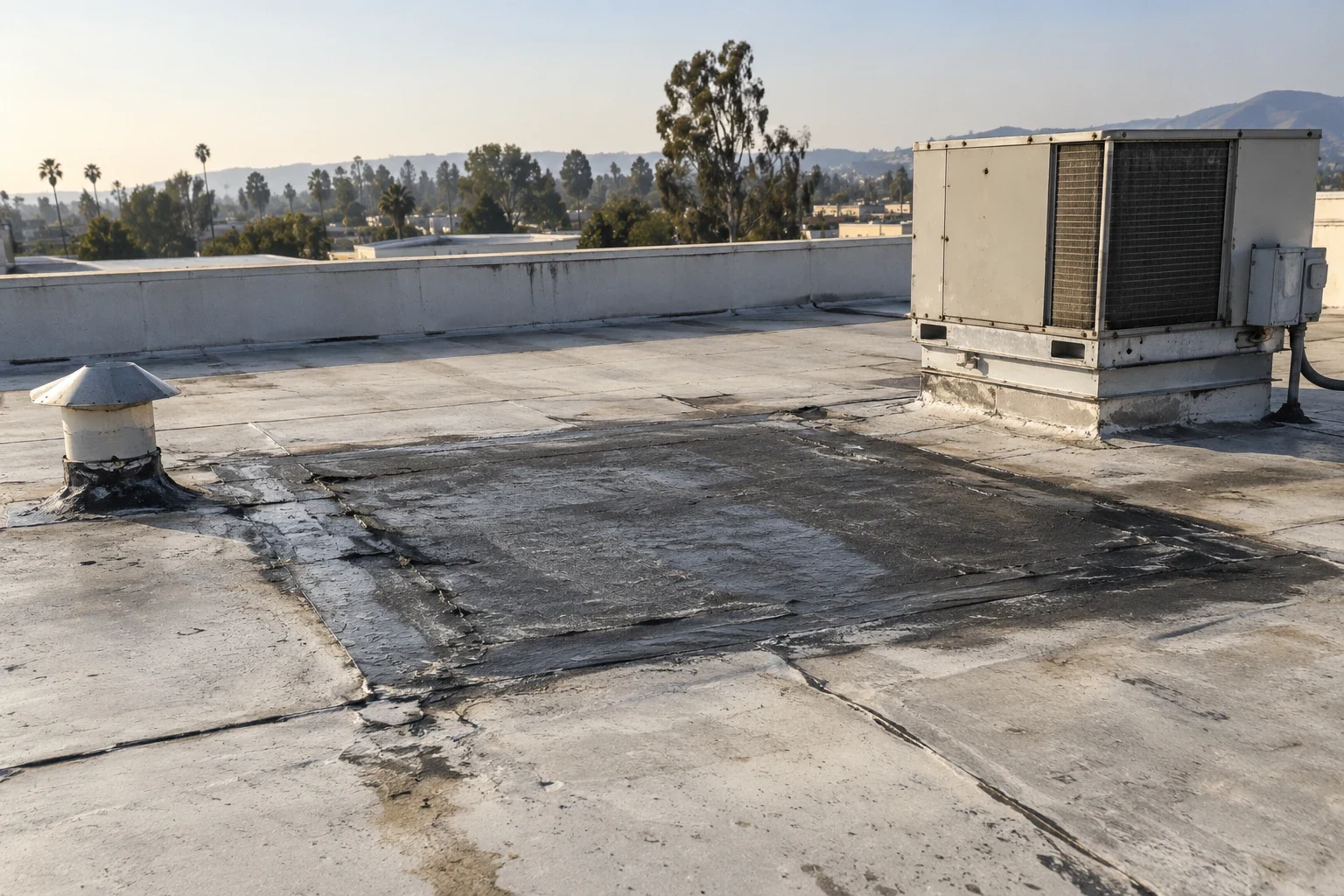
A patch placed beside a weak earlier repair may have no dependable edge to join. We inspect the surrounding material and mark the sound boundary needed for the correction. Cleaning can be enough at one position, while removal and local rebuilding may be necessary at another. The scope shows that difference with photographs and measurements so added preparation is a visible construction requirement, not an unexplained increase over the original defect.
The repair-focused field examination also locates seam intersections, corners and terminations that change the shape of the patch. A small hole close to a curb can need more room to finish its edges than an isolated puncture. We explain which detail is rebuilt and where the repair stops. The manager can approve that defined extent while another accessible concern remains a separately identified work item or monitoring task.
Junctions: coordinate wall and equipment work
Water through a damaged equipment cabinet or wall joint can reach a roof that also needs flashing work. We inspect both positions and explain the separate corrections. Repairing the membrane below cannot close an open enclosure above it. The wall or equipment contractor needs to leave a usable surface for roofing, with enough access to prepare and finish the junction. We coordinate those steps with the manager so related repairs reach a completed connection.
Moving a rooftop unit creates a new flashing location and may leave an old opening to rebuild. We mark both before placement and include closure of the abandoned position in the work discussion. The mechanical and electrical contractors handle operating changes, while an engineer reviews support where required. The roofer needs accessible surfaces for the weather connection. We agree on that sequence before the unit arrives, including any service interruption and restart arranged by the equipment team.
Water: retain the occurrence account
A reported drip provides timing and an indoor position to compare with exterior findings. We ask about weather, service activity and earlier repairs, then inspect the relevant roof and enclosure construction. A supported membrane defect can need correction while another moisture mechanism remains unresolved. The recommendation states the task addressed and the further examination assigned, preventing one nearby opening from automatically becoming an explanation for all water reported inside the building.
Where the manager needs a focused investigation of the reported entry, any testing is chosen for the material question and occupied conditions. Permission and protection are arranged first. Material openings show their local layers and receive practical closure; wider conclusions need sufficient evidence for the proposed extent. Thermal patterns, if useful, are interpreted and confirmed as appropriate rather than being treated as a direct map of all wet construction beneath the visible roof.
Setting: fit the work interval
Centerpointe Business Park includes industrial and office uses, and the Moreno Beach Drive Corridor has commercial properties near SR-60. A repair at a Centerpointe building therefore starts with questions about active yard routes and occupied rooms beneath the work. We ask where materials can enter and which roof positions are available. Extra handling or repeated setup is included where operations prevent the crew from reaching and finishing the detail in one visit.
Along the Moreno Beach Drive Corridor, the manager identifies entrances, occupied rooms and places that need protection during overhead work. A short repair can still need a clear material route and coordination with the equipment contractor. We explain those arrangements with the repair location and amount. The manager knows what the crew needs to complete the detail and can arrange access before preparation begins, rather than learning about an unavailable room or curb after arrival.
Conditions: protect the prepared area
A clean-looking surface can still be unsuitable for the selected repair product. We assess dryness, contamination and application conditions under the actual instructions. Inland Empire summer heat affects exposed-surface work and handling, while rain and regional wind can alter the usable interval. The crew plans a manageable operation with protection and a completed detail available. The record explains a revised sequence where the receiving surface or component work prevents the intended method from proceeding.
A repair at a drain is defined by the defect corrected. We separate clearing debris from replacing a failed junction or rebuilding field levels that affect water movement. Where a proposed alteration changes the assembly or designed drainage, the applicable project review is retained. Moreno Valley's building division provides submission and inspection guidance for its authority. We identify those requirements for the actual task, keeping a local repair decision separate from an unsupported blanket code or assembly assumption.
Follow-up: test the correction's purpose
The closeout photograph locates the completed detail beside the earlier finding, and the work record identifies components and preparation used. A check is selected for the installed repair and suitable circumstances, with another follow-up interval where observation is needed. Stopping an indoor symptom temporarily is useful information but does not alone demonstrate that every contributing mechanism has been resolved. We compare later reports with the specific correction and any activity occurring after it.
Preparation can expose more deterioration than was visible at the first visit. We photograph the newly uncovered position, measure the repair and explain the added cost and protection needed while it is unfinished. A wider replacement or restoration is considered separately when the findings support it. After the local repair, we leave its location, components and care requirements with the work information. Any upper wall or equipment repair still needed remains clearly identified for the appropriate contractor.
Commercial Roofing Questions
Why can preparation cost more than the patch material?
Old material may need removal, and the detail may need rebuilding before a patch can join it. We show those preparation tasks with the measured repair area.
Can one visible defect explain water in several rooms?
Compare the drip locations with roof, wall and equipment findings. A visible defect may need repair while a different water route still needs investigation.
What should another trade finish before roofing returns?
Leave the repaired curb, wall or equipment surface accessible for roofing. We explain the preparation needed before the unit is placed or the junction becomes difficult to reach.
Does a successful patch establish the whole roof's remaining life?
The patch addresses its inspected position. A larger roof or remaining-life decision needs enough findings across the assembly being considered.
Commercial Roofing Moreno Valley handles commercial roof repair, replacement, inspections, coatings and maintenance across Moreno Valley, Riverside and the Inland Empire. Request a roof assessment or call 555-555-5555.
Related Roofing Work
Show us the damaged detail
Share the roof position, recent repairs and any water indoors. Tell us the access restrictions and approval contact so we can inspect the material, explain preparation and price the finished repair.
Request a Roof Assessment555-555-5555