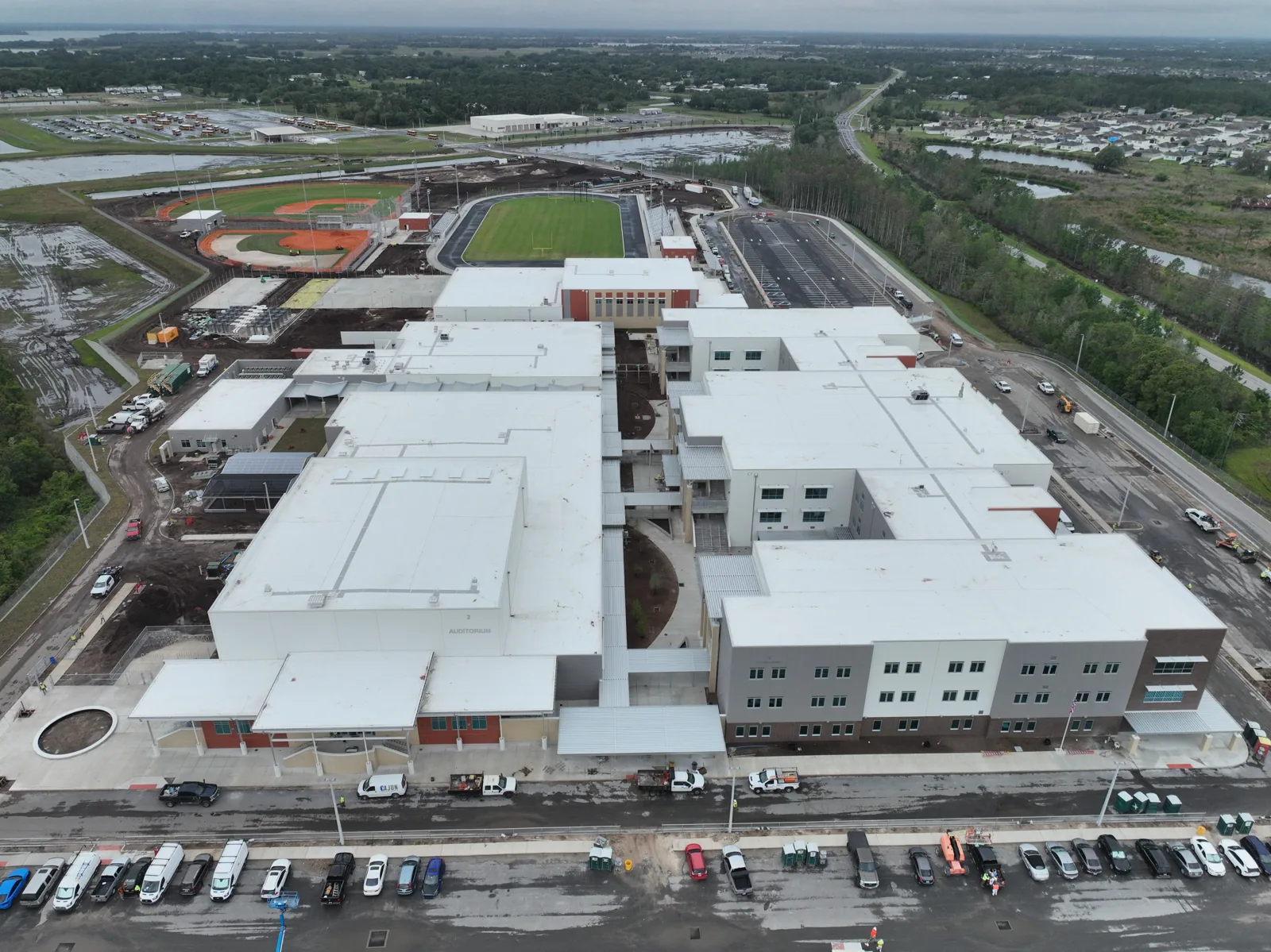
Which school, building, and room need the roof decision? A district request can span classrooms, offices, kitchens, gyms, and maintenance facilities, but inspection findings belong to individual roof areas. Commercial Roofing Moreno Valley works with school districts in Moreno Valley, CA to document those areas, access limits, and next approvals. City economic-development material identifies education alongside healthcare, March-area military facilities, and distribution businesses. That is part of the local institutional context; each school building still requires its own roof record and district contact.
Moreno Valley's SR-60 and I-215 junction connects district operations to neighboring markets, while the City maps Centerpointe Business Park and Moreno Valley Industrial Area separately. Those locations can orient equipment routing and service visits. They do not establish a school's access rules or roof assembly. We plan around the district calendar, site safety controls, and observed roof conditions, with the work record tied to the building and area approved for examination.
Campus map: assign each roof zone to a building
Start with the school or support building, reported room, roof section, and person authorized to coordinate access. A district property list may include classrooms, libraries, administration, gyms, food service, storage, and maintenance areas. Confirm the actual use and occupancy schedule with the school. Mark the affected room or route against the roof plan so inspection photographs can be tied to the right structure and work order.
A ceiling mark under a roof seam, curb, drain, skylight, or wall transition is a prompt for inspection, not a diagnosis. We examine the corresponding roof area and nearby details, then record visible findings and access limits. Keep multiple reports separate until field evidence shows whether they share a roof path. A school roof plan should identify the inspected area and any adjacent section that was not reached.
When district buildings are near one another, a route can group site visits, but each school still needs its own check-in, escort, room contact, and closeout record. A school building roof assessment can account for student routes and classroom protection without turning a district roster into a single construction scope.
District calendar: coordinate access with instruction
Confirm instructional days, summer programs, evening events, athletics, food service, and staff use before setting a work interval. School breaks may still include campus activity. The district contact identifies rooms, entrances, and routes that remain active. Roofing describes the section to be opened, expected duration, noise or odor where relevant, and protection below so a principal or facilities manager can coordinate the actual task.
For a larger reroof, sequence work by building or roof zone with a safe stopping point and temporary protection at each phase. Keep student and staff egress clear, and identify lift or material routes before equipment arrives. If a gym or kitchen must be unavailable for part of a day, name the affected space and timing in the proposal. District staff can then coordinate activities without relying on an assumed school break.
Summer heat in the Inland Empire affects safe field hours, while winter rain and regional Santa Ana winds may change the protection sequence. Those conditions inform scheduling; current roof evidence determines whether work is needed. The facilities team can compare a weather contingency with the school calendar and approved access plan.
Inspection: trace the report and retain clear evidence
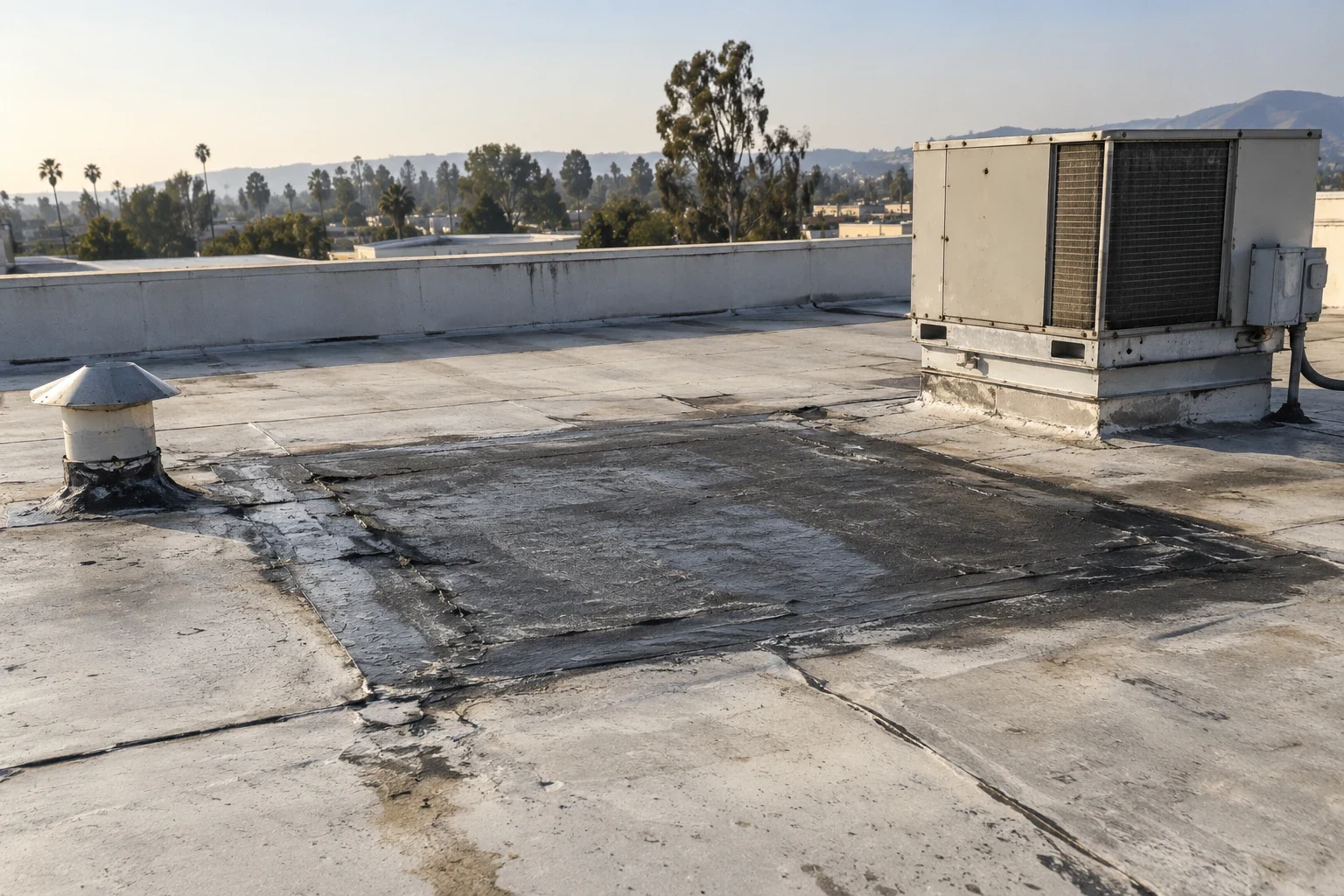
Record the room, date, whether water is active, recent repairs, and any equipment or interior change. Inspect seams, penetrations, skylights, curbs, drains, edge details, and adjacent transitions in the matching roof zone. A stain can appear away from the entry point. We mark the view on the plan and show a close detail with enough surrounding context for another reviewer to locate it.
A commercial roof inspection can separate visible conditions from questions that need testing. If moisture may extend into insulation, define the test or approved opening before pricing removal. For active leaks, repair work should identify the supported detail, protection, and any remaining condition. Emergency response runs around the clock, including weekends and holidays; record immediate stabilization separately from the permanent correction.
At a school with multiple additions, identify the assembly at each roof area. One wing may have different layers or repair history from the gym or administrative building. Do not infer a district-wide system from one inspection. The report says which buildings and sections were reached so staff can route any needed return visit.
Trade coordination: protect rooftop and room interfaces
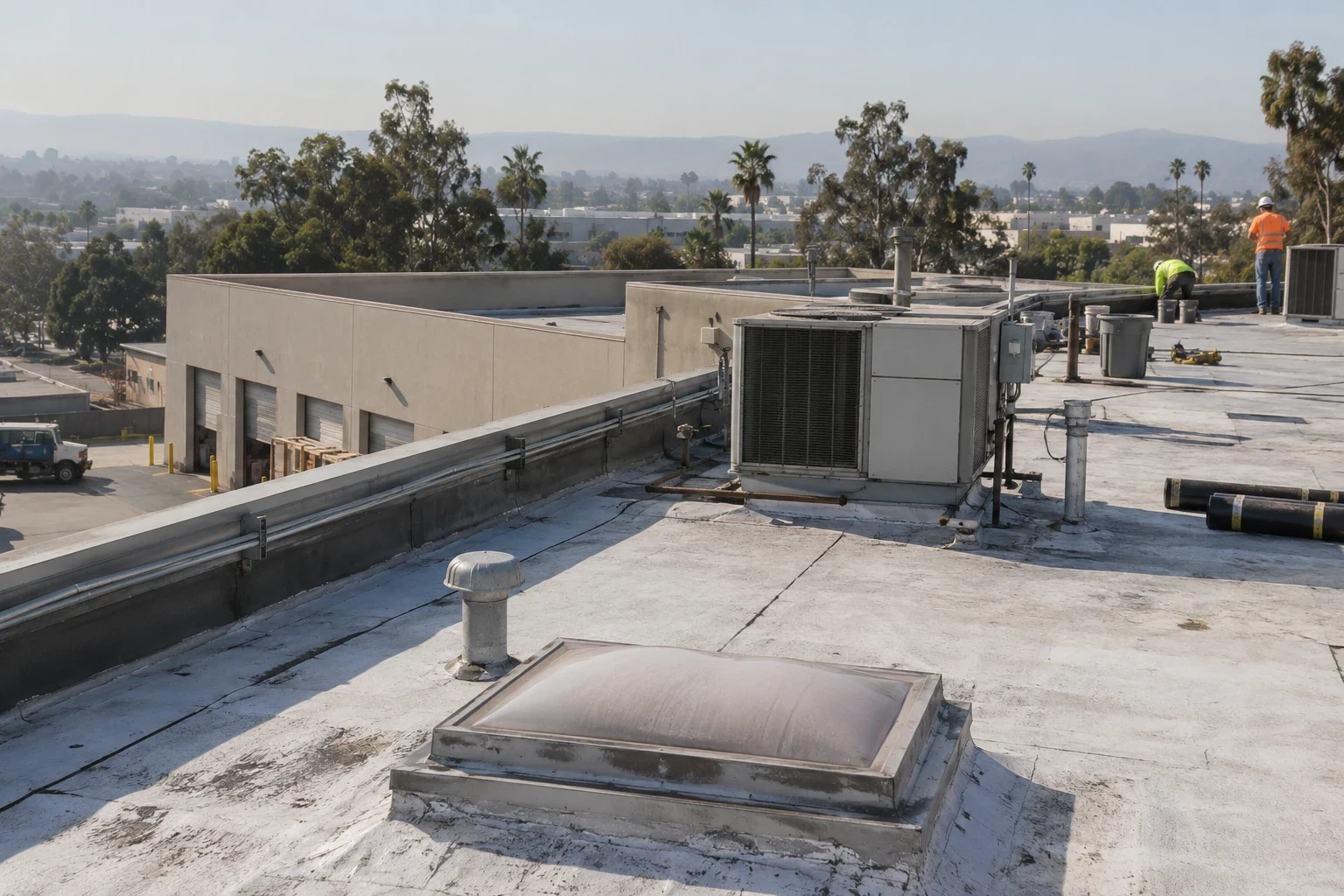
Rooftop HVAC, exhaust, electrical conduit, and communication equipment can affect flashing and access. Confirm whether a service contractor must shut down or move a component. The district's qualified trade controls that equipment. Roofing identifies the curb or penetration preparation required and completes the weather connection after the surface is ready. If an interior protection plan is needed, identify who provides it and when the room can be released.
Material compatibility depends on the installed roof system, not the school building label. A TPO roof area and a modified-bitumen section need different repair details and preparation. We verify accessible construction and note any layer or substrate question that requires testing. An estimate should cover seams, penetrations, drains, edges, insulation work, and closeout checks within the approved boundary.
District staff may coordinate with a city or public purchasing department. A public agency can have a separate approval route, while a healthcare system has different occupant controls. Those workflows do not replace the district's own building plan, access contact, and authorization.
Approval packet: define scope and additions
Compare bids by school and roof section, with preparation, access, protection, materials, exclusions, and schedule shown clearly. A low total can omit room protection, equipment coordination, or testing needed to establish the repair limit. The district can review a measured scope against the affected building and calendar. Keep capital recommendations separate from immediate leak correction and routine maintenance.
If removal reveals wet insulation, deck damage, or another roof layer, take photographs and mark the condition. Pause at a safe boundary and request authorization before the added work expands. The variance states new materials, labor, protection, timing, and design review needs. This gives the district a traceable approval and prevents an unpriced removal from becoming the assumed repair scope.
At completion, retain the marked plan, photos, materials where known, repair details, and remaining observations with the building file. Note any classroom or access area that needs a follow-up check. The district can route closeout to facilities and finance without relying on a general campus status.
Local record: maintain a district roof history
Moreno Valley's employment map identifies Centerpointe Business Park and the Moreno Valley Industrial Area as separate areas, and the city sits at the SR-60 and I-215 junction. Those facts help plan regional travel and material routes. The school's gate, parking, roof hatch, and student paths require current site instructions. A district-wide calendar can inform timing, but each building's approved access window belongs in its work order.
A preventive maintenance visit can track drainage, seams, curbs, prior repairs, and inspection intervals at each school. Preserve a roof-zone index, report photos, approvals, and outstanding items by building. For service across the Moreno Valley area, send the school list, building plans, recent leak reports, access restrictions, and district approval path. We will return findings tied to the authorized roof zones and the next decision.
Commercial Roofing Questions
What information should a district include with a leak request?
Name the school, building, affected room, report date, and whether water is active. Include the roof plan, prior work, access contact, and student or staff route restrictions.
Can roof work be scheduled over summer break?
The calendar helps identify options, but summer school, events, and staff activity may still affect access. We define the roof zone, protection, and duration for district review.
How should a district compare scopes for several schools?
Use consistent fields for included buildings, roof sections, findings, materials, protection, access, and open questions. Keep condition and approval records distinct by school.
Who coordinates HVAC shutdown during school roof work?
The district or its qualified service contractor controls equipment shutdown and restart. We identify the curb or penetration work and schedule roofing after that handoff is ready.
What should be saved with a completed school repair?
Keep the marked plan, photos, approvals, completed detail, materials where known, and remaining observations with the building work order. Record room and route changes separately.
Commercial Roofing Moreno Valley handles commercial roof repair, replacement, inspections, coatings and maintenance across Moreno Valley, Riverside and the Inland Empire. Request a roof assessment or call 555-555-5555.
Related Roofing Work
Plan a school district roof inspection
Share the campus list, building plans, reported rooms, school calendar, recent work, access rules, and approval contacts. We will inspect approved zones and document a clear repair or evaluation scope.
Request a Roof Assessment555-555-5555