Which roof zone moved, and what still holds at its edge? That is the first record a property manager needs after wind has disturbed a membrane, flashing, or edge detail. We inspect the reported area, trace adjoining transitions, and match photographs to a marked roof plan. In Moreno Valley, CA, regional Santa Ana winds are a work-planning condition, not proof that a particular roof sustained damage. The inspection identifies what is loose, split, displaced, or intact before a repair boundary is approved.
The Centerpointe Business Park and Moreno Valley Industrial Area sit within a market connected by SR-60 and I-215. We separate an exposed opening from a scuffed surface or undisturbed seam. The manager receives the zone, evidence, and next decision: stabilize, test, repair, or widen the scope. A related ponding-water check may be warranted when wind-blown debris has affected a drain path.
Observed movement: locate the change
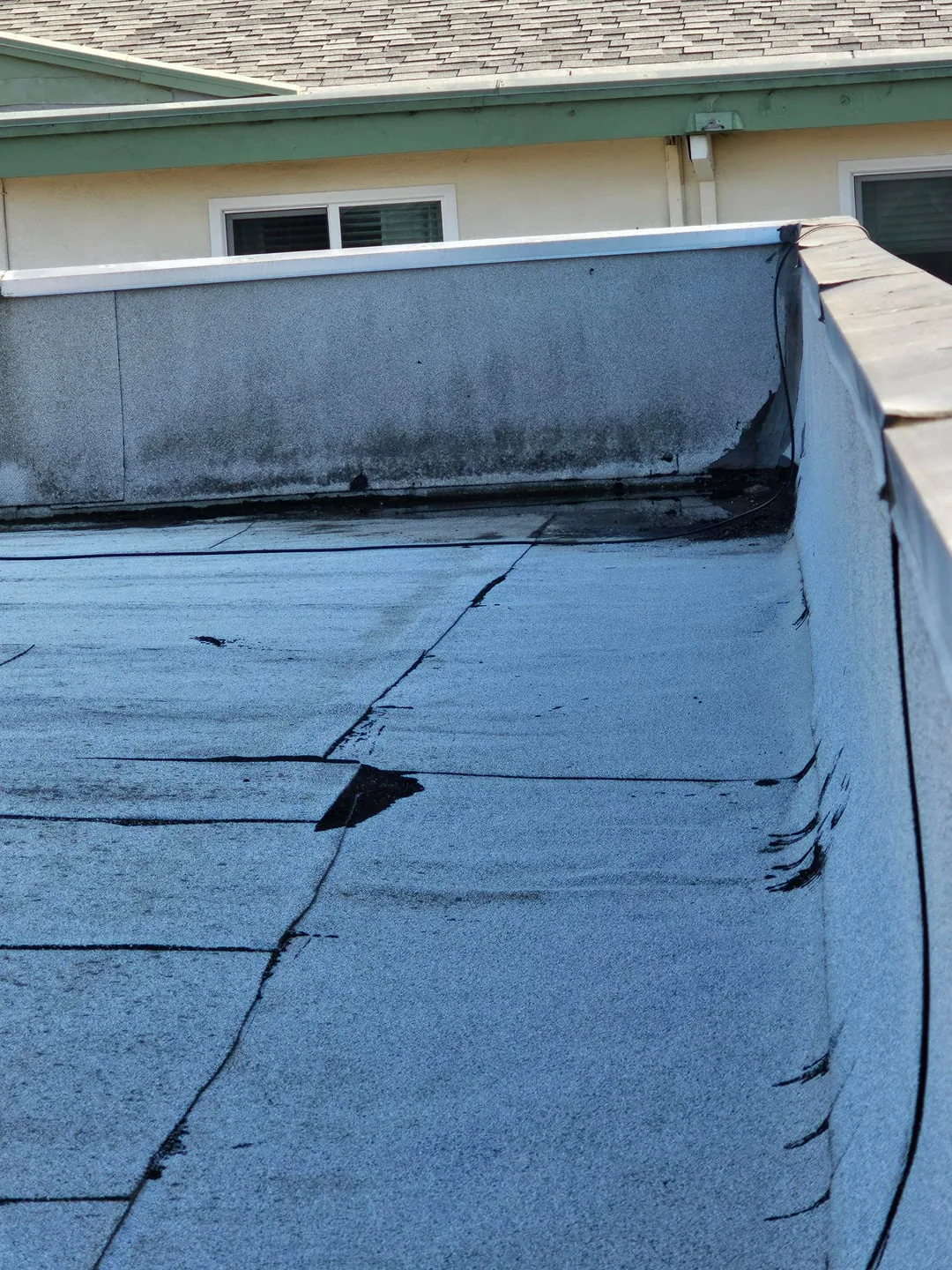
A raised corner, displaced cap, loose termination, or lifted flashing tells us where to look next, not how far the condition extends. We follow the detail in both directions and check attachment, adjoining membrane, and the substrate visible at the edge. A photograph taken square to the surface shows the opening; a wider view ties it to a curb, wall, drain, or roof perimeter. Each image carries its roof-zone mark.
Wind can move loose debris across a roof or drive an object against a projection. We record impact marks separately from a split in the membrane and note any sharp edge that could worsen the opening. Where an HVAC service route crosses the area, we identify whether the defect follows that route or a separate perimeter detail. The finding is not assigned to a cause merely because it appeared after a windy period. The repair order names the visible condition and the work needed to close it.
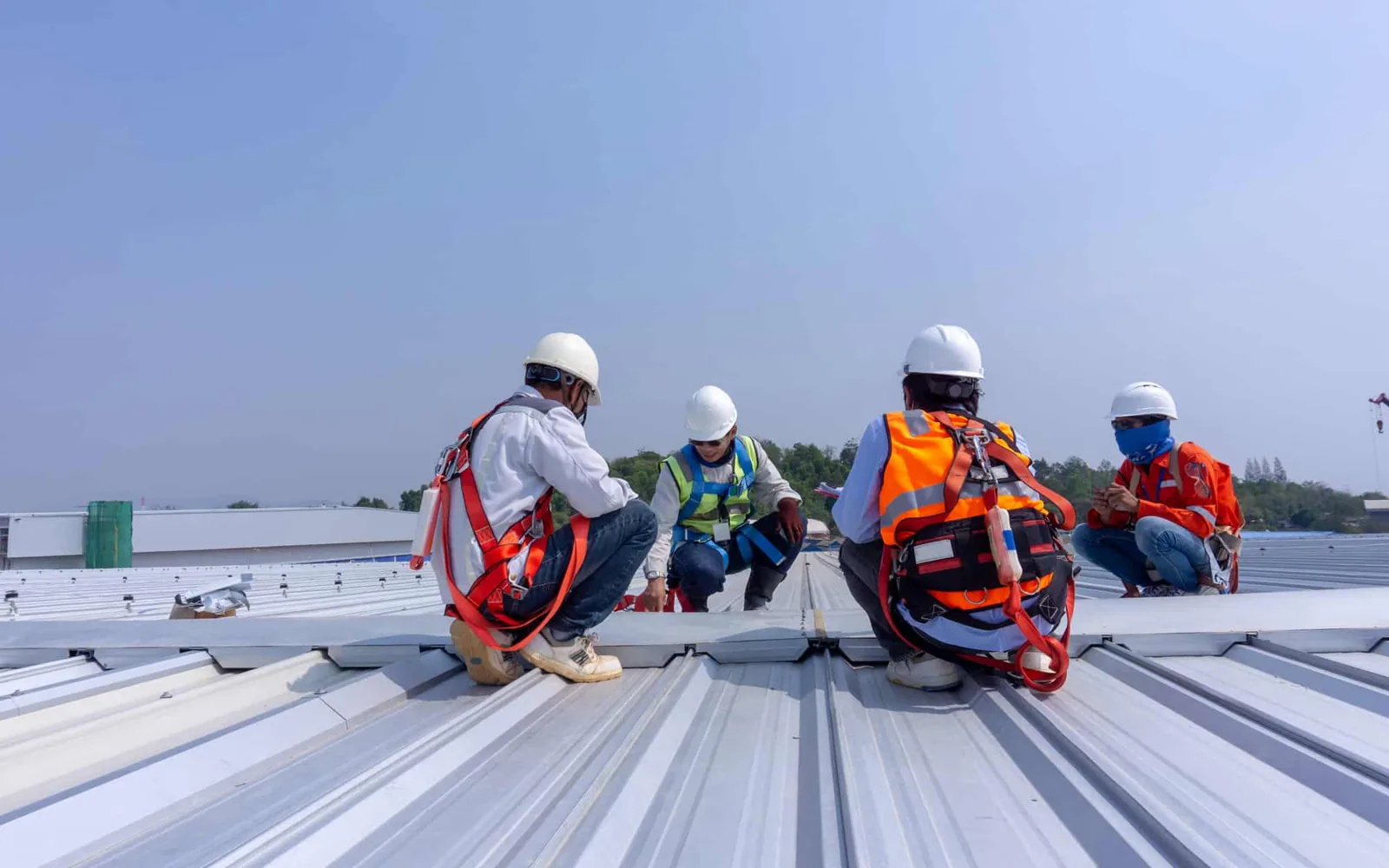
A hands-on roof inspection can extend beyond the reported leak when loose material or displaced metal raises a safety concern. We document each additional observation as its own item, not as evidence that every roof area has shifted. That distinction helps the manager authorize a limited correction while deciding whether a broader condition map is necessary.
Edge details: test the restraint
Perimeter conditions deserve close attention because membrane edges, metal closures, and wall terminations meet different materials. We check whether fasteners remain secure, whether the metal is bent or separated, and whether the membrane still turns into the detail without a gap. A repair that covers only the visible surface may leave the attachment problem untouched. The scope identifies the restraint, transition, and adjoining material to be repaired, with any concealed condition held for approval if it becomes visible during work.
Where edge metal or coping has shifted, we compare the affected length with nearby undisturbed runs. Reusing a distorted piece can leave a poor fit; replacing a component may require opening the adjoining membrane and rebuilding the tie-in. We describe which operation applies after inspection. edge metal and coping work can be coordinated with membrane repair so the finished boundary closes as one assembly. A separate flashing correction may be needed where the opening follows a wall or curb rather than the perimeter.
The work record identifies removed material, replacement connections, and any new condition. If fastener pullout or damaged substrate changes the repair, we document the scope change before continuing.
Water entry: map the interior report
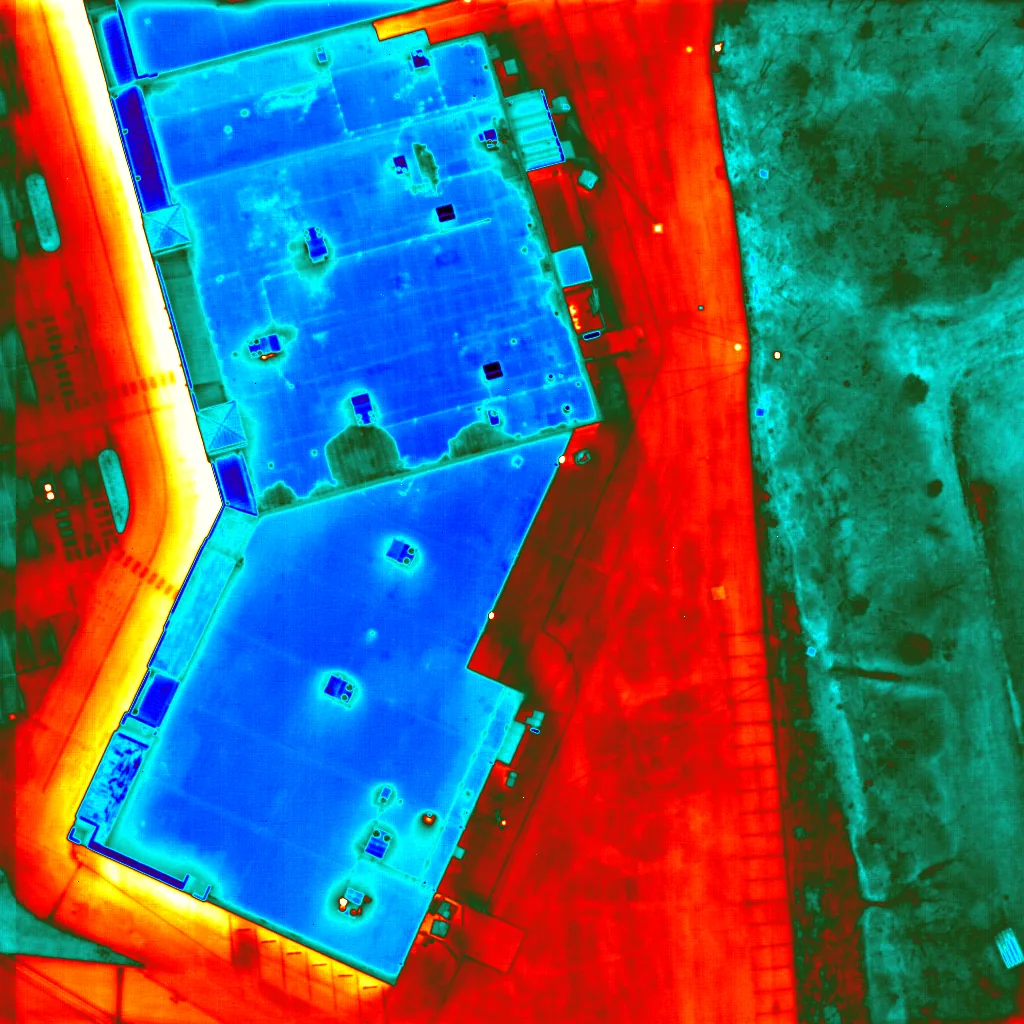
A ceiling stain does not locate the roof opening by itself. Water can travel along a deck, insulation joint, or structural member before appearing indoors. We compare the reported room with the roof zone above and examine nearby seams, penetrations, and drain routes. If the likely path remains uncertain, the record says which area needs moisture testing instead of treating the stain as a confirmed repair boundary. An infrared moisture survey can help define the extent when conditions support that method.
The Southern California weather guide describes winter rain and Santa Ana wind as regional field conditions. We use them to plan access and cover exposed work, then use the roof-zone inspection to locate any entry path. The manager receives the observation and checks still needed. A leak investigation can follow the evidence from the affected room back toward a roof-zone decision.
If permanent materials cannot be installed at once, we state what temporary protection covers and what remains exposed. The work order sets the return condition and follow-up check, keeping interim protection distinct from completed repair.
Access and sequence: protect active operations
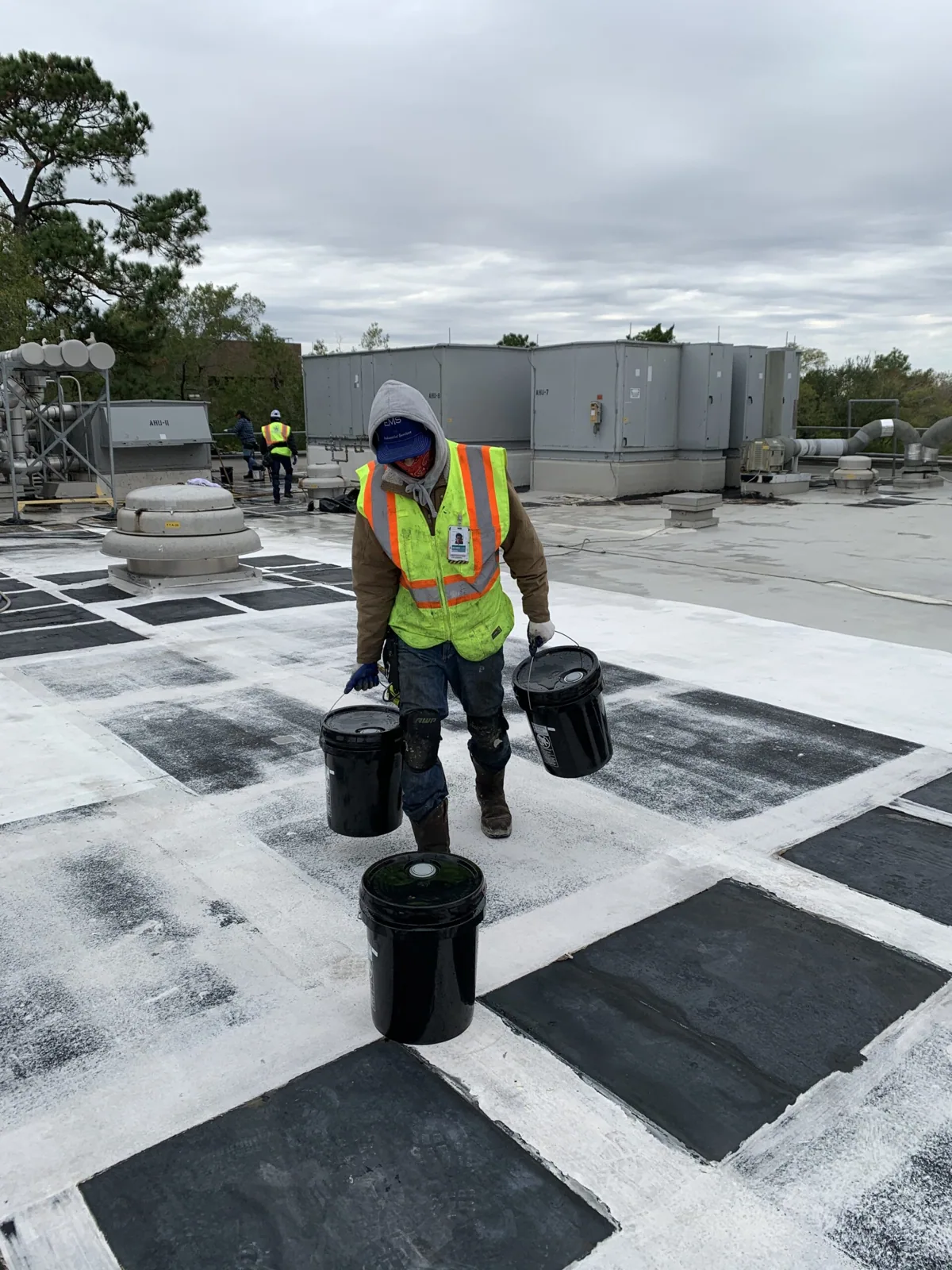
A wind-related repair can involve a lift, roof hatch, service lane, or occupied area below the work. We confirm where materials can be staged, how the crew will reach the zone, and which doors or routes must remain open. Centerpointe Business Park and the SR-60 Business Park Area are broad employment districts in the city inventory, not descriptions of any one building's access. At the property, the manager's current operating plan determines the safe route and work window.
Heat affects roof-surface work in Moreno Valley, while winter rain and regional wind conditions can constrain open-roof tasks. We schedule removal and closeout so the repair reaches a protected stopping point within suitable conditions. If a short window prevents completion of the permanent detail, the work plan states the temporary protection, the area covered, and the return step. The manager can align loading activity, tenant notice, and any other trade using the same roof access without treating coordination as a substitute for the roofing scope.
For a building with recurring access limits, we can place the observation on a photo-supported condition report and retain a marked roof-zone index. The record helps the next work order identify the same perimeter or penetration. It also shows whether later movement changes the condition, which is more useful than a collection of unlocated images.
Repair decision: set the boundary
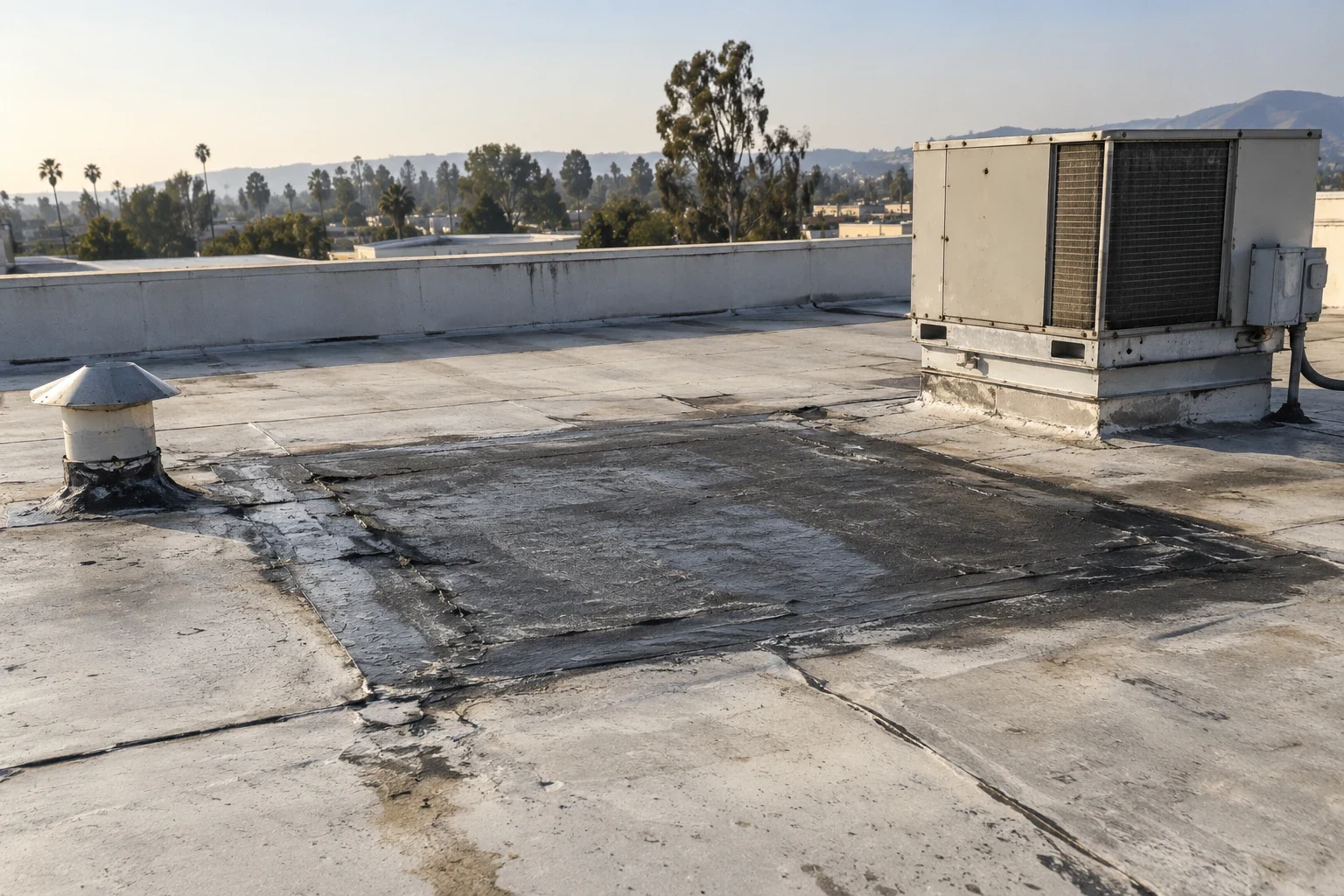
A local patch is appropriate only when the surrounding material can accept a compatible repair and the attachment detail remains suitable. We identify the membrane type when it can be confirmed, prepare the surface, and use a repair method compatible with that assembly. If the sheet is brittle, the seam is separating across multiple runs, or moisture testing finds a wider affected area, a patch may not resolve the condition. We show the evidence and compare localized repair with a larger correction or replacement planning.
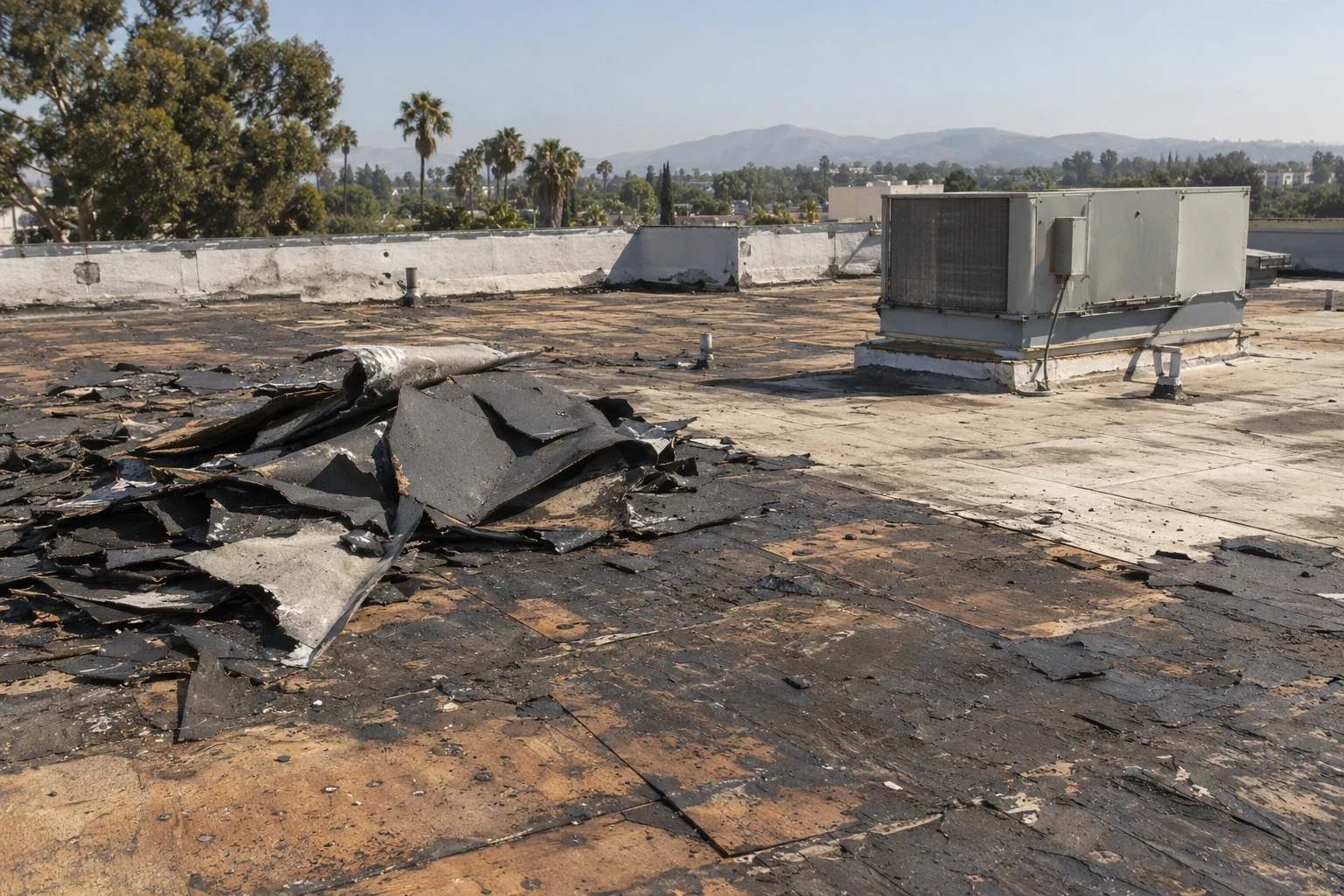
The estimate separates access, preparation, materials, metal work, and approved testing. Cost changes with repair length, transitions, staging, and operating constraints. If removal exposes damaged substrate or wet insulation, we photograph and measure it, then request approval before expanding.
For a sudden opening that leaves the building exposed, emergency roof response can be dispatched around the clock, through weekends and holidays. We record the immediate protection separately from permanent correction, then return under conditions suited to the specified material. The final work record identifies completed details, remaining limitations, and the follow-up inspection interval.
Commercial Roofing Questions
What should I send before a wind-related roof inspection?
Provide the roof plan, the room or equipment area affected, recent work orders, access limits, and the approval path. We will compare that record with the marked roof zone and identify what needs examination.
Does a new leak after high winds prove the roof was damaged by wind?
No. The timing narrows the investigation, but the roof detail and water path must support the conclusion. We document visible movement and separate it from conditions that require testing.
Can a loose perimeter be repaired without replacing the whole roof?
A localized correction may work when adjoining membrane and attachment remain serviceable. We inspect the full detail and set the repair boundary before comparing it with broader work.
How do you handle a repair that cannot be completed in one visit?
The work order identifies the protected area, remaining exposure, and return condition. A follow-up check confirms the permanent detail after the material can be installed safely.
Will the report distinguish roof repair from interior protection?
Yes. It separates the roof correction from any temporary measure below, notes who must complete each item, and gives the manager a status for each approval.
Commercial Roofing Moreno Valley handles commercial roof repair, replacement, inspections, coatings and maintenance across Moreno Valley, Riverside and the Inland Empire. Request a roof assessment or call 555-555-5555.
Related Roofing Work

Put the affected roof zone on record
Share the roof plan, recent work orders, leak locations, access limits, and approval path. We will inspect the reported area, mark related edge or flashing conditions, and return a repair scope with any testing or follow-up clearly assigned.
Request a Roof Assessment555-555-5555