A Corona roof decision should be based on the building's condition, not just its industry category. The City identifies construction, manufacturing, healthcare, and retail services among its largest industries, and provides commercial site-selection and available-space resources. That context can help a portfolio manager organize different property needs, but it does not establish the roof type, age, or current condition at an individual site. We start with the property plan, mark the inspected area, and connect each finding to the work order it supports.
Corona also has an economic-development manufacturing assistance program. If an owner is planning a business expansion, roof work may need to coordinate with equipment, exterior changes, or an occupied schedule, as confirmed by the project team. We document those constraints separately from roof observations. Moreno Valley, CA is in the Inland Empire forecast area, where summer heat, winter rain, and Santa Ana winds affect safe field timing. Those seasonal conditions guide planning for exposed work, not claims of damage or design loads in Corona.
Asset intake: identify the building and roof history
A useful intake record names the property, roof section, leak location, recent work, and person authorized to approve investigation. If a portfolio includes manufacturing, healthcare, retail, and construction-related properties, we keep each building's records separate rather than assuming that similar uses share a roof system. The first inspection verifies visible materials, drainage, transitions, and repair history. We note what is confirmed and what requires a plan review or test before a scope is priced.
For an existing building with an incomplete roof file, we prepare a condition map with photographs tied to a roof-zone index. A commercial roof inspection can document the initial condition, while a roof asset record can carry the finding into future work orders. The property manager can then distinguish a current defect from an older repair or an item that still needs approval.
A new commercial listing or site-selection resource describes real-estate availability, not the roof condition at a listed property. We examine the actual asset before estimating repair quantity, remaining serviceability, or replacement needs. If a project is still being planned, the approved building documents and field access determine what can be confirmed before construction or tenant occupancy.
Symptom analysis: separate the interior report from the roof finding
A drip in a retail space, production area, or medical office can disrupt operations, but the room where it appears does not necessarily identify the roof opening. We compare the reported location with drains, penetrations, seams, wall transitions, and previous patches above it. The inspection record names the observed defect and marks its position. If the water path remains unclear, we identify a moisture test or limited opening that can answer the next question.
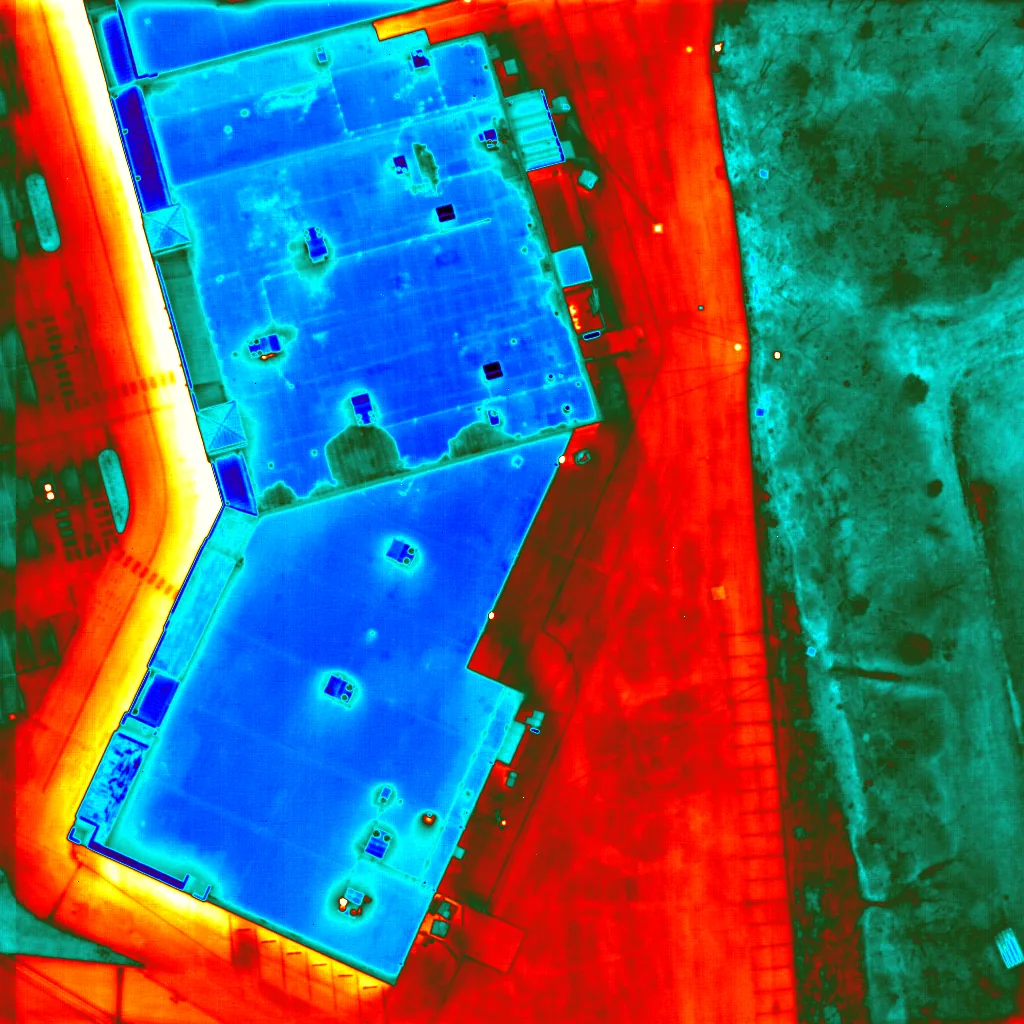
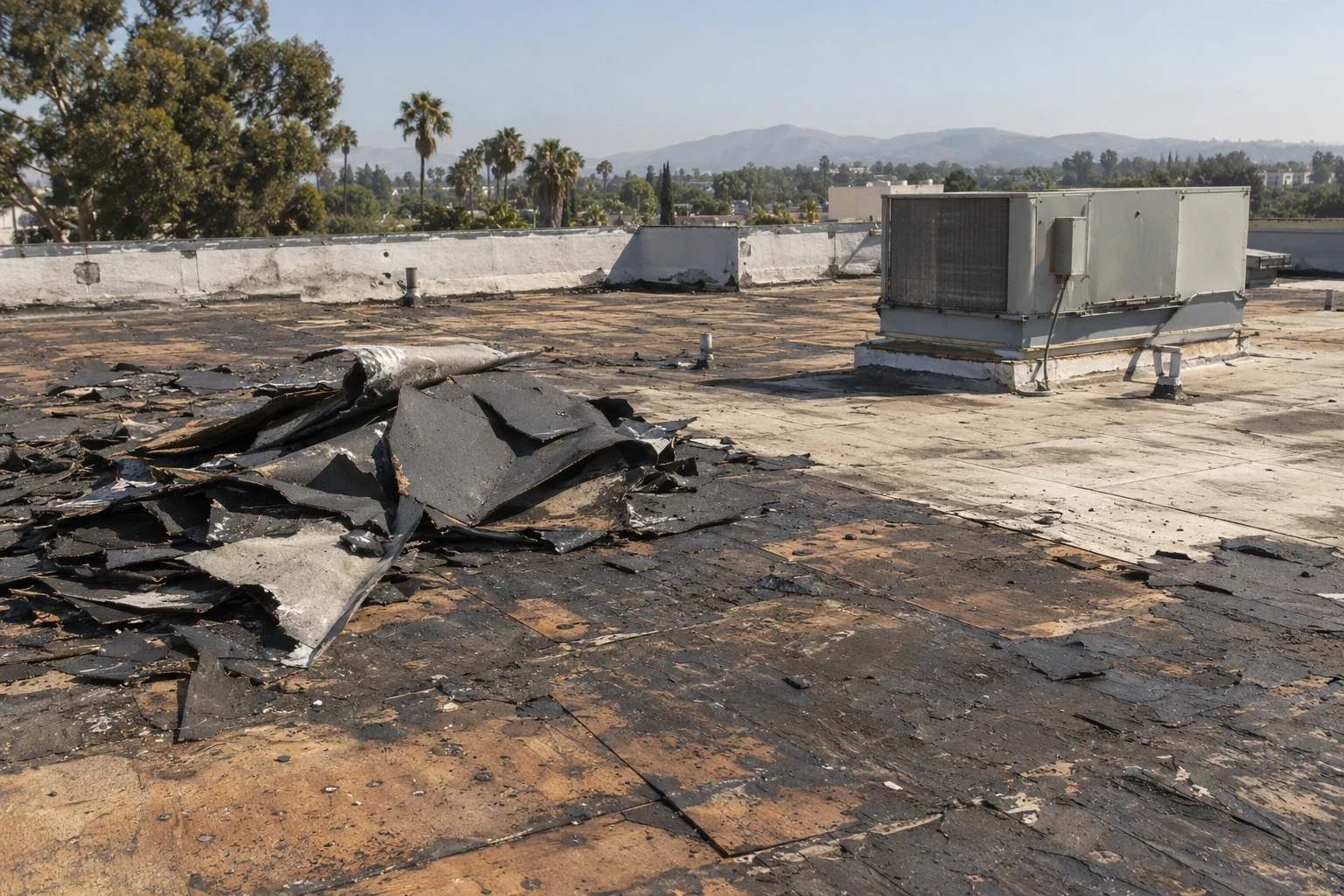
When wet insulation is suspected, a targeted moisture survey can help choose confirmation points. We report readings alongside conditions that affect interpretation and avoid treating an image as a complete removal map. After verification, the repair boundary should show the affected material, the sound tie-in area, and the limit approved by the owner. That lets the estimate state what is included and what remains outside the scope.
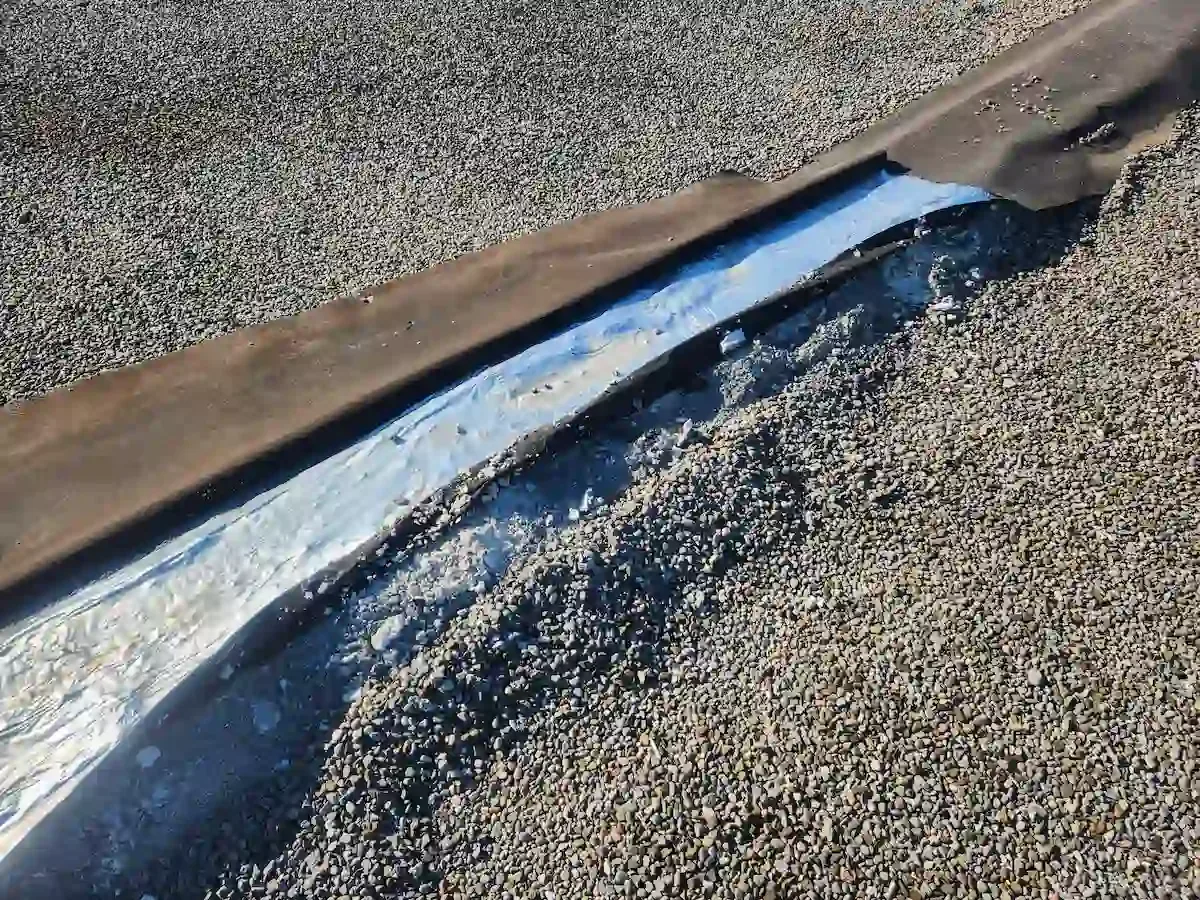
For visible seam separation, punctures, or failed flashing, we check nearby material before recommending a patch. A seam failure review records whether the defect is isolated or repeated across a roof section. The evidence informs whether a compatible repair is enough or if several findings point to a broader condition that should be compared with renewal.
Operating window: coordinate access and temporary protection
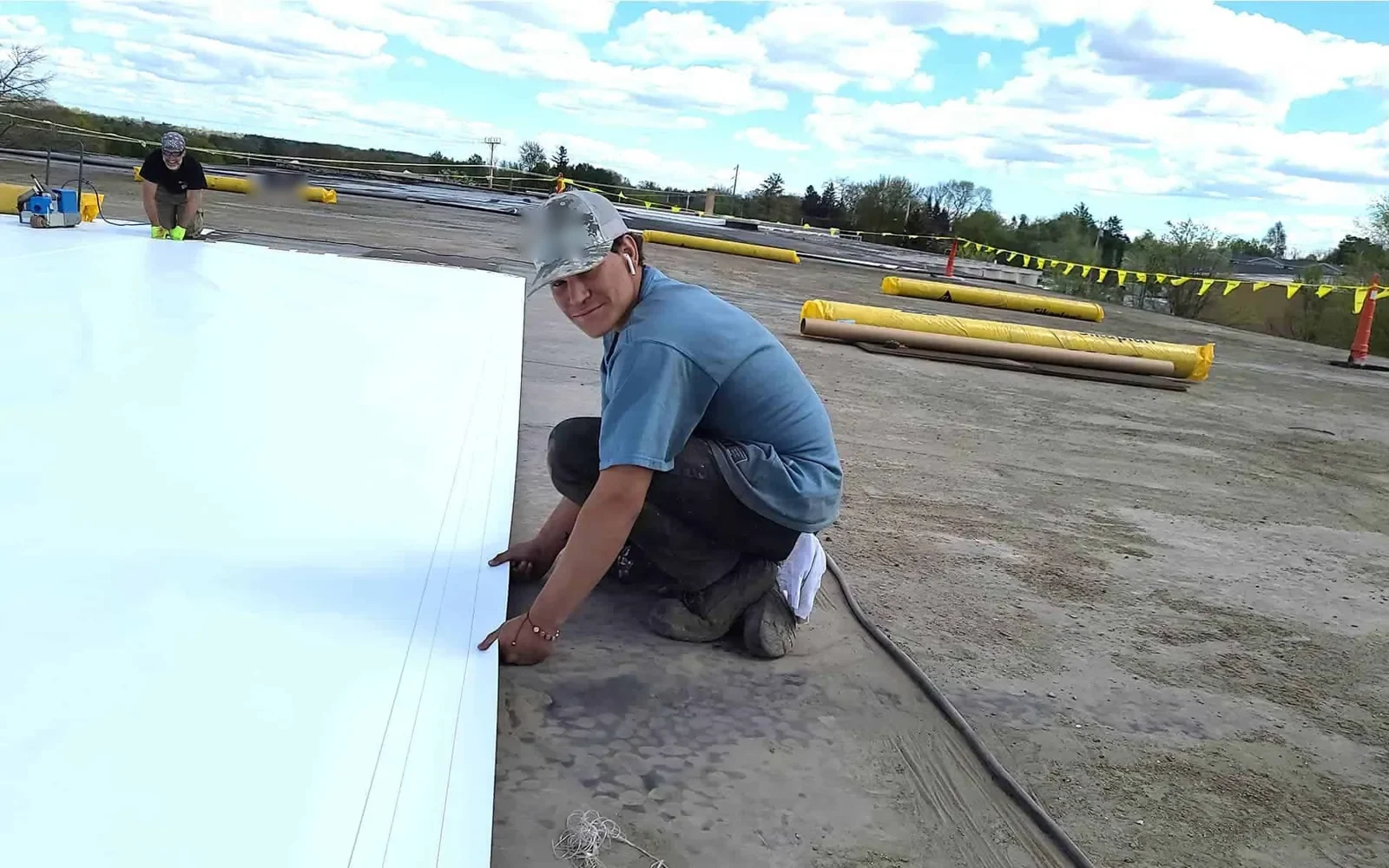
Occupied commercial work needs an agreed route, staging point, and protection plan for the space below. The owner or facility contact identifies restricted areas, equipment clearances, work hours, and any required shutdown. We mark those limits on the sequence and confirm which roof area can be opened and closed within the planned window. A phased reroof approach can help the manager coordinate active work with the operating schedule.
Regional heat, winter rain, and Santa Ana winds affect safe access and the time available to work on an exposed detail. We check the current forecast, set a dry-in point, and record the condition of the roof before leaving the area. The regional weather facts are planning inputs only. They do not show that a Corona building has experienced damage, nor do they replace project-specific wind or attachment design.
If weather or an operating restriction changes the sequence, we identify what is complete, what is protected, and what needs a return visit. The work-order trail should name the person who receives the update and the approval still needed. That keeps temporary protection from being mistaken for a finished repair and gives building staff a precise status for the affected zone.
Capital options: compare the repair with a larger scope
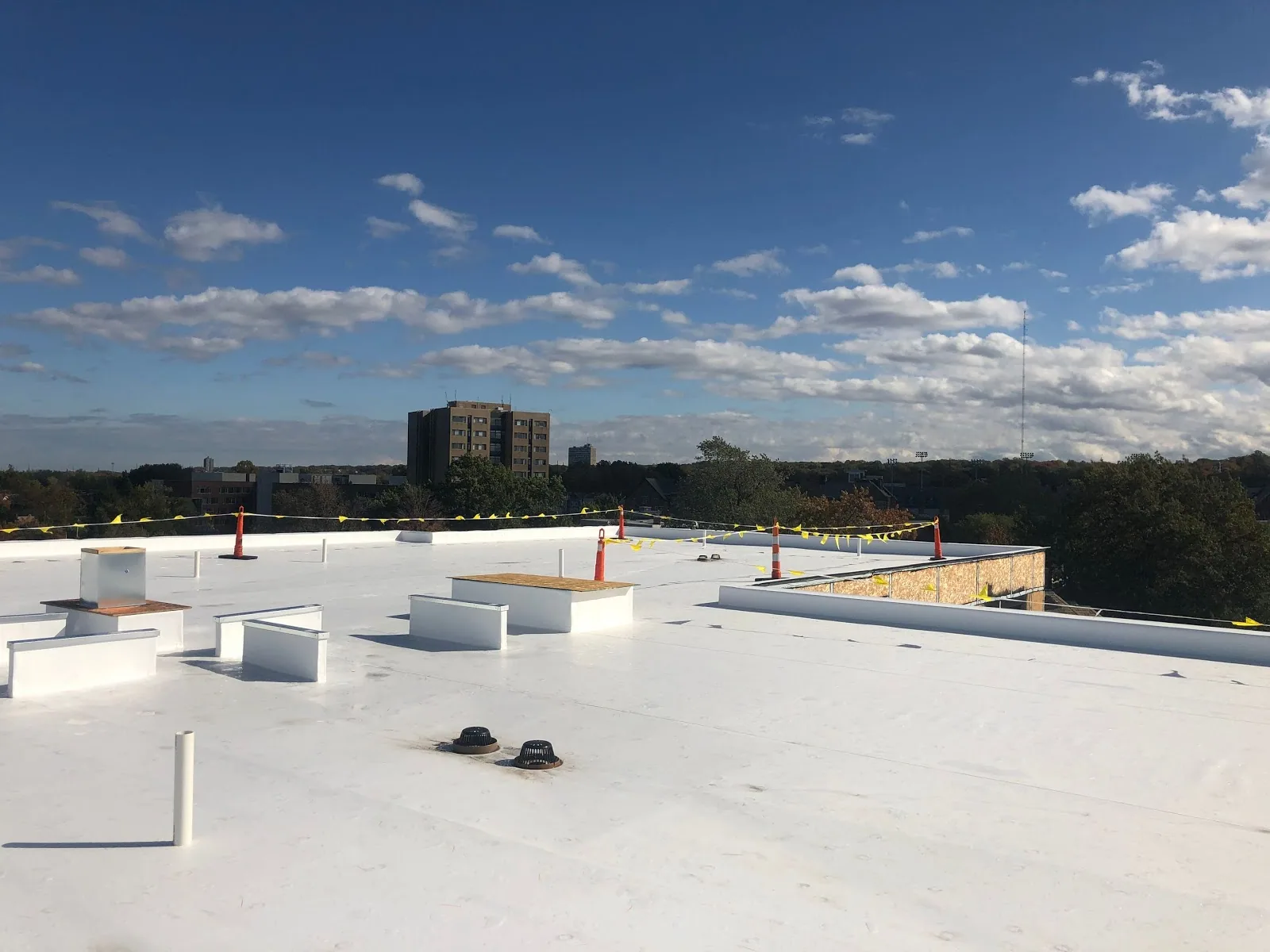
A repair can remain local when the defect is limited and adjacent layers provide a sound base. A coating or restoration requires a compatible existing assembly, suitable adhesion, and acceptable moisture conditions across the proposed area. Replacement may be the better comparison when multiple defects, wet insulation, or widespread separation make individual patches unreliable. We present those options with quantities and findings so the owner can compare what each scope resolves.
For a manufacturing, healthcare, or retail property, access, protection below, equipment, and work sequencing can all affect cost and duration. We state material assumptions, removal limits, edge and penetration details, disposal, and decision points for concealed conditions. A repair proposal should name its work boundary; a replacement scope should show the full assembly, drainage, and transitions. The owner can then route the right approval without relying on a broad allowance.
A capital plan can organize near-term repairs and larger work by condition and priority. A Redlands roof review or Jurupa Valley assignment remains a separate property record even when the same manager oversees several locations. Keeping evidence and approvals distinct supports better maintenance decisions across the portfolio.
Closeout: preserve the record for future maintenance
Once work is complete, the file should show the original finding, approved boundary, materials installed, photographs, and any remaining item. We note changes authorized during removal and whether another zone still needs testing. A clear closeout record prevents later staff from mistaking an approved repair for a full-roof renewal or repeating an investigation that has already been documented.
The next inspection interval depends on the condition corrected and what remains under observation. A visit may confirm a seam repair, check a flashing transition, review drainage, or test an area where moisture was previously detected. We state the purpose and roof-zone reference for that check so the property manager can add it to the right work order. The record can also support a future capital review if new findings change the priority.
Share the roof plan, leak locations, recent work orders, access limits, and approval route when arranging service in Corona. We will inspect the assigned area and return a marked condition record with a defined repair boundary and next step.
Commercial Roofing Questions
Does Corona's industry mix indicate which roof system a property has?
No. The City industry information provides commercial context. We inspect the building and confirm the installed materials before recommending work.
Can a site-selection listing establish whether a building needs a new roof?
No. Availability information does not establish roof condition. We review current records and inspect the asset before comparing repair and replacement.
What is needed to assess a leak in an occupied business?
Provide the room or operation affected, roof plan, access contact, and recent repairs. We match the report to roof details and document the next test or repair.
How do you keep a small repair from becoming an open-ended scope?
We mark the approved boundary and set a decision point for concealed conditions. Added removal requires documented evidence and owner authorization.
Can a repair record support a future capital plan?
Yes. The finding, quantities, materials, photos, and open items provide a property-specific record for later maintenance and budget decisions.
Commercial Roofing Moreno Valley handles commercial roof repair, replacement, inspections, coatings and maintenance across Moreno Valley, Riverside and the Inland Empire. Request a roof assessment or call 555-555-5555.
Related Roofing Work
Make the roof record useful to the next decision
Share the roof plan, leak locations, recent work orders, access limits, and approval route. We will mark the finding and document the next supported action.
Request a Roof Assessment555-555-5555