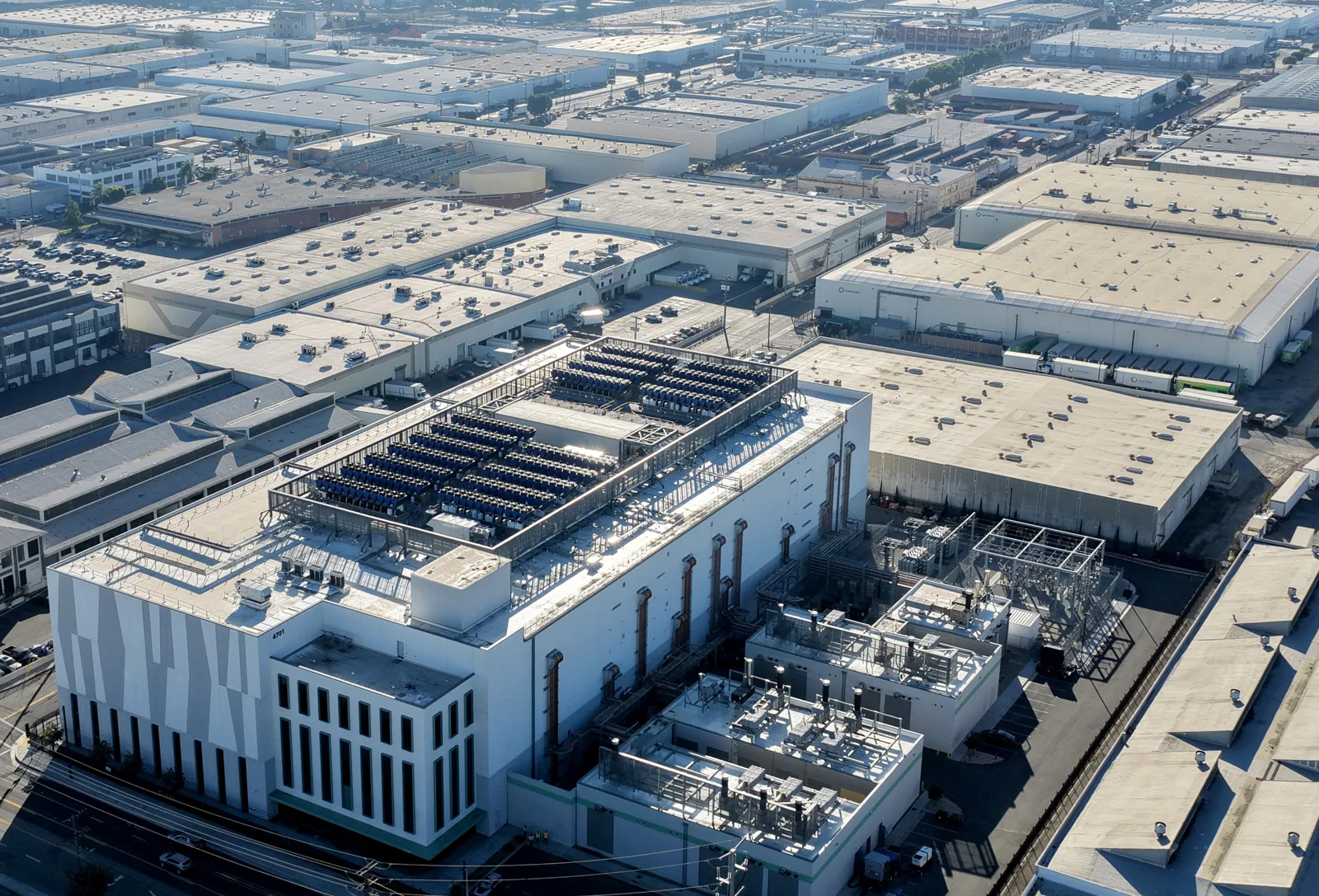
A data-center roof request needs a defined work zone and an operating contact before anyone reaches the membrane. Commercial Roofing Moreno Valley inspects and repairs data-center roofs in Moreno Valley, CA, and plans larger roof work with the facility’s access and continuity rules. The city’s employment inventory identifies industrial areas at Centerpointe, along SR-60 and in the Moreno Valley Industrial Area. Those districts establish commercial context, not the presence or construction of any particular data center.
We mark the roof location, photograph the condition and list the protection, approvals and equipment coordination needed for the task. The manager can see which part of the roof is affected and whether the next step is repair, moisture testing or a broader review. A controlled sequence keeps each decision connected to an identified area.
Access control: establish the work boundary
Restricted roofs require more than an appointment. The facility contact identifies approved personnel, escort rules, check-in steps, roof access points and any equipment that must stay clear. We provide the planned task and expected work area so access approval matches the actual scope. If a second technician or test instrument is needed, that change is communicated before arrival rather than added informally at the hatch.
The work boundary also applies below the roof. A lift, staging position or temporary barrier may affect a service path or emergency route. We show the location and duration of any restriction, and the facility manager identifies who authorizes it. This keeps a small membrane repair from creating an unplanned conflict with building operations.
For multi-property owners, each site receives a separate access record. A shared program can organize inspections, but access rules, roof layouts and approval chains remain property-specific. warehouse roof planning can preserve that distinction while tracking open work across facilities.
Condition map: connect finding and evidence
A dark ceiling tile or an alarm in a technical room does not locate a roof opening. We start with the reported time and area, then inspect nearby seams, curbs, drains and wall transitions. The roof plan gets a zone mark, and each image shows enough surrounding detail to find the same point later. If the visible symptom does not align with an obvious opening, we state what other examination could narrow the path.
Moisture testing is useful when the extent of affected insulation will change repair or replacement. We identify test positions and any confirmation point, then explain how the results shape the proposed repair boundary. An authorized opening may be necessary to confirm a layer or close the question at a critical detail. A drone roof inspection can document broad surface conditions, while close examination is still needed for seams and penetrations.
Moreno Valley is in the NWS San Bernardino and Riverside County Valleys forecast area. Regional summer heat, winter rain and Santa Ana wind conditions affect safe access and exposed work timing. The actual condition at the building determines what repair is needed.
Equipment interfaces: assign each trade
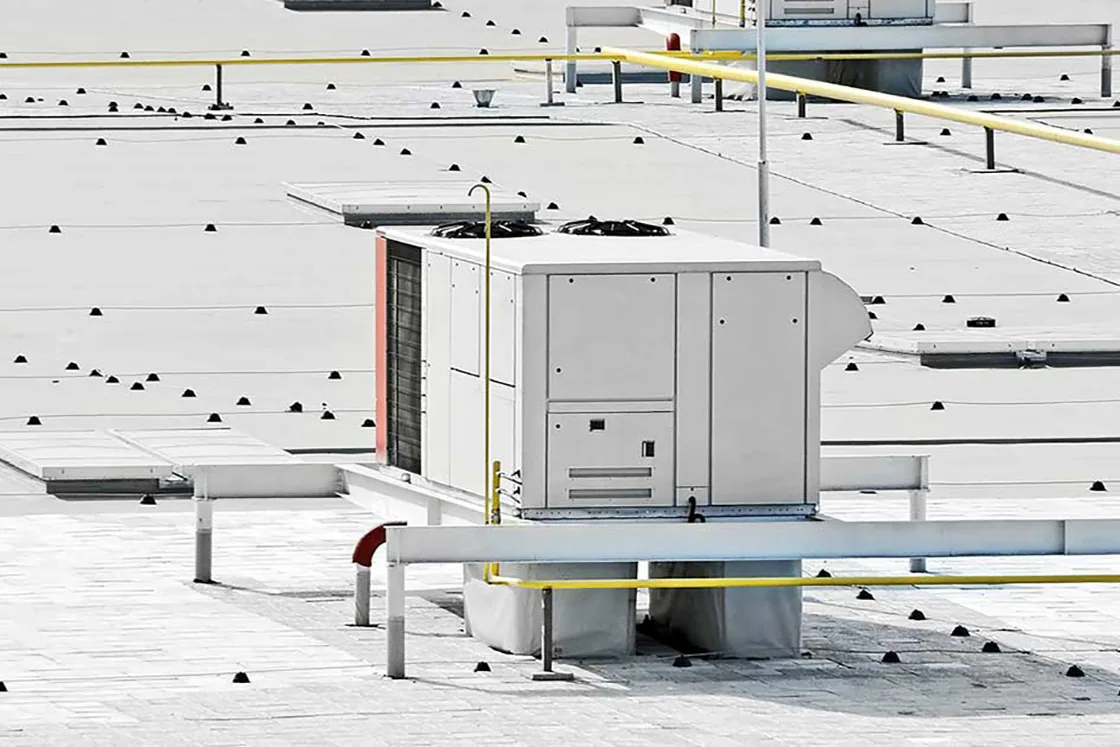
Cooling equipment, electrical pathways, sensors, conduit and service curbs share the roof plane with the membrane. A roofer can inspect the flashing and surrounding sheet, but a disconnected line or unstable equipment support belongs to the qualified trade responsible for it. We mark the roof-side repair, name the handoff and schedule a return look after equipment work is complete.
Penetration count and access restrictions affect timing. If a unit must be shut down or isolated, the facility’s equipment lead controls that step. The roof scope states when its detail can be opened and how it will be protected before the shift ends. Curb and equipment-support work can be coordinated with membrane repair where the two scopes meet.
Drainage has its own interfaces. We inspect whether the outlet is clear and the membrane connection remains intact. A drain obstruction, split flashing and broad low area require different actions; we list them as separate findings. The service record should show which correction restores the roof connection and which condition calls for further design review.
Repair or broader work: protect uptime
A localized repair can keep a sound assembly in service when a specific seam or flashing has failed. Repeated openings, wet insulation or a broad attachment concern can justify a larger investigation. We set the proposed boundary against marked findings and identify any test that could change it. The manager then has a practical approval choice instead of an open-ended direction to replace the roof.
For active water entry, our emergency response is available at any hour, all week and through holidays. The first scope protects the opening and documents the temporary measure. A permanent repair or replacement receives a separate work record, with approval, access and equipment requirements stated before installation.
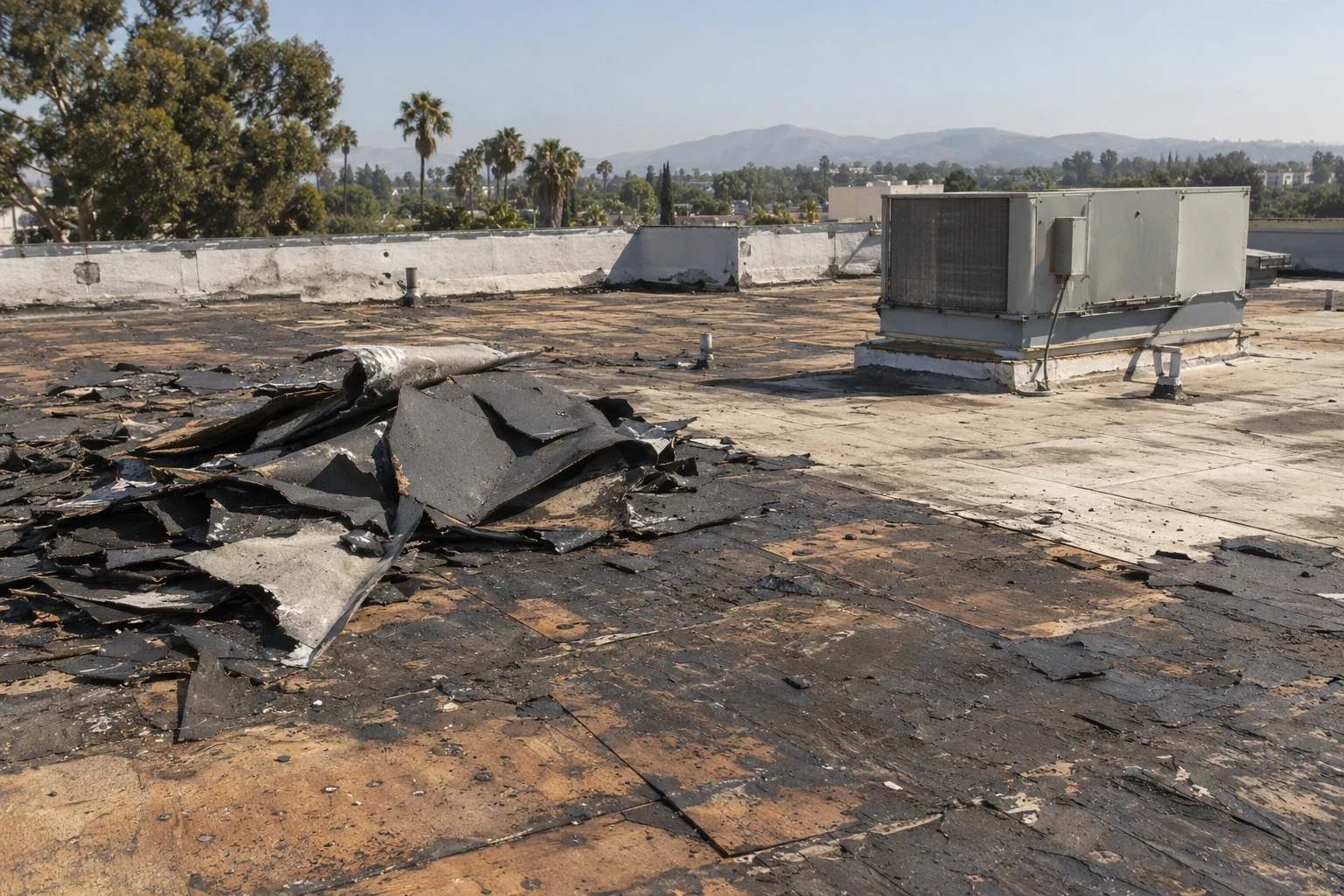
A recover adds a layer, which can alter edges, drains, curbs and clearances. We review existing layers and moisture findings before recommending it. Recover work may suit an assembly that supports another layer; replacement planning defines removal and reconstruction when it does not.
System review: match details to the design
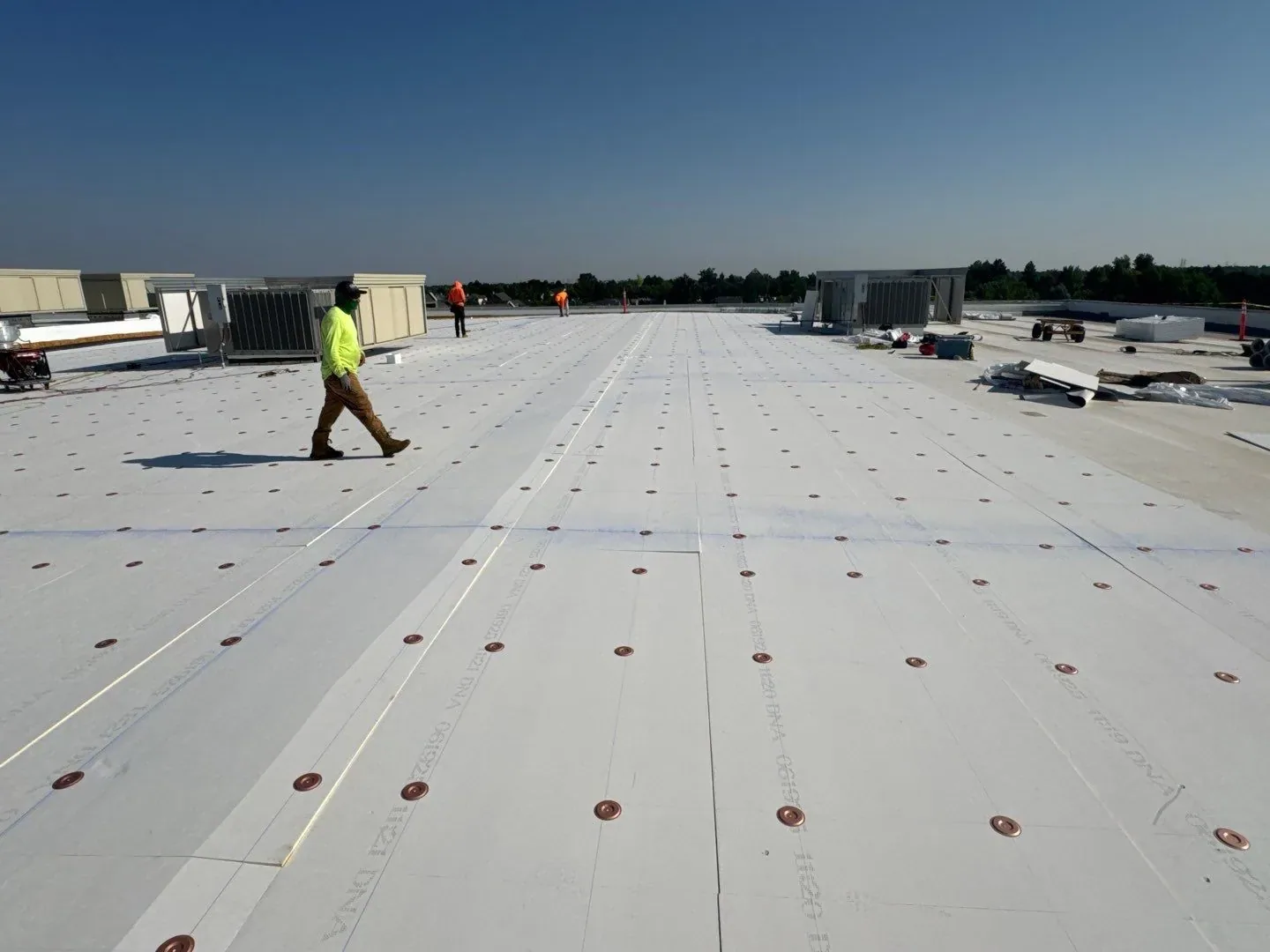
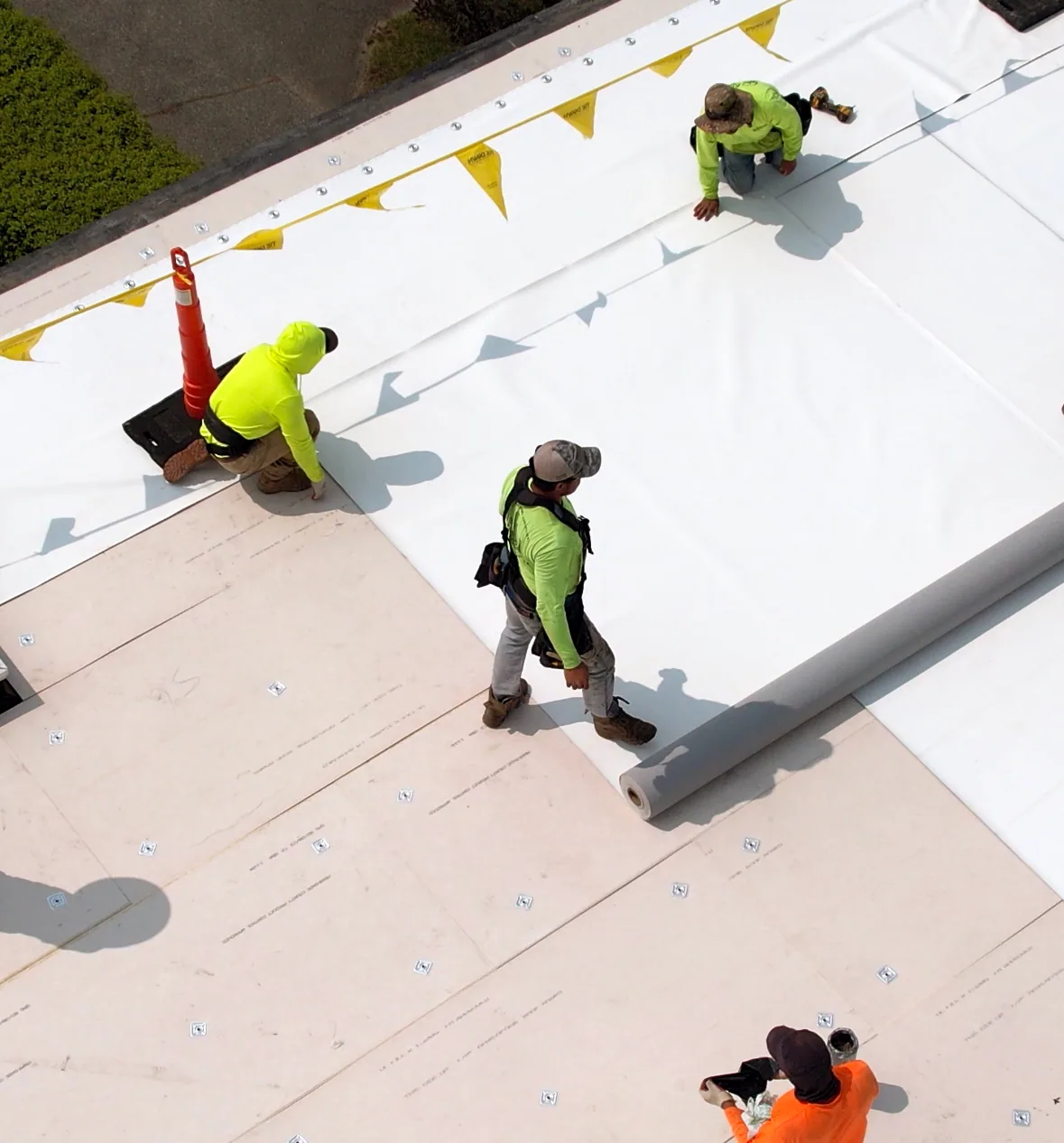
We identify the current membrane or panel system before preparing a repair. TPO and PVC seams are heat welded; EPDM, modified bitumen, built-up and standing-seam metal use different methods and compatible details. A retrofit or replacement also needs review of deck, attachment, insulation, perimeter and drain conditions. The chosen assembly follows those observations and the project requirements confirmed by the owner.
Roof-mounted equipment adds clearances and future service paths to the system review. A new curb or support can change flashing height or create a connection that the roofing crew must complete after the equipment trade. We list that return work and record which party provides the final operational release. PVC roofing and TPO roofing can be compared when the project conditions support either option.
Moreno Valley’s commercial inventory includes industrial, office and medical properties. The presence of healthcare and distribution employers does not establish the design or redundancy of a private facility. Each project uses the property’s own system records, drawings and approved requirements.
Closeout: retain an auditable roof record
Closeout photographs show repaired seams, transitions, curbs and drains with their plan location. We record the material and attachment details that were confirmed, plus any area that still requires testing or a trade return. If a scope change occurred after an opening, the record explains what changed and which approval authorized it.
The follow-up visit checks the same marked zone and compares its present condition with the repair photograph. A facility team can keep the inspection record beside equipment service and access logs, giving the next manager a clear history of the roof-side work. hospital roof coordination connects findings and closeout photographs in one reviewable file.
The scope cost and duration depend on access, protection, testing, roof layers, penetrations, equipment work and sequencing restrictions. We separate those drivers and identify where an owner decision affects the schedule. For work in Centerpointe Business Park or another Moreno Valley employment area, the site contact confirms the local gate and roof access process before mobilization.
Commercial Roofing Questions
How do you control roof access at a data center?
Approved personnel, escort and check-in requirements come from the facility contact. approved personnel, escort and check-in requirements. We confirm the work area and task before arrival, then record any access restriction that affects sequencing.
Can a drone survey replace a hands-on roof inspection?
Aerial images can show broad surface patterns and help locate areas for closer review. Seams, penetrations and repair edges still need examination appropriate to the roof decision.
Who coordinates HVAC or electrical shutdowns?
A qualified equipment lead at the facility controls shutdown and restart. Our scope marks the roofing interface, identifies the needed handoff and includes a check after that trade completes its work.
When is moisture testing worth scheduling?
Use it when the extent of affected insulation could change a repair boundary or replacement choice. We mark test locations and explain what confirmation is needed before a final scope.
Can a repair happen without interrupting facility operations?
The task can often be isolated to a roof zone, but equipment, access and protection needs determine the sequence. We identify the affected area and required approvals before work begins.
Commercial Roofing Moreno Valley handles commercial roof repair, replacement, inspections, coatings and maintenance across Moreno Valley, Riverside and the Inland Empire. Request a roof assessment or call 555-555-5555.
Related Roofing Work
Set a controlled roof inspection
Share the roof plan, access rules, leak reports, equipment contacts and approval path. We will mark the work boundary, document the roof-side condition and identify the coordination needed for a repair or broader scope.
Request a Roof Assessment555-555-5555