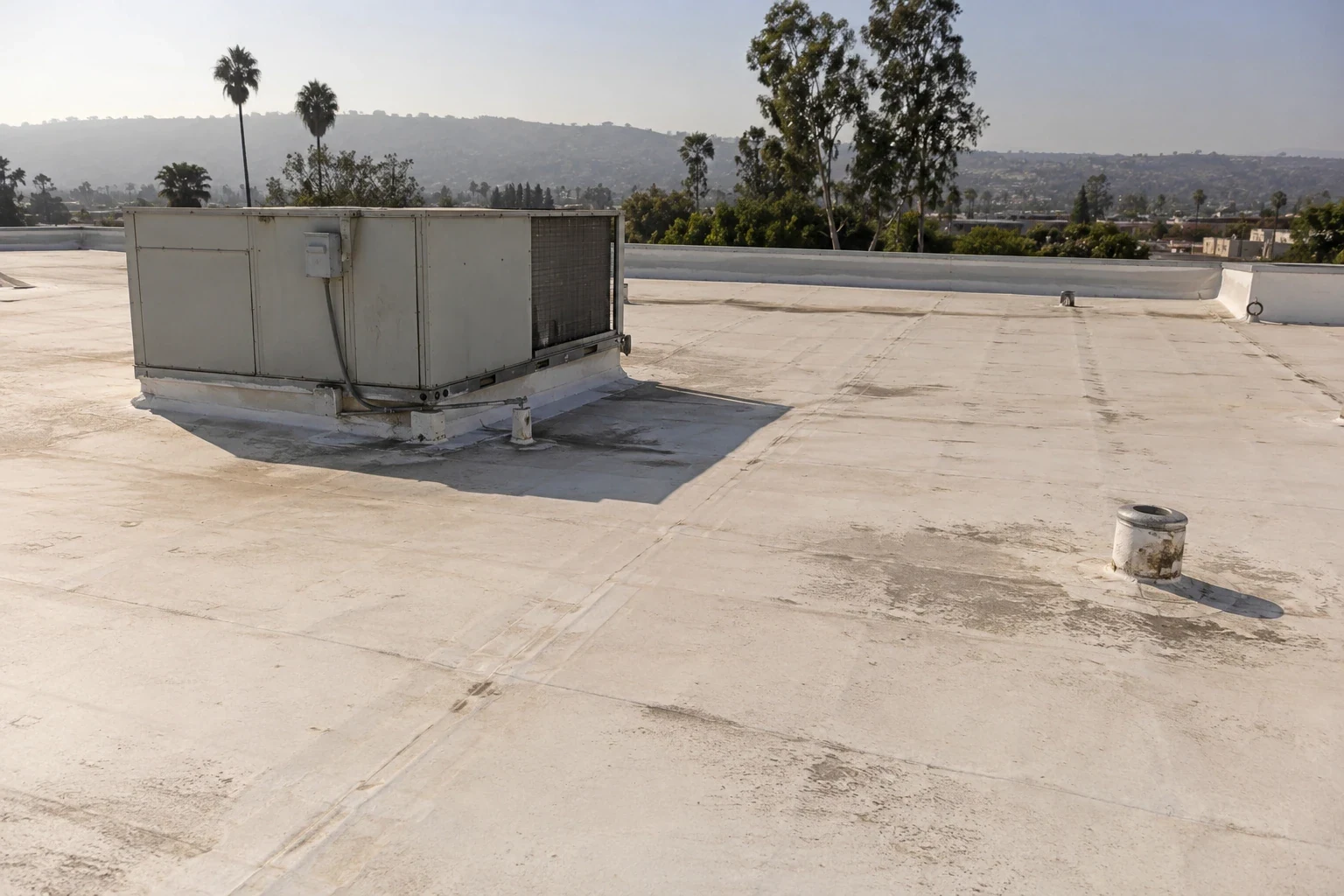
The KEE work record starts with the installed sheet, not the name on an old invoice. Commercial Roofing Moreno Valley checks KEE membranes in Moreno Valley, CA, for weld condition, flashing, attachment, and compatibility before recommending repair or replacement. KEE products use a PVC-based membrane modified with ketone ethylene ester, but formulations and product requirements vary. We mark the roof zone, record the visible product information, and match each finding to the decision it affects. Summer heat and regional Santa Ana winds also shape safe field timing, while the building's service route determines where tools and materials can be staged.
Product identification:
KEE and standard PVC sheets can appear alike from a distance. The label, submittal, warranty record, or prior work order may identify the membrane, while thickness, reinforcement, surface, and seam method help confirm what is installed. We compare those details before applying a repair adhesive, cleaner, or coating. If the product name is missing, we record the identifying evidence and choose a test that helps the manager approve a compatible material rather than guess from color alone.
Moreno Valley's development inventory distinguishes the Centerpointe Business Park, the Moreno Valley Industrial Area, and the SR-60 Business Park Area. In each broad employment area, access routes and rooftop equipment can vary from one facility to another. The condition map links product identification to the curb, drain, or roof zone where service is planned. A commercial roof inspection can document the visible sheet and isolate where product data is still needed.
Weld quality:
KEE seams are typically heat-welded. Temperature, pressure, travel speed, sheet cleanliness, and ambient conditions affect the fusion. We make a test weld when the specification calls for it, allow it to cool, and probe the edge before production work continues. The work record names the roof area tested and the result. A glossy seam is not the only check: a weak edge, wrinkle, contamination, or incomplete bond can leave a path for water.
We set repair limits around sound material and stable seams. A loose section beside a curb may need new flashing or a rebuilt corner, while a short field separation can take a localized repair. When openings repeat across multiple rows, we review attachment and sheet movement across the affected zone. Commercial roof repair can address the marked defect; cover-board work is separated when the support beneath the membrane has been damaged.
A test weld also gives the crew a working setting for the actual sheet and conditions that day. We note the material surface, ambient conditions, welder setting, and test result before running the production seam. If the test edge can be peeled or the sheet distorts, we reset the method and retest before the repair continues. The approval record can include that check where a project specification requires it.
Exposure and maintenance:
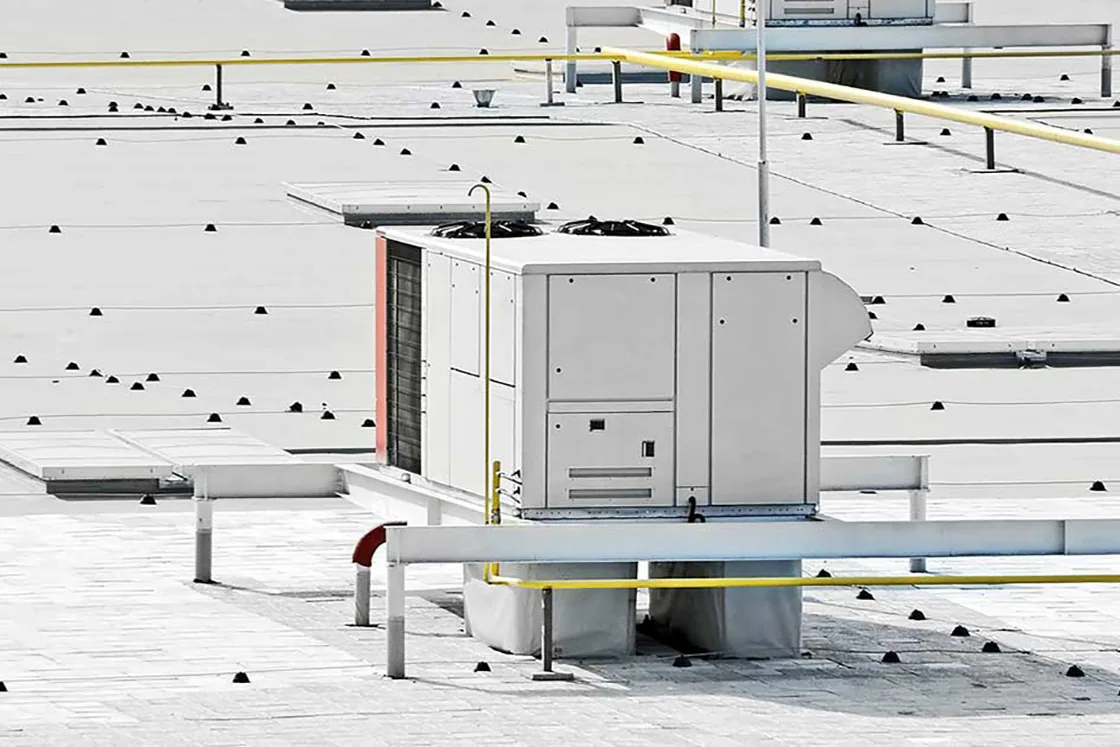
Equipment discharge, kitchen exhaust, service materials, and foot traffic can affect a membrane surface. We mark the affected area and locate the discharge or traffic path before choosing a cleaner or replacement patch. The observed contact and the installed KEE product guide compatibility. We use the installed KEE manufacturer's information and the observed exposure to set an appropriate repair approach. If the issue comes from recurring service access, the scope can include walk pads or a revised route so tools do not cross the same seam each visit.
Industrial properties along Perris Boulevard and San Michele Road create a service corridor where rooftop routes and exhaust points can affect maintenance. For each KEE roof, we mark the path that reaches the membrane surface. preventive roof maintenance can track those zones across inspection intervals, while a follow-up check after equipment service catches a lifted weld or displaced pad before it blends into the next work order.
Compatibility questions can affect both repair material and the operating change needed to prevent a repeat. If exhaust lands near the marked zone, we locate its discharge and coordinate with the mechanical contact on a change to the outlet or service schedule. If the surface is worn but the underlying sheet remains bonded, cleaning or a manufacturer-approved repair may be sufficient. The work order distinguishes those paths so the manager can authorize a membrane fix without leaving a known exposure point unaddressed.
Drainage and detail work:
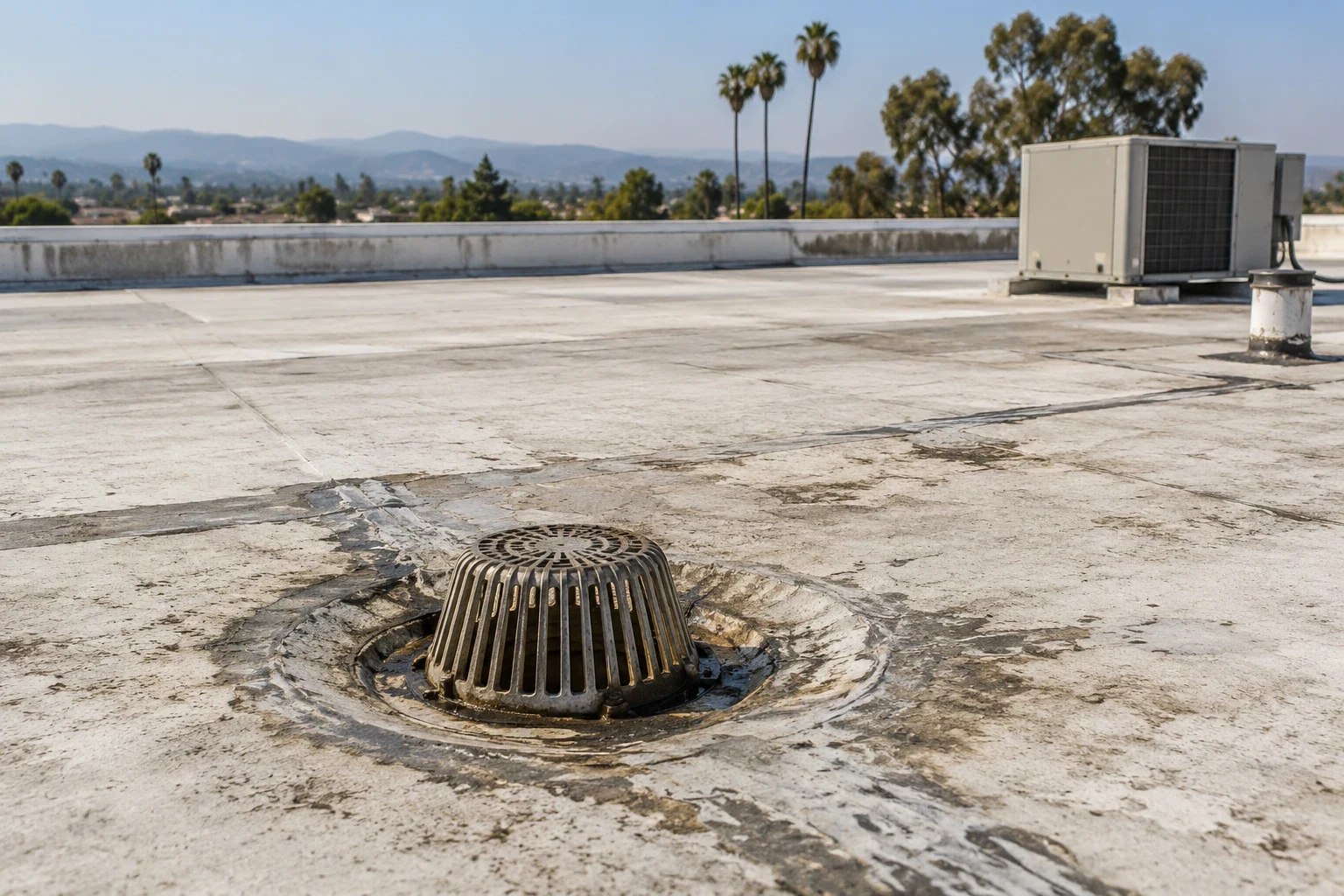
Water follows the roof's slope to drains, scuppers, and overflow points. We inspect low areas, membrane wrinkles, curb corners, and patch buildup that can redirect flow. A blocked outlet and settled insulation require different work. We mark the water boundary and locate the outlet so a later inspection can compare the same area. For a recover, drain elevations and edge heights need review before material is added, because thickness can change the connection to the existing plumbing or overflow path.
Centerpointe includes office space alongside its broader employment uses, so access may involve building occupants and scheduled service. We set a work window around equipment visits, protect the opening at the end of each shift, and keep drains accessible. Drain and scupper service can correct the membrane tie-in at an outlet. If a curb is being changed, equipment curb coordination keeps the KEE flashing and new support detail in the same scope.
Approval and follow-up:
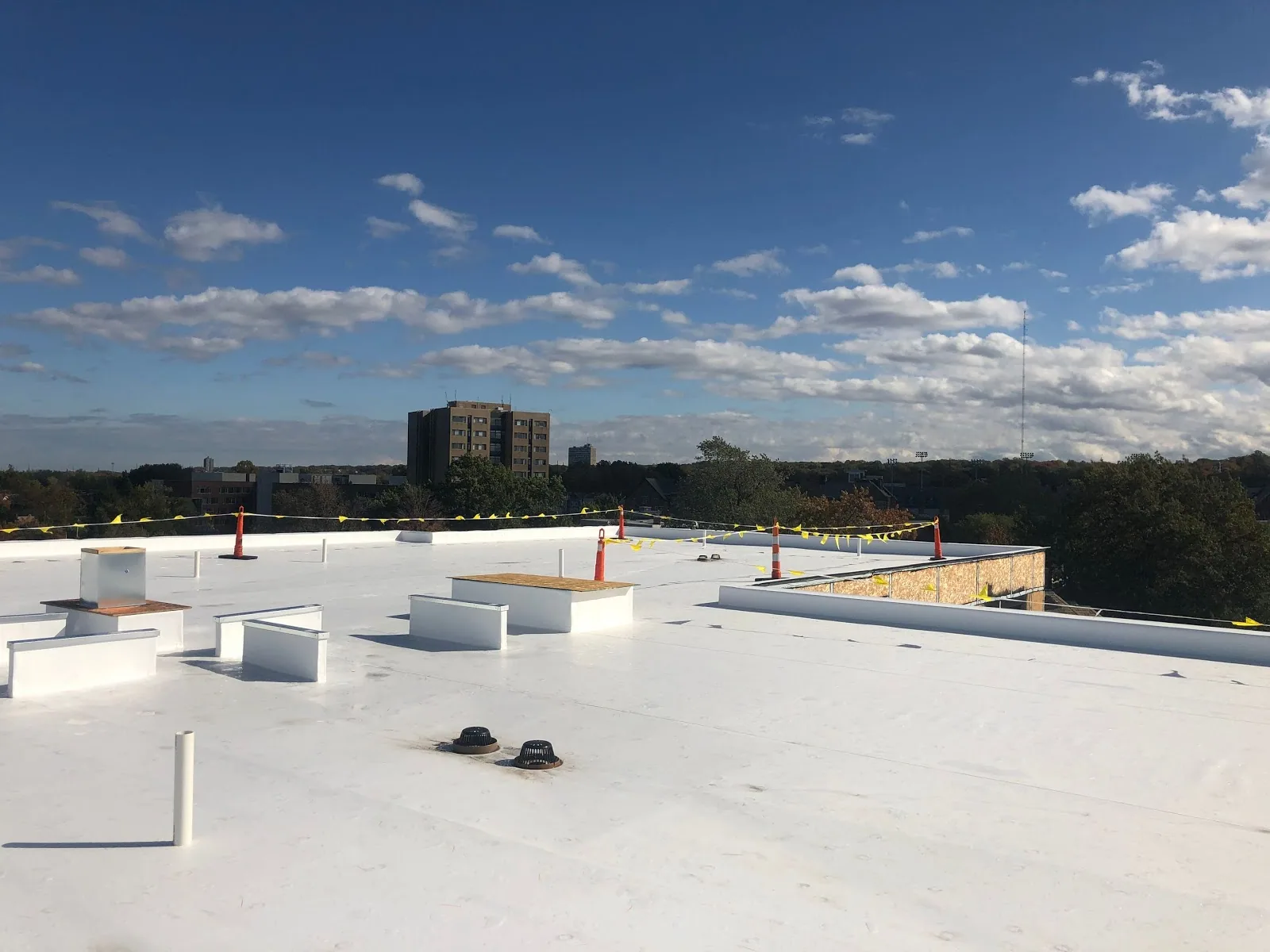
A KEE repair should identify the sheet, seam method, repair material, roof-zone location, and any conditions that were not opened. We photograph the tested weld and finished edge, then update the work-order trail with a follow-up date if more access or product information is needed. When moisture testing changes the repair boundary, the report shows the sample locations and extent. The property manager can then release the localized repair or authorize a broader assembly investigation.
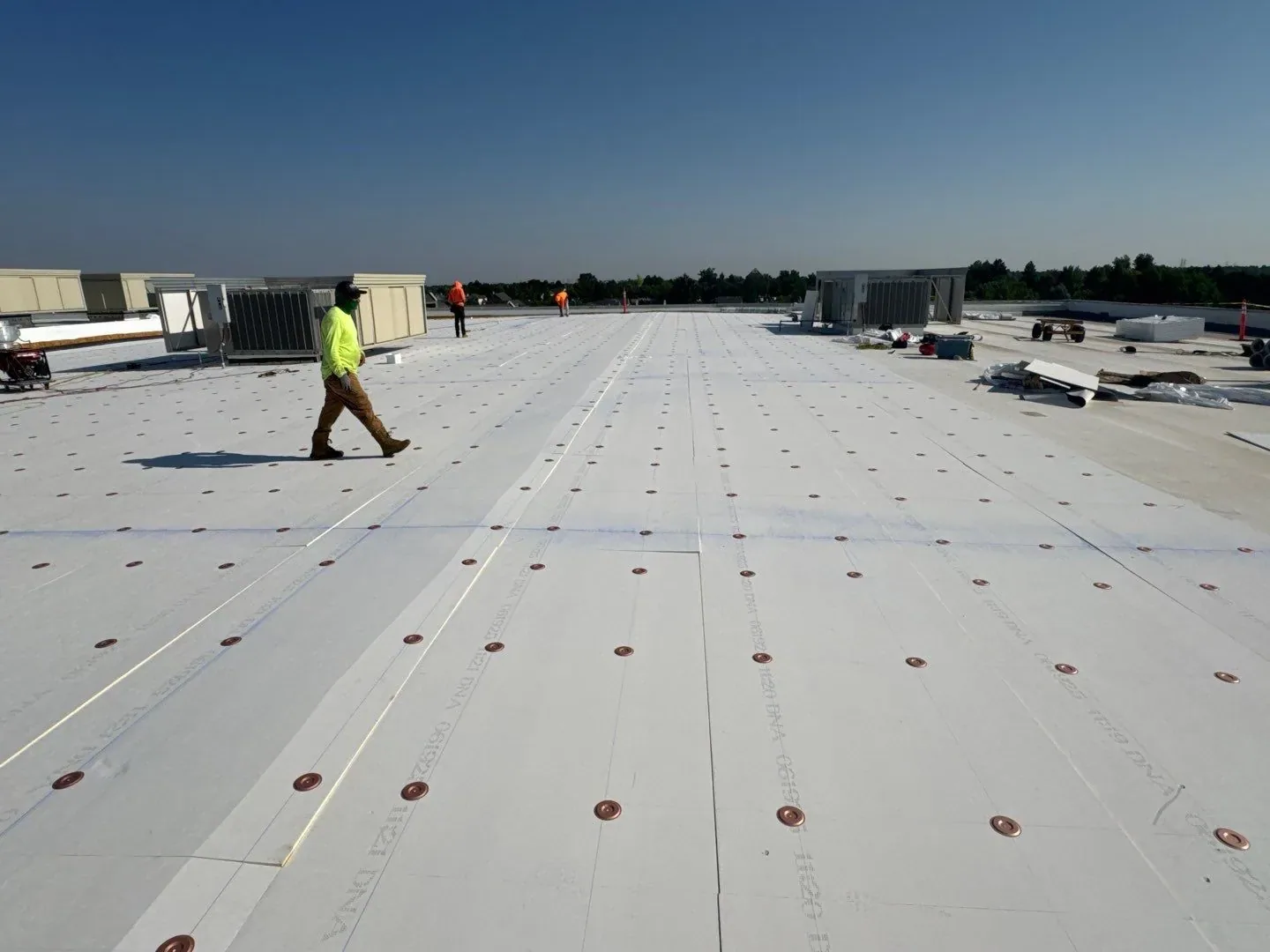
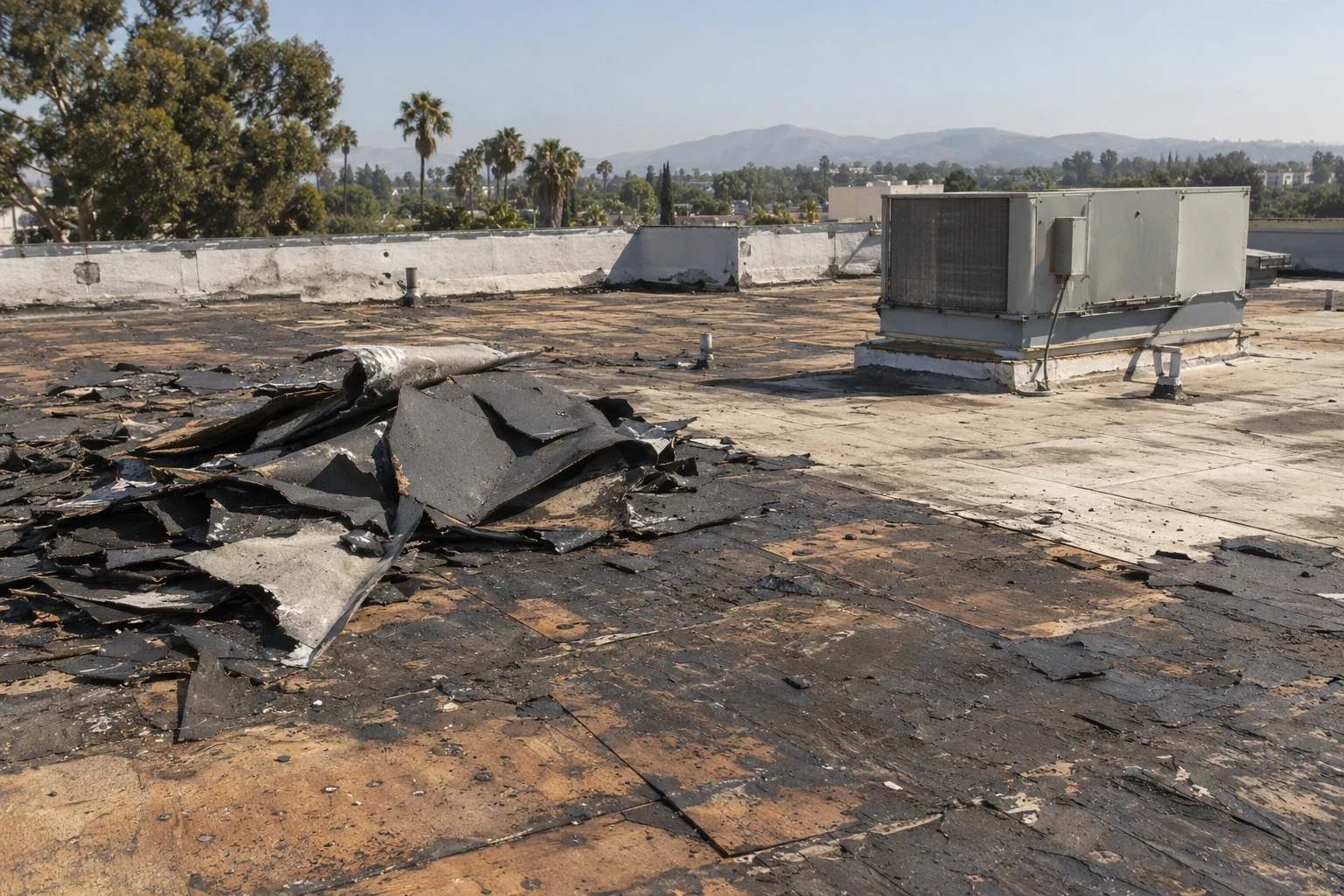
Replacement may make sense when repeated seam failures, moisture, or attachment issues reach beyond a workable patch area. A recover review checks existing layers and edge conditions; replacement planning sets removal limits and new transitions. PVC and TPO provide other single-ply comparisons. SR-60 Business Park Area service can be scheduled around the marked roof zones and the building's approval path.
Replacement cost and duration reflect removal access, the number of curbs and drains, insulation condition, edge metal, and the sequence needed to keep occupied areas protected. A recover may reduce tear-off but adds height at parapets and equipment. We note these drivers by zone, including any sample opening that must be approved before final quantities are set. The manager receives a comparison tied to findings rather than a single scope that hides unresolved layers.
Commercial Roofing Questions
How can you tell whether a roof has KEE or standard PVC?
We compare product records with the installed sheet, reinforcement, thickness, surface, and seam detail. The work record identifies what supports the product choice.
What is checked in a KEE test weld?
After cooling, we probe the seam edge for fusion and continuity. The roof-zone mark and test result become the reference for production welding.
Can a coating repair a KEE seam?
A coating does not replace a failed welded joint. We repair the seam with compatible membrane material, then determine whether a coating system is appropriate for the larger surface.
What makes a KEE repair more extensive?
Repeated separations, moisture below the sheet, damaged board, or a curb transition can widen the boundary. We mark those conditions and show the added work for approval.
What should be recorded after KEE work?
List product identification, seam method, repair material, marked roof area, photographs, and any follow-up check. A service crew can then protect the same welds on its next visit.
Commercial Roofing Moreno Valley handles commercial roof repair, replacement, inspections, coatings and maintenance across Moreno Valley, Riverside and the Inland Empire. Request a roof assessment or call 555-555-5555.
Related Roofing Work
Record the KEE system before repair
Share product records, roof plans, work orders, leak areas, operating windows, and access rules. We will identify the sheet, test and map suspect welds, and return a repair boundary with any product check or follow-up approval noted.
Request a Roof Assessment555-555-5555