The PVC condition map should connect each weld, penetration, and reported leak to a roof zone and a decision. Commercial Roofing Moreno Valley inspects PVC assemblies in Moreno Valley, CA, for localized repair, restoration, or replacement. The sheet can resist many common rooftop exposures, but the product, thickness, attachment, and installed detail determine the actual system. At the Moreno Valley Industrial Area, equipment service and process activity can make discharge points and access paths useful inspection targets. We mark what is visible, identify where testing or a product check affects the scope, and give the property manager a work record that supports a clear approval.
Sheet and seam:
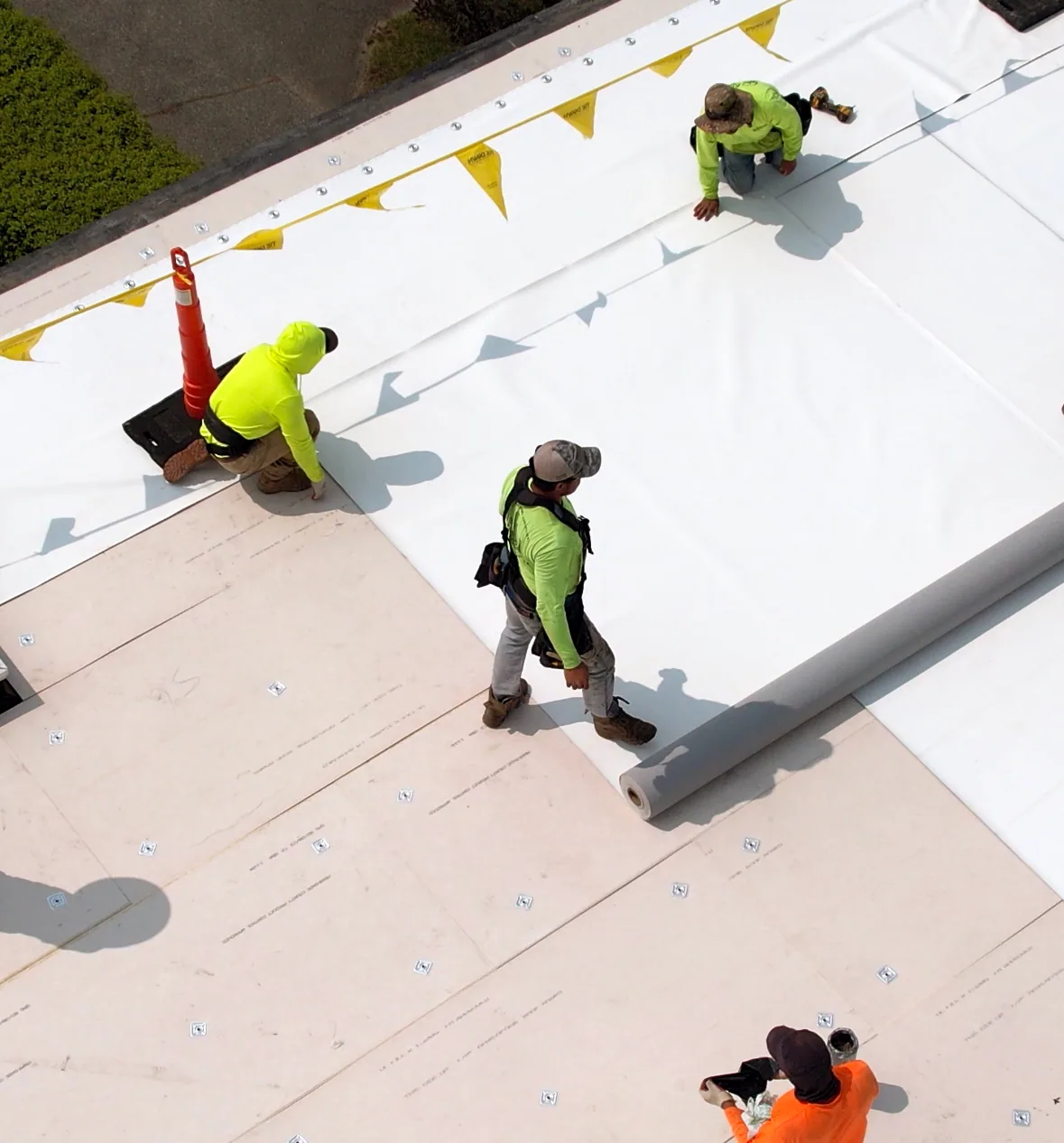
PVC sheets are joined with heat-welded seams. We inspect weld width, edge fusion, wrinkles, fishmouths, patches, and signs of surface change. A probe can find an edge that has not bonded, while a marked roof plan shows whether it is one defect or part of a longer run. Repair begins with preparation: clean, dry material and a test weld set to the sheet and field conditions. We record the repaired length and tie the closeout photo to the same roof zone.
Centerpointe Business Park includes industrial employment space and an office component. A building with regular equipment service may need a route that crosses fewer seams and keeps drain access open. We mark those paths when inspecting the membrane, particularly near curbs and rooftop units. A roof inspection can identify visible seam conditions, detail failures, and locations where a closer test would change the repair boundary.
A weld repair should extend beyond the visible opening to clean, bonded sheet. We trim a fishmouth or loose edge only when the repair can land on stable membrane, then heat the patch evenly and probe it after cooling. Near a parapet or equipment curb, the weld must connect to compatible flashing rather than stop at the field sheet. The marked boundary shows how far the repair runs and whether a separate metal or curb detail remains open for approval.
Exposure and compatibility:
PVC is often selected for areas where oils, grease, or certain chemicals may reach a roof, but suitability depends on the actual substance, concentration, and product data. We locate exhaust discharge, kitchen vents, service equipment, and recurring spill paths before recommending the membrane. We trace the documented exhaust or process path to the membrane and compare that exposure with the manufacturer's compatibility information before choosing a repair material.
Industrial properties along Perris Boulevard and San Michele Road give the inspection a corridor frame. At the building, we locate the actual discharge point and decide whether cleaning, flashing repair, or membrane replacement addresses the contact with the PVC sheet. We can coordinate with the property manager's operations contact to locate the process point and keep the test area specific.
Attachment and flashing:
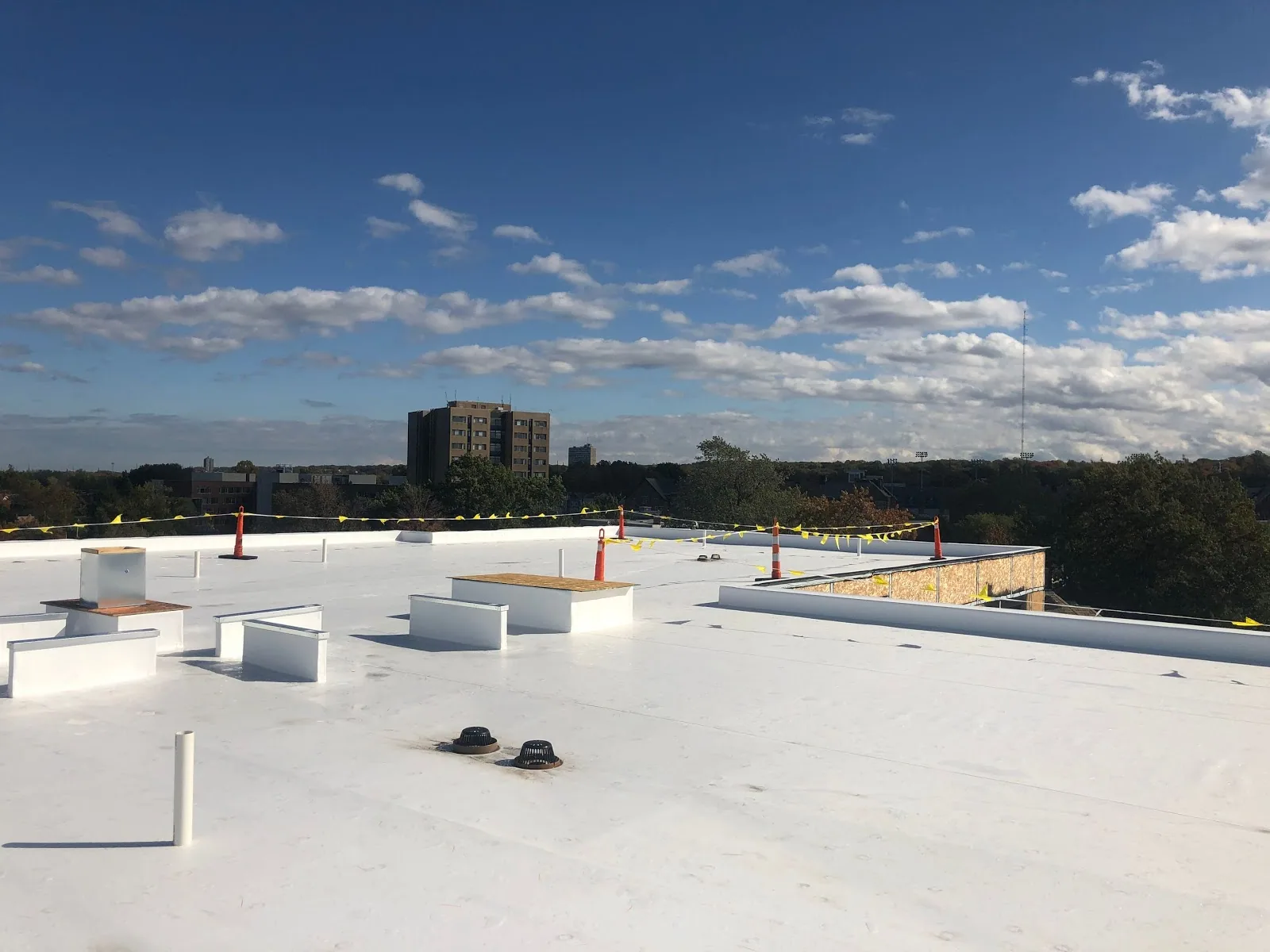
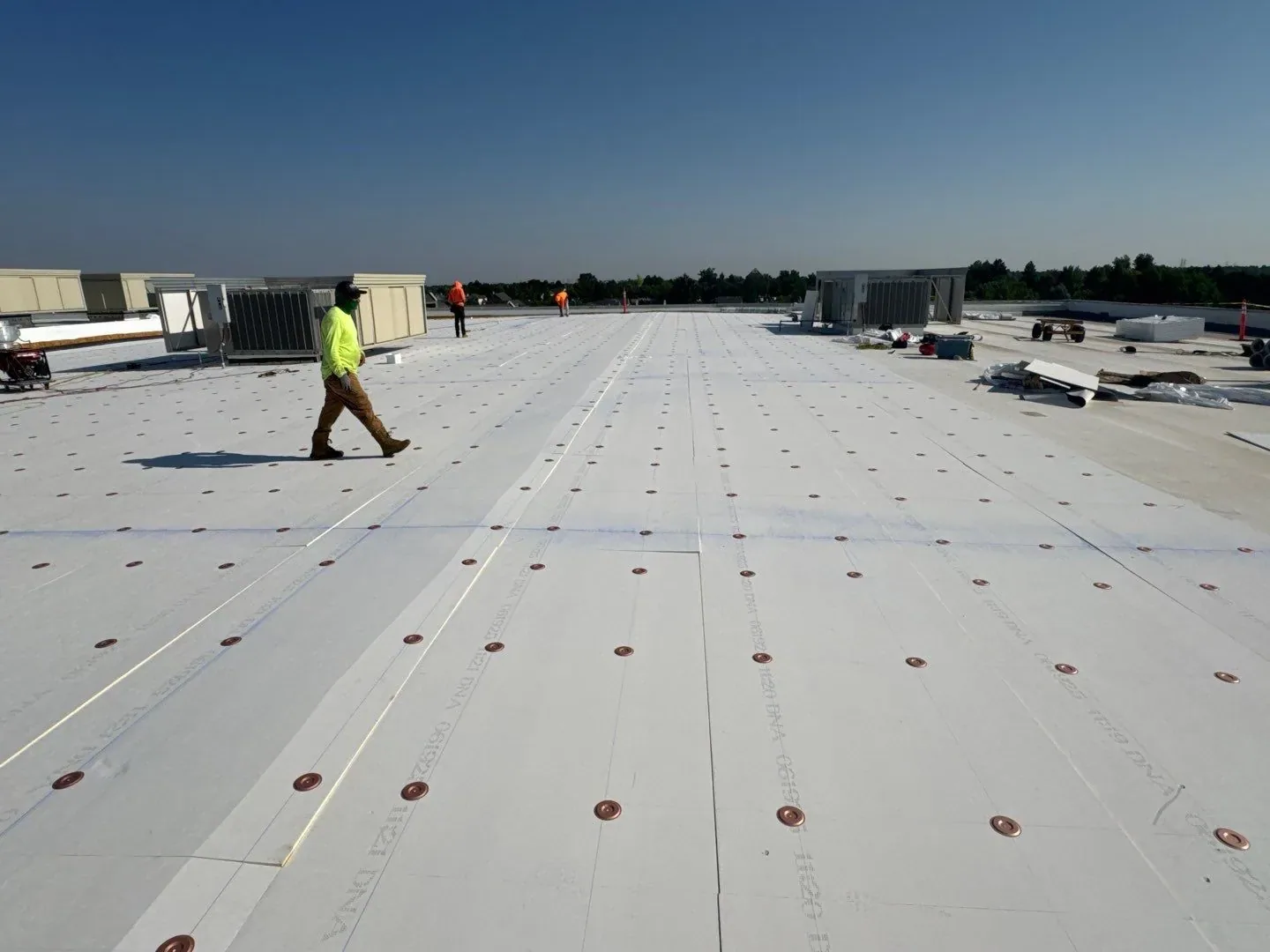
Mechanical attachment, adhesion, or ballast may be part of an approved PVC assembly. We inspect accessible perimeter details, fasteners, cover board, insulation, and the membrane tie-in at curbs and walls. If a sheet lifts, the repair decision depends on whether the issue sits at a weld, attachment, or layer below. A surface patch is not a substitute for rebuilding a loose curb or correcting a damaged board. The report marks each component so the estimate does not combine separate work without explaining it.
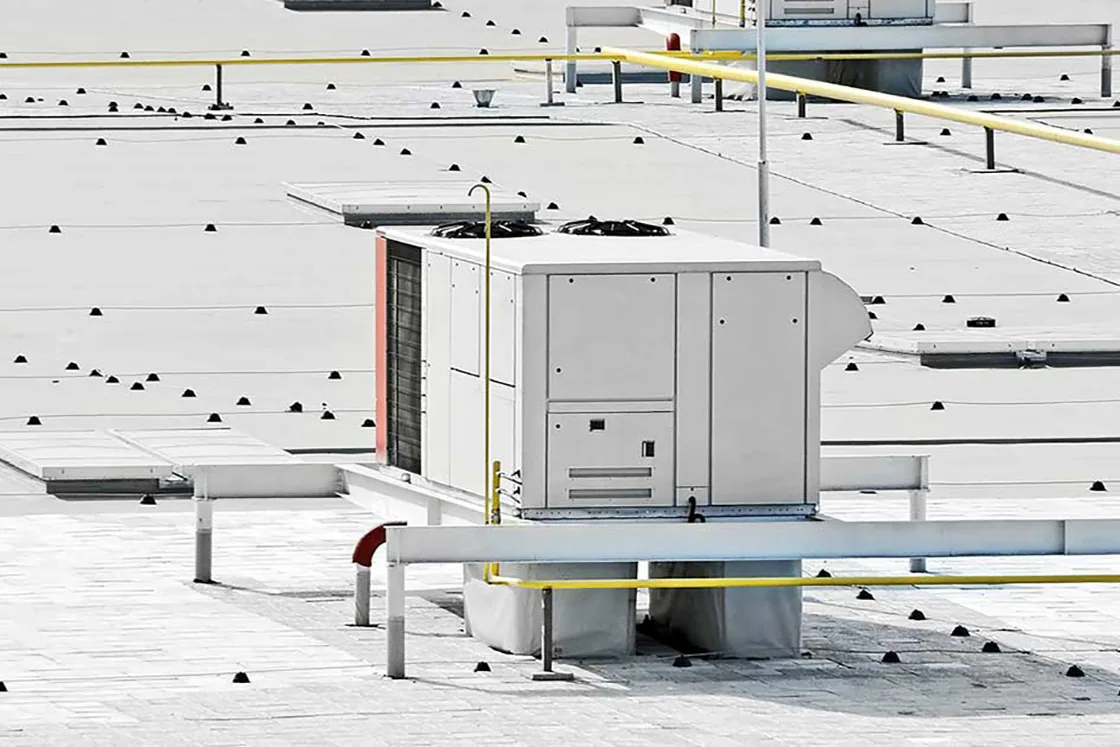
A curb replacement changes the opening, flashing height, and drainage around the unit. We coordinate dimensions and lift timing before the old curb is removed, then show how the PVC sheet turns up and terminates. Curb and support work can be scoped with the membrane detail. Where the field sheet remains sound, localized repair can address the failed weld or flashing without expanding into unrelated roof areas.
Timing and cost change with the roof's access route, seam length, number of curbs, surface preparation, and the need to move equipment or protect active intakes. Testing for compatibility adds a step when the contact material or prior repair is unclear. We list each part separately so the manager can authorize an immediate weld while holding a broader exposure correction for review. Where another trade will cross the roof, the work order identifies who returns for a joint check and which zones must remain clear.
Drainage and weather window:
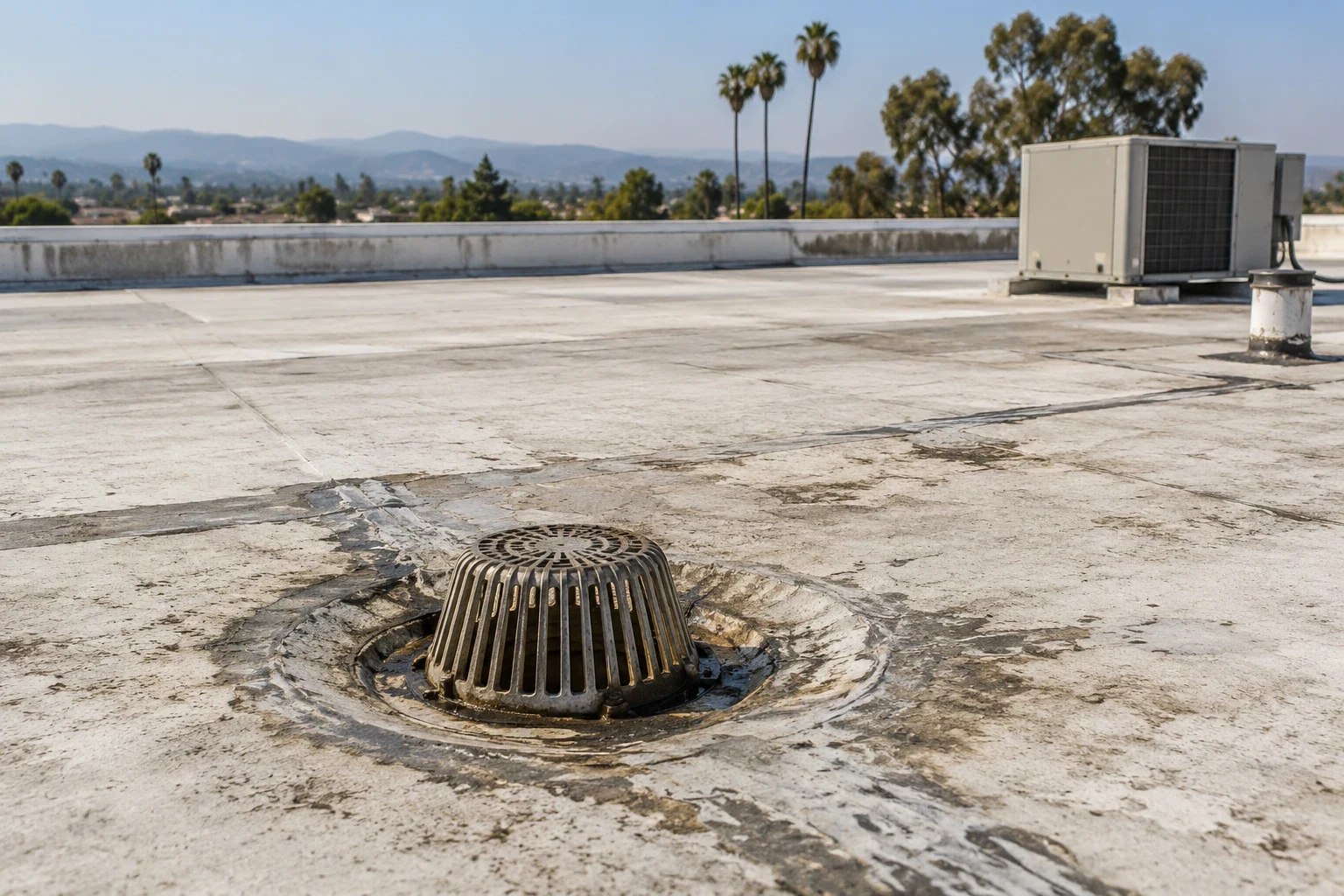
Water routes across the membrane to drains, scuppers, and edge outlets. We check low points, overflow capacity, debris, and patched areas that may create a dam. An open outlet with a depressed roof field calls for a different scope than a clogged strainer. We mark the ponding area and note the depth or measurement that informs the next step. A planned recover also needs drain and curb elevations checked before another layer is added. We photograph the strainer, overflow, and membrane ring so closeout shows which part of the water route changed.
The National Weather Service documents summer heat, winter rainstorms, and Santa Ana winds in Southern California. In Moreno Valley, those conditions shape when a crew can weld, leave a roof open, or complete temporary protection. We use the forecast window and the actual roof condition to schedule work. Drain and scupper service can address outlet connections, while emergency repair can protect a newly opened area during an urgent response.
Scope and work record:
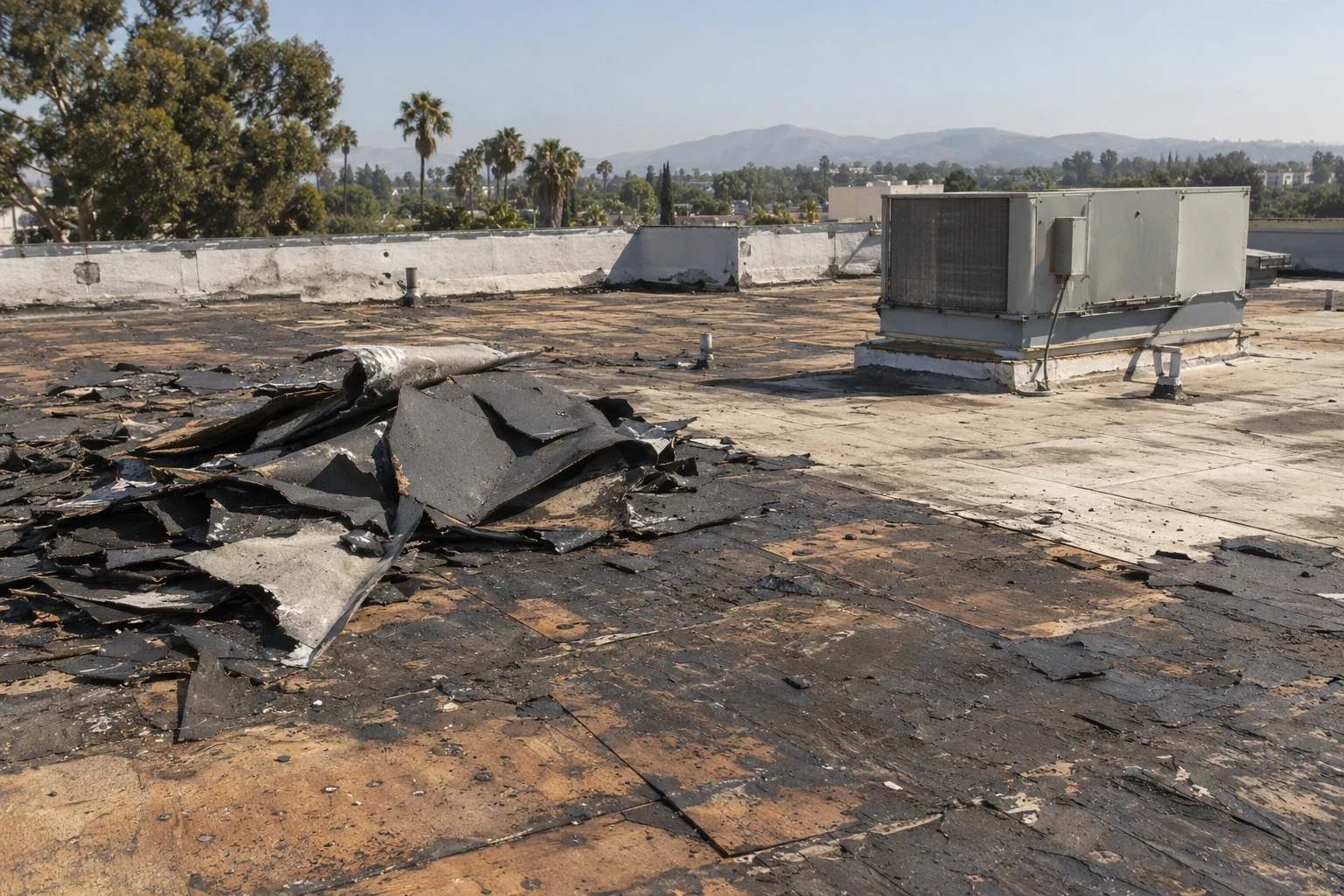
A short seam repair, broad re-weld, recover, and replacement carry different access, material, and approval needs. We compare the conditions in the marked zones and note where moisture testing or an opening could change the choice. For a recover, we review existing layers, edge height, drainage, and project requirements. TPO sheet and EPDM membrane use different repair details, which can inform a replacement comparison. A replacement scope identifies removal limits and how new insulation, PVC, flashings, and equipment transitions connect. Recover review and replacement planning keep those options distinct.
The closeout lists the sheet and attachment when known, weld repairs, exposure points, flashing work, and open follow-up items. Moreno Valley's SR-60 and I-215 junction supports regional transport, but each material delivery still needs a building-specific set-down location and access schedule. We label photographs by roof-zone index and note any trade work that could cross the repaired area. Centerpointe Business Park service can be scheduled around the facility's operating route and approval path.
The report names that area.
Commercial Roofing Questions
How do you decide whether PVC fits a roof exposed to grease?
We identify the actual discharge or spill path, then compare the exposure with the membrane product data. The work record separates cleaning, repair, and any change to the ventilation or roof detail.
What belongs in a PVC seam repair record?
List the roof zone, seam limits, preparation, test-weld result, repair material, and closeout photograph. That gives the next inspector a specific edge to check.
Can PVC be installed over the existing roof?
A recover needs review of moisture, attachment, existing layers, edge height, drainage, and project requirements. We document those items before adding another assembly.
Why check the curb during membrane repair?
The sheet has to connect to a stable curb with enough flashing height. If the curb moves or has to be replaced, the membrane detail and equipment schedule change together.
When is an emergency PVC repair useful?
A temporary repair can protect the interior while a permanent material and detail are selected. We record the temporary area and return for the final weld when access and weather allow.
Commercial Roofing Moreno Valley handles commercial roof repair, replacement, inspections, coatings and maintenance across Moreno Valley, Riverside and the Inland Empire. Request a roof assessment or call 555-555-5555.
Related Roofing Work
Set the PVC approval boundary
Send the roof plan, work orders, exposure notes, leak locations, access limits, and approval path. We will map the PVC conditions, identify any testing that changes the choice, and return a repair or replacement scope by roof zone.
Request a Roof Assessment555-555-5555