A leak call is more useful when the manager can tell us where water appeared and what was happening at the time. Commercial Roofing Moreno Valley traces commercial roof leaks in Moreno Valley, CA, by comparing that account with the roof and equipment above the affected space. We mark defects, examine possible entry routes and explain the repair supported by what we find. Where the evidence leaves a question open, we identify the next useful check.
Water can travel through construction before showing indoors, and a wall or equipment problem may contribute to the same drip. We inspect those relationships before choosing the patch location. A visible membrane defect can need repair even if it does not explain every reported occurrence. We tell the manager which roof detail we can correct and where an HVAC technician, wall contractor or further test is needed to understand the remaining water route.
Account: preserve the timing
Tell us the affected room, when water appeared and whether rain or equipment was running. Recent repair photographs and work orders can help distinguish a new leak from an older stain. We keep the reported timing beside the conditions found during inspection, rather than expecting the manager to diagnose the problem. A clear account directs the first examination and helps us decide whether closer roof work or an equipment check will answer the next question.
A drip on a dry day can come from equipment, condensation or water held within construction, but timing alone cannot choose among them. We examine the roof buildup and current operating conditions before reaching that conclusion. If the roof visit cannot answer the equipment question, we explain what the service technician needs to check. The manager receives a practical next step instead of a diagnosis that sounds definite but has not established where the water is entering.
Exterior: examine possible entry routes
A curb, seam intersection or wall transition above the reported room is a starting position to examine, not an automatic repair choice. We map accessible relationships and inspect the material and adjoining enclosure. An opening at a membrane edge may support a correction, while a higher wall joint or equipment cabinet needs separate review. Each finding retains its position and the reason it matters, allowing the manager to compare it with the indoor occurrence account.
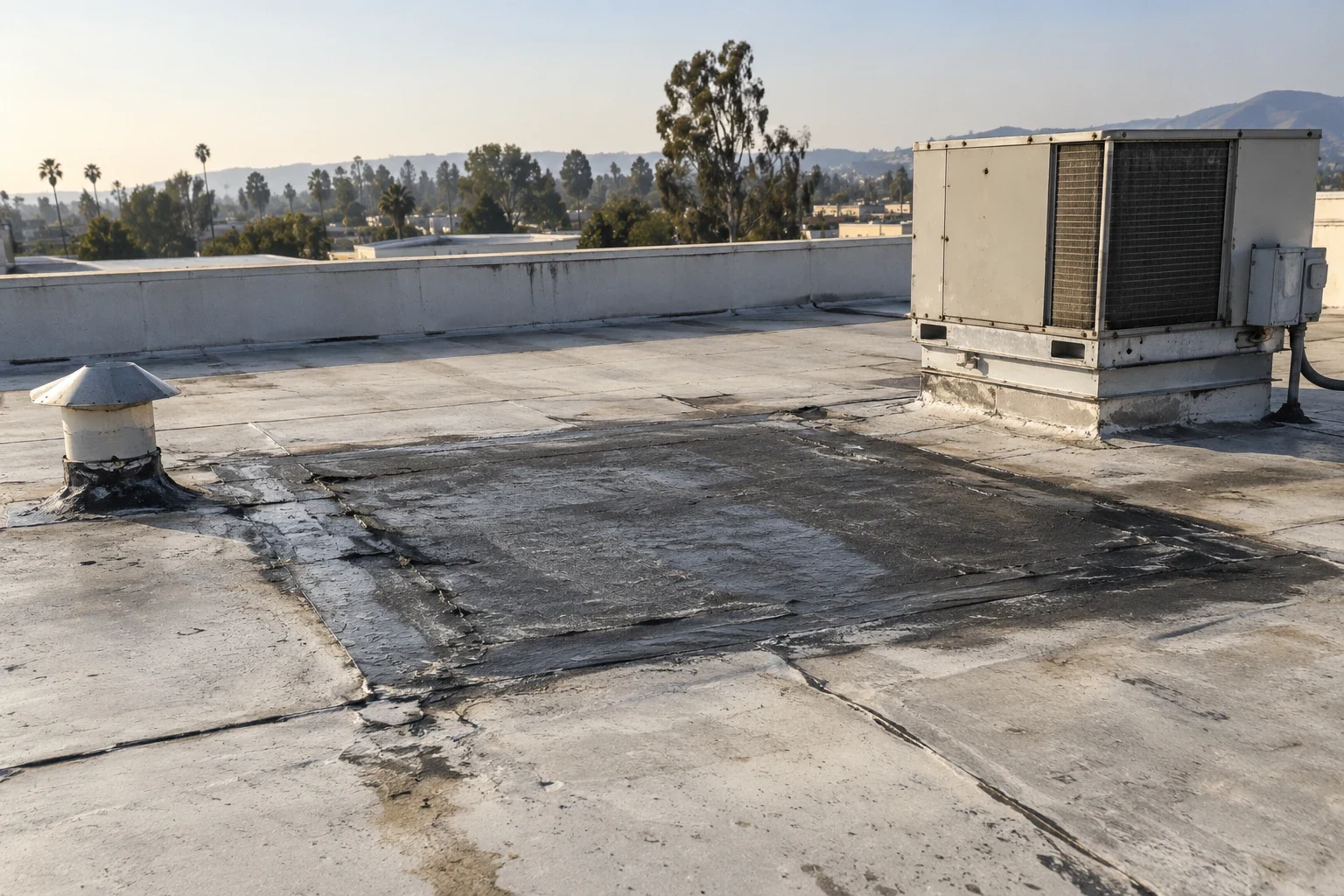
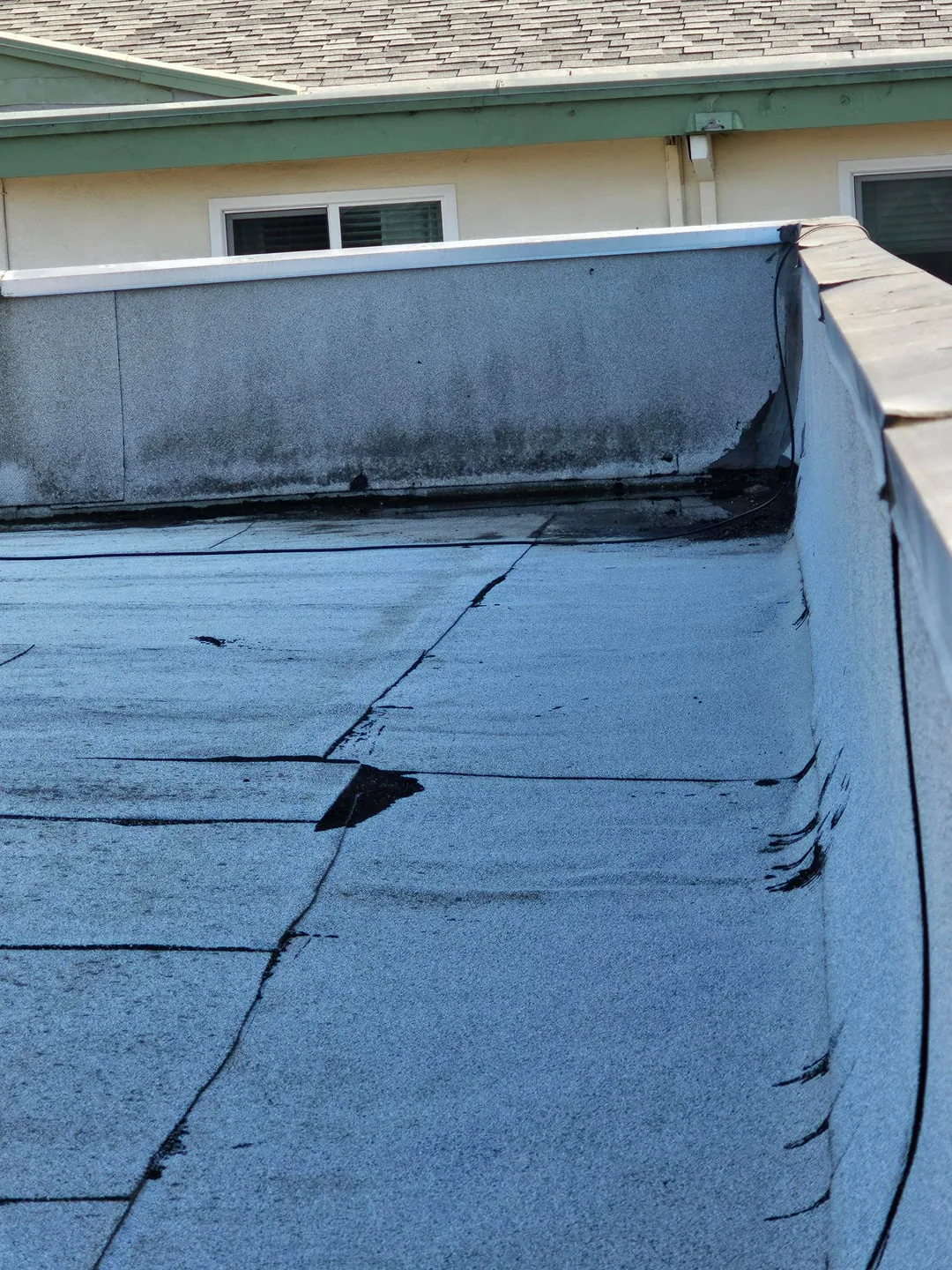
A hands-on check of the suspected route can show details hidden in a broad photograph. We examine earlier patches and the surface a new repair would join. Old treatment may need careful removal, with the manager's permission, before the damaged edge can be assessed. We explain which positions were reached and where further access is needed. That makes the next estimate clearer without assuming an obscured detail is either sound or damaged.
Testing: answer a defined question
Testing is chosen to answer a specific uncertainty about the leak. Before it proceeds, we discuss the method, obtain permission and arrange protection for the spaces it could affect. A water-based test may suit some construction, but flooding a roof or restricting outlets is not a general tracing procedure. We identify the detail examined and explain what the result demonstrates, keeping any remaining route open for further investigation rather than claiming one test answered everything.
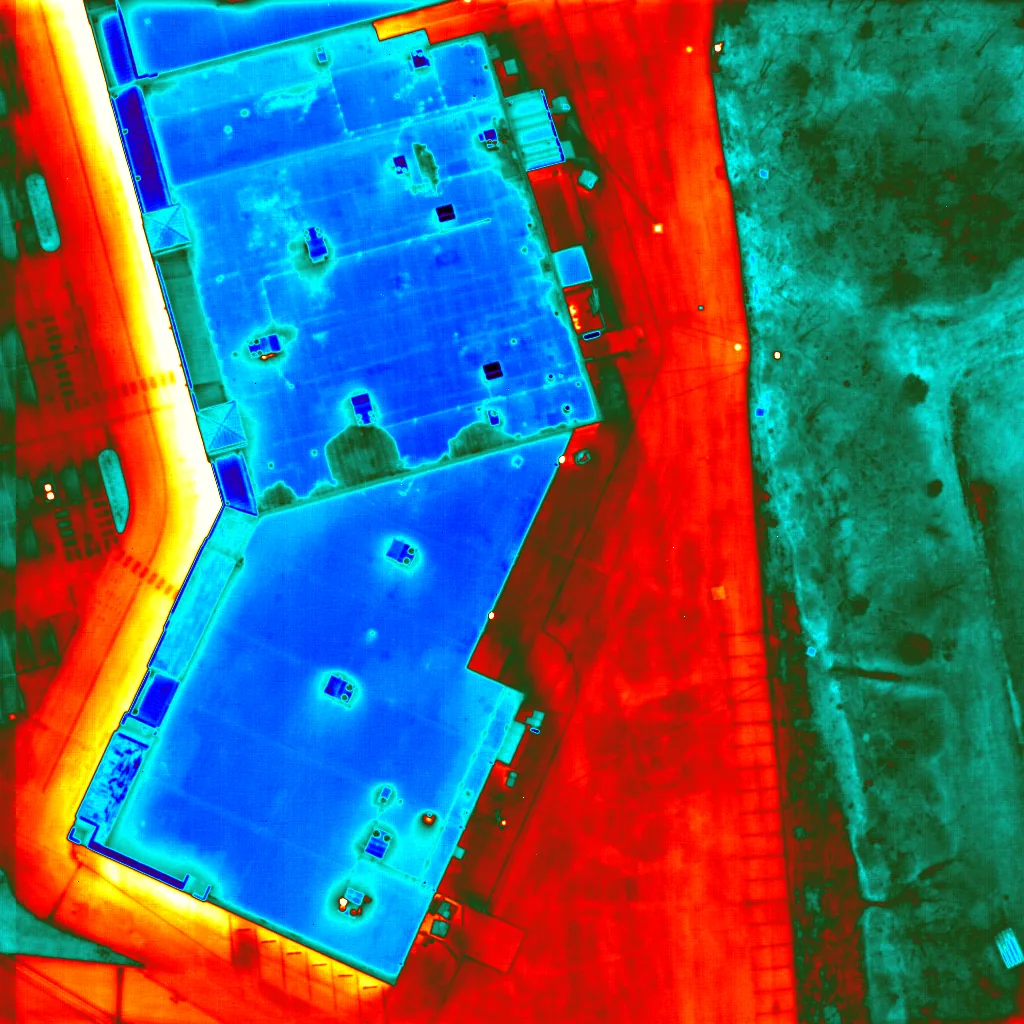
If moisture extent changes the remedy, a suitably planned thermal evaluation can help identify positions for further investigation. Patterns are interpreted for the assembly and conditions, with relevant material confirmation before they support wider work quantities. A sample records local layers and condition. The manager receives the confirmed finding separately from a suspected area, making the next approval proportionate to the evidence rather than an estimate based only on image appearance.
Repair: prepare the final connection
The installed membrane determines compatible components and the joining procedure. We inspect contamination, old patches and the material remaining at the proposed boundary before application. A thermoplastic TPO repair connection needs a suitable welding surface and checks appropriate to the detail. A rubber or bituminous correction has different preparation requirements. We locate the actual task, including cleaning or removal needed to reach sound material capable of receiving the new connection.
An open equipment cabinet or wall joint needs repair above the roof flashing as well as a sound connection below it. The equipment or wall contractor handles that upper work, and we coordinate the surfaces roofing needs to join. A rebuilt flashing detail may be part of the remedy without closing the cabinet or wall opening itself. The manager can arrange both tasks while access to the junction remains available for the finished repair.
Local operations: obtain usable access
Sunnymead Boulevard has office, retail and service buildings, while Moreno Valley Industrial Area is a separate employment district. For a leak along the Sunnymead Boulevard Corridor, we ask which rooms and entrances need protection during inspection or repair. The manager identifies the person who can provide access to the affected space. If that room or an exterior detail cannot be reached safely at the visit, we explain the access needed to continue tracing the route.
In the Moreno Valley Industrial Area, active yard routes and equipment access can influence how the crew reaches a suspected detail. We agree on a practical approach and a place for repair supplies with the building contact. Any necessary HVAC or electrical operating change is scheduled by the qualified service team. The roofer's entry arrangement remains separate from that shutdown and restart, so the inspection can proceed against conditions the manager has actually coordinated.
Interim work: state the limit
An active leak may need temporary protection while the permanent repair surface or an adjoining component is prepared. We assess what can be done safely and explain the position addressed and the remaining work. Calls are received day or night, including weekends and holidays. We discuss attendance and feasible measures against current conditions and available crews, then tell the manager what access and protection are needed to carry out the next step.
Heat, winter rain and regional Santa Ana winds can change access and the conditions at an exposed repair. We check the actual surface against the selected material instructions before applying it. A wet or contaminated area may need more preparation, and an unfinished wall detail may need the other contractor first. We explain that sequence and the protection suitable while it is pending, keeping the manager informed about what can proceed and what must wait.
Follow-up: check a recurring drip
The completed repair is photographed against the original roof mark, with preparation, components and relevant checks retained in the work record. The follow-up is selected for the corrected detail and suitable conditions. An immediate change in the indoor symptom is recorded but does not alone prove that every route has been resolved. Later information is compared with the installed correction, weather and any service activity occurring after the work.
If water returns, we revisit the repaired detail and compare the new timing with weather and equipment activity. The patch may have changed, or a different component may need attention. We explain the finding instead of automatically repeating the same repair. Wider removal or replacement needs its own roof evidence and estimate. The manager can then distinguish the next local correction from further leak investigation or a larger construction choice that still needs examination.
Commercial Roofing Questions
Can a dry-day drip prove condensation?
Timing helps choose the examination, but cannot establish condensation. We check the equipment, roof layers and operating conditions before reaching that conclusion.
Should a stain directly select the roof patch location?
Use the stain with timing and exterior findings. We choose the repair from the defect and water route established, rather than the indoor mark alone.
Why can leak tracing need another trade?
A wall joint or equipment cabinet may need its own repair above the flashing. We coordinate that work with the surfaces the roofer must join.
Does temporary symptom relief close the investigation?
Observe the repaired detail under suitable conditions. An unresolved route or later equipment change still needs examination even if the drip stops briefly.
Commercial Roofing Moreno Valley handles commercial roof repair, replacement, inspections, coatings and maintenance across Moreno Valley, Riverside and the Inland Empire. Request a roof assessment or call 555-555-5555.
Related Roofing Work
Tell us where water appeared
Send the room location, timing and recent roof or equipment changes. Include the roof plan and access contact so we can examine the possible routes and explain the correction or next check.
Request a Roof Assessment555-555-5555