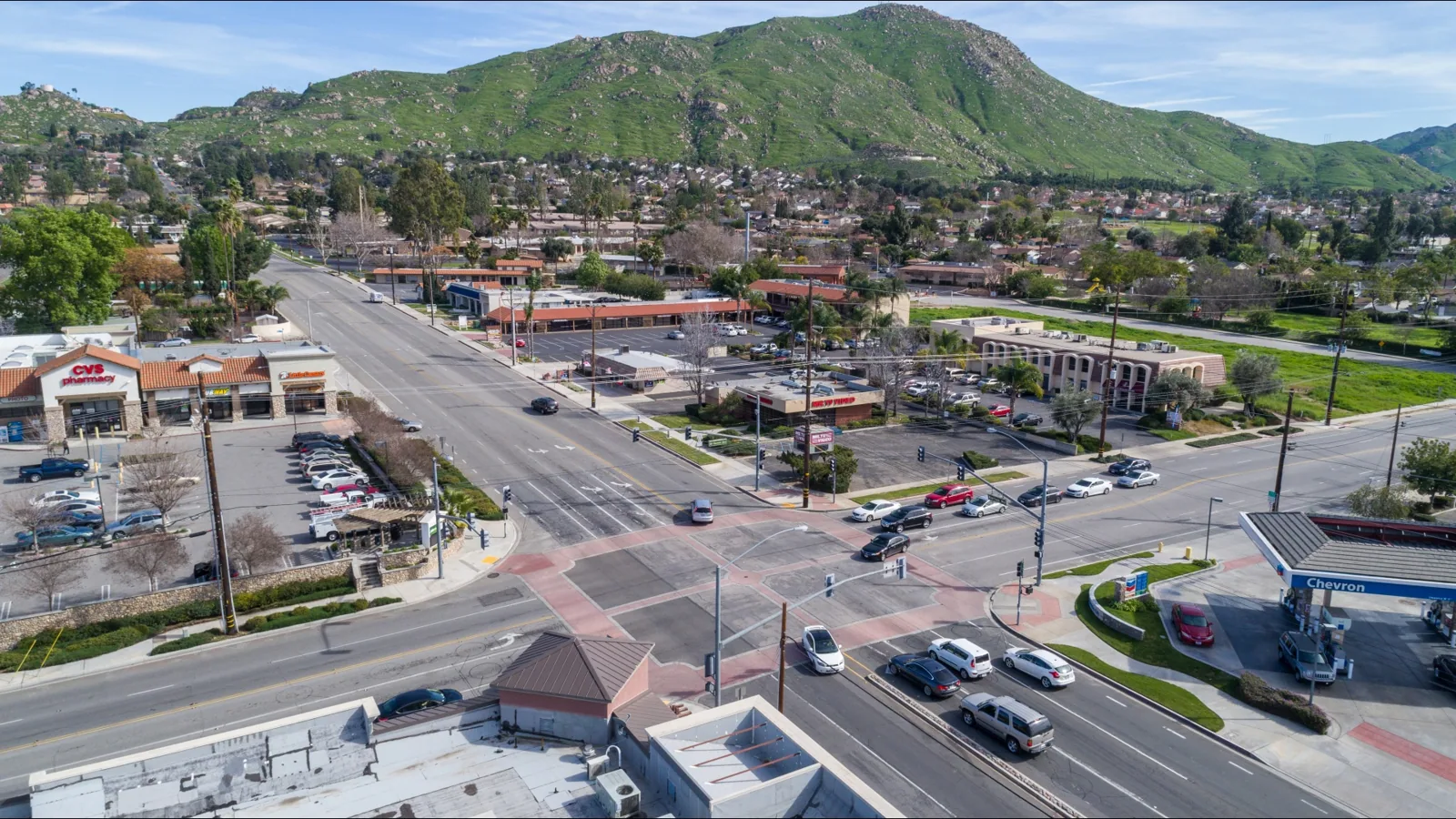
A Grand Terrace roof file should separate the roof finding from any nearby development plan. Barton Road includes a Village Commercial planning area in the City's specific plan. The City also announced approval in June 2025 for two standalone restaurant buildings there, but that approval is not proof that construction is complete. We inspect the property named in the work order, mark the affected roof zone, and record the materials and details that support a repair decision.
The Barton Road project description includes demolition of an existing commercial building and new parking and public improvements. That describes planned reinvestment, not the condition or assembly of a separate roof in Grand Terrace. Regional summer heat, winter rain, and Santa Ana winds affect safe field timing when a repair exposes the roof. Moreno Valley, CA lies in the same Inland Empire forecast area, but those regional patterns guide work planning only; they do not prove damage or define design loads at an individual property.
Planning context: keep project status and roof evidence separate
Planning documents can help a manager understand where commercial changes are being considered, but roof scope still begins with a property inspection. We note whether an assignment concerns an existing building or a project under construction, then confirm access, drawings, and the responsible contact. An approved project is not automatically a completed structure, and the plans do not establish its eventual roof material. Those details belong in the project documents and field record.
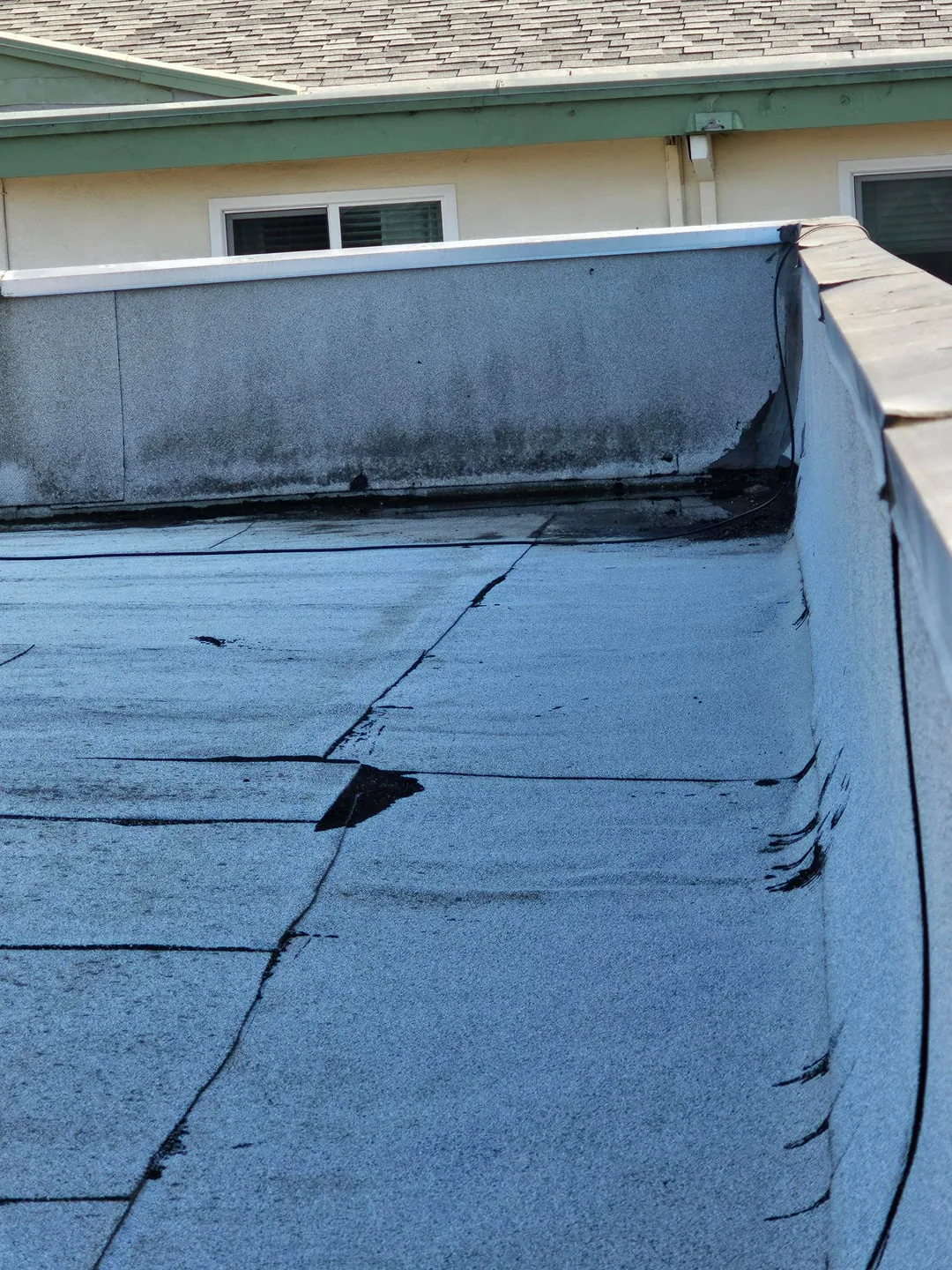
For a roof already in service, we compare the reported issue with the membrane, seams, drains, edge conditions, and prior repair marks. The inspection identifies visible defects and flags hidden conditions for testing. A commercial inspection can map these observations; a written condition record connects photos to the marked roof area and preserves the recommended next action. This is useful whether the owner needs a small correction or a capital review.
The specific plan's Village Commercial label identifies a planning area along Barton Road. It does not mean every building in Grand Terrace has the same operation, access route, or roof system. We ask the site representative which entrances and loading areas may be used, then record any limits that affect staging. The work record should distinguish supplied access instructions from conditions observed on the roof itself.
Roof observation: trace the reported condition
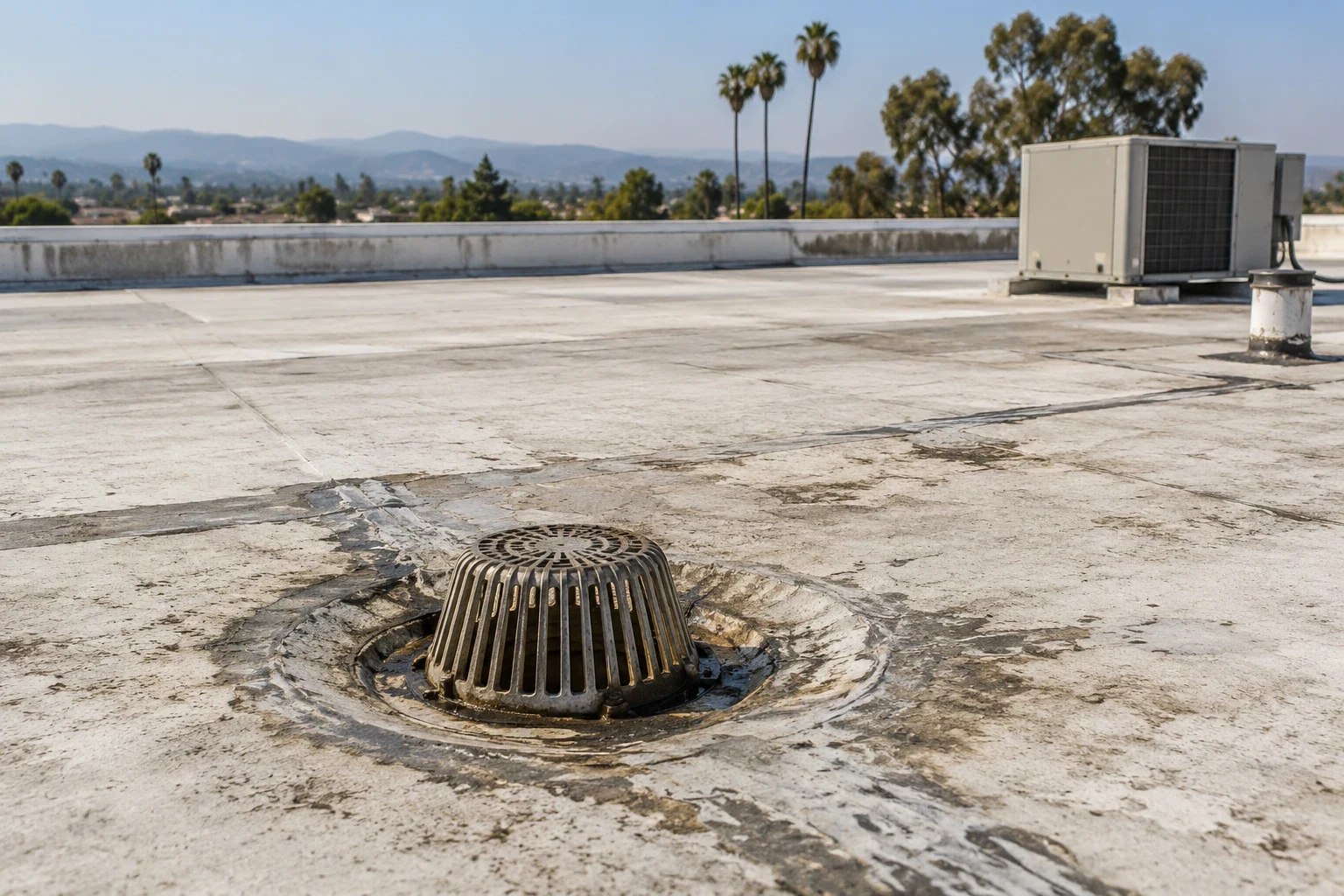
A leak report becomes actionable when its location can be matched to a roof detail. We compare the interior mark or service ticket with drains, scuppers, penetrations, seams, and wall transitions above the affected area. The source may be a failed flashing, a split seam, a blocked outlet, or a condition outside the first visible stain. We label photographs and separate a confirmed defect from a question that needs moisture testing.
When several repairs have been made, we plot them on one plan and look for a shared boundary or repeated transition. That can show whether the problem is isolated or whether a larger roof zone deserves review. A flashing assessment checks the tie-in at walls and curbs, while a drain inspection distinguishes an outlet issue from a low area in the roof plane.
We state which test would change the scope before opening materials. If a test opening is approved, its location, observed layers, moisture result, and temporary protection are recorded. The owner can then approve a defined repair boundary or request a documented change if the evidence supports more work. This decision point prevents a visible symptom from becoming an undefined removal instruction.
Work sequence: protect the roof at each stopping point
Heat, rain, and regional wind conditions can change the safe window for exposing a roof. We check the forecast, identify the amount of work that can be dried in during the shift, and confirm how materials will reach the marked zone. Any work near an occupied space also needs a protection plan for the area below. The plan should show the daily stopping boundary and who will receive notice if weather alters the sequence.
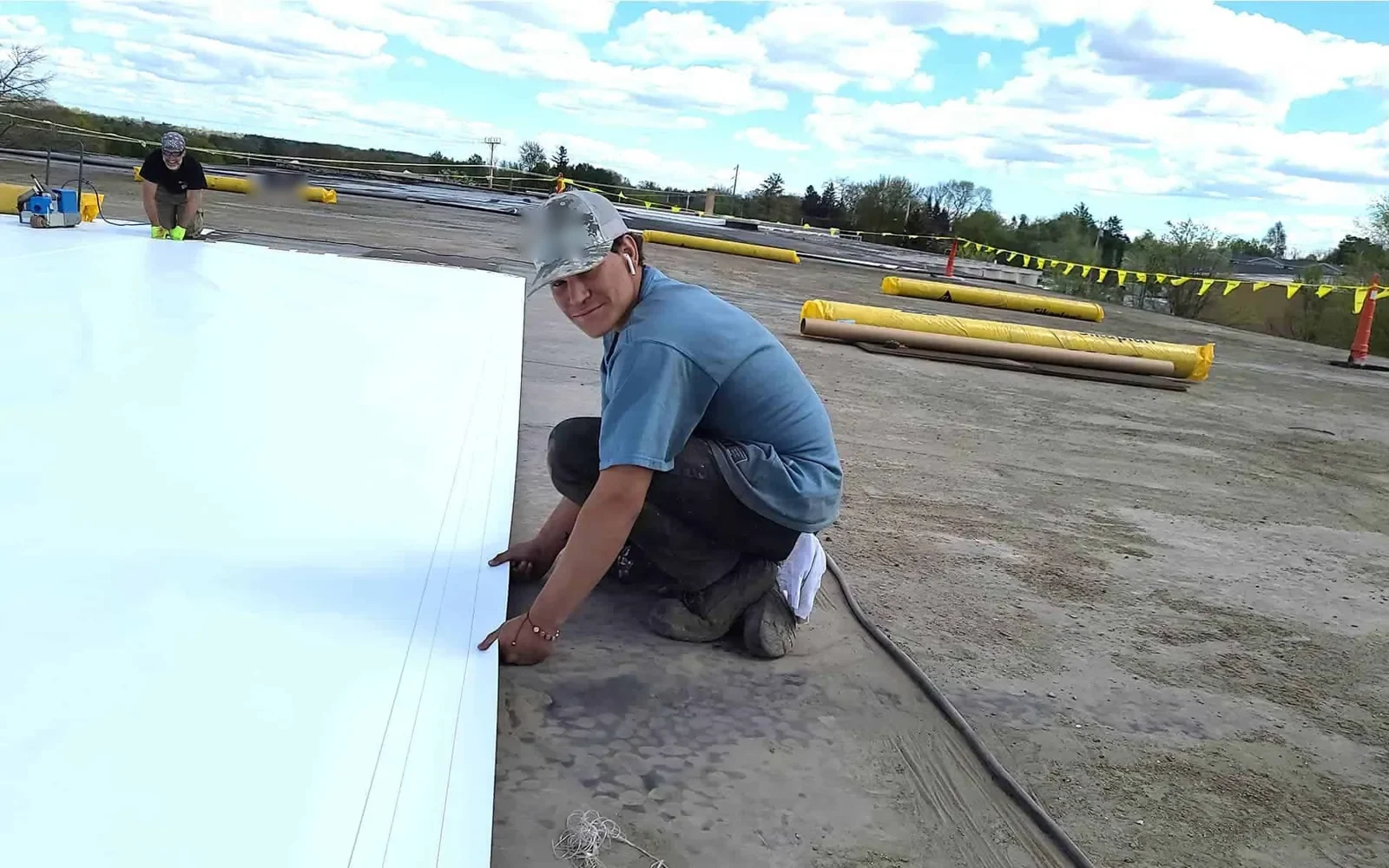
A small repair may need one controlled opening and a compatible tie-in. A broader project may advance by roof sections, with each area made watertight before the next begins. A phased reroof plan can coordinate staging and access with the property's operating schedule. We note what remains incomplete at each stage so a manager can route the right decision instead of relying on a general progress message.
The forecast guide describes regional seasonal conditions, not a prediction of roof failure in Grand Terrace. We use it to plan when an exposed detail can be worked and protected. If rain or wind changes the work window, we update the work record with the area secured, remaining tasks, and the follow-up check needed before the roof is returned to its normal inspection interval.
Scope choice: compare the repair with the roof's condition
A local correction is appropriate when the defect is limited and the surrounding membrane, substrate, and flashing can accept a lasting tie-in. A coating or restoration can be considered only after checking moisture, adhesion, and detail conditions across the proposed area. Replacement enters the discussion when deterioration or repeated failures extend beyond a repairable boundary. We connect each recommendation to findings in the condition map instead of using a project label as a substitute for inspection.
Access equipment, removal depth, disposal, penetrations, edge metal, and protection below all affect schedule and cost. The estimate should identify those items, list assumptions, and specify which hidden condition would need owner authorization. A repair scope can show quantities and tie-in details; a replacement plan should define removal, new insulation and membrane, drainage, edge work, and closeout documents.
If a Grand Terrace property is part of a broader portfolio, keep its roof-zone index separate from a Redlands or Loma Linda assignment. Different plans and repair histories should not be merged because the properties share a service contact. Separate work records make the approval packet useful to facilities, finance, and the next inspection team.
Closeout record: carry the next action forward
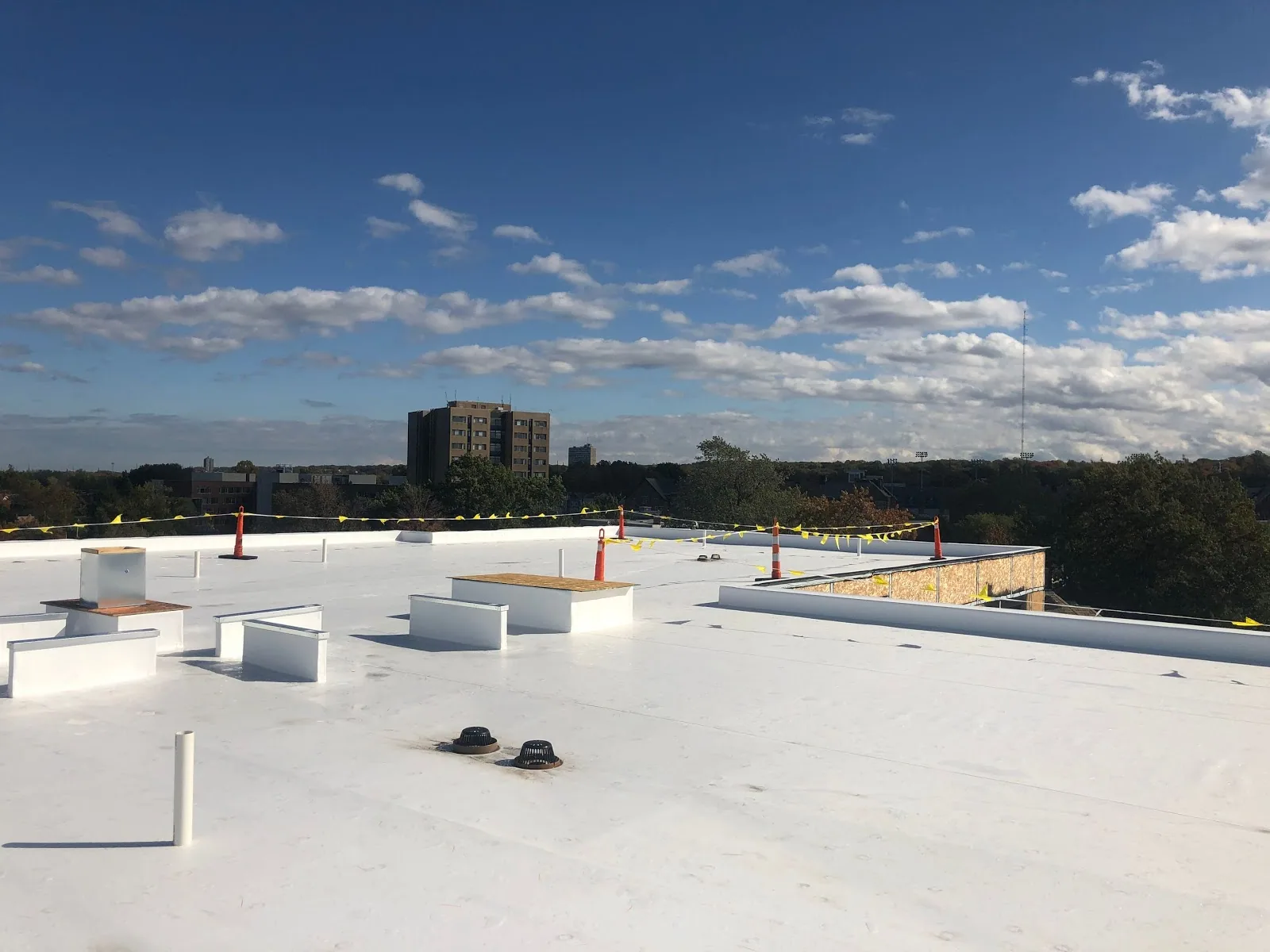
After work, the manager should be able to identify the completed roof area, installed materials, photographs, and any remaining observation. We note approved scope changes, access conditions, and whether temporary protection was removed. If another test or repair remains open, the record should name the responsible next action so the item does not disappear into a general maintenance note.
The next inspection interval can be based on the repair and any condition that needs observation. A follow-up might verify a flashing tie-in, check a repaired seam after weather exposure, or confirm that the moisture boundary remained stable. We make the interval specific to the roof zone and state what the visit is intended to confirm. That gives a property manager a practical work-order trail for both routine maintenance and capital planning.
Send the roof plan, recent work orders, leak locations, access limits, and approval path when arranging service in Grand Terrace. We will inspect the assigned area and return a marked condition record with the repair boundary and next decision.
Commercial Roofing Questions
Does the Barton Road approval prove the new buildings are complete?
No. The City's 2025 announcement documents approval, not completion. A roof scope for any property still requires current project records and an inspection.
How should an owner handle a leak report without a roof plan?
We identify the building and reported interior area, then create a marked roof reference during inspection and label each observation to that area.
Can weather change a repair sequence?
Yes. We plan the exposed area and dry-in point around the work window, then record any remaining task if conditions require a stop.
When does a local repair no longer fit?
A broader option should be compared when moisture, separation, or repeated failure extends beyond a sound tie-in boundary.
What should the closeout packet contain?
Keep the marked plan, photos, materials installed, completed boundary, approvals, open items, and next inspection action with the property record.
Commercial Roofing Moreno Valley handles commercial roof repair, replacement, inspections, coatings and maintenance across Moreno Valley, Riverside and the Inland Empire. Request a roof assessment or call 555-555-5555.
Related Roofing Work

Give the next approval a clear roof record
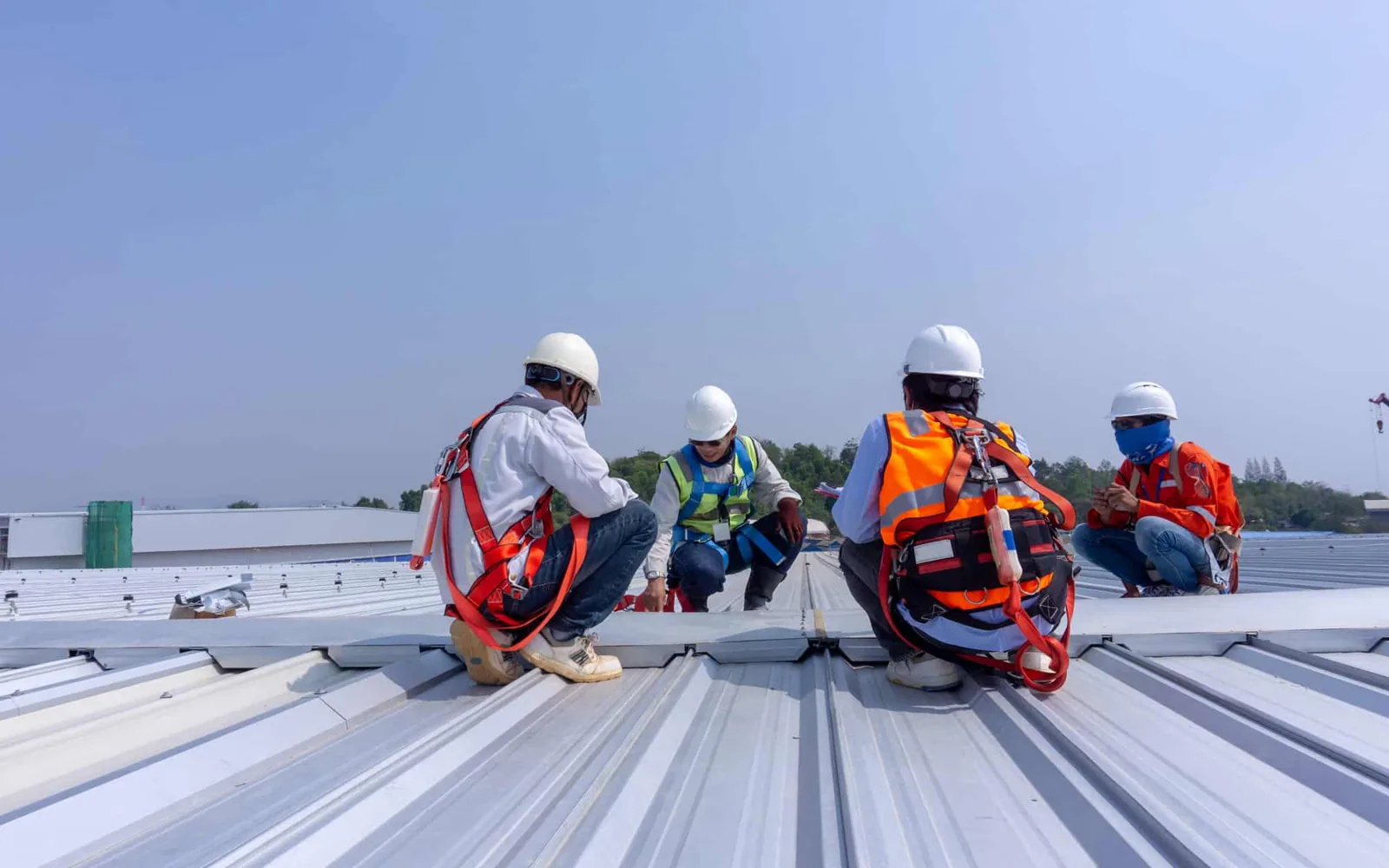
Share the roof plan, recent work orders, leak locations, access limits, and approval path. We will mark the inspected area and document the next supported action.
Request a Roof Assessment555-555-5555