
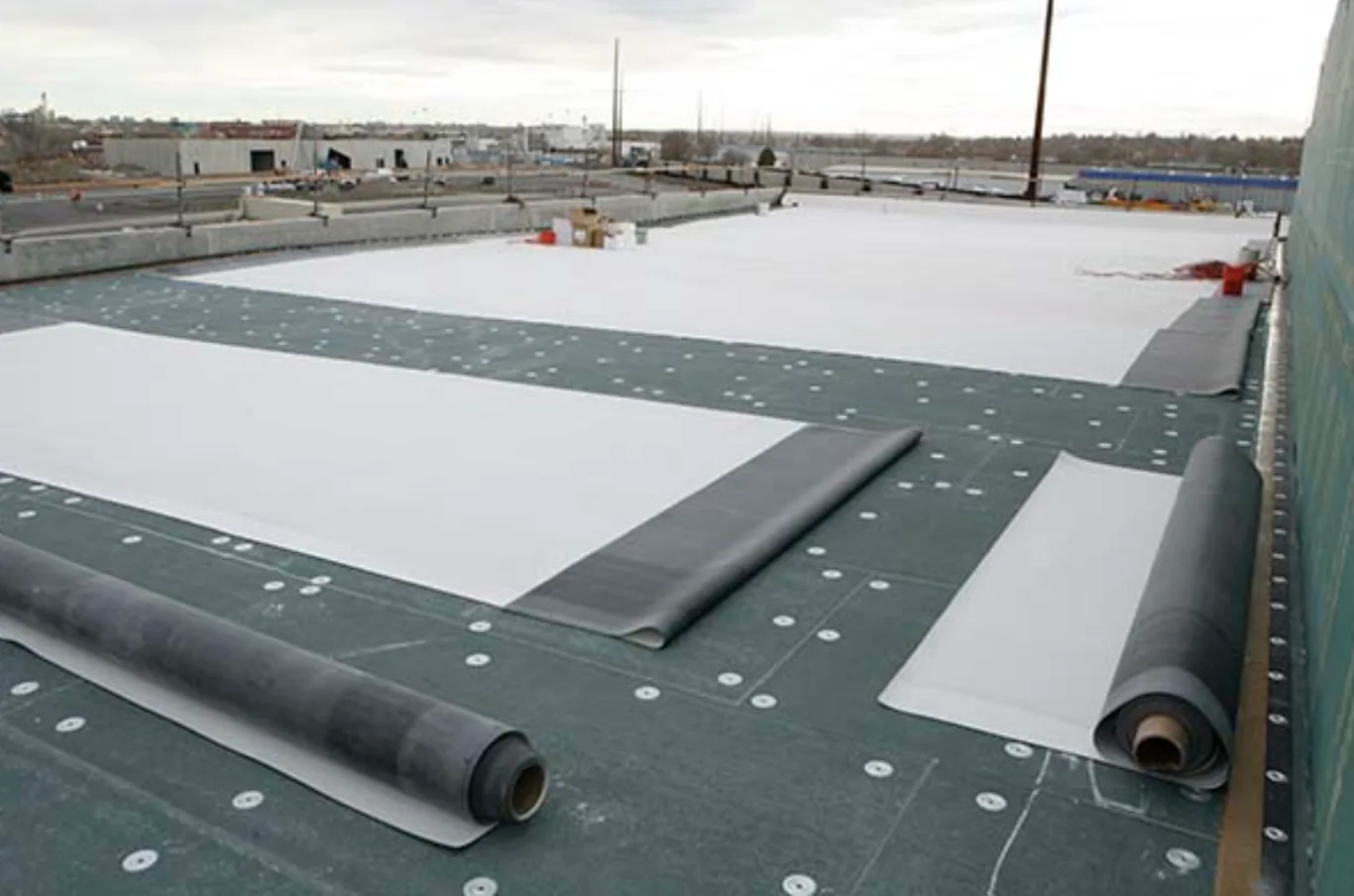
The EPDM work record should show which seam or flashing is involved and how far the repair needs to reach. Commercial Roofing Moreno Valley inspects rubber membrane roofs in Moreno Valley, CA, for open laps, punctures, shrinkage, drainage concerns, and repair compatibility. The sheet can look sound in a wide view while a lap edge has lost adhesion at a curb or drain. We mark that condition on the roof-zone index, connect photographs to the plan, and note whether the next step is a patch, a test opening, or work on another layer. This gives the property manager a defined approval point rather than a general roof note.
Sheet and repair material:
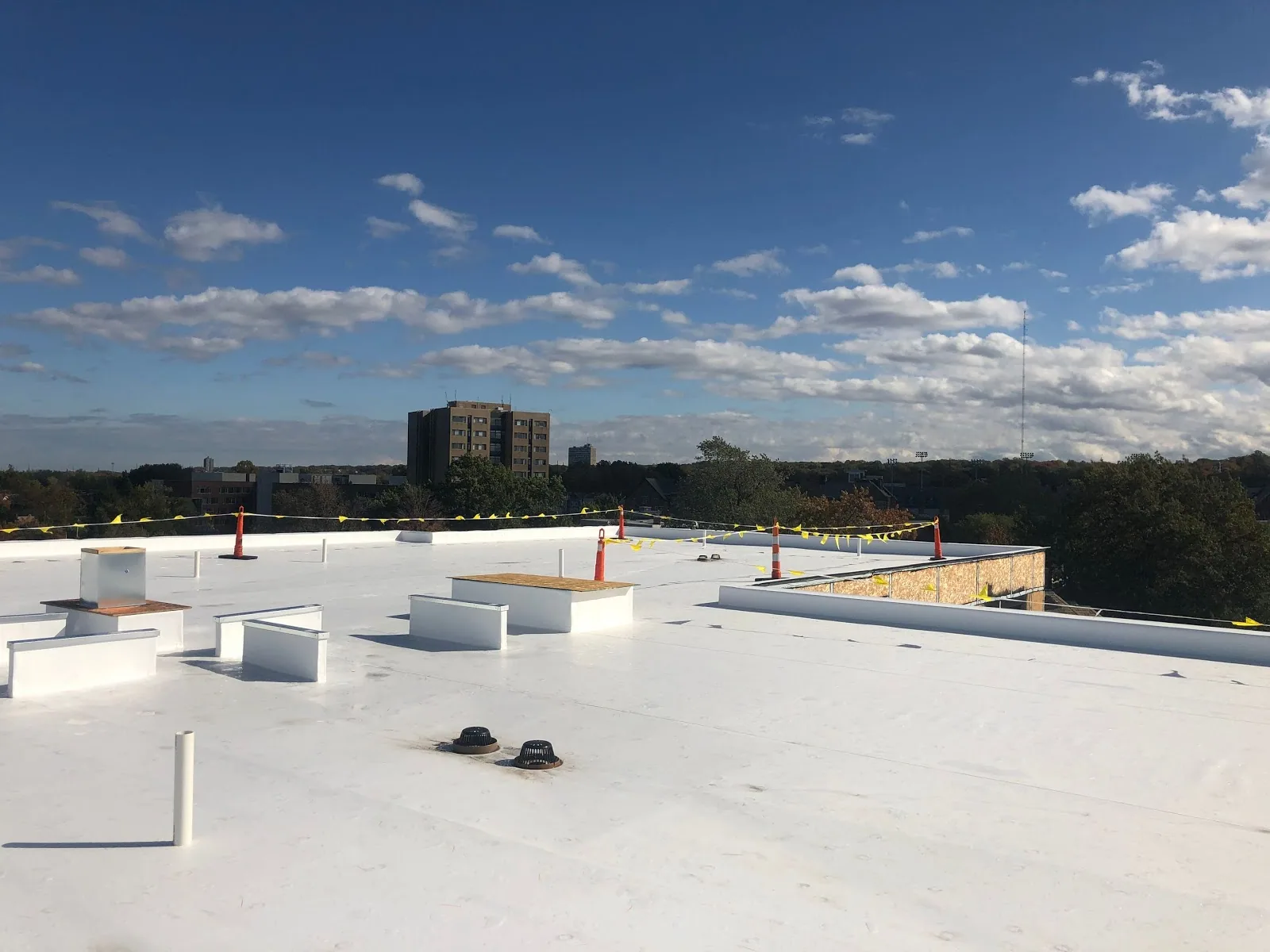
EPDM is a flexible rubber membrane often installed in broad sheets. We look for cuts, punctures, open laps, shrinkage, surface changes, and patches from earlier service. The existing repair product matters because some sealants and coatings will not bond to EPDM or can make later work harder. We identify the sheet and compatible repair method before applying cleaner, primer, tape, or adhesive. The work record lists the product used and its roof-zone location for the next inspection.
At Centerpointe Business Park, industrial and office uses share a broad employment area. A property manager can reduce repeated roof crossings by pairing an EPDM inspection with planned equipment service. We mark walkway pads, hatch routes, and recurring work areas alongside the membrane seams. A hands-on inspection can map the accessible sheet and identify a sample area when the current build-up or patch type affects the repair choice.
Lap and perimeter condition:
EPDM seams may use tape or adhesive systems, depending on the installed assembly. We check lap edges for lifting, contamination, fishmouths, wrinkles, and loss of bond. A repair needs clean, dry sheet and enough sound material around the defect to make a stable lap. If separation extends through several roof zones, the scope should examine sheet movement, attachment, and edge restraint rather than repeat isolated patches without a condition map.
Shrinkage can pull a membrane away from a parapet, curb, or pipe boot. We inspect the termination, pressure bar, counterflashing, and substrate behind the edge. A sealant bead over a moving gap does not rebuild the flashing. Edge metal and coping work can be coordinated when the EPDM connection meets a loose or corroded perimeter. The estimate separates the sheet repair from any metal component that requires replacement.
Adhesive and tape repairs need a surface prepared to the system instructions. Dust, release agents, old sealant, moisture, and oxidized material can interfere with the bond. We clean only the area needed for the repair and confirm the sheet is ready before applying primer or seam tape. At a lap, we roll the tape to full contact and inspect its edge after installation. The photograph shows the repair limit and the adjoining seam, giving the next roof walk a repeatable check.
Punctures and rooftop work:
Tools, dropped fasteners, sharp equipment feet, and dragged materials can puncture rubber sheet. We note the likely work path and check nearby seams or walk pads, then make a repair that extends onto prepared, compatible membrane. A small hole in the field may be simple to close; damage beside a curb or at a lap can require rebuilding the whole detail. The condition map records each mark so the crew can compare the initial defect with the repaired surface at closeout.
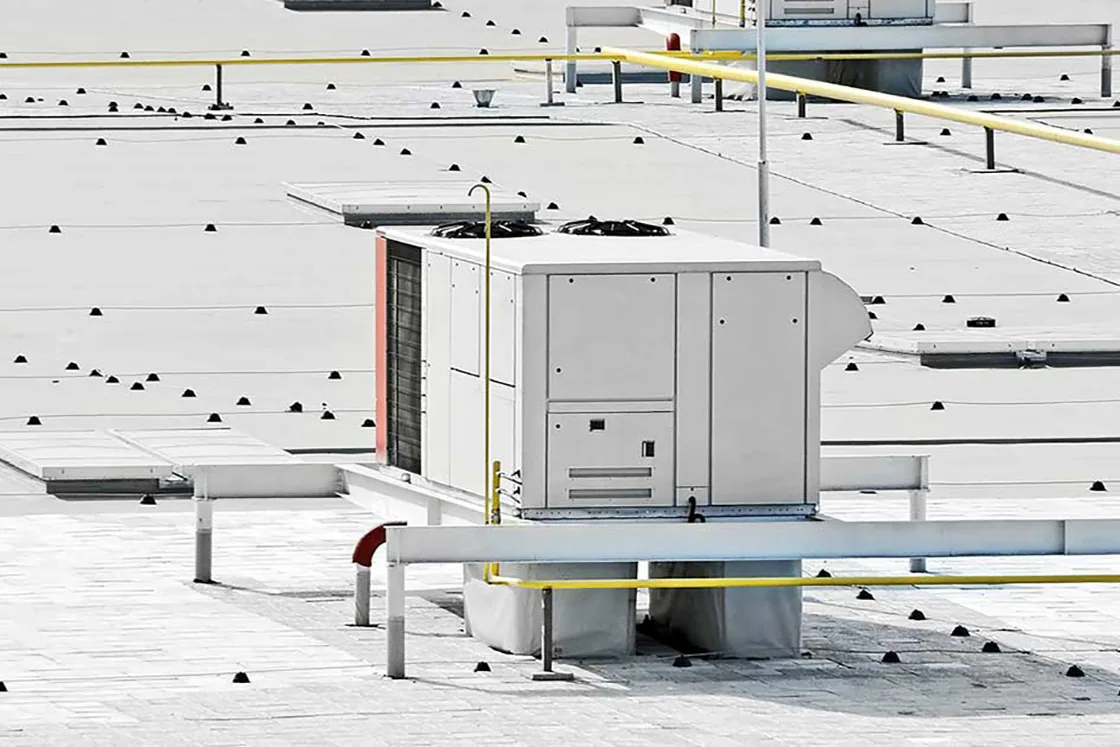
Riverside's Hunter Industrial Park includes industrial buildings and commercial offices beside I-215. That area's mix makes lift placement and service traffic practical planning details for nearby properties. We agree on the route for any replacement unit before the old equipment is lifted, then inspect the EPDM curb transition after the trade leaves. Equipment curb work can coordinate the opening and waterproofing; roof repair can address punctures and separated laps in the surrounding field.
Water and field movement:
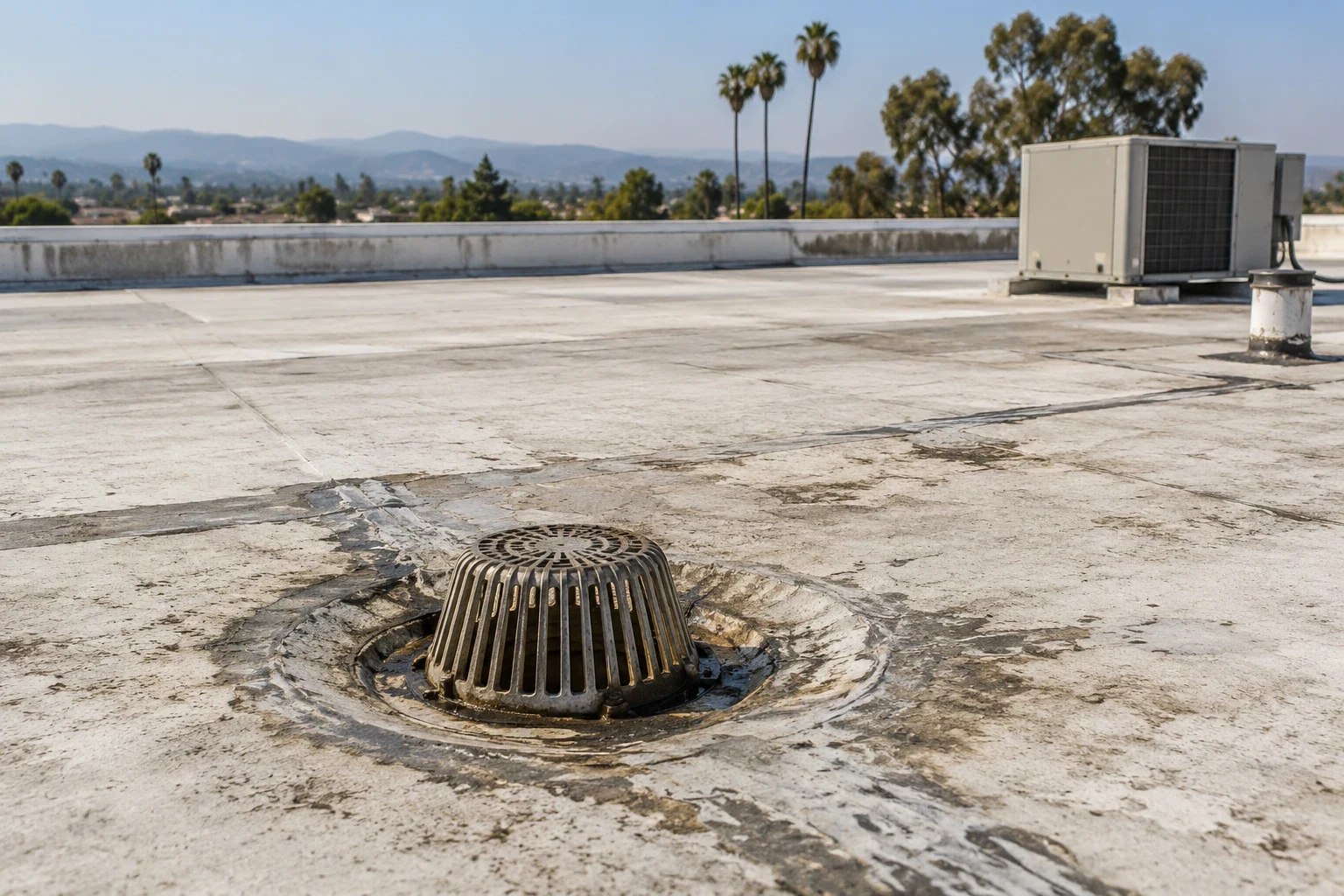
Rubber membrane can conform over a stable surface, but it will not correct a depression, loose board, or blocked outlet. We trace the water route to the drain or scupper, inspect wrinkles and patches that change flow, and note where the field holds water. If roof levels or insulation have settled, we measure the area before deciding whether slope correction, a drain adjustment, or a local repair is appropriate. The repair boundary should match the condition recorded, not only the interior ceiling stain.
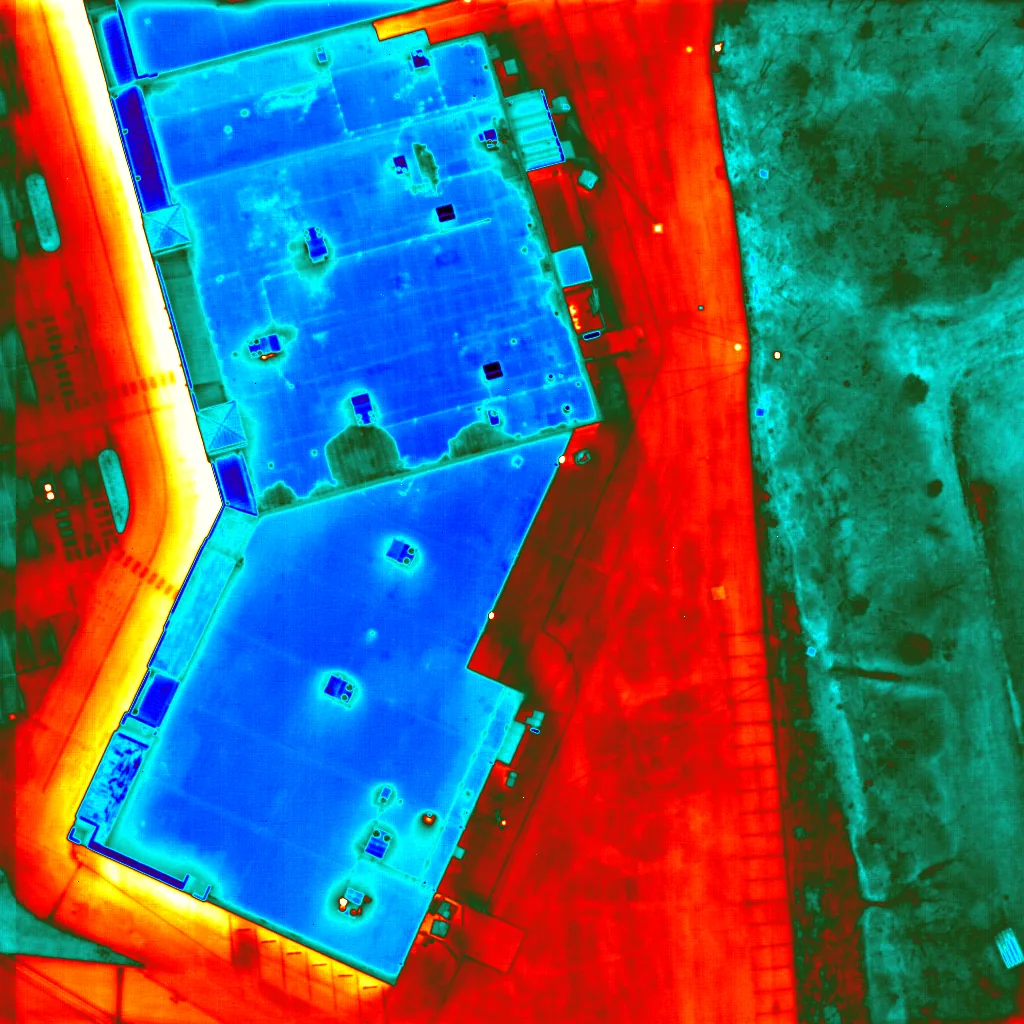
Moreno Valley falls within the Inland Empire forecast area. Winter rain and summer heat influence inspection timing and how long an exposed repair can remain open. We check the field forecast before removing material and close each work zone against weather at the end of the shift. Drain and scupper service can correct the outlet connection, while moisture mapping can locate wet insulation when testing will change whether the manager approves repair or replacement.
Repair boundary and record:
A localized EPDM patch is a reasonable option when the surrounding sheet remains bonded and the substrate is stable. If seams keep releasing, moisture extends beyond the marked area, or repairs cover much of the field, the manager may need a broader scope. We compare the moisture extent and repair history with current observations. A recover adds another roof layer only when the assembly and project requirements support it; replacement removes the affected build-up and creates a new transition at each edge.
Closeout lists the EPDM product when known, seam method, repair material, flashing location, and any condition held for follow-up. TPO membrane and modified bitumen have different seam and repair methods, useful when an owner compares replacement assemblies. a recover evaluation and Centerpointe service can be scheduled with the marked roof areas, building access rules, and approval packet.
Access and timing depend on the length of membrane to be opened, the need to move rooftop equipment, and whether moisture testing or a core is approved. A small puncture can be handled within a limited work zone; shrinkage along a parapet or wet insulation can extend the protection and replacement area. We separate immediate dry-in from permanent repair, list the follow-up test, and identify who must approve a larger opening before the crew proceeds.
Photo labels should match the same roof-zone index used on the next work order. If another contractor repairs a nearby curb, that location belongs on the follow-up route so a later seam check does not miss the transition.
Commercial Roofing Questions
How do you choose an EPDM patch material?
We identify the sheet and existing repair products, then use a compatible cleaner, primer, tape, or adhesive. The closeout names the material and roof zone for future service.
When does EPDM shrinkage need flashing work?
A pulled edge at a curb or parapet needs inspection of the termination and substrate. We rebuild the connection where movement has opened the waterproofing detail.
Can an EPDM puncture be repaired without replacing a roof section?
A field puncture can take a local patch when the surrounding sheet is sound and dry. Damage at a seam, curb, or wet board may need a larger boundary.
What should a manager provide before an EPDM inspection?
A roof plan, prior repair records, leak locations, equipment schedule, and access limits help us match observations to work orders and plan the inspection route.
Does ponding mean an EPDM membrane has failed?
Standing water calls for a check of the outlet, field level, seams, and substrate. We mark the water area and identify the correction that addresses its cause.
Commercial Roofing Moreno Valley handles commercial roof repair, replacement, inspections, coatings and maintenance across Moreno Valley, Riverside and the Inland Empire. Request a roof assessment or call 555-555-5555.
Related Roofing Work
Map the EPDM repair boundary
Share the roof plan, leak locations, prior patch records, equipment route, and access restrictions. We will map the sheet and its details, identify compatible repair materials, and return a scope tied to the marked roof zones.
Request a Roof Assessment555-555-5555