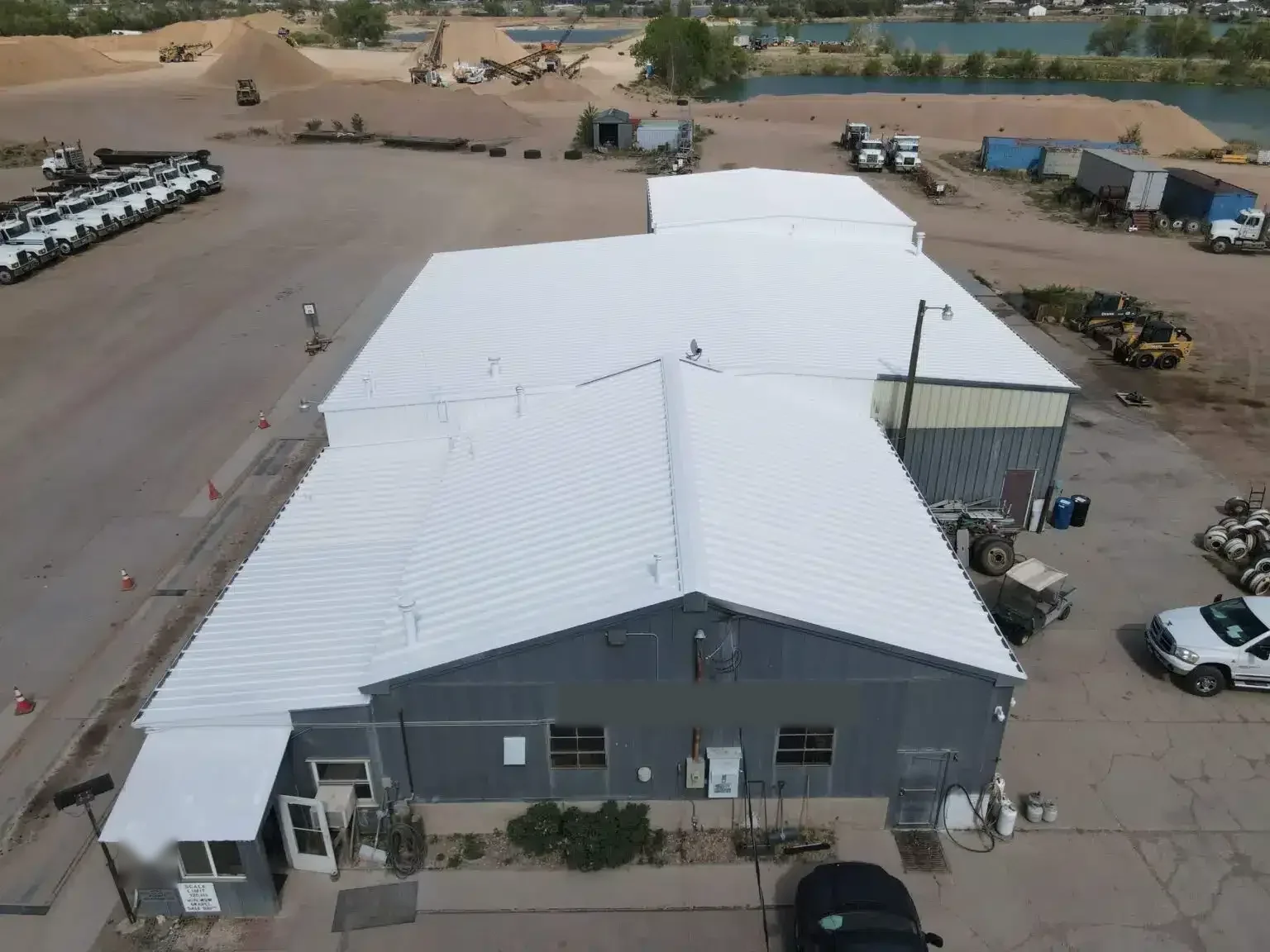
The SPF condition map should connect the foam, protective coating, and each roof opening to the repair decision. Commercial Roofing Moreno Valley inspects spray polyurethane foam systems in Moreno Valley, CA, for erosion, punctures, delamination, coating wear, and drainage changes. The surface can be shaped to move water, but a coating renewal will not correct loose foam or a wet substrate. We mark visible conditions, identify where adhesion or moisture testing could affect restoration, and keep each photograph tied to a roof zone. Moreno Valley's industrial areas and office corridors also make equipment access and intake protection part of the work plan.
Foam bond and profile:
SPF bonds to a prepared substrate and creates a continuous layer. We inspect for soft areas, cracks, voids, erosion, exposed foam, and changes in thickness. A ridge can guide runoff or indicate irregular application; we follow the roof levels and water path before proposing a slope correction. If the bond is uncertain, an adhesion check or core can show whether the foam remains attached and what layers sit below it. The test location and restored opening go in the work record.
The Moreno Valley Industrial Area includes separate industrial premises along streets such as Perris Boulevard and San Michele Road. For buildings with recurring equipment service, a marked route can limit traffic across foam and coating. A roof inspection can map penetrations, slopes, and soft areas, then isolate the test that would change the repair boundary.
A test area should be representative of the roof zone that will receive restoration. We locate it away from a drain edge or curb corner, document the coating and foam layers, and restore the opening after the bond is checked. If one side of a building has a different application history, it may need a separate test. The result tells the manager whether the proposed preparation method is ready for that zone or whether removal and replacement should be priced instead.
Protective coating and preparation:
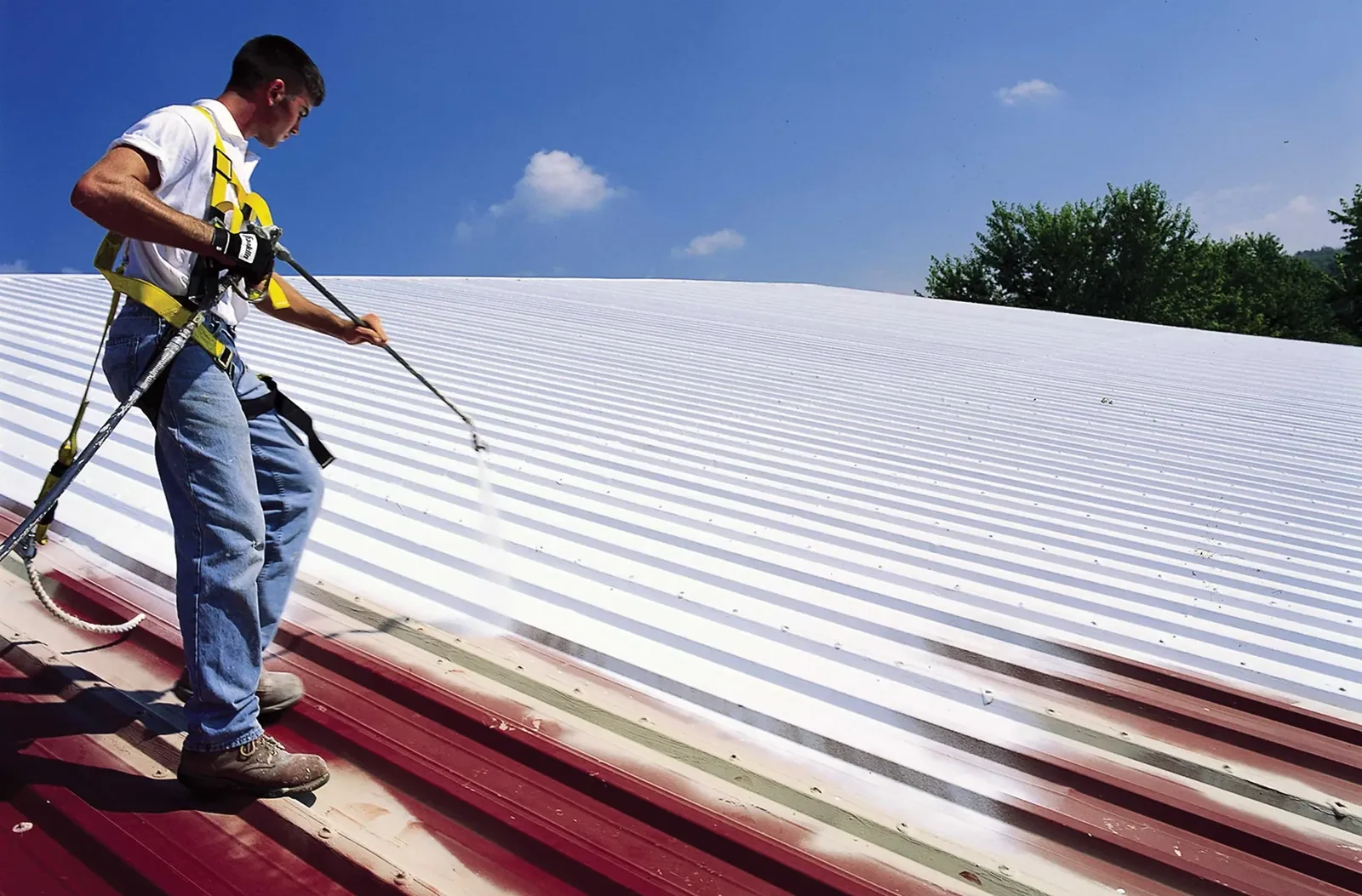
The coating shields SPF from weather and foot traffic. We check film wear, peeling, cracks, exposed foam, and repair compatibility before selecting a restoration material. A new coat needs a clean, dry surface and preparation matched to the existing product. If coating has separated over wet foam, the underlying condition needs attention before restoration. We record test patches and application limits, then compare them with product requirements rather than assume the same procedure works across every roof zone.
At Centerpointe Business Park, the development inventory includes industrial job space and a separate office area. That mix can change when a lift or coating crew can reach a roof and which intakes need protection. We plan around active equipment and operating hours, then identify ventilation, overspray, and access controls on the work order. Coating restoration can be scoped after the foam bond and substrate are mapped.
SPF repair materials need to meet the installed system and the shape of the damaged area. We cut back loose foam to a stable edge, rebuild the profile, and restore the protective coating across the repair. A thin surface coat over a low spot can leave water standing; a patch at a curb must carry the foam and coating up to the termination. The closeout photograph shows the transition and the marked field area, not only the broad finish color.
Water paths and curbs:
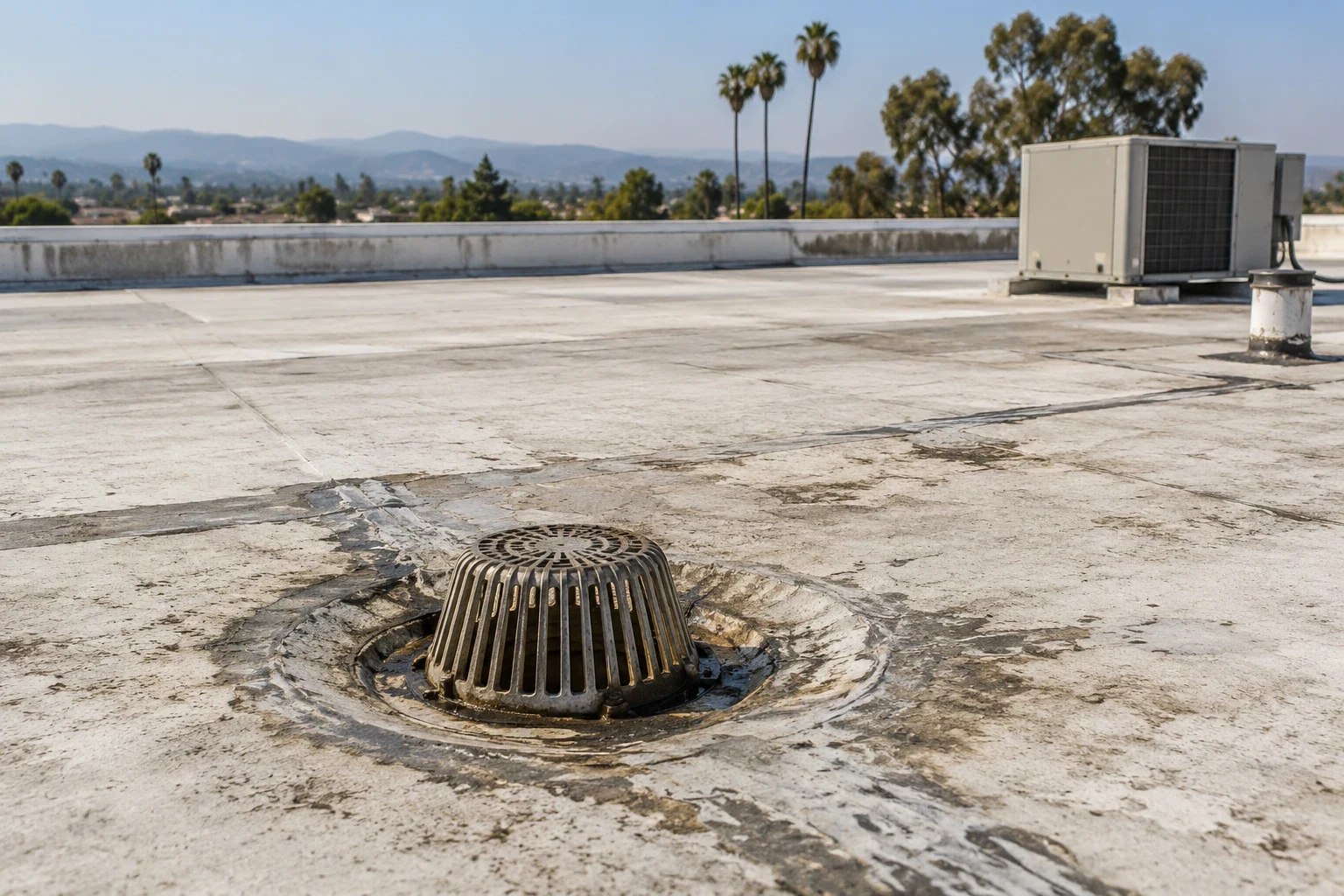
SPF can create crickets and direct water to an outlet, but field shape must preserve drain and overflow openings. We trace low points, water marks, curb edges, and scuppers. Added foam or coating must not form a dam against a wall or narrow the outlet. We measure the area before specifying additional slope or drain work. At a curb, the foam profile, coating termination, and flashing must connect so movement around the unit does not reopen the weather line.
The National Weather Service describes winter rainstorms and summer heat in Southern California. Those seasonal conditions affect application timing, cure, and protection of exposed foam. We schedule around the field forecast, keep drains open, and close each work area before the crew leaves. Drainage service can address an outlet or overflow path; curb coordination can sequence equipment work with the SPF transition.
Repair or restoration:
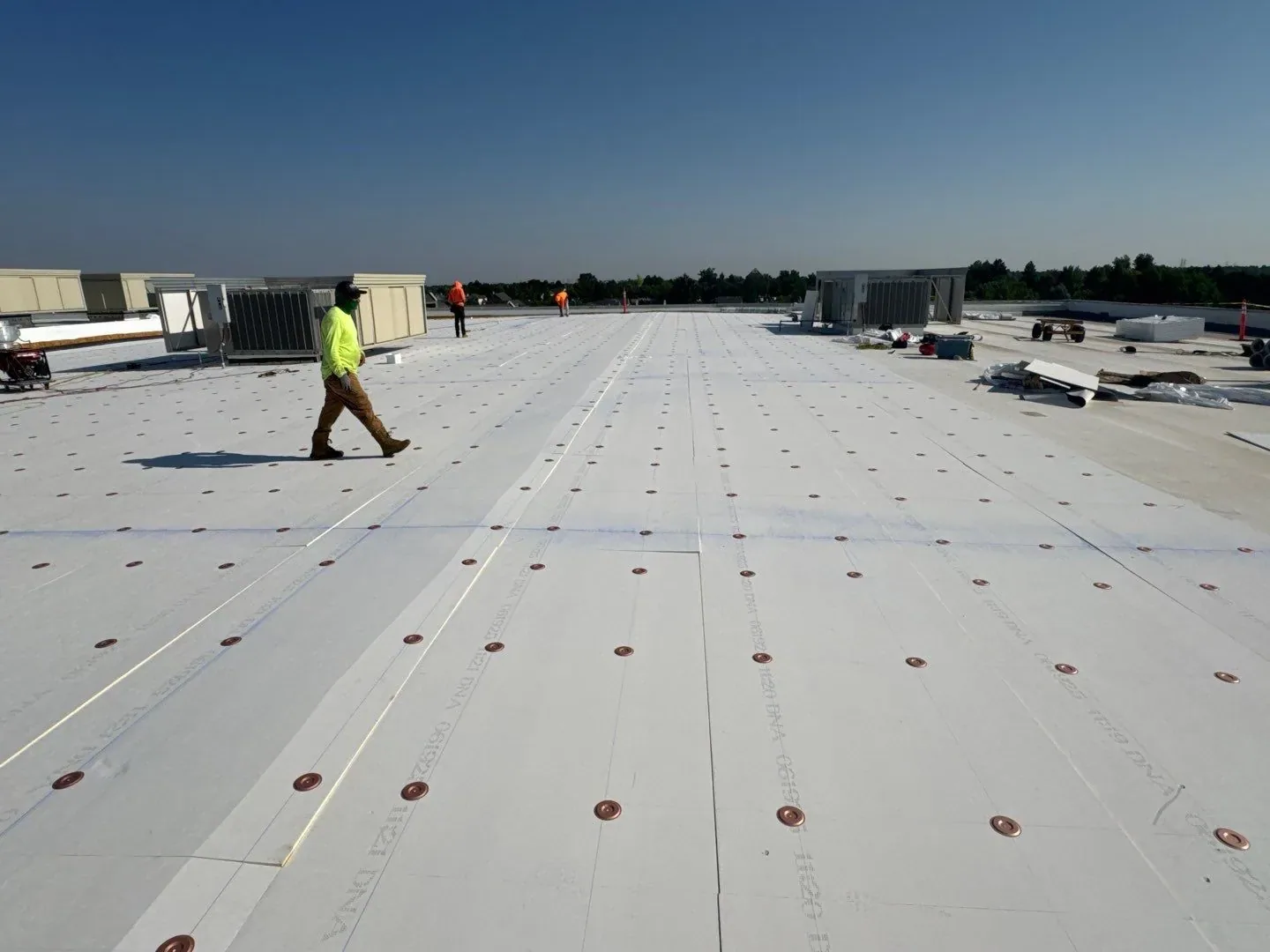
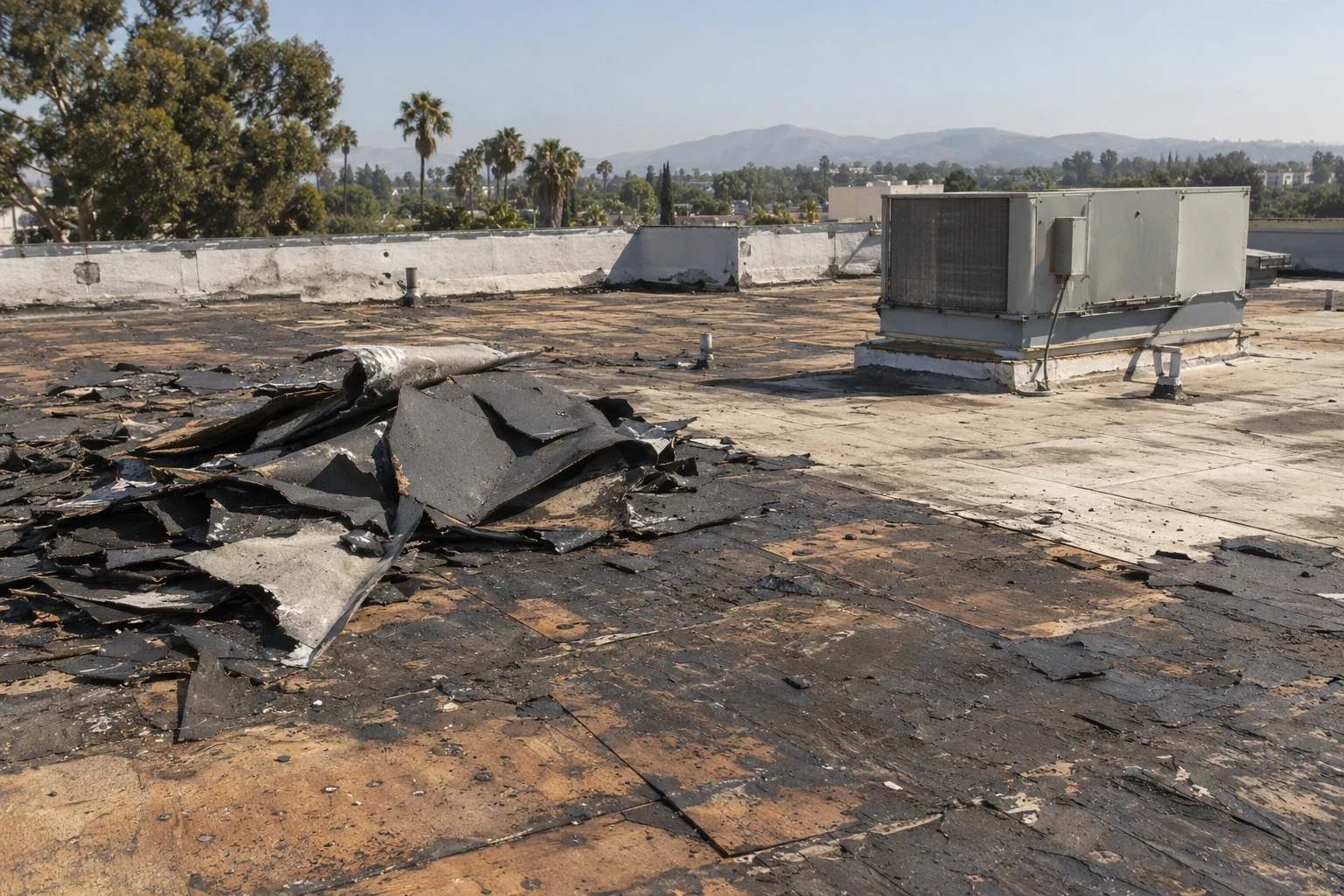
A localized puncture or worn coating may be restored when the foam is dry, bonded, and stable around the defect. Wider delamination, moisture, or exposed substrate changes the scope. We mark the affected area, note test results, and list which conditions remain concealed. A restoration can include foam infill, reinforcement, coating, and detail repair as separate items. If the roof requires removal, the plan defines the tear-off area and the protection needed beneath it.
Moreno Valley is situated at the SR-60 and I-215 junction, which can shape regional deliveries and lift scheduling. Each site still needs its own equipment route and staging area. A recover evaluation checks whether the existing assembly can support another system; replacement planning sets a new build-up when it cannot. We compare those options against the same roof-zone index and approved test areas.
Timing and cost depend on the number of foam cuts, coating preparation, lift access, protection of intakes, and how long the application needs to cure before traffic returns. If equipment must be lifted, the crew needs a defined route and a stable curb detail before the spray work starts. We separate those tasks in the estimate and identify the trade coordination that belongs to the owner approval path. That helps the manager release restoration without leaving a curb opening or service route unresolved.
Closeout and access:
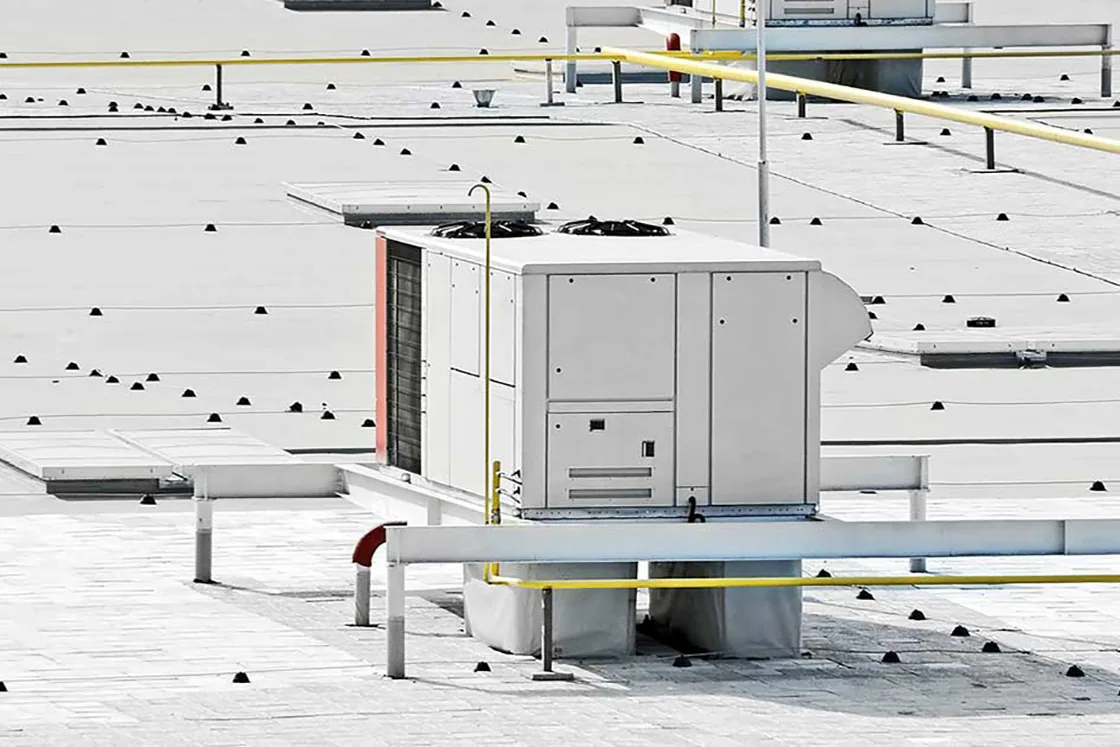
The work record lists foam and coating products when known, thickness or coverage requirements, repair locations, test results, and open follow-up. Photos show preparation, reinforcement, curb work, and final coating. The facilities team can then match a future patch to the installed materials. Where HVAC or electrical service will return, we note the path across the roof and any area that needs a post-trade check.
Access route, lift placement, ventilation, overspray protection, cure window, and number of repair zones affect sequence and cost. We identify which shift closes each opened area and what weather protection remains overnight. Preventive maintenance can check coating wear and drains at a defined interval. Silicone coating and acrylic systems have different product conditions. Centerpointe service can be coordinated with the building's access and approval path.
Commercial Roofing Questions
Can a coating fix a soft SPF area?
The foam needs to be bonded and dry before coating. We test a soft or separated zone and include foam repair or removal when the substrate will not support a new finish.
How do you set the SPF repair boundary?
We mark exposed foam, delamination, punctures, and coating separation, then extend the boundary to stable material. A test area can change the limit if moisture reaches below the foam.
What affects the cure schedule for SPF work?
Weather, surface condition, ventilation, coating product, and access to the roof affect application and cure. We set the work window around the field forecast and building operations.
Do drains need to be checked after a foam repair?
Yes. New foam or coating can change a low point or outlet height. We check the flow path and overflow opening before returning the area to service.
What should be in an SPF closeout?
Product names, repaired foam zones, coating coverage, test results, photos, and remaining follow-up help future crews match the system and protect the completed work.
Commercial Roofing Moreno Valley handles commercial roof repair, replacement, inspections, coatings and maintenance across Moreno Valley, Riverside and the Inland Empire. Request a roof assessment or call 555-555-5555.
Related Roofing Work
Document the SPF condition
Share product records, roof plan, leak zones, prior repairs, access limits, and equipment schedule. We will map foam and coating conditions, identify useful testing, and return a restoration or removal scope by roof zone.
Request a Roof Assessment555-555-5555