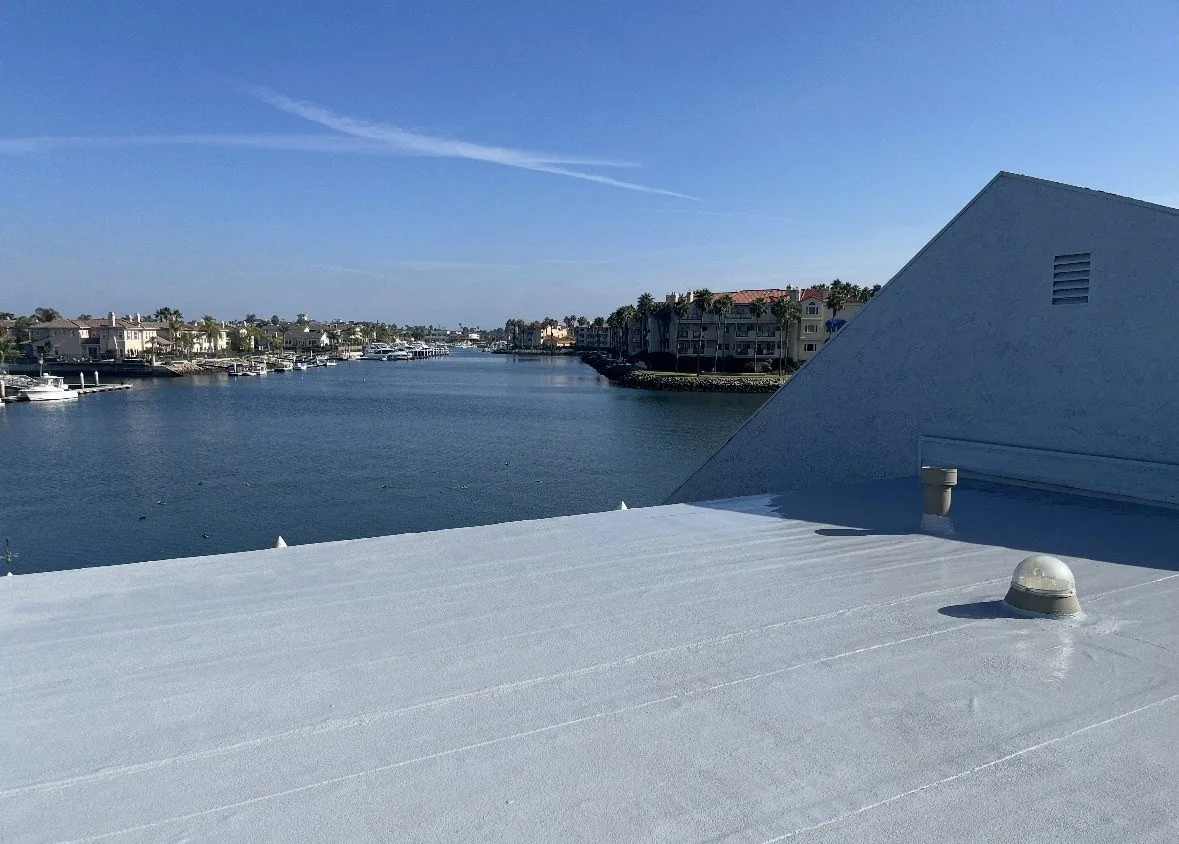
The silicone restoration record should show what the coating can bond to and which repairs must happen first. Commercial Roofing Moreno Valley evaluates silicone systems in Moreno Valley, CA, for adhesion, ponding, seam movement, flashing, and surface wear. A coating adds protection only when the existing roof and preparation support it. At the Moreno Beach Drive corridor and Perris Boulevard corridor, commercial and mixed-use settings make access and staging part of the project record. We mark test areas and visible defects, then give the property manager a choice among coating, repair, recover, or replacement where the roof condition supports those options.
Existing system and adhesion:
Silicone products do not bond the same way to every membrane, coating, or repair compound. We identify the existing roof, map material changes, and check for loose layers, open seams, wet insulation, and prior patches. A representative adhesion test shows whether cleaning, primer, or removal is needed. The test location should match the surface planned for restoration; a single result should not be applied to zones with a different layer history. We record the result and approved preparation method by roof area.
The City inventory lists several commercial opportunities near Moreno Beach Drive and SR-60, including distinct properties across a broader corridor. A roof coating decision still depends on the tested surface at each building. A roof inspection can map the roof and identify where an adhesion check changes the scope before materials are ordered.
Test results can vary between roof sections where old repairs or surface coatings differ. We record each sample's location, substrate, preparation, primer, and bond result. The manager can approve a single method for compatible zones and a separate removal or repair for a patch that fails. If the existing membrane has an unknown coating history, product selection waits for that specific area rather than extending an untested assumption across the roof.
Cleaning and repairs:
Cleaning removes dirt, chalking, oil, and loose material that can weaken adhesion. We select a method suited to the substrate and control wash water near drains, equipment, entrances, and parked vehicles. The prepared surface must dry within the product limits. Open seams, punctures, loose terminations, and failed curb flashings receive separate repairs; the coating should not be expected to hold together a moving joint or rebuild a curb connection. The proposal distinguishes preparation from detail repair.
At an occupied office or retail property, wash-water and access timing can affect entrances and service routes. We set a cleaning window with the facilities contact and protect intakes before work begins. Roof repair can address open seams or flashing defects first. Drain service can clear the flow path and repair the membrane connection at the outlet.
At curbs and penetrations, the crew checks that the coating terminates at a stable flashing and does not bridge a moving gap. Loose metal, failed sealant, or a damaged membrane needs correction before field coating. We detail each transition and note whether reinforcement is specified at corners or seams. That lets the facilities team inspect the vulnerable areas later and identify a new separation before water reaches the layers below.
Before cleaning, we locate HVAC intakes and decide where wash water can discharge. That protects active building systems and keeps the drainage path available during surface preparation.
Coverage and wet conditions:
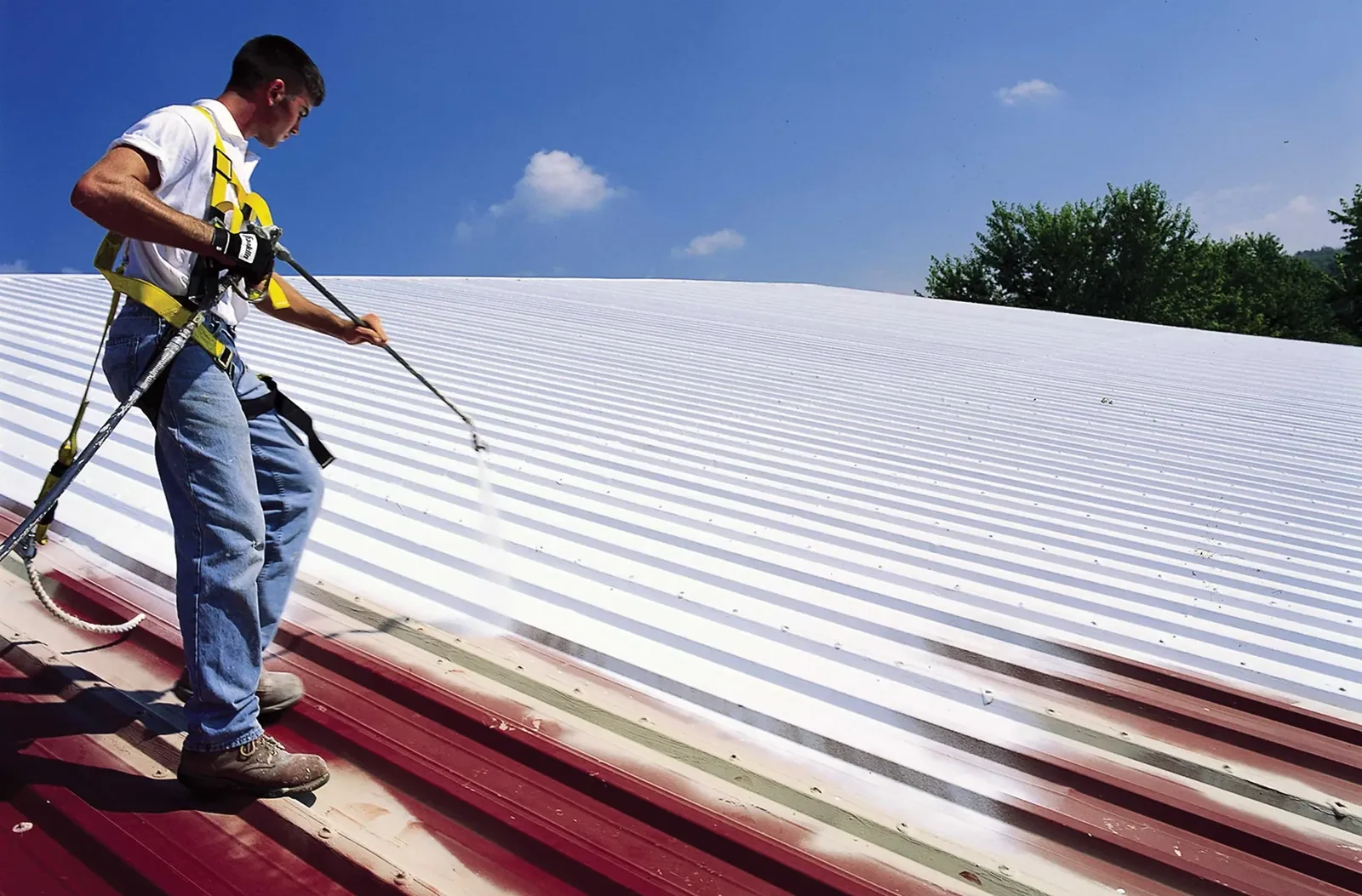
Silicone is installed at specified coverage and film thickness, often in more than one pass. We check material consistency, application rate, wet-film readings, reinforcement, and transitions around drains and curbs. A roof can look uniform while the measured thickness varies, so the closeout identifies the check locations. The approved product data sets the surface preparation and coverage requirements; the work record shows which roof zones received each step.
Moreno Valley is part of the Inland Empire forecast area, where summer heat, winter rain, and Santa Ana winds affect field timing. We check weather before cleaning and application, then protect each completed area until it reaches the specified cure. If rain enters the forecast during work, we adjust the sequence so drains stay open and the building remains protected. Coating restoration can be staged by roof area when access or cure time limits the full-roof schedule.
Ponding, drains, and edges:
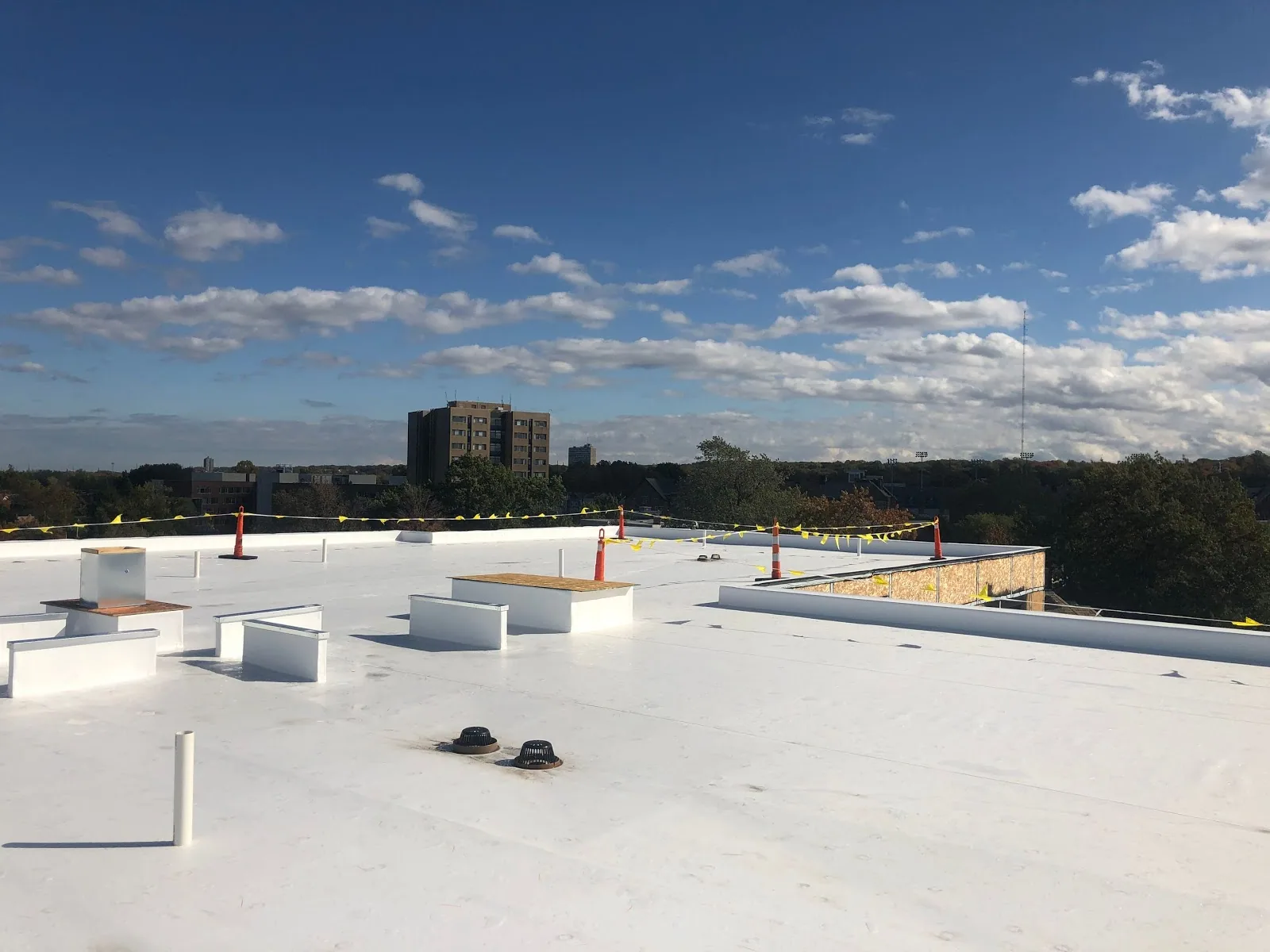
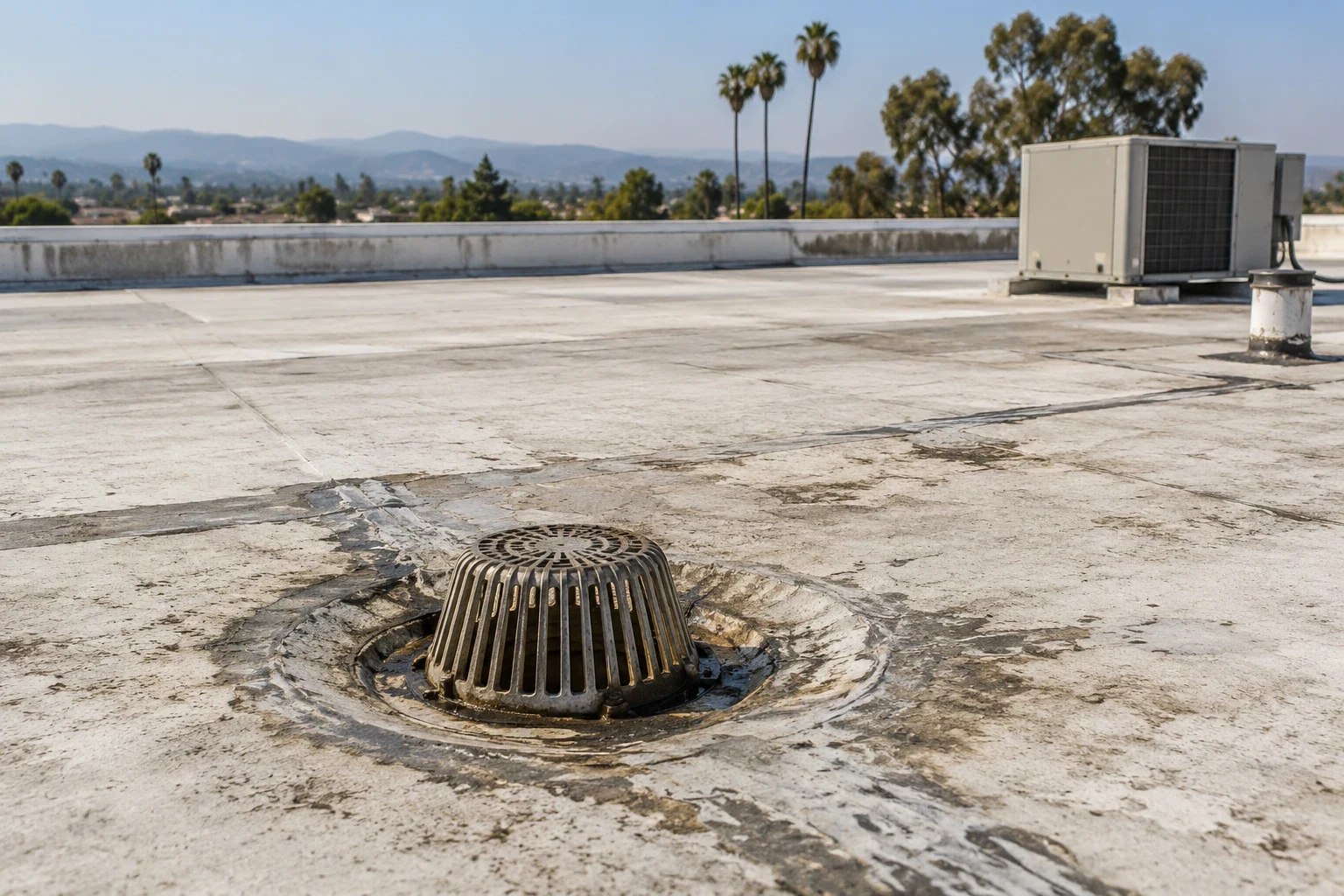
Silicone products vary in their ability to tolerate standing water. We inspect low areas, drain bowls, scuppers, parapets, and overflow openings, then compare those conditions with the selected product requirements. Repeated ponding caused by a depressed field may need slope correction before coating. Added film can affect drain and curb geometry, so the plan measures those transitions and keeps the outlet open. The owner receives the drainage correction as a separate work item if it is needed.
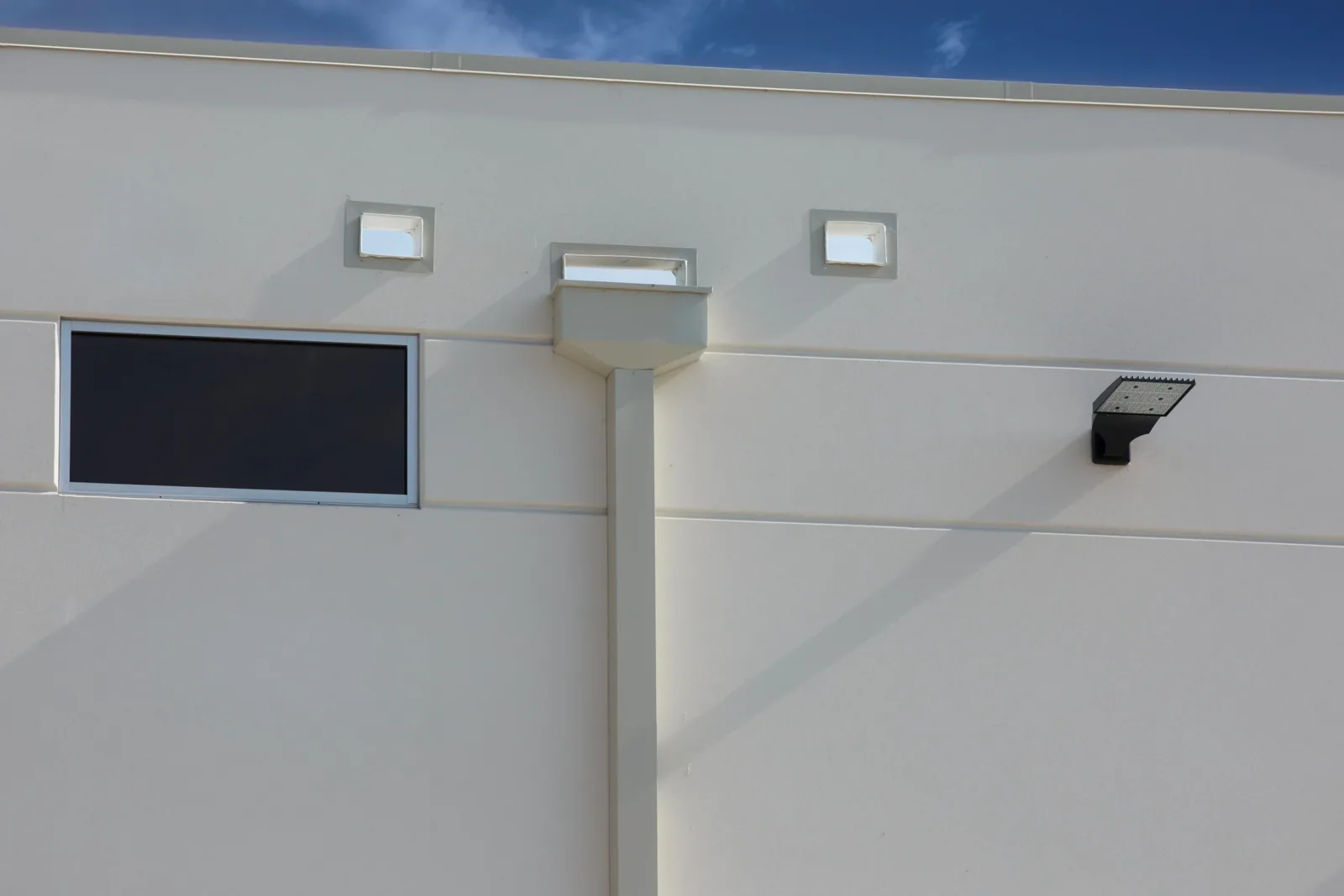
Perris Boulevard is a mixed-use corridor with commercial and medical or office premises in the City's property inventory. A building there may need access coordinated with visitors, deliveries, or clinical operations. We protect the entrance below and keep the roof route clear of wet coating. Edge metal and gutter work can address a failed perimeter detail before the coating crew approaches that roof zone.
Restoration choice and closeout:
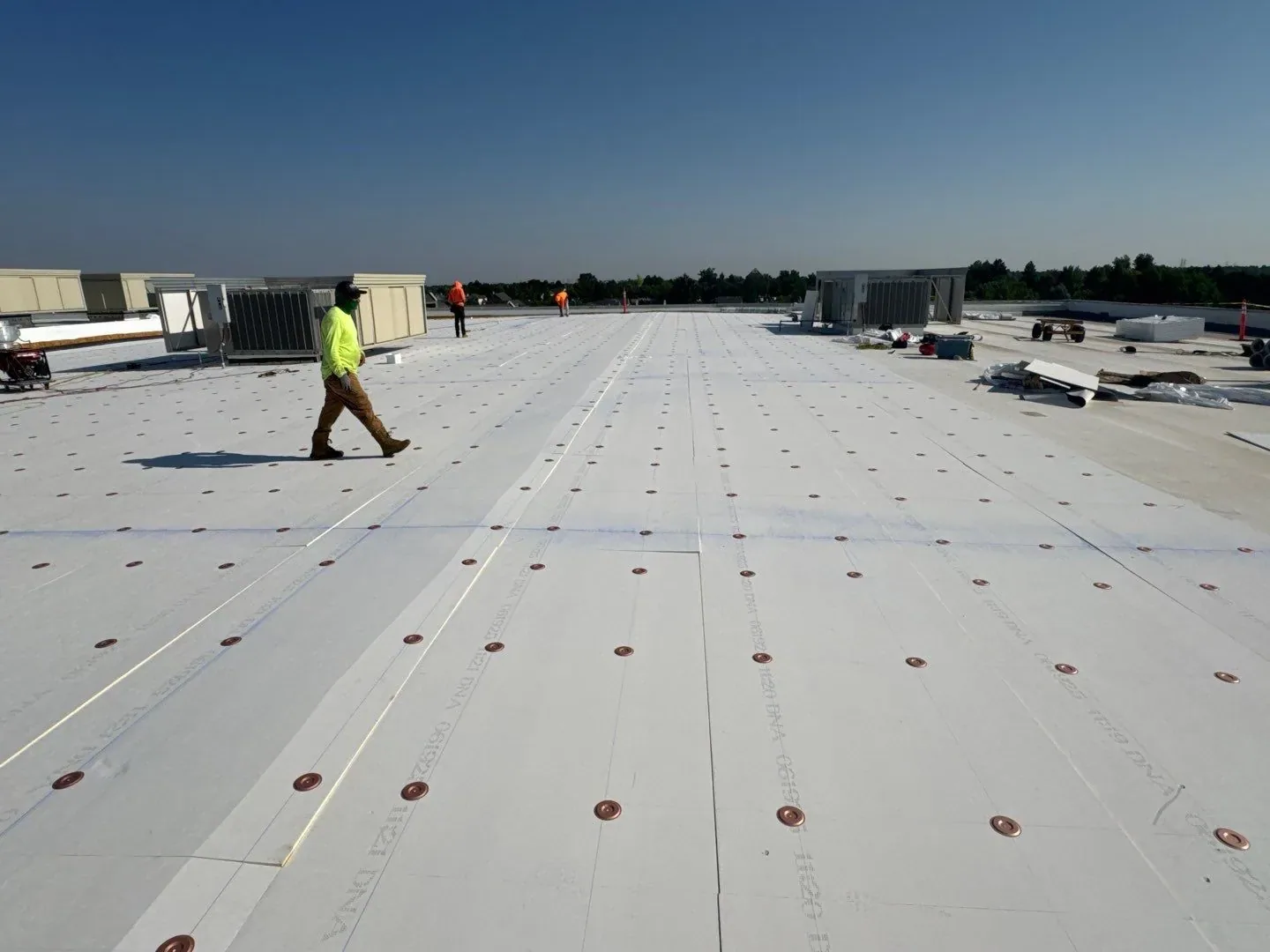
Coating can fit when the roof is dry, stable, compatible, and repairable. Recover or replacement may be the better scope when moisture, delamination, or failed attachment reaches beyond the tested areas. We compare the results, marked boundaries, edge heights, and drain conditions. The proposal separates preparation, repairs, primer, coating, reinforcement, and excluded conditions, so the property manager can approve the work step by step.
Acrylic coating and SPF restoration have different substrate and application considerations. A recover evaluation checks a new layer against the existing build-up. The closeout records products, coverage checks, test patches, photographs, and remaining follow-up. Perris Boulevard corridor service can be scheduled around the property's access rules and the approval route.
Project cost and duration depend on the roof's preparation needs, amount of repair, number of test zones, coating coverage, reinforcement, lift access, and cure conditions. Washing an occupied roof may require work zones to be sequenced around entrances or ventilation. We show those work items separately and note which can proceed immediately and which depend on a test result. A marked proposal prevents the owner from treating a drainage correction or curb rebuild as part of the coating price when it requires a different scope.
We also label areas held out of the coating scope so a later bid can price them separately.
Commercial Roofing Questions
How do you test whether silicone coating will adhere?
We prepare a representative area and test the bond on the actual surface. The report marks that zone and records any primer, cleaning, or removal step needed before full application.
Can silicone go over an older coating?
Only after the existing coating is identified, stable, clean, and compatible with the new product. We test the bond where the surface history changes.
Will silicone fix a low roof area?
A coating may protect a compatible surface, but a depressed field or raised drain can still hold water. We inspect slope and outlet geometry before approving the coating scope.
How is coating thickness documented?
Wet-film readings at selected points show application progress. The closeout links those checks to roof zones and lists the product coverage requirement.
What should happen before coating starts?
The roof system, adhesion, moisture, drains, seams, and details should be reviewed. We list preparation and repair items first so the manager can approve a complete restoration scope.
Commercial Roofing Moreno Valley handles commercial roof repair, replacement, inspections, coatings and maintenance across Moreno Valley, Riverside and the Inland Empire. Request a roof assessment or call 555-555-5555.
Related Roofing Work
Test the coating decision first
Share product records, roof plans, leak reports, prior coatings, access restrictions, and approval needs. We will map the existing surface, test representative zones, and separate preparation, repairs, and coating coverage.
Request a Roof Assessment555-555-5555