
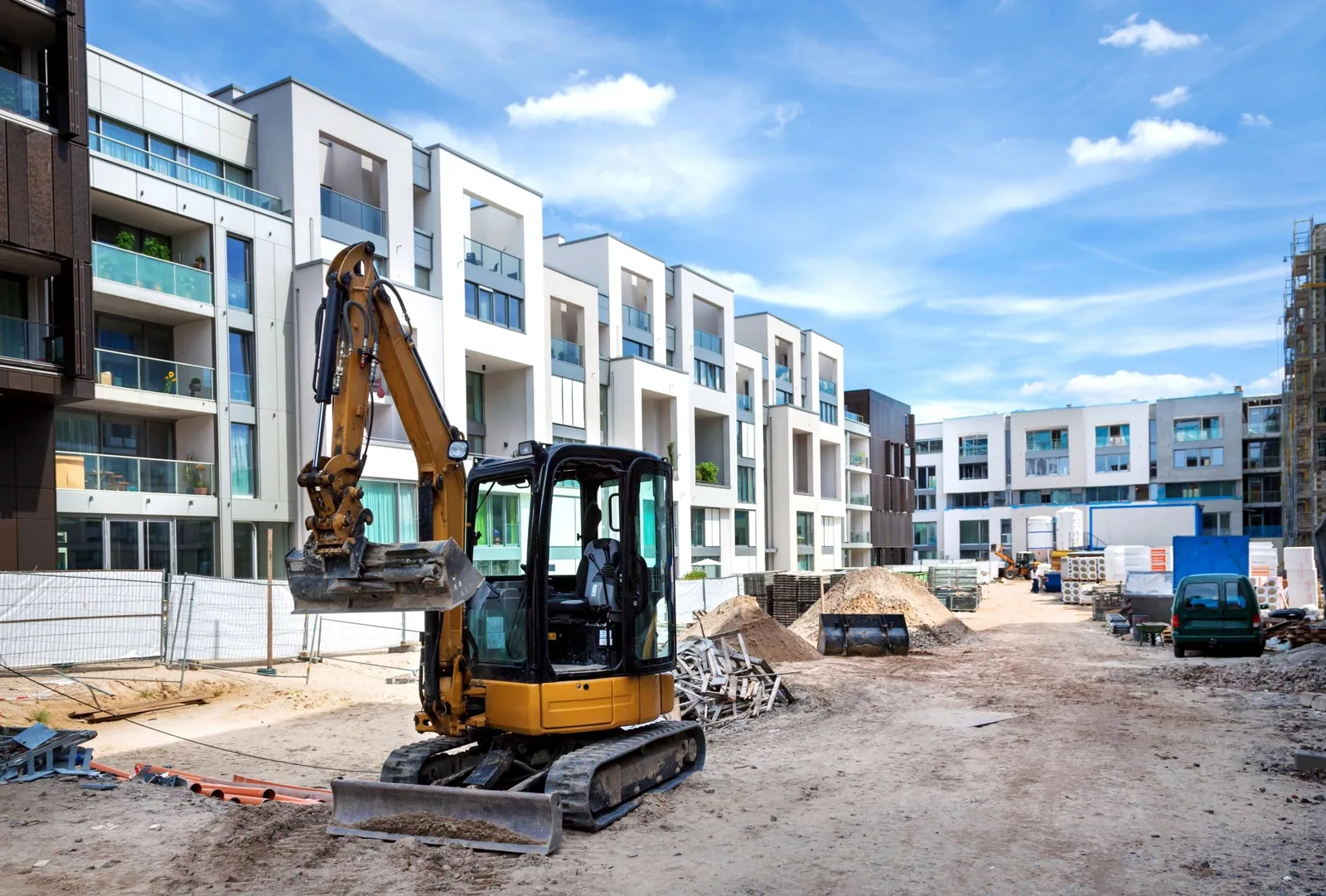
Which roof assembly and trade boundary are holding the current schedule? General contractors in Moreno Valley may coordinate occupied renovations, tenant improvements, industrial projects, and building renewals. Commercial Roofing Moreno Valley documents the roof condition and defined work area so the construction team can sequence preparation, access, and closeout. The City inventories separate employment areas at Centerpointe Business Park, Moreno Valley Industrial Area, and SR-60 Business Park Area. Those commercial settings help orient regional planning, while the project drawings and field inspection determine the actual roof scope.
A roofing line item can affect mechanical replacement, interior protection, dry-in, and enclosure turnover. We identify the assembly where it can be confirmed, the detail to be opened, and the surface another trade must leave ready. Inland Empire heat, winter rain, and regional Santa Ana winds can change the safe work interval. They inform scheduling; they do not establish an existing roof defect or project design load.
Bid package: define the roof work boundary
Before pricing, establish the building, roof zone, available drawings, access route, and current project phase. A roof plan should distinguish removal, repair, temporary protection, and work retained by another trade. We compare visible conditions with the specified assembly and report material conflicts before they become a field change. If the roof cannot be fully inspected before bid, identify the accessible area and the assumption that remains open. The estimate can then separate known work from an allowance or post-opening review.
The City identifies Centerpointe Business Park and Moreno Valley Industrial Area as separate employment districts, with SR-60 Business Park Area also shown in its inventory. Nearby logistics and manufacturing settings can involve tight delivery windows and active operations, but each general contractor confirms the actual site use and sequence. A property-management roof record is useful when tenants or an owner retain approval duties; an insurance restoration scope may also need a separate distinction between covered repair documentation and construction change orders.
For work above active production or distribution space, confirm whether lifts, rooftop access, and material staging can share the same interval as other trades. City economic-development material identifies distribution businesses alongside education and healthcare, while individual site hours remain a project contact detail. The superintendent can use the roof-zone plan to schedule each opening, inspection, and dry-in around the actual operation.
Our condition report can document the inspected area, visible defect, photograph location, and excluded section. That record supports bid leveling and helps the superintendent compare the proposed work with the roof condition before committing downstream trades.
Trade sequence: make each interface explicit
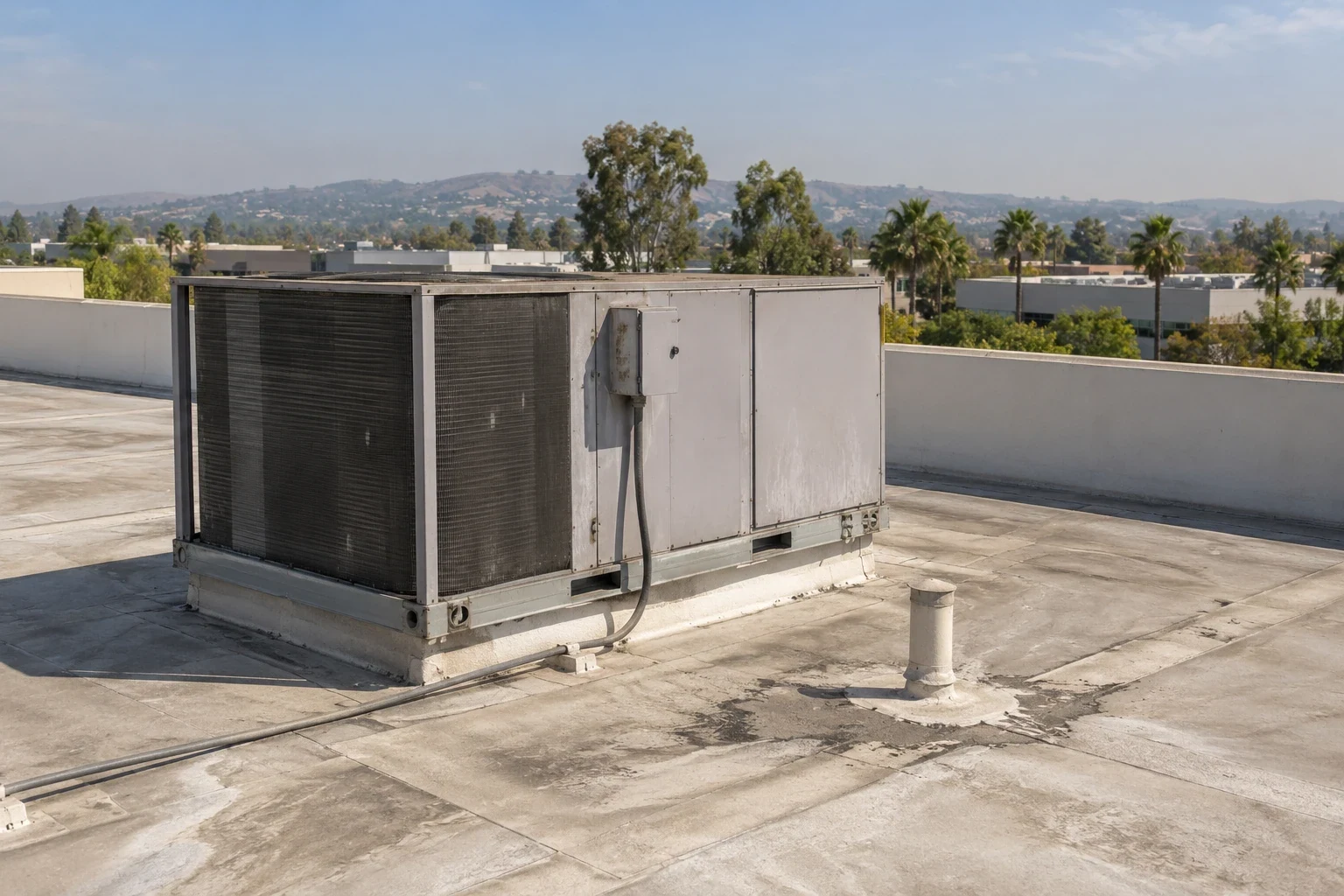
Roof work often meets mechanical curbs, electrical supports, parapet metal, wall assemblies, skylights, or controls. Name the party responsible for disconnecting equipment, removing supports, restoring power, and providing a stable substrate. Roofing identifies the preparation and weather connection; the assigned trade completes its own equipment or enclosure task. This avoids a field assumption that flashing can correct an unstable curb or that a roofer can restart operating equipment.
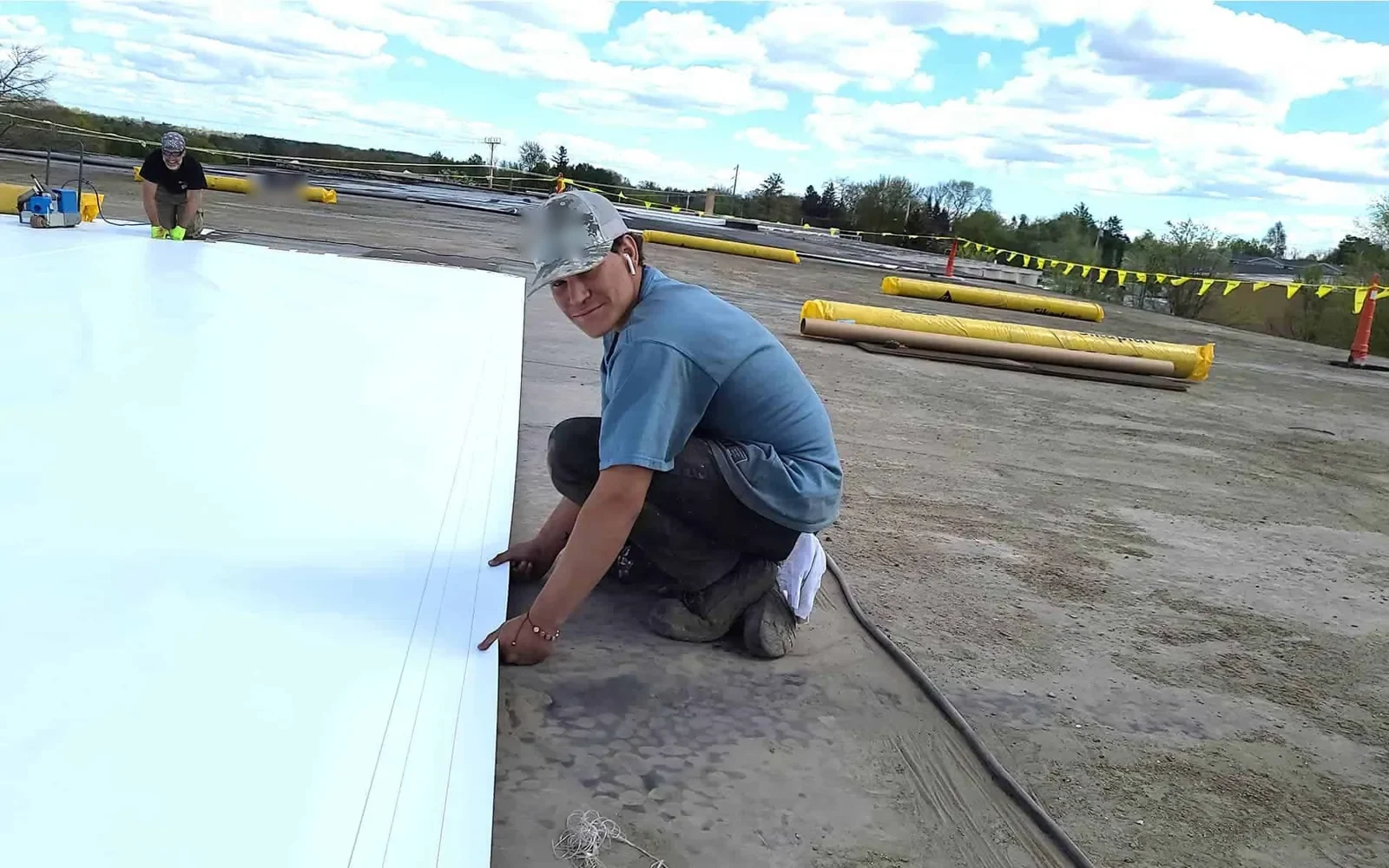
For replacement, sequence removal so the building remains protected at each daily stopping point. Specify which deck section can be exposed, what temporary dry-in is required, how debris leaves the roof, and what must be inspected before insulation or membrane covers the work. Where work occurs above occupied space, identify interior protection and the person who can confirm the room is ready. A phased occupied-building reroof can be divided by roof zone and tenant impact, with a clear transition at each stage.
The Moreno Valley road network meets at SR-60 and I-215, while the City's inventory maps Centerpointe and the industrial area as separate project settings. Route and delivery context can inform mobilization; it does not replace job-specific crane access, laydown approval, or gate instructions. These details belong in the preconstruction plan and should be reconfirmed before materials are sent.
Existing roof: confirm the condition before closure
On a renovation, drawings may show a prior roof design that no longer matches the field. We inspect the accessible area for seams, repairs, penetrations, drainage, insulation changes, and substrate condition. Photographs carry a plan mark so the superintendent can locate each item after other trades mobilize. If a ceiling report is part of the project, record its room and compare the corresponding roof zone rather than assigning a cause from the interior symptom alone.
When opening work reveals wet insulation or a damaged deck, stop at a safe boundary and document the exposed material before covering it. A scope change should identify location, quantity basis, replacement material, temporary protection, and approval needed. If testing will help determine moisture extent before demolition, state where and how it will be performed. This produces a reviewable decision for the owner and construction manager instead of a broad field directive.
A roof inspection can establish the pre-work record, and a drainage correction can be coordinated with adjacent membrane work where included. Each estimate should keep the roof scope, mechanical scope, and interior restoration distinct while noting the sequence required to finish their shared interface.
Closeout: leave a usable roof work record
Closeout should tell the owner what roof area was completed, what materials were installed, and which details remain outside the contract. Include before-and-after photographs, marked plan, manufacturer product identifiers where relevant, approved changes, and any inspection or follow-up item. The general contractor can use this record for turnover without reconstructing a roof zone from daily reports. A clear list of exclusions is as useful as the completed work because it prevents a limited repair from being mistaken for a full-system renewal.
For a replacement bid, compare alternatives by removal depth, substrate condition, drainage correction, insulation requirements, access, weather protection, and occupancy sequence. A recover option may be appropriate only after the existing assembly and moisture condition are understood. We explain preparation requirements and scope limits rather than reducing the decision to membrane price alone. A TPO assembly and a metal retrofit, for example, use different attachment and transition details; the selected system should match project requirements and field conditions.
Retain the closeout with the building's work-order trail and add a follow-up check where the contract calls for one. When construction warranty questions arise, the dated roof-zone record helps distinguish the completed roofing detail from later equipment or tenant changes.
Commercial Roofing Questions
Can roofing price from drawings alone?
Drawings help define intent, but the accessible roof should be compared with the specified assembly before a complete scope is set. We identify visible differences, access limits, and areas that require opening or testing, then state any unresolved condition in the bid.
How should a general contractor handle a roof scope change?
Mark the affected roof zone, record the exposed condition with photographs, and pause before covering work that changes the original repair boundary. We provide the material, quantity basis, temporary protection, and approval needed for the proposed correction.
Who handles rooftop equipment disconnection?
The construction team assigns the qualified mechanical or electrical contractor for shutdown, removal, reconnection, and restart. Roofing defines the flashing or curb work and its sequence with that task, then documents the completed weather connection.
Can roof work be phased with an occupied renovation?
Yes. We can identify a roof-zone sequence, daily stopping points, temporary dry-in, and any interior protection needed. The superintendent and building contact confirm access, tenants, and operations before each phase is scheduled.
What should roofing closeout include?
Keep the completed roof area, photographs, approved changes, materials, exclusions, and any follow-up item in a building-level file. A marked plan lets the owner and next service team locate the work without relying on a general project description.
Commercial Roofing Moreno Valley handles commercial roof repair, replacement, inspections, coatings and maintenance across Moreno Valley, Riverside and the Inland Empire. Request a roof assessment or call 555-555-5555.
Related Roofing Work

Coordinate the roof scope before mobilization
Send the bid set, roof plans, project schedule, access restrictions, and trade-responsibility matrix. We can inspect the roof area, document interfaces, and return a defined scope for pricing and sequencing.
Request a Roof Assessment555-555-5555