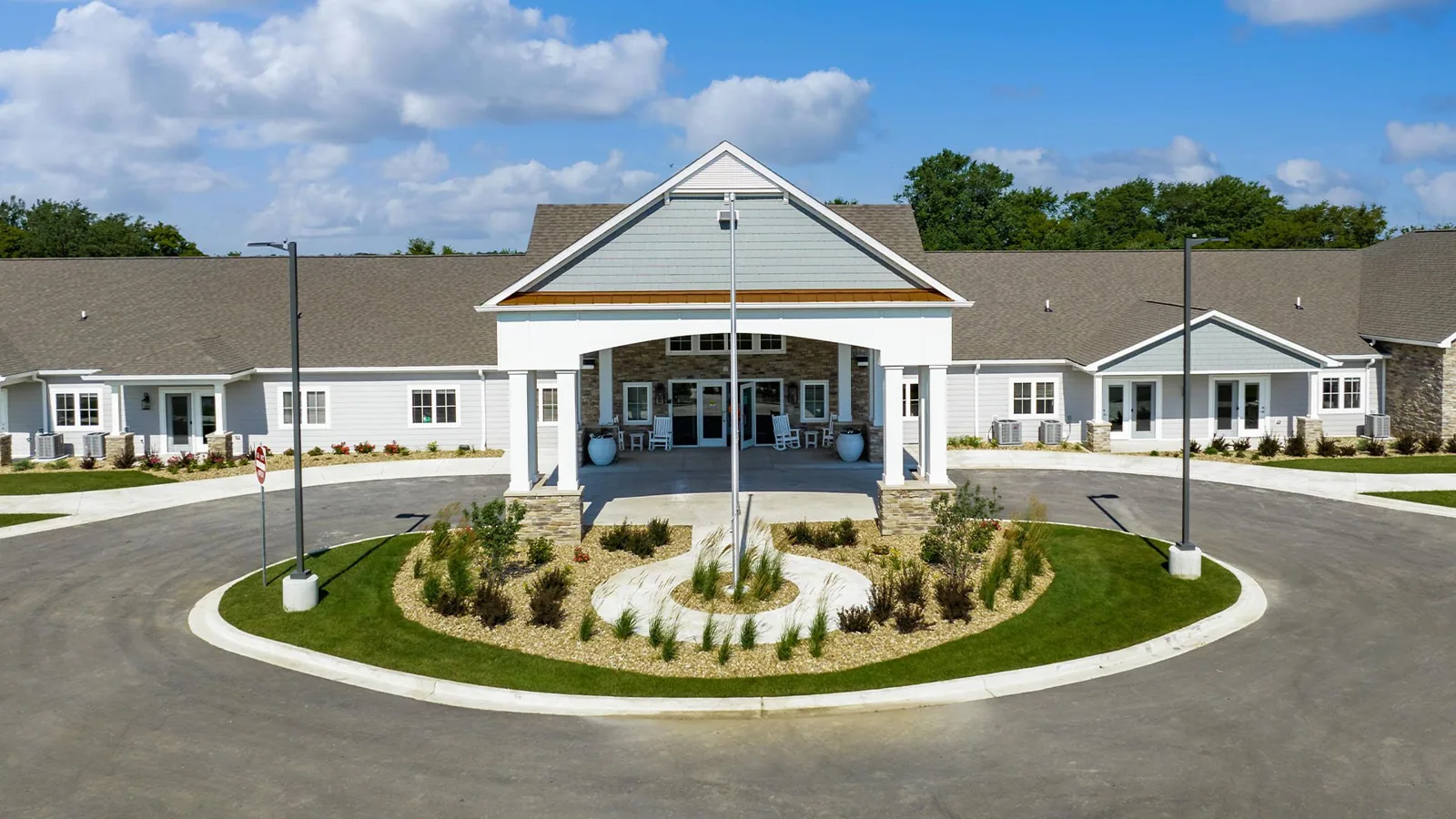
A senior-living leak request should connect the room below, the marked roof area, and the approval needed for repair. Commercial Roofing Moreno Valley inspects and maintains senior-living roofs in Moreno Valley, CA, and prepares a replacement scope when findings support a wider project. We record the roof zone, photograph the visible condition, and identify any area that needs moisture testing. A facility manager can then coordinate resident access, interior protection, and work timing from one condition map rather than a general leak description.
Care operations continue while a roof is inspected. We ask which entrances, resident rooms, dining areas, or equipment routes must stay available, then plan the access and daily exposure around those controls. Moreno Valley includes the Riverside University Health System Medical Center and Kaiser Permanente hospital, establishing a local healthcare context alongside its industrial areas. That does not tell us how any senior-living roof is built. The property inspection does, and the work record keeps each observation tied to its building.
Resident areas: keep the work boundary visible
Before opening a roof, we identify the rooms and circulation routes beneath the marked area. A leak above a resident room may need prompt protection, while repair staging near an entrance or dining space can affect movement below. The facility contact defines resident restrictions and staff procedures; our scope shows where materials, access, and the roof opening will be located. Each shift ends at a defined dry-in point, with temporary cover identified separately from completed repair.
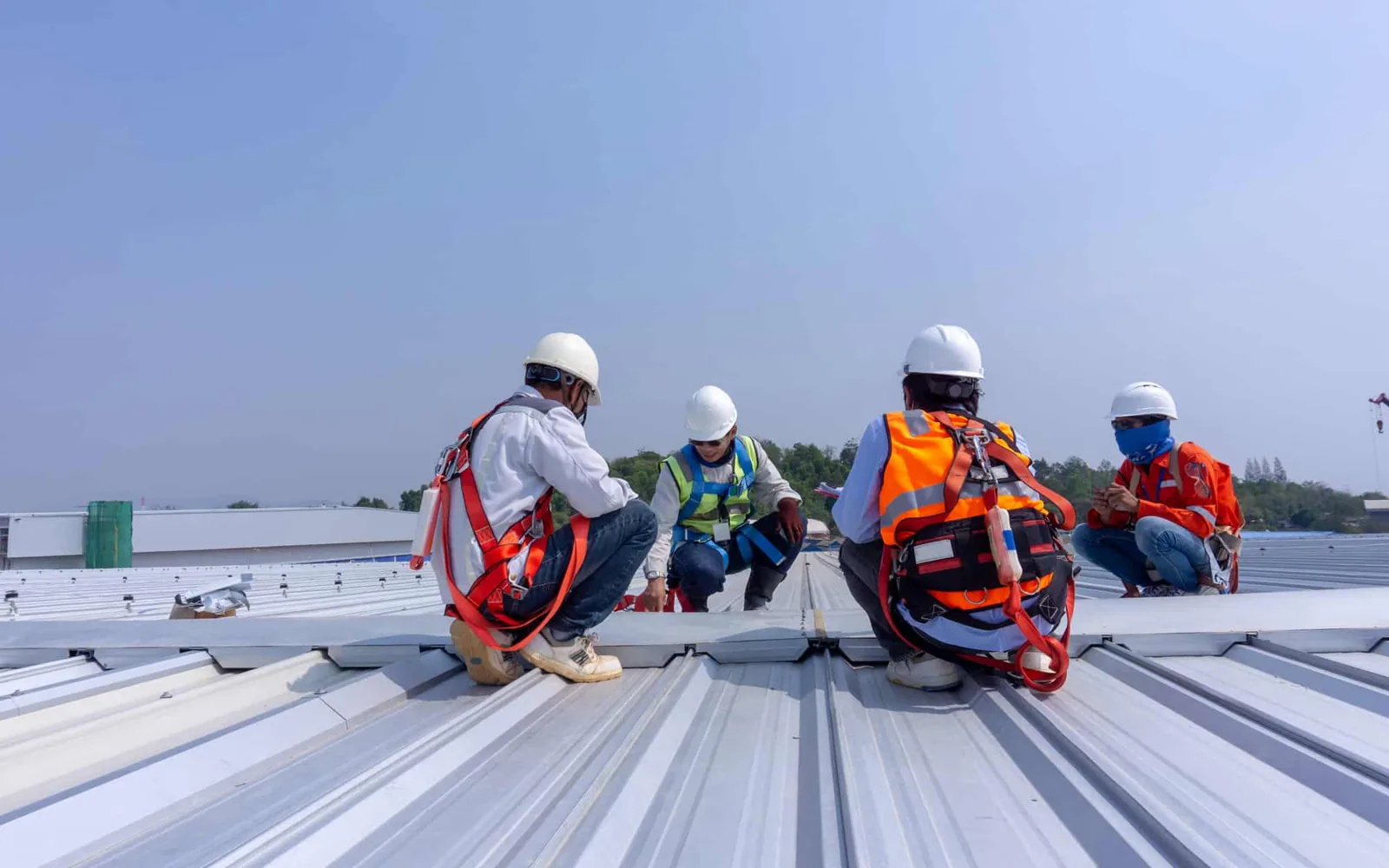
We locate the access hatch, tie-off route, equipment, and section break, then note what could not be reached. When a corridor or common room is involved, the manager can arrange a clear route and suitable notice before work begins. Occupied-building roof sequencing divides a larger project into controlled areas. A separate Moreno Valley property review also needs its own access and condition map, even when one owner manages several buildings.
Leak report: compare the room with roof evidence
A ceiling mark may sit away from the opening where water enters. We record the room, time, recent weather, and whether nearby equipment was operating, then compare that report with roof seams, curbs, drains, and wall transitions. Water can travel along an assembly before showing indoors. The inspection identifies the likely path and what evidence supports it, while any concealed condition that needs testing stays outside the confirmed repair boundary.
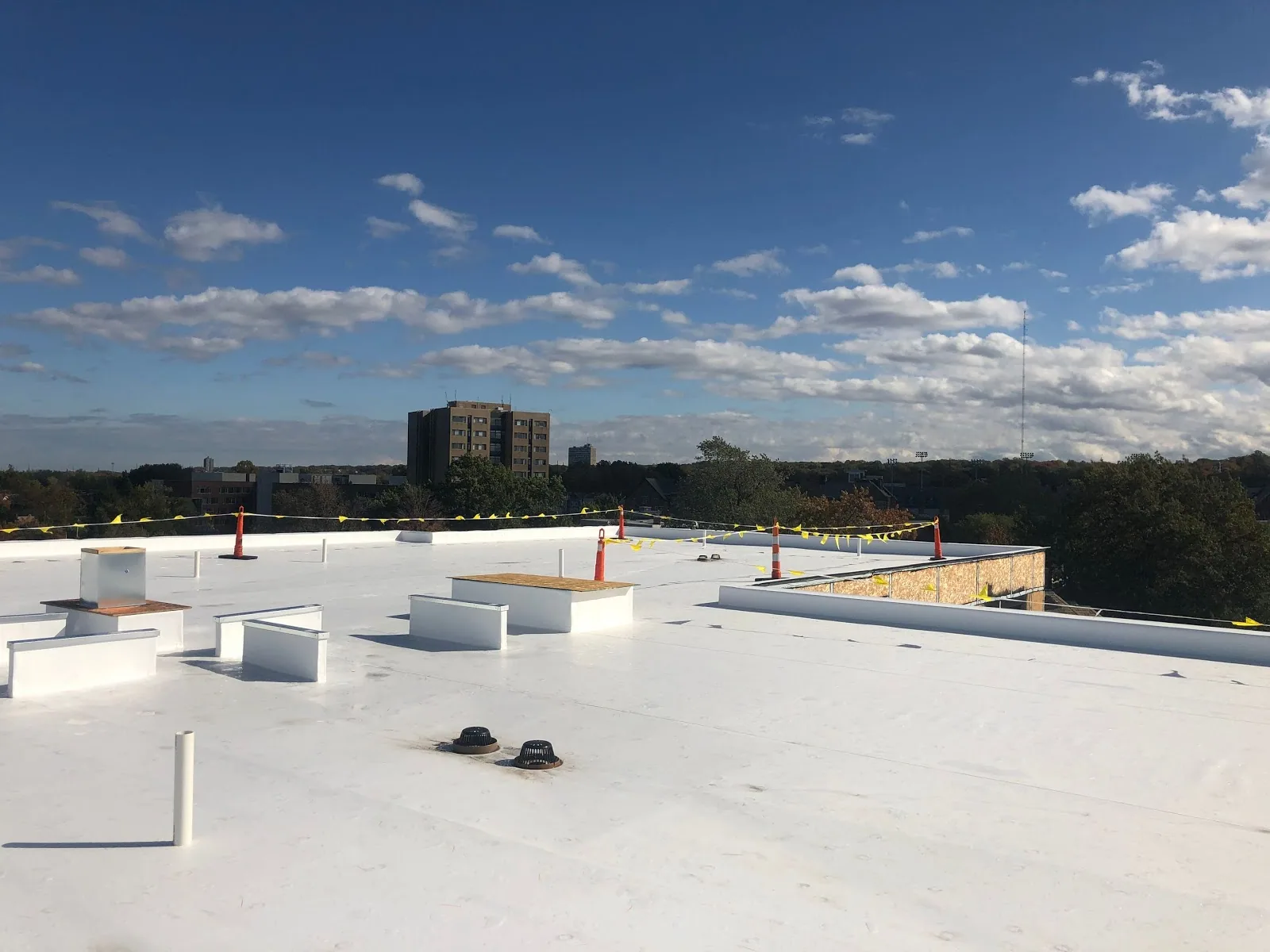
At the roof, we inspect the low point, drain bowl, overflow route, penetration flashing, membrane laps, and earlier patches. A hands-on roof inspection follows accessible areas and records limitations. Where the moisture extent could change removal limits, an infrared moisture survey can help select a test location, but the test result determines whether insulation is wet. The approval packet states the repair option and any separate test allowance, so care staff can review the actual work being requested.
Equipment: protect service connections
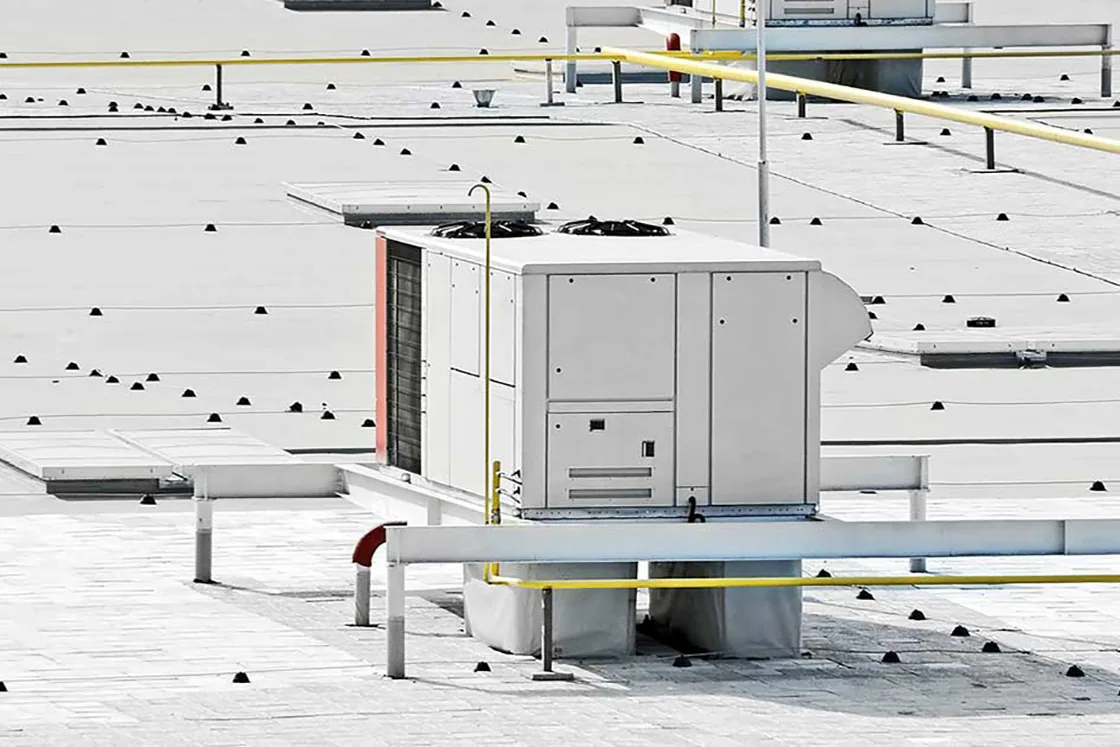
Rooftop units, exhaust, conduits, and pipes interrupt the membrane and create details that need inspection. We check curb seals, flashing corners, supports, and the connection between each penetration and the roof assembly. If another contractor has changed an equipment line or unit, we mark the altered area and coordinate access with the responsible service trade. We do not move or shut down care equipment without the facility's designated approval.
A roof repair may need a mechanical trade to stabilize or disconnect a unit before the membrane detail can be rebuilt. We describe that dependency and identify who must complete each part, then schedule a follow-up check after the connection is restored. Curb and support repairs address the roof interface, while medical-office roof coordination can also involve occupied clinical areas. The work record names the property and roof zone so a service call at Centerpointe Business Park or a care building is not confused with another facility's details.
Weather window: time exposure and closeout
Moreno Valley is within the Inland Empire forecast area, where summer heat, winter rainstorms, and regional Santa Ana winds affect roof-work planning. These conditions influence the inspection window and how an exposed detail is protected; they do not establish damage at a particular property or a design load. We check the actual surface, confirm suitable application conditions, and set a daily closeout that leaves the opening weather-tight before residents and staff rely on the space below.
For a coating or membrane repair, surface preparation and material application must follow the system requirements and actual conditions. If the work cannot be completed within the available window, we plan an interim protection step and record what remains. A wind-related roof review documents lifted edges or displaced components when observed. The facility can route that condition with photos, a marked roof area, and a follow-up check rather than treating a regional weather reference as a diagnosis.
Repair comparison: show what changes the scope
A localized split or failed curb with sound material around it may support a focused correction. Repeated leaks, widespread moisture, poor attachment, or several failed sections can justify testing or broader replacement planning. We identify the assembly, repair history, visible condition, and test limits before comparing patch, recover, coating, or replacement. If testing changes the moisture extent, the condition map and estimate are updated before additional removal is approved.
Cost and duration depend on access equipment, interior protection, preparation, removal depth, insulation, edge metal, drain work, material availability, and the roof area that can be exposed in a shift. Resident routines can also determine when a section is available. Commercial roof repair addresses confirmed defects, while recover planning checks whether the existing assembly can accept another layer. We keep those options distinct so the manager can route a repair approval without treating an untested condition as a completed quantity.
Moreno Valley's SR-60 and I-215 junction connects the city to regional routes, while the Perris Boulevard Corridor is identified in the local mixed-use framework. These location references help situate a service request, but neither replaces the facility access instructions or roof plan that the crew needs for the visit.
Follow-up record: carry findings into maintenance
Closeout should identify the building, roof section, repair boundary, materials installed, photographs, and any open coordination item. Temporary stabilization remains separate from permanent correction. If a test cut or equipment change alters the scope, preserve the earlier mark and add the result and approved change. A later manager can then see what was observed, what was repaired, and which follow-up check remains.
A maintenance visit can revisit drains, curb seals, seams, and edges at an interval based on the assembly and observed condition. Keep roof plans, resident-area restrictions, equipment contacts, leak locations, and work orders together. Apartment roof service has similar access and resident coordination concerns, but the inspection and approval file must still match the specific building and care program.
Send the roof plan, recent work orders, leak locations, access limits, equipment schedule, and approval path. We will inspect the marked areas, document the evidence, and return a clear repair or testing scope with the next check identified.
Commercial Roofing Questions
Can roof repairs proceed while residents remain in the building?
Yes, when the facility sets access and resident-area controls. We limit the open roof section, coordinate interior protection, and identify the daily dry-in point before work begins.
What should accompany a leak report from a resident room?
The room, date, recent weather, and any equipment activity help connect the ceiling mark with roof conditions. We map the likely route and note whether testing is needed.
Who approves access to care equipment on the roof?
The facility's designated operator controls equipment access and shutdown. Our work order identifies the roofing interface and any follow-up check after service work.
When does a roof repair require moisture testing?
Testing is useful when concealed moisture could change the removal limit or repair method. We state the test location and keep that allowance separate from confirmed work.
What belongs in the closeout file?
Keep the marked roof area, photographs, materials, work completed, access limits, and remaining item together. That record lets the next manager route maintenance or approval from the evidence.
Commercial Roofing Moreno Valley handles commercial roof repair, replacement, inspections, coatings and maintenance across Moreno Valley, Riverside and the Inland Empire. Request a roof assessment or call 555-555-5555.
Related Roofing Work
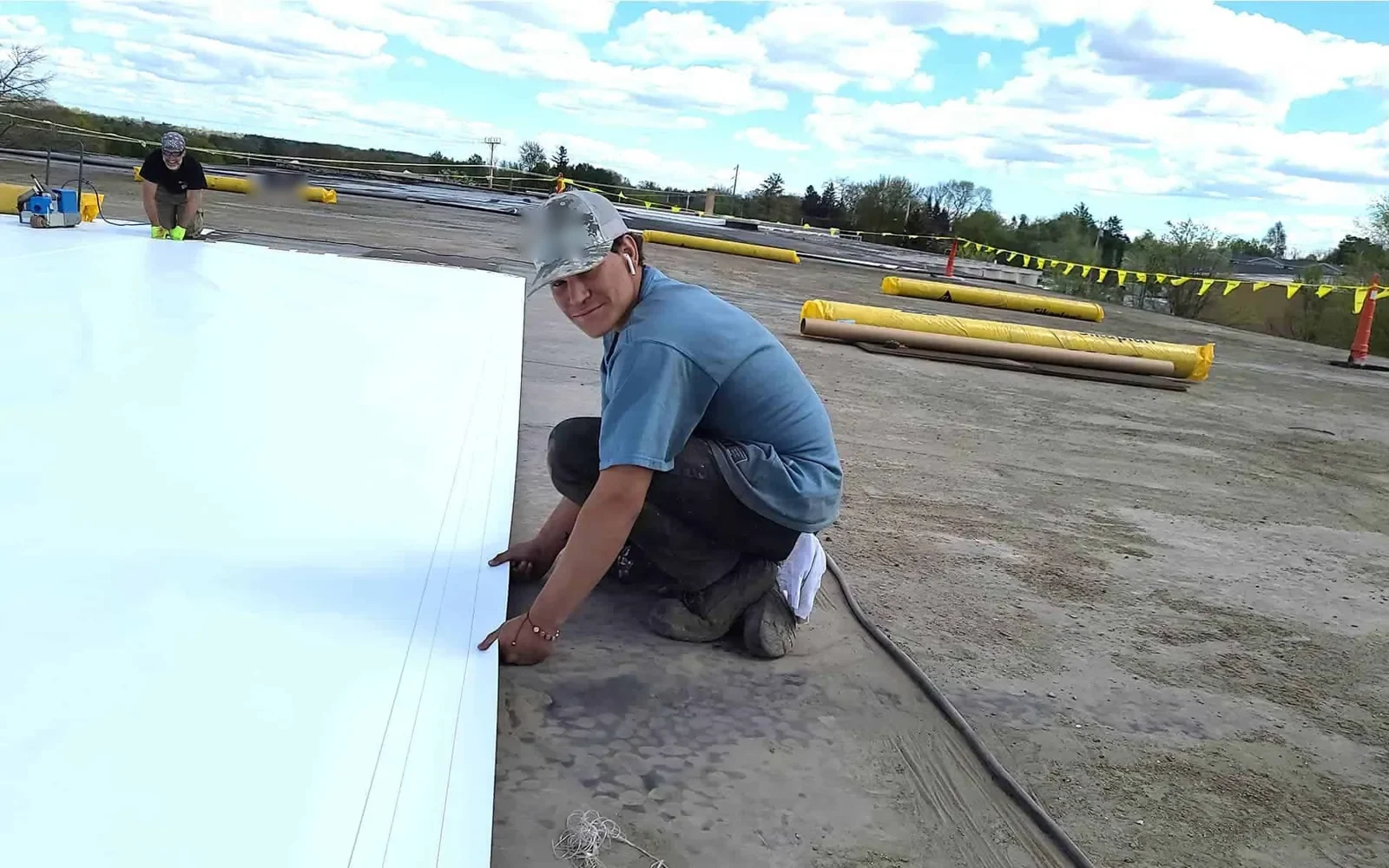
Document the senior-living roof condition
Share the roof plan, recent work orders, leak locations, access limits, equipment contacts, and approval path. We will inspect the marked areas and return a clear scope and follow-up record.
Request a Roof Assessment555-555-5555