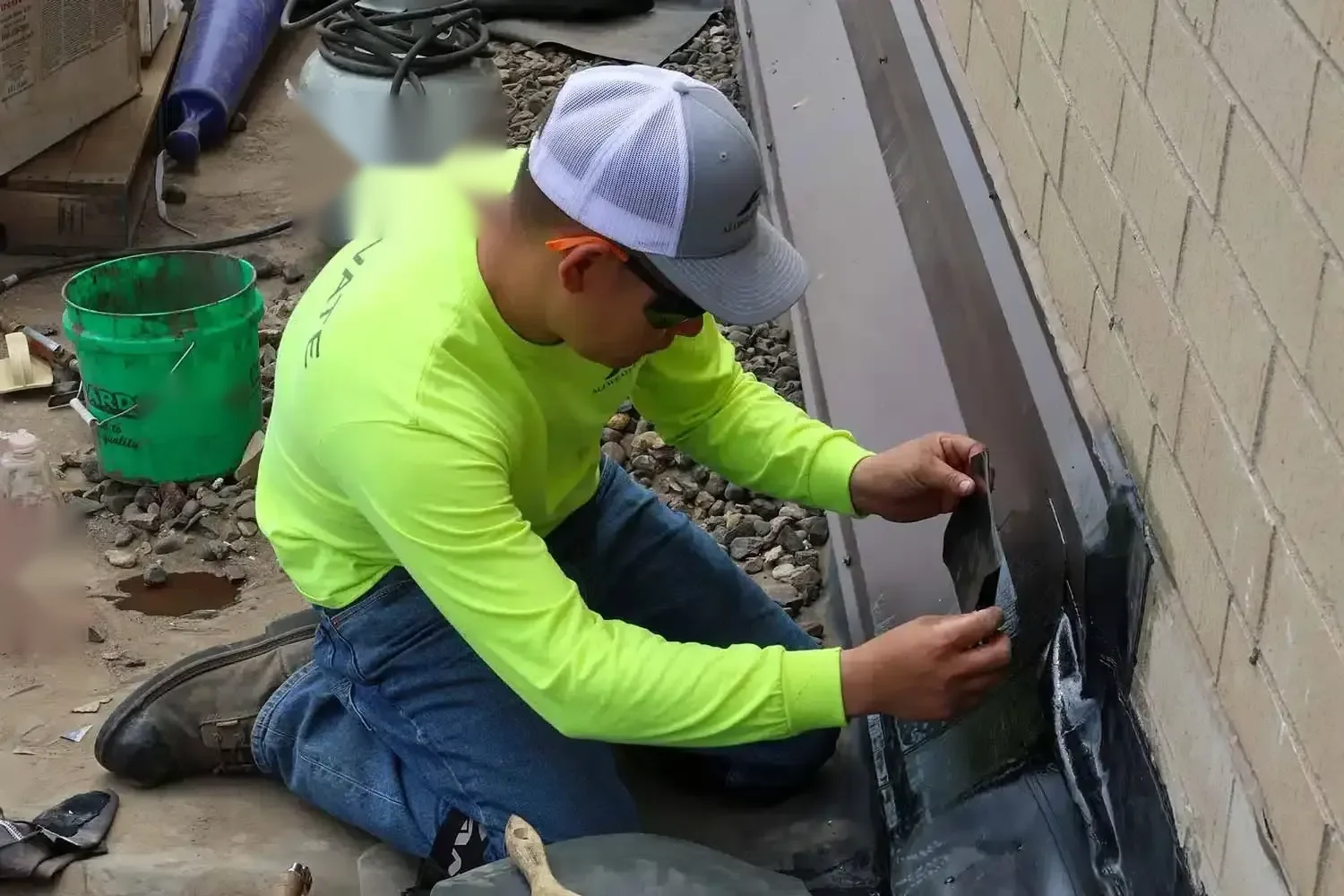
What crossed the roof, and where did the membrane first lose continuity? Those questions help a property manager separate a puncture from a nearby seam or flashing failure. We mark the opening, inspect the surrounding sheet, and trace the route taken by equipment, tools, or debris. In Moreno Valley, CA, the City inventory includes industrial and commercial premises across Centerpointe Business Park and the Moreno Valley Industrial Area. The repair boundary comes from the roof itself.
A small cut can expose insulation or deck to water, while a scuff may leave the membrane intact. We document both without enlarging the repair on appearance alone. The record notes the puncture size, nearby foot traffic, rooftop equipment, interior reports, and any test needed to determine moisture extent. The manager can authorize a compatible patch, a broader repair, or additional inspection against a marked zone and defined next step.
Impact location: mark the opening
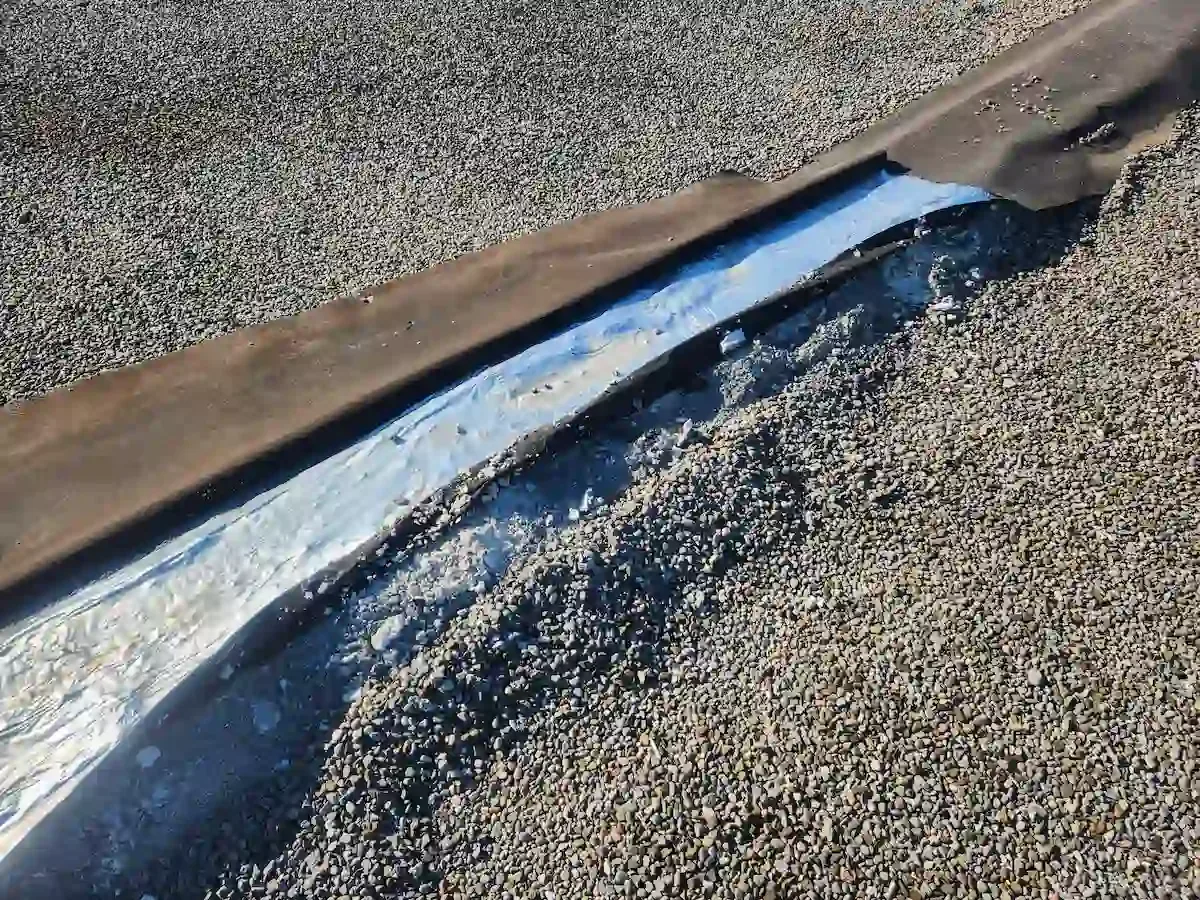
We photograph the puncture with a scale and a wider roof reference, then add its position to the roof-zone plan. The inspection checks for sharp edges, embedded material, a displaced walkway pad, or a path from a service hatch to equipment. The route guides inspection but does not prove how the hole formed. We record visible conditions and keep any incident report separate.
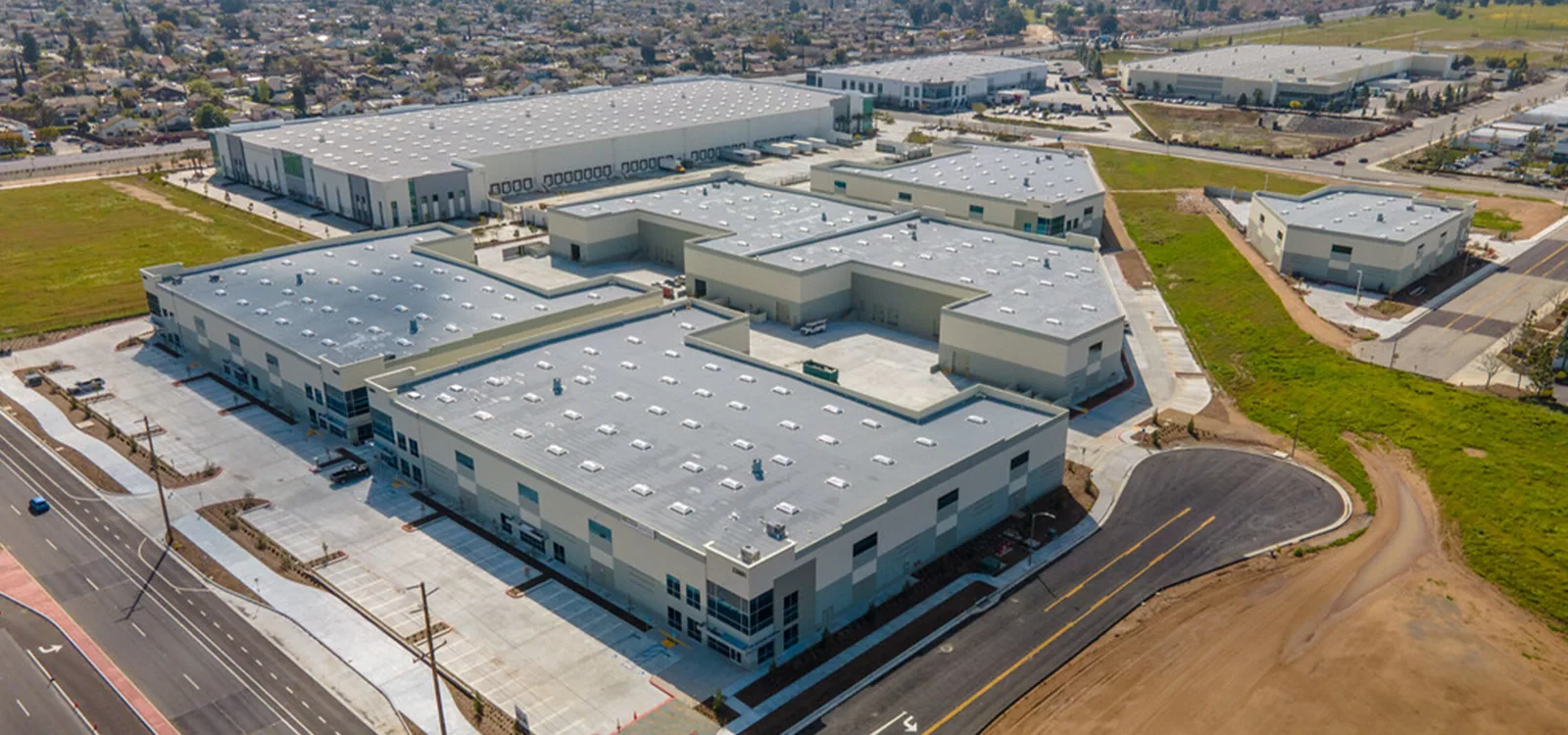
At the Moreno Valley Industrial Area, commercial and industrial uses can involve regular rooftop servicing. A roof map can show the route between access points and equipment without claiming that any particular property has a puncture history. We inspect nearby penetrations and seams where foot traffic or dropped tools could have contacted the membrane. A aerial documentation may help document broad access context, but a suspected puncture still needs a close field examination before repair material is selected.
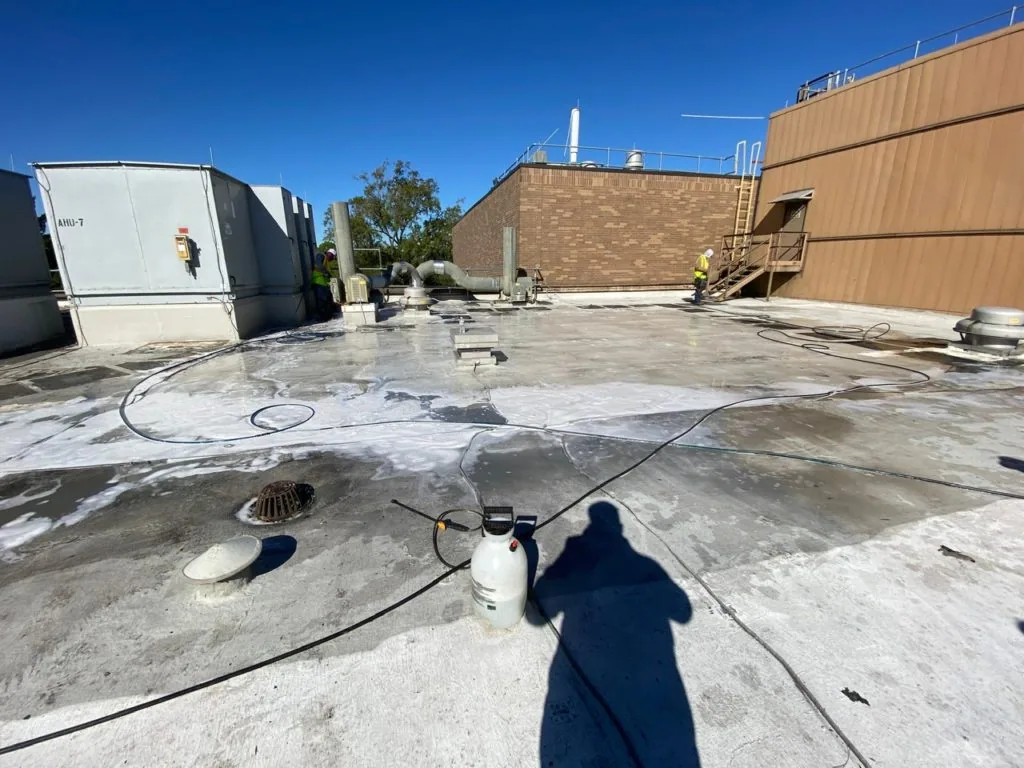
When access is limited, the manager can identify scheduled equipment work, escort needs, and safe roof paths in advance. We keep the inspected portion distinct from areas that could not be reached. If the opening sits beneath a unit or cable tray, we coordinate safe clearance with the responsible trade rather than pulling equipment or disturbing its connection.
Subsurface check: determine what lies below
A puncture can pass through the top membrane but stop above dry insulation, or it can admit water into a wider assembly. We examine the cut, the exposed layer if visible, and any staining or softness around it. A water report indoors is compared with the roof mark because the path may travel before showing below. If the condition cannot be confirmed from the surface, we identify an approved test area and explain what decision its result will support.
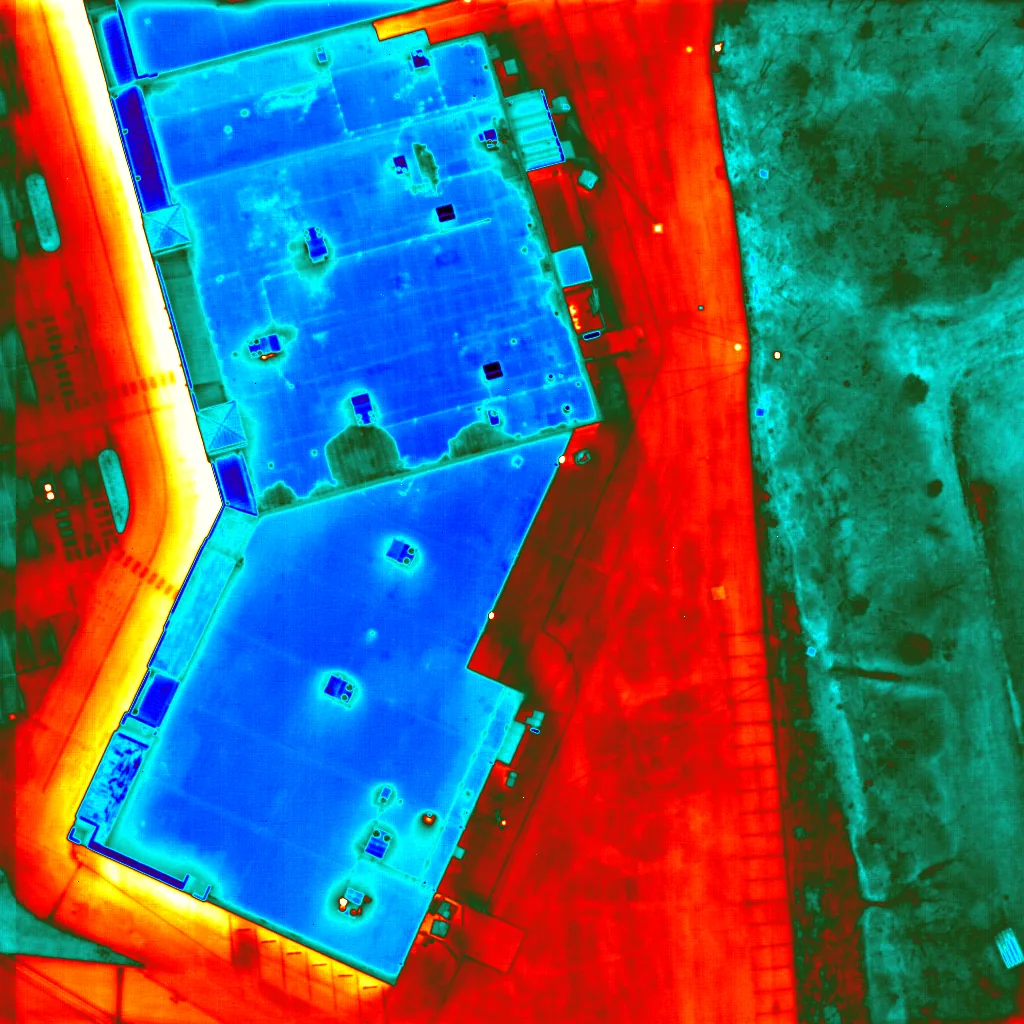
Moreno Valley's employment areas include office as well as industrial uses, and medical facilities form part of the city building stock. Building use can affect protection below a repair, while plans and inspection confirm the roof layers. An infrared moisture survey can help map suspected wet insulation when conditions are appropriate; any test opening has a planned restoration detail.
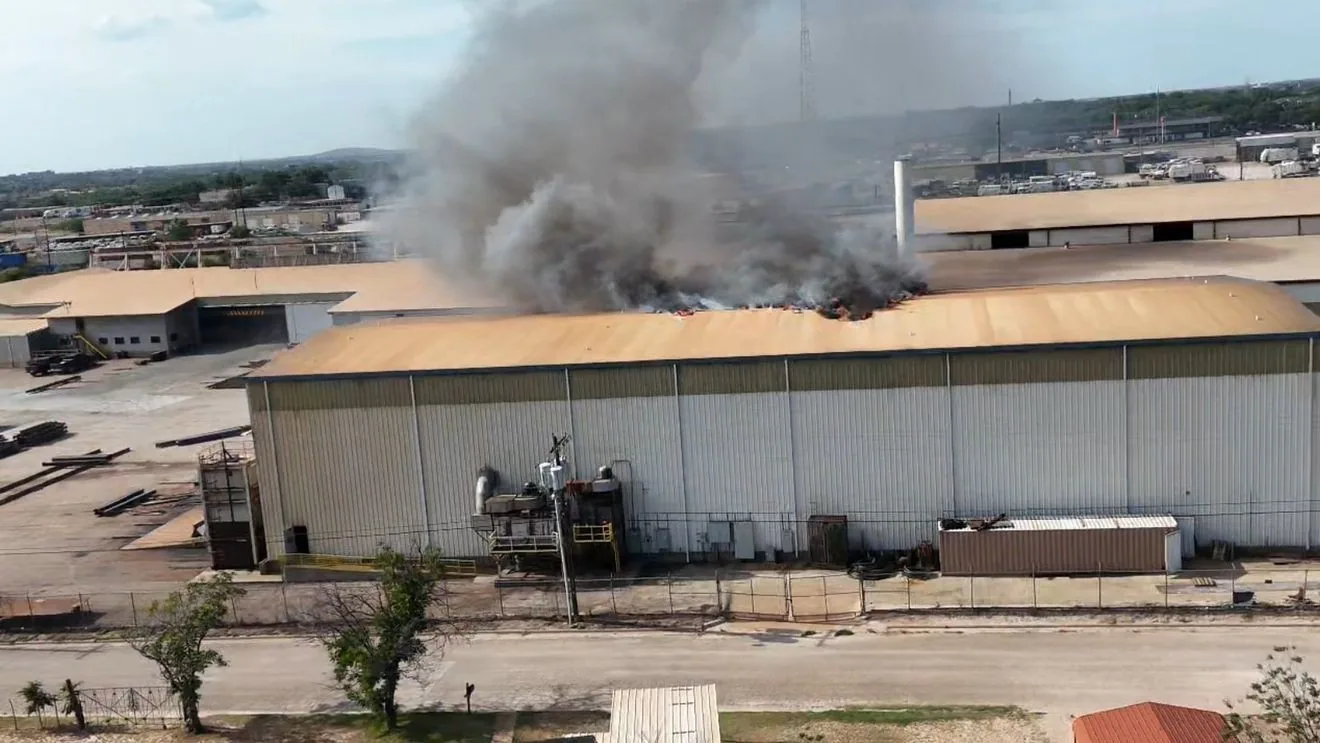
Where a cut reaches wet insulation, replacing only the membrane patch may leave trapped moisture behind. We map the material to be removed, photograph each layer as it is exposed, and pause at the approved boundary if the condition expands. The manager receives the moisture extent and a scope change before additional material is removed. A separate damage assessment is also appropriate if heat or smoke exposure has affected a different roof zone.
Material match: close the membrane
The patch must suit the existing membrane and opening. We verify the system from labels, records, or field checks, then prepare the surface for a compatible repair. A weldable sheet requires clean material and a tested bond; a splice-based membrane uses its own primer and adhesive. We size the patch beyond damaged material and finish corners so there is no cut edge pointed into a likely water path.
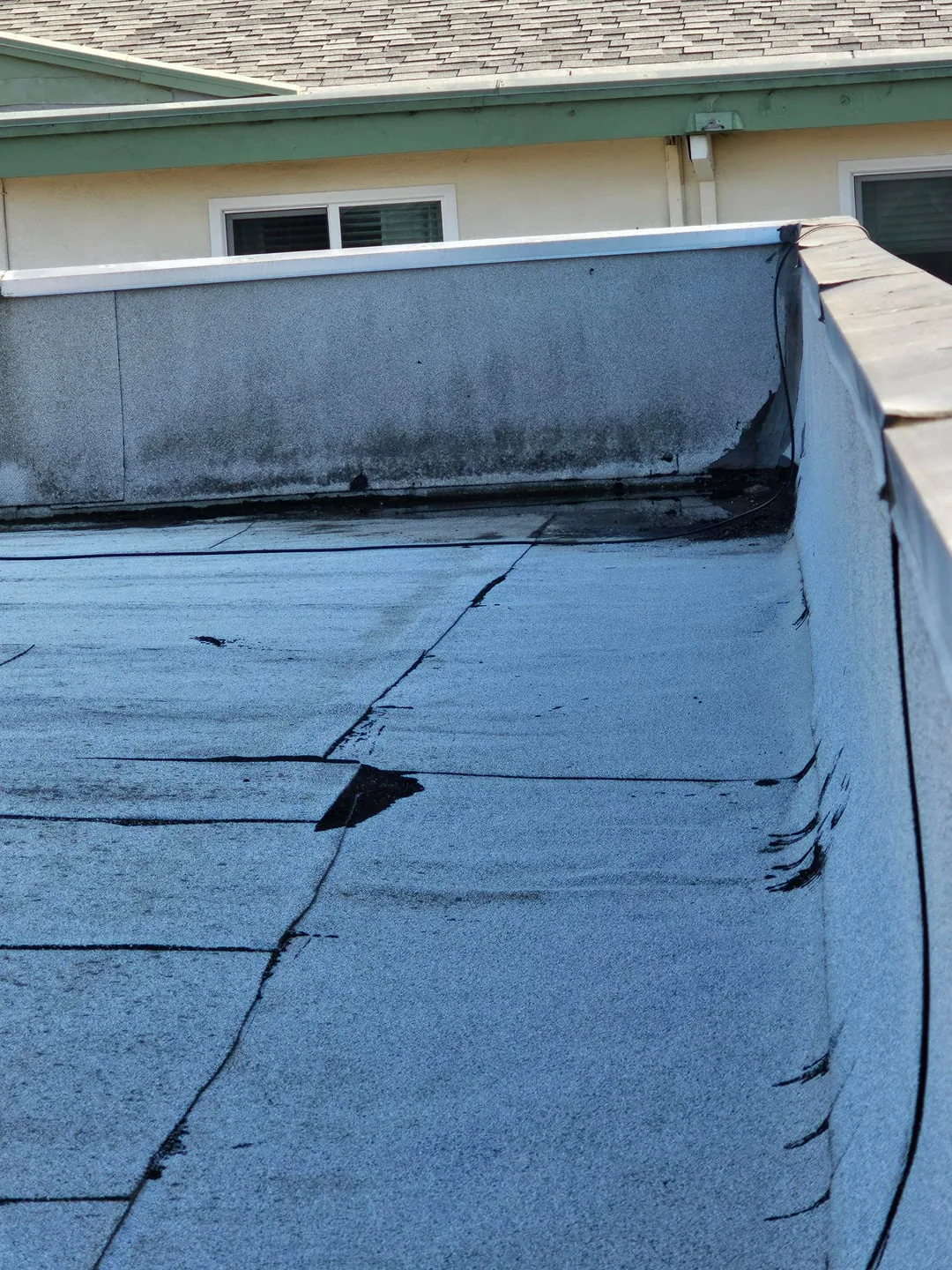
If the puncture crosses a seam, a patch may need to reinforce both the field sheet and the open joint. That work should identify the seam repair boundary rather than cover the intersection without checking it. If damage reaches flashing around a curb or pipe, we inspect the turn-up and connection as well. The flashing correction remains a separate item if it requires different preparation or removal.
Cost and timing depend on membrane type, cut dimensions, access, substrate condition, and whether material must be removed before the patch. A simple surface correction differs from rebuilding insulation, cover board, or a penetration. We list those tasks independently and state what is confirmed. If the membrane type is unknown, a preliminary compatibility check belongs before installation rather than after an incompatible material has been placed.
Roof traffic: reduce repeat contact
A repair can close the current opening without changing the route that caused repeated contact. We ask which trade uses the area, what equipment needs service, and whether a walkway or protective pad should be reset or added. The answer depends on the roof layout and the material manufacturer's requirements, not on a generic direction to avoid the roof. We identify where access crosses the repaired zone and show the manager how that interface will be protected during follow-on work.
The Moreno Valley Industrial Area sits within the city's employment districts. We coordinate material deliveries and trade scheduling against property access. The operating plan sets which route remains open and when equipment service can occur.
If temporary protection is installed, its limits should be visible in the closeout record. We identify the area covered, the condition that still needs permanent work, and the return date or trigger. For an exposed opening requiring immediate response, emergency roof service is available around the clock, including weekends and holidays. A temporary measure and a permanent patch receive separate status lines.
Closeout: preserve the repaired zone
After installation, we photograph the repair from close and reference views and add it to the roof-zone index. The work record names the membrane identified, patch extent, substrate work, and any adjacent condition left outside the approved scope. If an opening was made for testing, the restoration detail is documented with its own photo. Maintenance staff can check it before the next service visit.
A later inspection compares the patch edge and nearby traffic path with the original mark. If the area remains sound, the follow-up closes that work order; if movement or moisture returns, new evidence can be assigned to the same zone. A photo-supported roof condition report can store the repair with earlier work records. If multiple surface failures suggest broader age or exposure concerns, a complete inspection can establish the next comparison point.
The final approval packet should distinguish completed work, open recommendations, and areas not tested. That distinction matters when several trades access the roof or when capital work is being considered. We do not label the whole assembly sound based on one patch. The manager receives the defined repair boundary, any care instruction for the roof path, and the inspection interval appropriate to the corrected area.
Commercial Roofing Questions
Can a pinhole wait if it has not caused a ceiling stain?
A small opening can admit water before an interior mark appears. We inspect the surrounding layers and define whether a patch or additional testing is needed.
What if a puncture crosses a roof seam?
We evaluate the sheet and joint together, then list the patch and seam work at the measured boundary. The closeout shows how both connections were restored.
Should rooftop equipment be moved before repair?
Only when safe access to the damaged area requires it. We coordinate any movement with the equipment owner and record which party restores its connection.
How do you determine whether insulation is wet?
We examine visible layers and use suitable moisture testing when it will change the scope. Any opening is located with approval and restored as part of the authorized work.
What records will I receive after a puncture repair?
Expect the roof-zone mark, close photographs, materials identified, work completed, and any follow-up item. Areas outside the inspection boundary remain clearly noted.
Commercial Roofing Moreno Valley handles commercial roof repair, replacement, inspections, coatings and maintenance across Moreno Valley, Riverside and the Inland Empire. Request a roof assessment or call 555-555-5555.
Related Roofing Work
Locate the impact before patching
Share the roof plan, service routes, interior reports, recent trade activity, and approval path. We will mark the opening, confirm the membrane and moisture extent, and return a repair scope for the affected zone.
Request a Roof Assessment555-555-5555