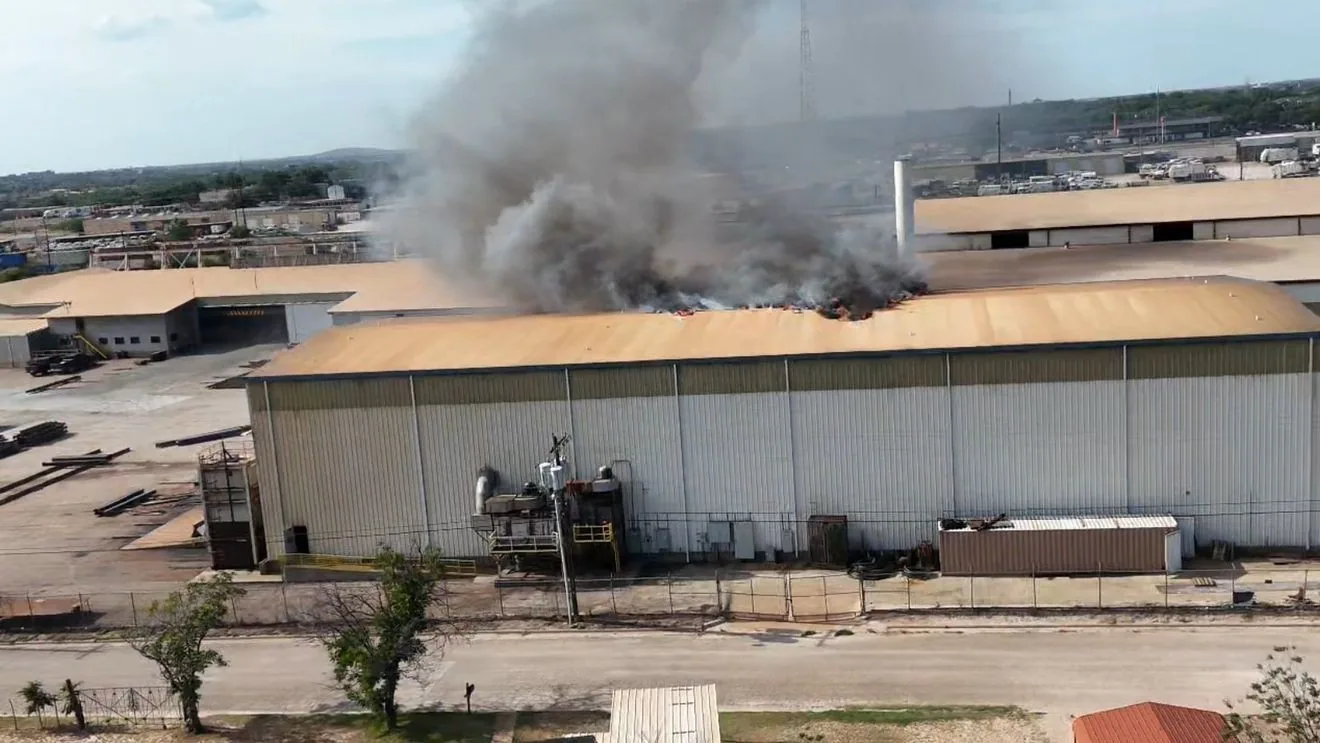
Which roof materials were exposed, and where does the fire-related work boundary begin? A property manager needs those answers before choosing temporary cover, testing, or reconstruction. We inspect the affected roof zone, identify visible heat damage, and record smoke residue and water from fire suppression separately. Moreno Valley, CA, has industrial, medical, office, and commercial building uses in its property inventory. The type of occupancy matters for protection and access, but the repair follows the conditions found on the specific roof.
Moreno Valley's employment map identifies the Moreno Valley Industrial Area and Centerpointe Business Park as broad commercial and industrial districts. That context helps frame loading, service access, and operations that may be affected during roof work. It does not establish that a fire occurred at a particular site or reveal the roof assembly. We connect the incident record to marked roof zones, note which components were examined, and give the manager a sequence for stabilizing exposure and deciding what must be opened.
Exposure record: separate heat, smoke, and water
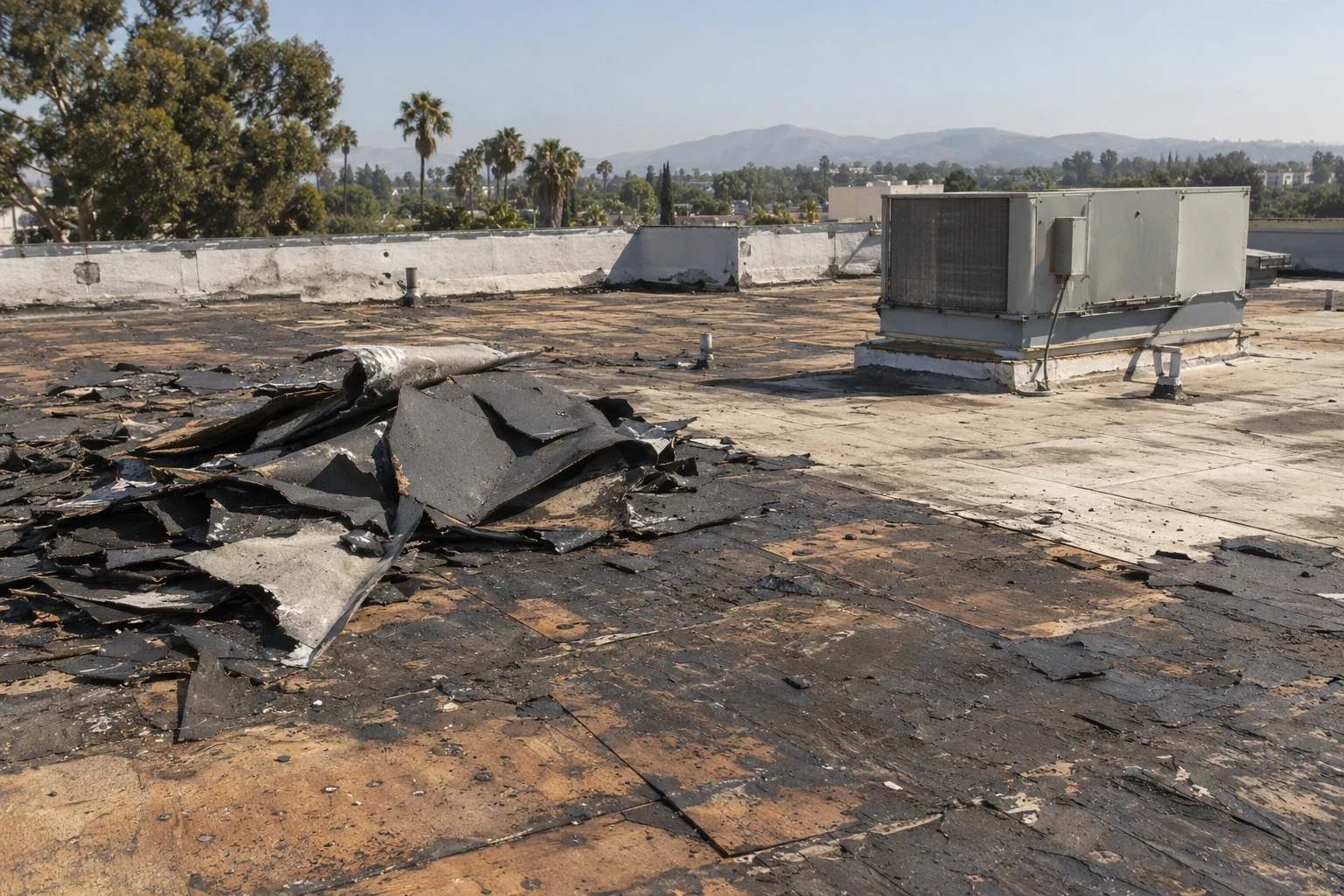
Fire-related roof damage is not a single condition. Direct flame can deform or consume membrane, insulation, metal, and deck. Radiant heat may affect nearby material without visible burning, while smoke deposits can collect on surfaces and water from suppression may enter through openings or drains. We photograph these observations separately and identify the limits of the area reached. A darkened surface alone does not tell the manager which layer has lost its function.
We mark the perimeter of visible damage and inspect transitions, penetrations, and adjacent sheet. Where material is blistered, charred, distorted, or separated, the report records its location and depth visible at inspection. If a concealed layer may be affected, we identify a controlled opening or testing method for approval. A roof inspection can document the roof field and nearby details, while a qualified fire-restoration or engineering professional may need to evaluate structural, electrical, or hazardous-material questions.
Interior observations matter as well. We compare the rooms below the affected zone, equipment records, and moisture reports with the roof plan. Water can travel beyond the opening before appearing indoors, so the first ceiling mark is not automatically the roof boundary. The work record separates visible roof damage from interior cleanup and assigns each question to the trade qualified to resolve it.
Immediate protection: control exposure
An open roof after a fire can admit rain or leave damaged layers exposed to movement and weather. We identify the opening, what the temporary cover can protect, and what edges remain vulnerable. The cover must not conceal evidence or add an unapproved load. We document installation and the return condition. Interim protection is its own line item, distinct from the permanent repair that follows testing and approval.
Regional winter rainstorms and Santa Ana winds are documented for Southern California in the National Weather Service guide. In Moreno Valley they inform the work window and temporary-protection plan, but they do not establish cause or extent of fire damage. Summer heat also affects roof-surface work and safe handling. We check field conditions before opening additional roof area and set a protected stopping point for every shift.
For an active opening or sudden water entry, emergency roof response is available at any hour, including weekends and holidays. The manager receives a short record of the area stabilized, the material used, and unresolved hazards or tests. If first responders or fire investigators control access, roofing work waits until the site authority releases the area. We do not disturb an incident scene or remove material needed for an investigation.
Assembly review: decide what can remain
After access is cleared, we identify the roof construction from plans, records, labels, or an approved field opening. We consider membrane, insulation, cover board, deck, attachment, and edges. A top sheet may need replacement while lower layers remain usable, or heat and water may require wider removal. We document each layer as it is exposed and keep the proposed removal boundary available for review.
If a patch is technically suitable, the repair must connect to sound and compatible material. Where the surrounding membrane has softened, lost attachment, or cannot accept a durable tie-in, a broader rebuild may be required. A localized membrane repair addresses an isolated opening; it is not a substitute for removal of damaged insulation or deck. We compare that scope with replacement planning when the confirmed damage reaches across a larger roof area.
Smoke and suppression residue can affect surfaces scheduled to receive new roofing. We identify whether cleaning, removal, or evaluation by a qualified restoration professional must occur before membrane work. If electrical equipment or rooftop units were exposed, the electrical or mechanical contractor confirms equipment condition and safe operation. The roofing estimate states which interfaces are included and which work must be completed by another trade before the roof can close.
Operating plan: sequence the affected rooms
Moreno Valley includes Riverside University Health System Medical Center and Kaiser Permanente among its medical institutions, alongside industrial employers and commercial properties. The manager identifies rooms needing protection, access controls, equipment shutdowns, and the approval route. We plan the roof phase around those specific operating constraints.
Centerpointe Business Park and the Moreno Valley Industrial Area give a broad picture of employment uses where loading and service routes may matter. We confirm the actual staging area, lift location, debris path, and roof access before removal. If other trades need to inspect equipment or wiring first, the schedule records that dependency. Work proceeds only after the responsible party clears the interface, and each open area has an agreed protection point.
Cost and duration depend on the area requiring removal, the layers confirmed, temporary protection, waste handling, access, and any trade or design review. A fire incident may create several separate approvals: emergency cover, investigation, removal, rebuilding, and final roofing. We label each stage so a manager can release immediate protection without pre-approving unknown reconstruction. Material discoveries are photographed, measured, and submitted as a scope change before work extends into another roof zone.
Reconstruction record: close each work item
After damaged layers are removed, the exposed deck or substrate is reviewed before new material is installed. Structural concerns go to the appropriate design professional. We document preparation, insulation and cover-board work, membrane attachment, flashing, and finished edges in the approved scope. Each photo is tied to a roof-zone mark, so the manager can compare the original finding with the completed assembly.
The closeout separates roofing work from fire restoration, electrical work, and interior cleanup. It lists installed materials where confirmed, conditions that remain, test records requested, and the follow-up inspection interval. A photo-supported condition report can retain the evidence with the work-order trail for future maintenance. If a new seam or penetration is part of the rebuild, that detail receives its own inspection mark.
Later roof work should refer to the repaired area and any limits from the incident. If heat exposure also left brittle or discolored material outside the removed boundary, we list it for monitoring rather than silently extending the conclusion. A heat and UV review can help assess that separate condition. The closeout gives each item a status: repaired, tested, awaiting another trade, or requiring follow-up.
Commercial Roofing Questions
Should roof removal begin before the fire investigation ends?
No. Work waits until the authority controlling the site releases the area. We document the roof condition without disturbing material needed for an investigation.
Can the roof be patched while reconstruction is being planned?
A temporary cover may reduce exposure when it can be secured safely and does not interfere with evidence. We document what it protects and what remains open for permanent work.
Does visible charring show how much insulation must be replaced?
Not by itself. We inspect the assembly and identify a suitable test or opening when the result will set the removal boundary. Each exposed layer is recorded for approval.
Who checks rooftop equipment after a fire?
The qualified electrical or mechanical trade evaluates its equipment. We coordinate the roof interface and complete flashing or membrane work after the responsible party clears the area.
What is included in a fire-damage roofing closeout?
It identifies the repaired zones, materials confirmed, protection removed, related work by other trades, open items, and follow-up interval. Photos tie the finished work to the approved scope.
Commercial Roofing Moreno Valley handles commercial roof repair, replacement, inspections, coatings and maintenance across Moreno Valley, Riverside and the Inland Empire. Request a roof assessment or call 555-555-5555.
Related Roofing Work
Separate stabilization from reconstruction
Share the roof plan, incident-area boundaries, access release, interior protection needs, and approval path. We will document exposed roofing, identify testing or trade dependencies, and price temporary protection separately from permanent repair.
Request a Roof Assessment555-555-5555