
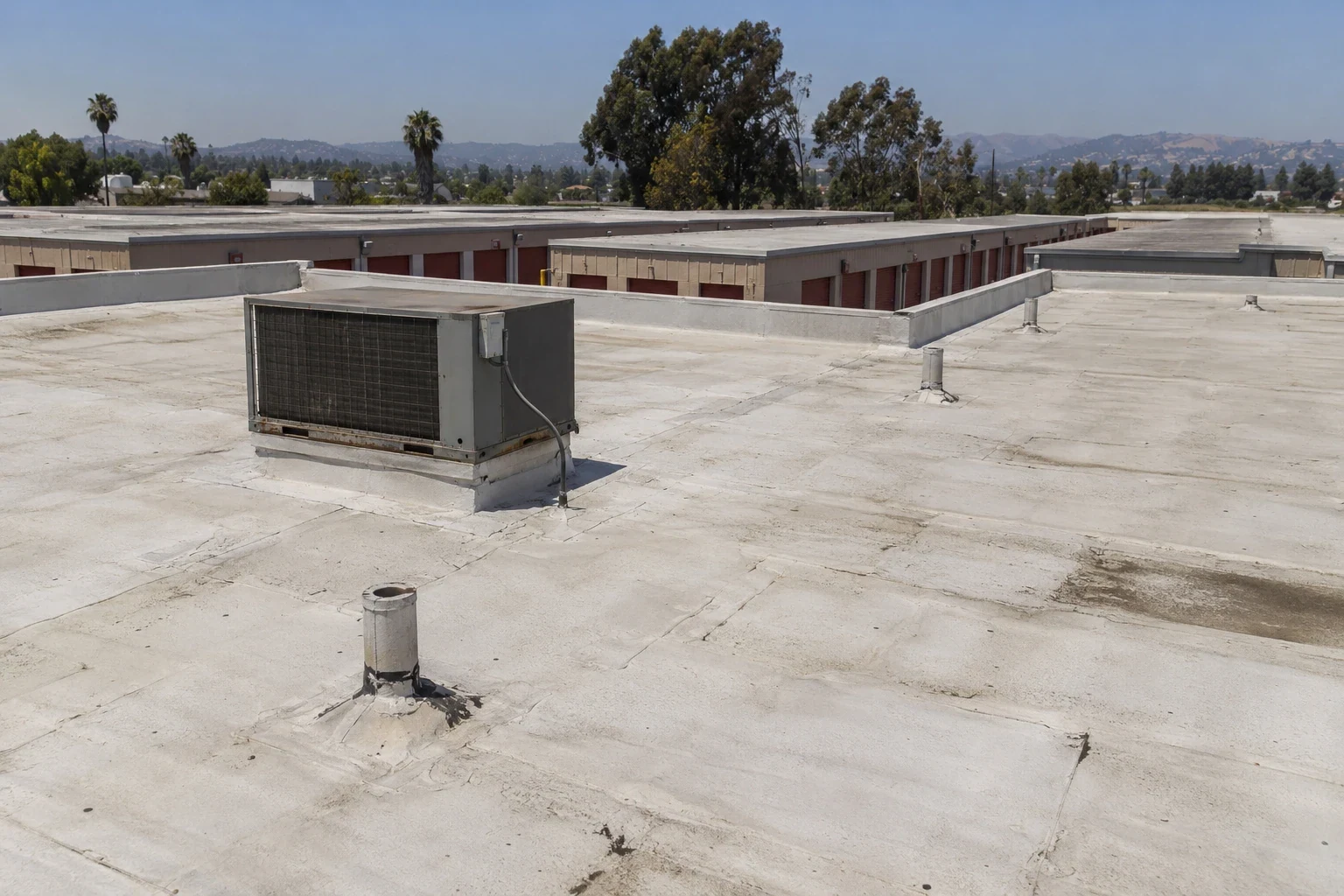
A self-storage leak ticket should identify the building, unit row, and roof zone before a repair is priced. Commercial Roofing Moreno Valley inspects and maintains self-storage properties in Moreno Valley, CA, and prepares replacement scopes when conditions support a larger project. We compare the tenant report with drains, seams, penetrations, and perimeter details, then mark the observed area on a plan. The manager receives a condition record that can be matched to unit access, customer notices, and the approval needed for work.
Access can run above occupied storage units while the facility continues to admit customers. We identify gate procedures, drive aisles, lift placement, and the row below the repair. The inspection follows each roof section and notes any blocked or unsafe area. Moreno Valley's employment maps distinguish broad areas including the Moreno Valley Industrial Area and SR-60 Business Park Area. Those names orient dispatch, but the property record controls roof, layout, and access details.
Unit report: connect the tenant location to the roof zone
A tenant may notice a mark on a box or wall before water becomes visible on the roof. We record the unit, row, date, and any recent maintenance, then relate that position to the roof plan. On the surface, we inspect seams, penetrations, curbs, drains, wall joints, and earlier patches around the likely path. The nearest roof feature is not automatically the source; the work order states which findings support the repair boundary.
If several units report water in the same area, we compare their positions and timing before enlarging the work limit. A roof inspection records accessible sections; leak repair can follow a confirmed path. When moisture could extend below the membrane, infrared indications can help select a test point, while a test confirms whether insulation is affected. Separate each unit report from the roof evidence so customer communication does not become a substitute for a diagnosis.
Access plan: protect customers and stored contents
Before work, the facility manager identifies gate hours, customer circulation, restricted rows, and any unit that needs notice. We mark where a lift or material staging can fit without blocking the drive aisle and define which units lie beneath the work. If contents need temporary relocation or added protection, the owner establishes that with the customer before the crew opens the roof. Our scope identifies the roof section, daily exposure, and interior protection that the repair requires.
A minor flashing correction may fit a narrow access window, while removal of wet insulation needs a larger opening and planned closeout. We set a dry-in point for each shift and document any temporary cover separately from permanent work. Occupied-property sequencing can divide a replacement into controlled sections. If water is active, emergency response is available overnight, on weekends, and holidays; the work record still lists the lasting correction that remains.
A warehouse or distribution building may have loading and vehicle paths instead of individual unit aisles. Inspection stays specific to each property's access and customer schedule.
Drainage: find where water collects or exits
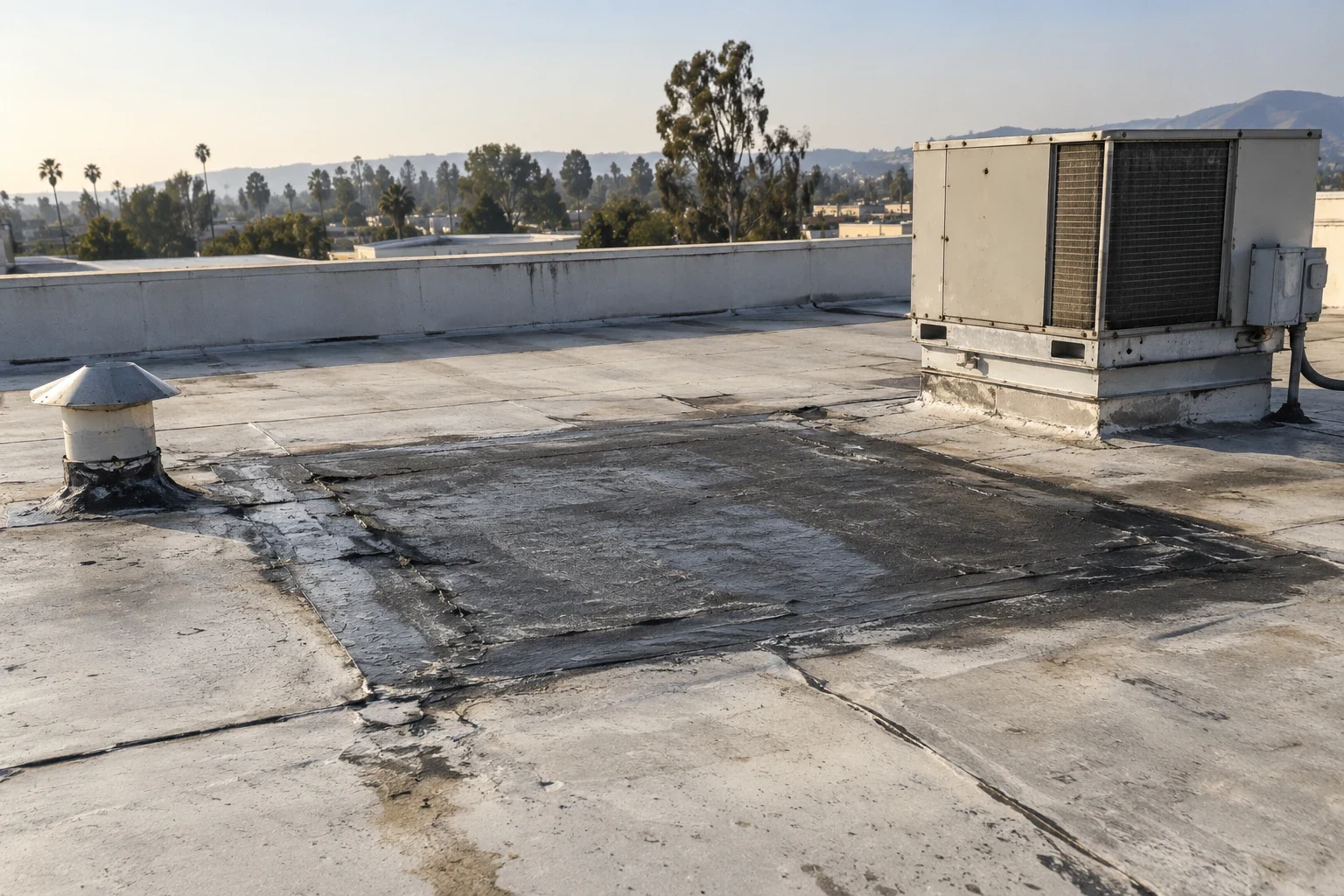
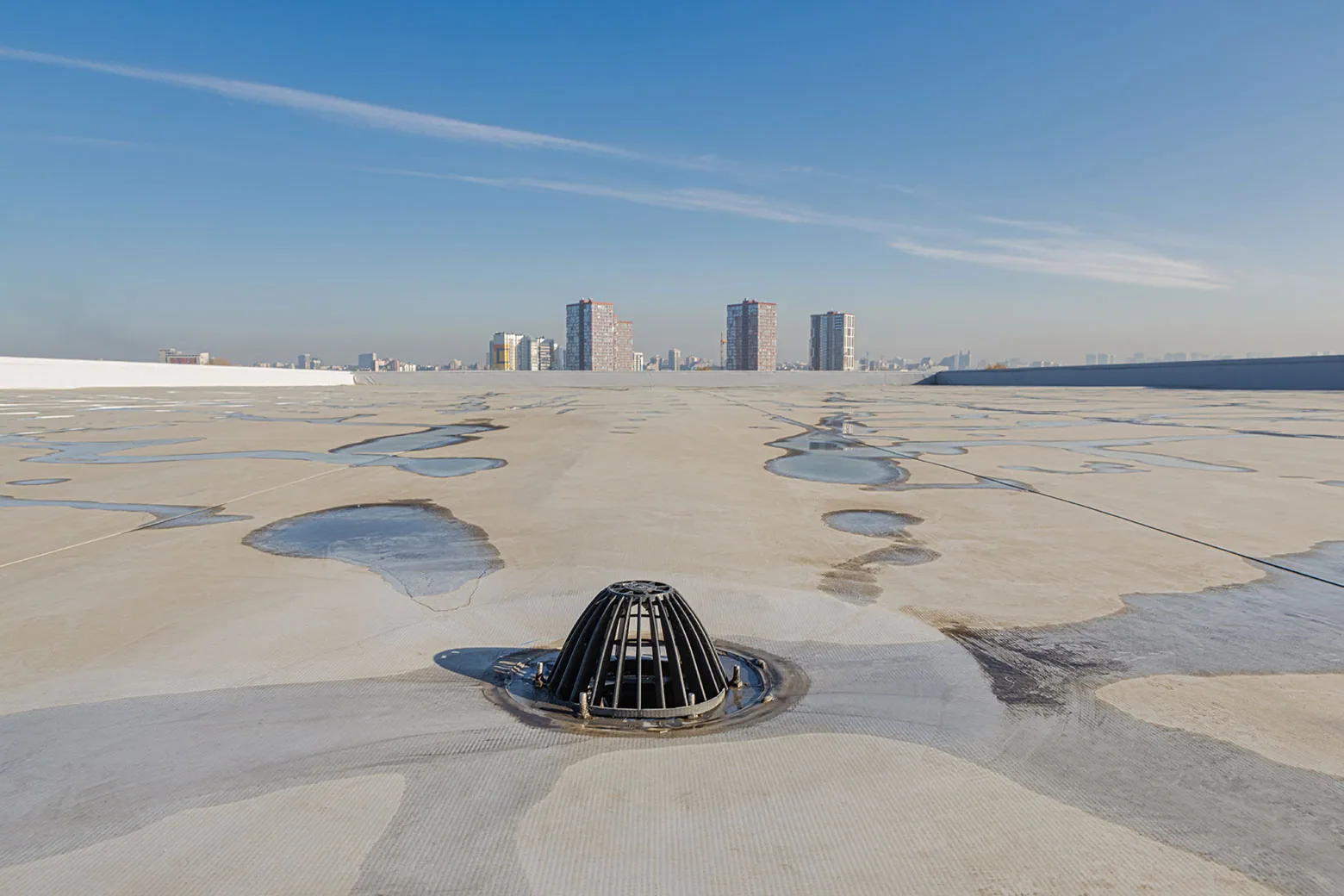
We inspect the low point, drain bowl, overflow, scupper, and membrane around each opening. Debris, standing-water marks, a loose connection, and a split seam are recorded as different observations because they require different work. A blocked drain may need clearing; a failed tie-in may need membrane repair or rebuilding around the bowl. The report includes the roof area and a photograph that shows the outlet in context.
For an interior report, we check nearby drains and transitions before concluding that the water entered directly above the unit. Water can travel along a deck or insulation joint. If the moisture extent changes the removal boundary, an infrared survey can guide a test location; results are recorded before a larger quantity is approved. A ponding-water assessment evaluates slope, outlet, and surrounding surface together.
Moreno Valley is within the Inland Empire forecast area. Summer heat, winter rainstorms, and regional Santa Ana winds affect field timing and exposure planning. They do not establish that a particular storage property was damaged. We document the roof, weather at the visit, and any interior report, then set the repair scope from those conditions.
System check: match repair material to the assembly
Storage roofs can use different assemblies, and the service request does not identify which one is present. We check the visible surface and record membrane, coating, built-up, or metal construction when it can be confirmed. At seams, we look for open laps, loose attachment, punctures, surface wear, and prior patches. At parapets and edges, the inspection records termination, coping, and metal condition. If layers cannot be identified from the surface, we name the test that would resolve the question.
A compatible patch needs sound material and preparation around the defect. A coating needs a stable substrate and appropriate adhesion; a recover requires the existing roof to support another layer. If removal is needed, the estimate identifies insulation, drains, edge metal, disposal, and protection below. TPO repair details differ from metal or modified-bitumen work, so we confirm the installed system before selecting materials.
The city's broad employment areas include Centerpointe Business Park and Moreno Valley Industrial Area, while a Moreno Valley property may sit elsewhere in the service market.
Scope comparison: price measured work and access
A localized opening with sound material around it may support repair. Repeated leaks, broad moisture indications, poor attachment, or several failed roof zones can justify testing or a larger replacement comparison. We document the condition and state what changes the recommended boundary. A repair scope can close a confirmed defect; a recover review checks the existing assembly before adding another layer.
Cost and timing depend on the number of roof sections, access equipment, customer restrictions, preparation, removal depth, insulation, drainage, edge metal, disposal, and how much area can be exposed in a shift. A repair above a unit row may require notices and coordinated access, while an edge detail may need different staging. The estimate keeps confirmed quantities separate from an allowance for concealed conditions. If a test changes the work, the manager receives a variance and updated approval request before removal expands.
Moreno Valley's SR-60 and I-215 junction helps orient regional deliveries, but a route does not determine the property's gate or staging location. Confirm those details with the facility contact so material arrival does not interrupt customer access.
Maintenance file: keep unit reports with roof history
Closeout should list the building, roof zone, unit row if applicable, materials, photographs, and any unresolved item. Temporary dry-in remains distinct from permanent repair. If testing changes the moisture extent, attach the result and approved scope change to the same work order. Later tenant reports can be compared with the repaired roof zone.
A maintenance visit can revisit drains, seams, edge metal, and earlier patches at an interval based on condition. Keep tenant report locations, roof plans, access rules, and work-order trail together. Warehouse roof maintenance may share inspection points such as drains and penetrations, while unit notices and customer circulation remain specific to self-storage operations.
Send the roof plan, unit locations, leak reports, gate procedures, previous work orders, and equipment schedule. We will inspect the marked areas and return repair, testing, and follow-up needs in a record the manager can route.
Commercial Roofing Questions
How do you connect a tenant leak report to the roof?
We map the unit or row, compare it with drains and roof details above, and photograph findings. If concealed moisture could change the repair boundary, we identify a test before expanding removal.
Can a roof repair proceed while customers use the facility?
Yes, with a defined access route, marked work area, lift placement, and customer controls. The manager identifies rows requiring notice, and each shift closes at its planned dry-in point.
What if more than one storage unit reports water?
We compare unit locations and timing with roof zones before setting the boundary. Related reports may point to one path, but each finding is documented before the repair quantity is chosen.
Should a storage roof be coated instead of replaced?
Only if the existing assembly and substrate support that option. We inspect for moisture, attachment, surface condition, and compatible preparation before comparing coating with other scopes.
What should the manager keep after a repair?
Retain the marked roof area, affected row, photos, material, work record, customer access limits, and remaining action. Separate temporary protection from permanent correction.
Commercial Roofing Moreno Valley handles commercial roof repair, replacement, inspections, coatings and maintenance across Moreno Valley, Riverside and the Inland Empire. Request a roof assessment or call 555-555-5555.
Related Roofing Work
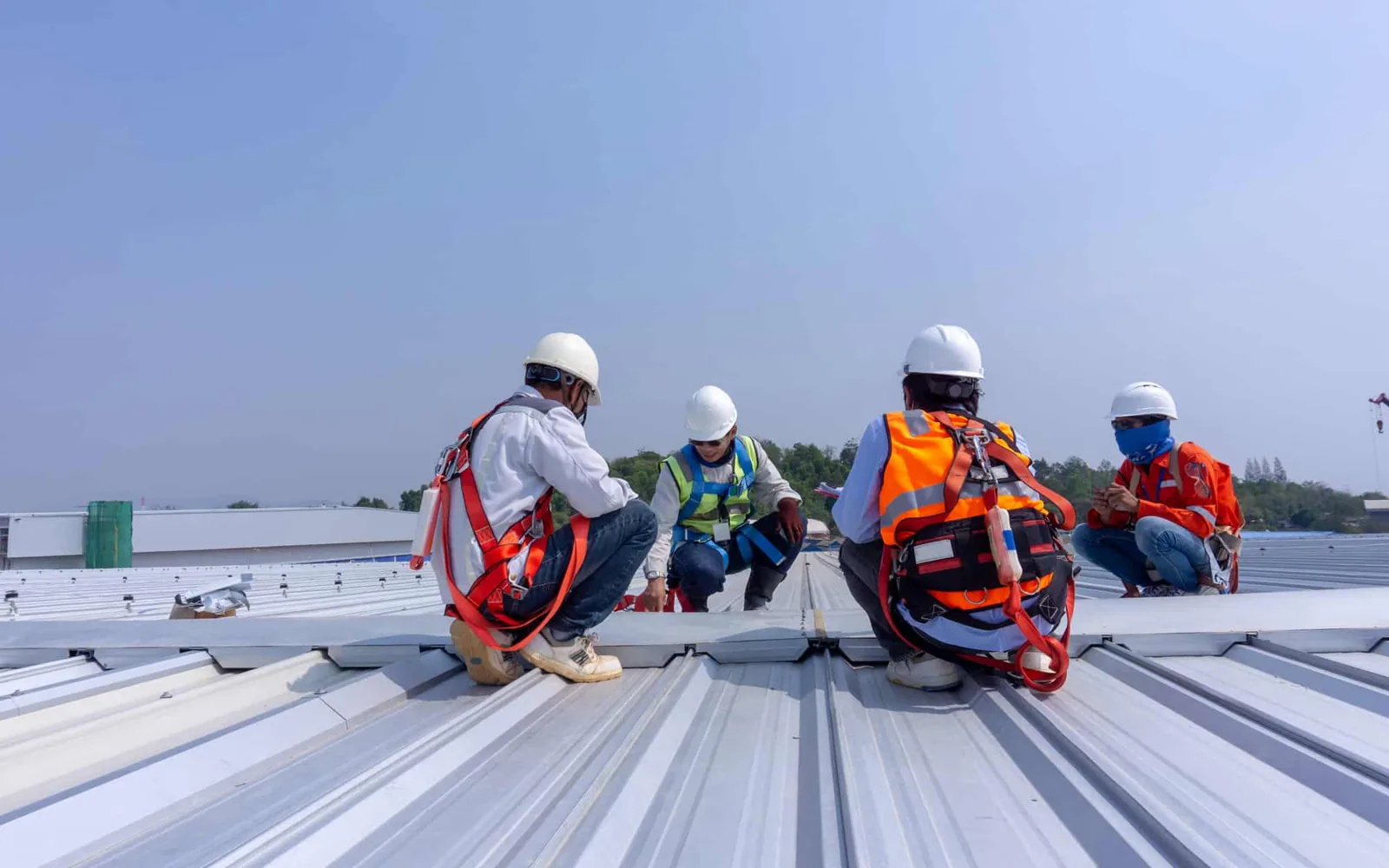
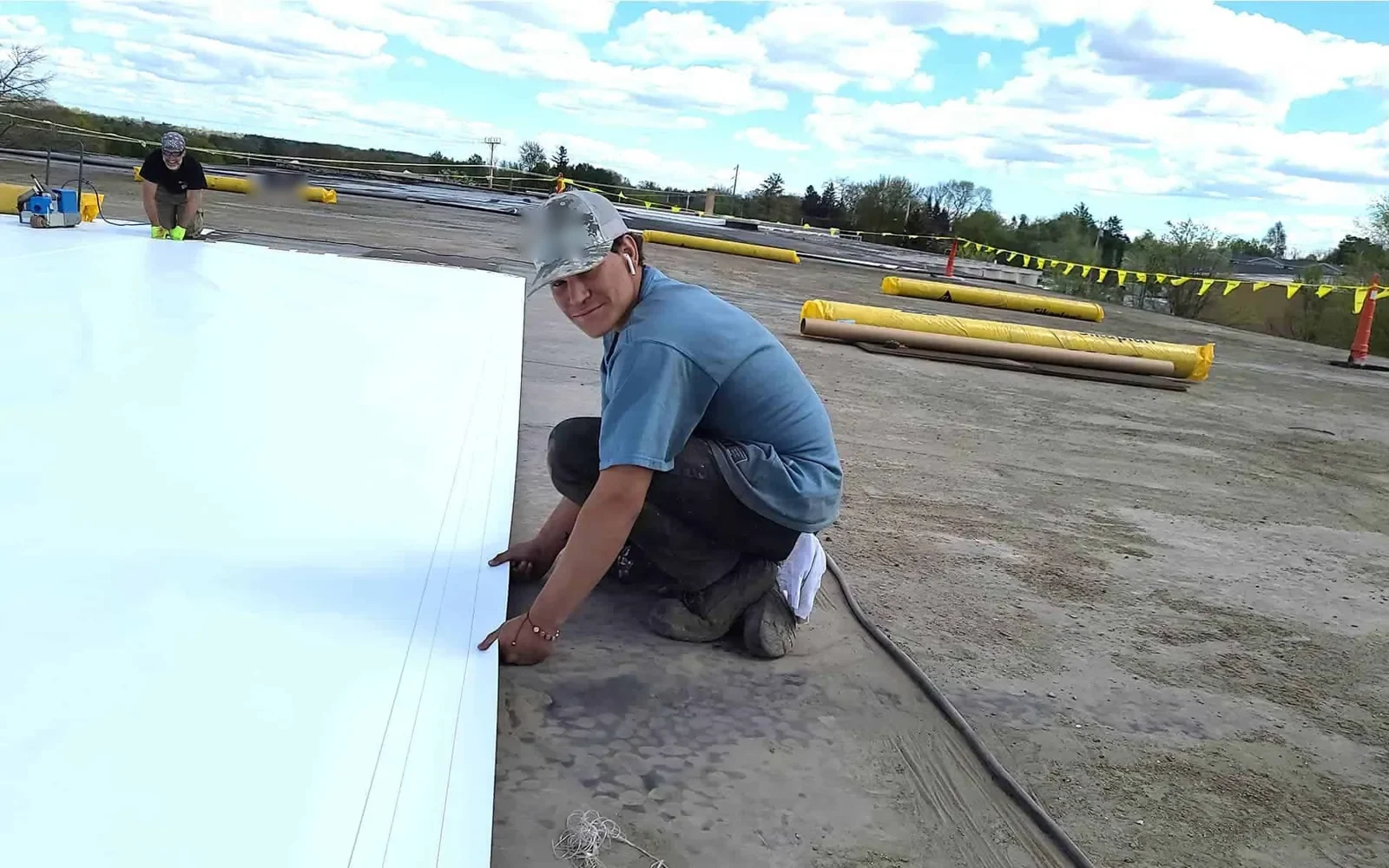
Map a self-storage roof concern
Share the roof plan, affected unit rows, tenant reports, access rules, and prior work orders. We will inspect the relevant sections and return a marked scope with follow-up actions.
Request a Roof Assessment555-555-5555