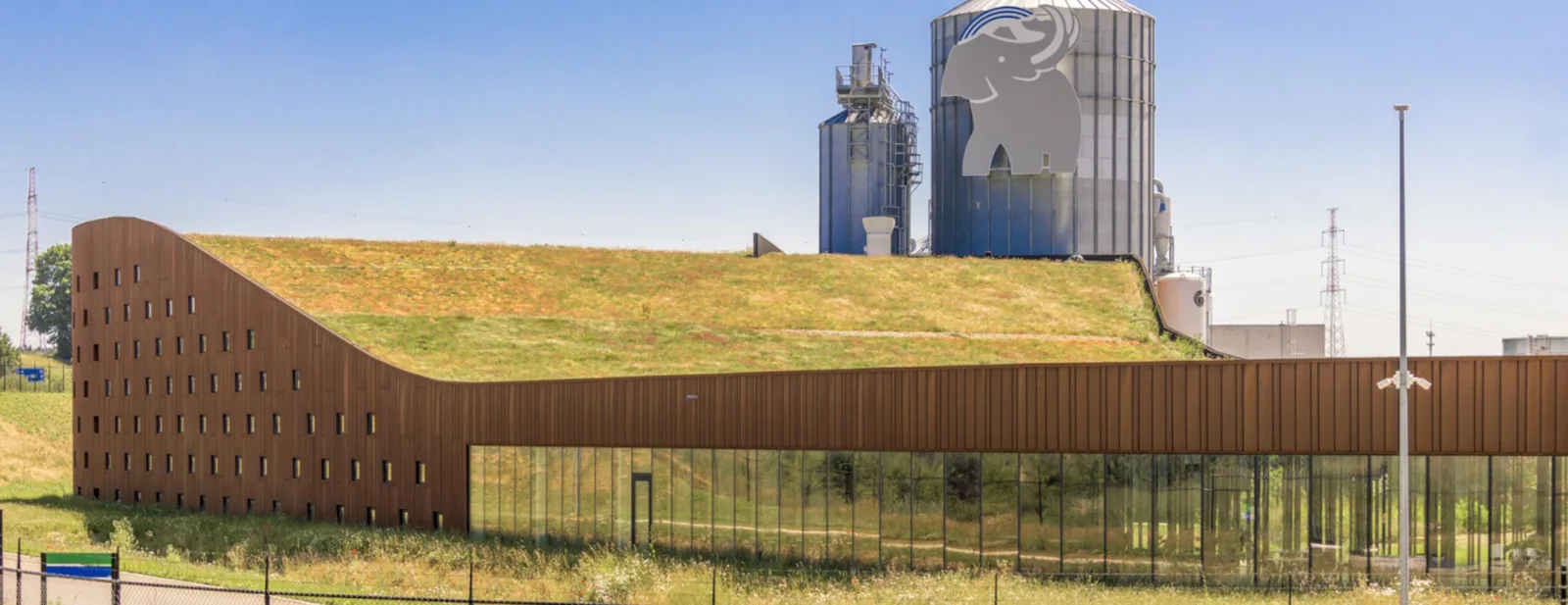
Which Soprema roof layer, detail, or repair needs a decision? Commercial Roofing Moreno Valley inspects Soprema commercial systems in Moreno Valley, CA, tying visible conditions to the building plan and work record. Soprema's commercial portfolio includes SBS-modified bitumen, PMMA/PMA liquid-applied membranes, and single-ply PVC products. The product family helps focus the review, but the current roof assembly and prior work have to be confirmed before choosing a compatible repair or restoration method.
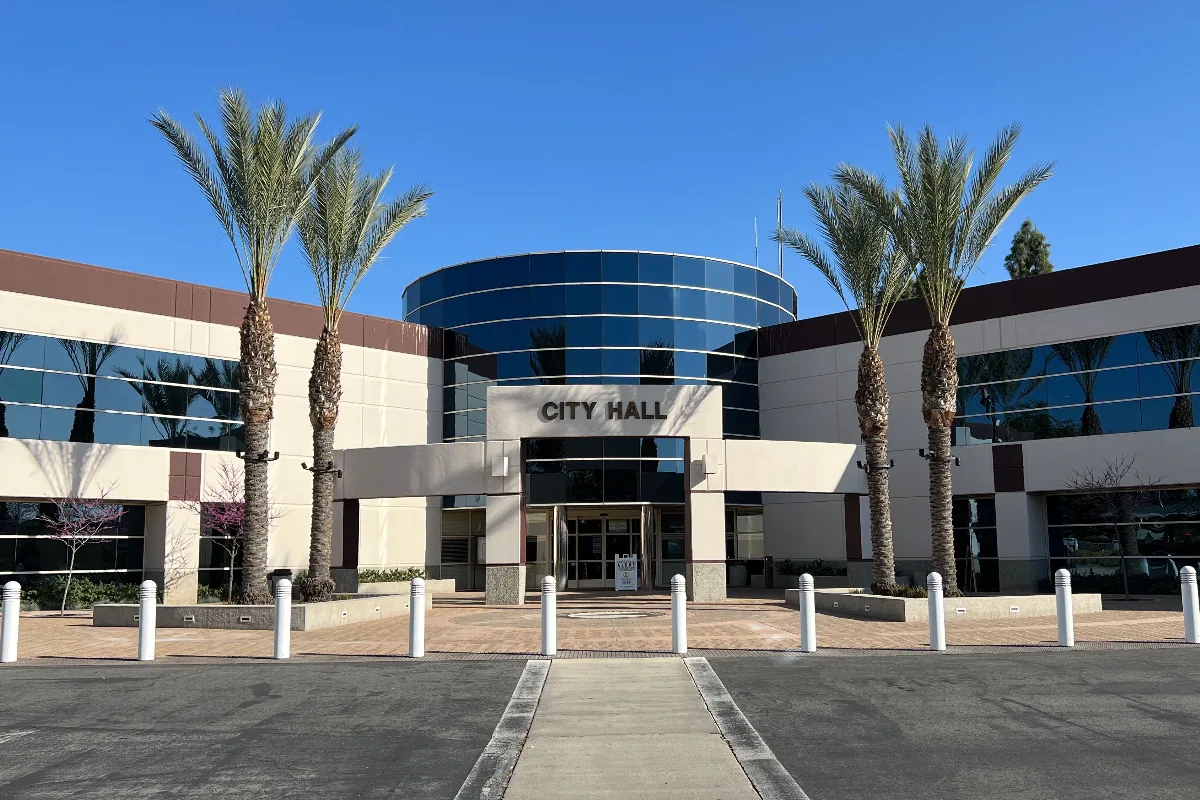
Moreno Valley's City inventory maps the Industrial Area, Centerpointe Business Park, and the SR-60 business area as separate employment districts. That context helps organize visits to different commercial settings, while the property contact identifies access and active operations. Inland Empire summer heat, winter rain, and regional Santa Ana winds affect safe inspection and exposed-work timing. We record the actual roof findings and any weather-related schedule change separately.
System record: identify the material and layer sequence
Review closeout documents, submittals, invoices, and past repairs to determine which Soprema product is installed and where. We compare them with exposed edges, seams, flashing, and coating history. One property can contain separate phases or repairs using different materials. Where the record and field do not agree, we identify the uncertain area and seek confirmation before ordering a product-specific repair. The manager receives a plan mark, photographs, and the next step needed to settle the assembly.
SBS-modified bitumen assemblies use multiple membrane plies or approved system layers, while a single-ply PVC roof has a different seam and flashing approach. Liquid-applied PMMA or polyurethane-bitumen details need suitable substrate preparation and reinforcement where specified. The Soprema product documents govern which materials work together. A modified-bitumen roof review checks the ply laps, cap sheet, transitions, and previous patches; product identity alone does not establish the surface is ready to receive another layer.
The City lists industrial, commercial, office, and medical properties in Moreno Valley. At a building with regular equipment service, the roof record should include access paths and any changed penetrations. The contact confirms the approved route and service window. We mark the exact area examined so a future visit can compare the same seam, flashing, or drain.
SBS plies: inspect laps, surfacing, and transitions
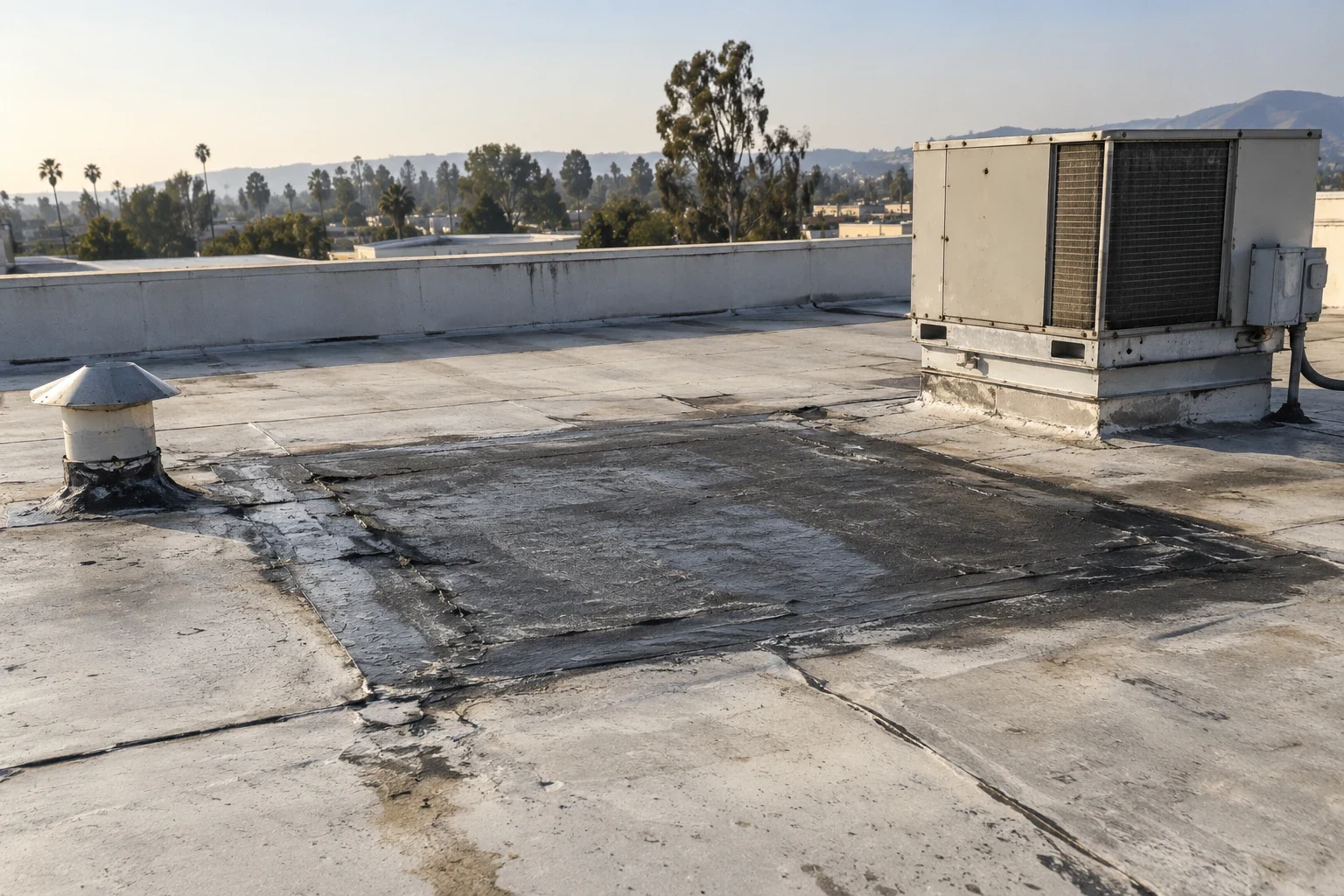
An SBS roof concern can involve an open lap, a blister, a split at a transition, or damaged surfacing. We inspect the affected area and nearby plies, then identify whether the condition is isolated or repeated. A close photograph shows the lap or cap detail; a wider view locates it on the plan. Repair preparation may require cleaning, drying, removal of unsound material, and rebuilding the membrane detail. The scope should say which layer is corrected and where the repair stops.
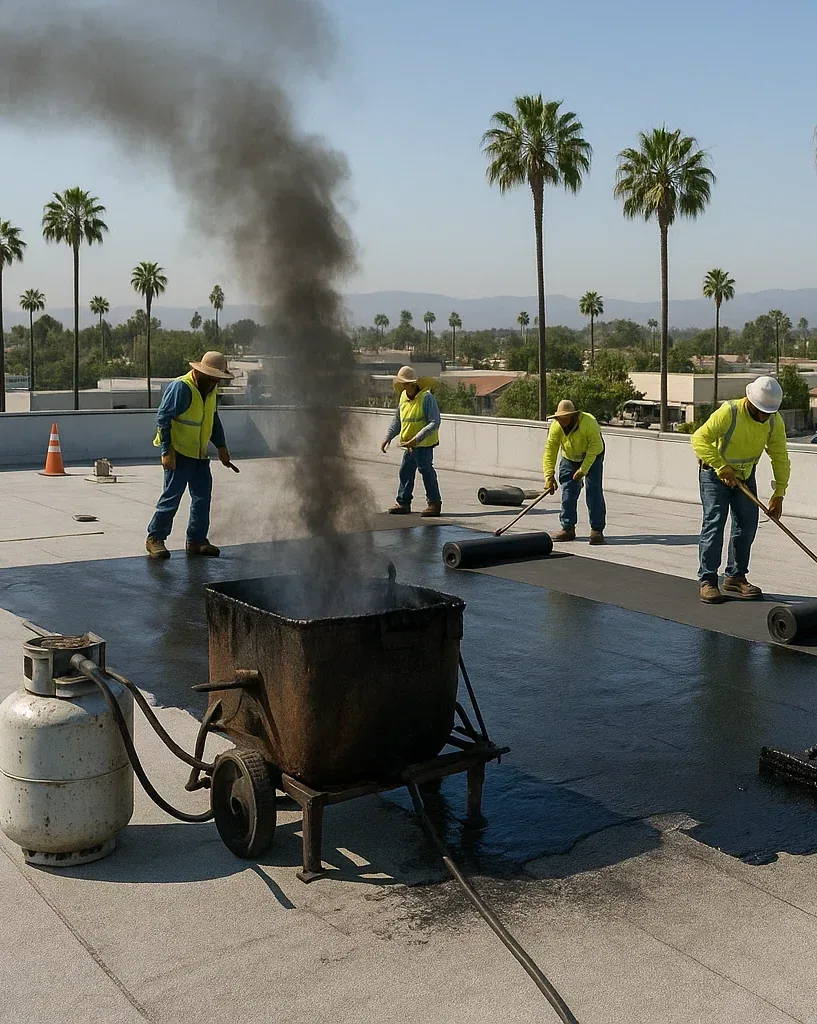
At a parapet, drain, curb, skylight, or expansion joint, the transition must connect to the surrounding roof layers without leaving an exposed edge. We check prior sealant and patching, then identify any metal, equipment, or wall work that belongs to another trade. If a hot-applied or torch-applied method is specified, access, fire controls, substrate, and operating conditions must be planned for that work. We describe the selected approach and site protection rather than substituting an unapproved adhesive or coating.
On a multi-ply roof, a surface defect can involve the cap sheet while the lower plies remain intact, or moisture may extend beyond the visible split. We inspect the adjacent membrane and review repairs in the same roof zone before defining removal. Where a test opening is authorized, the report names the location, material layers, and condition found. That evidence helps the owner approve only the correction supported by the exposed assembly.
For water reported indoors, document the room, time, and recent service work. We trace the roof area above and adjacent construction. A ceiling mark alone does not show the point of entry. A leak investigation can distinguish visible membrane damage from an untested area or a separate equipment junction. Any moisture opening is located and restored under the approved scope.
Liquid-applied details: verify preparation and reinforcement
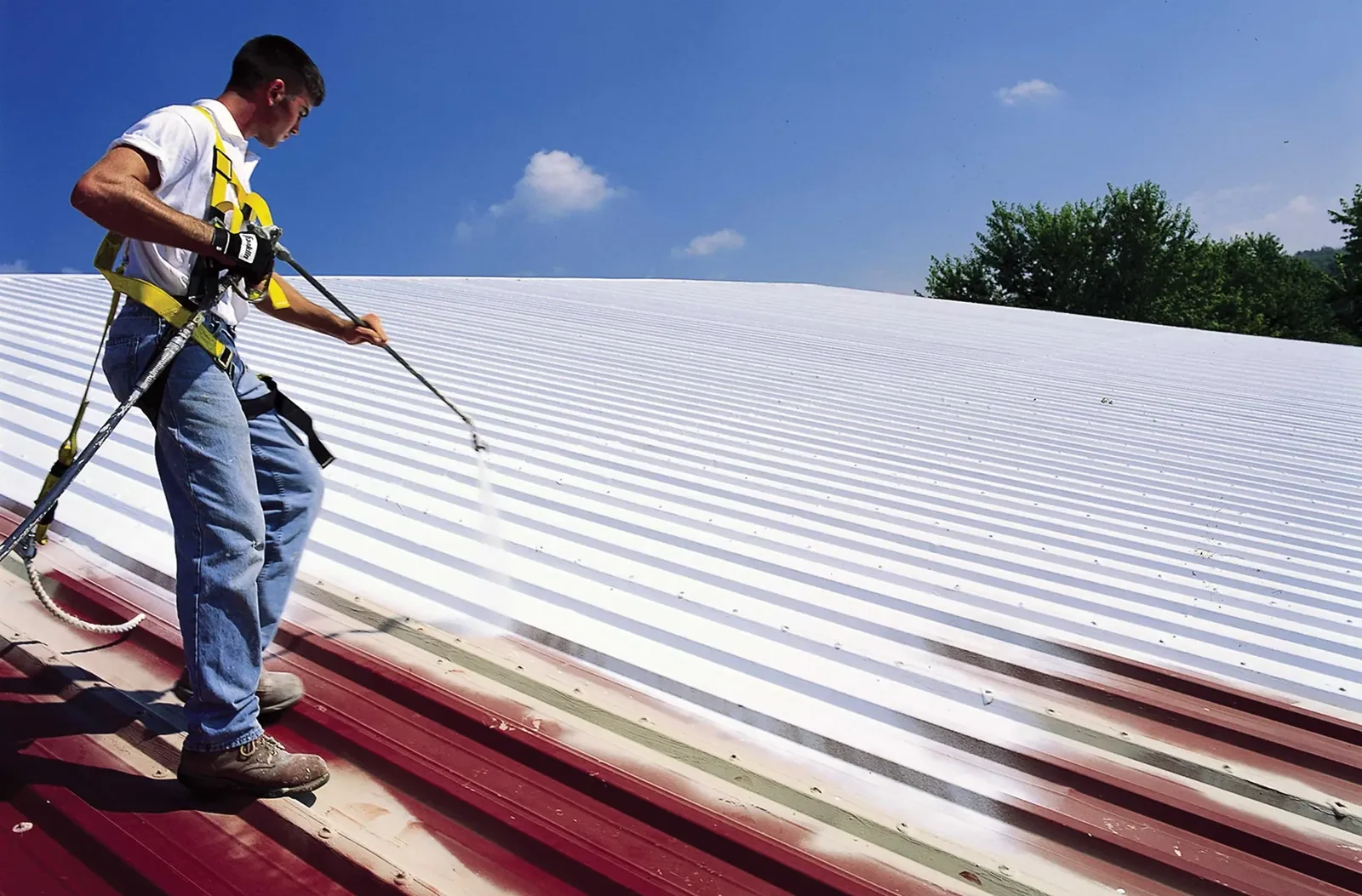
Soprema offers liquid-applied membranes and flashing products for specified roofing applications. The surface condition, temperature, moisture, reinforcement, and transition detail affect the installation. We identify the named product where records confirm it, then compare its required substrate with the existing roof. A liquid application should not cover loose coating, contaminated material, or a moving joint without resolving the underlying condition. The repair file shows preparation and extent so the property manager can review what was treated.
At complex penetrations, a reinforced liquid detail may tie together irregular geometry more neatly than an improvised patch, but system instructions still determine where it can be used. We inspect corners, pipe supports, curb faces, and changes in plane. If the surrounding membrane is from another manufacturer or material family, compatibility has to be addressed before work. A restoration assessment distinguishes a compatible liquid flashing repair from broad coating work and includes any membrane repairs required first.
Summer heat in Moreno Valley can shorten the safe interval for application and curing. Regional rain and wind influence exposure protection and dry-in. The work plan states the area that can be prepared and completed during the scheduled interval. If conditions change, the crew secures the open area and records what remains for a return visit.
Repair or renewal: compare the supported choices
We present confirmed defects, areas requiring further evidence, and sections not included in the inspection. A local SBS lap or flashing repair may be suitable when surrounding layers remain serviceable. Repeated splits, wet insulation, or uncertain layers may require testing and a wider proposal. The condition map gives the manager a clear basis for a repair authorization or a capital review without assuming every part of the roof has the same condition.
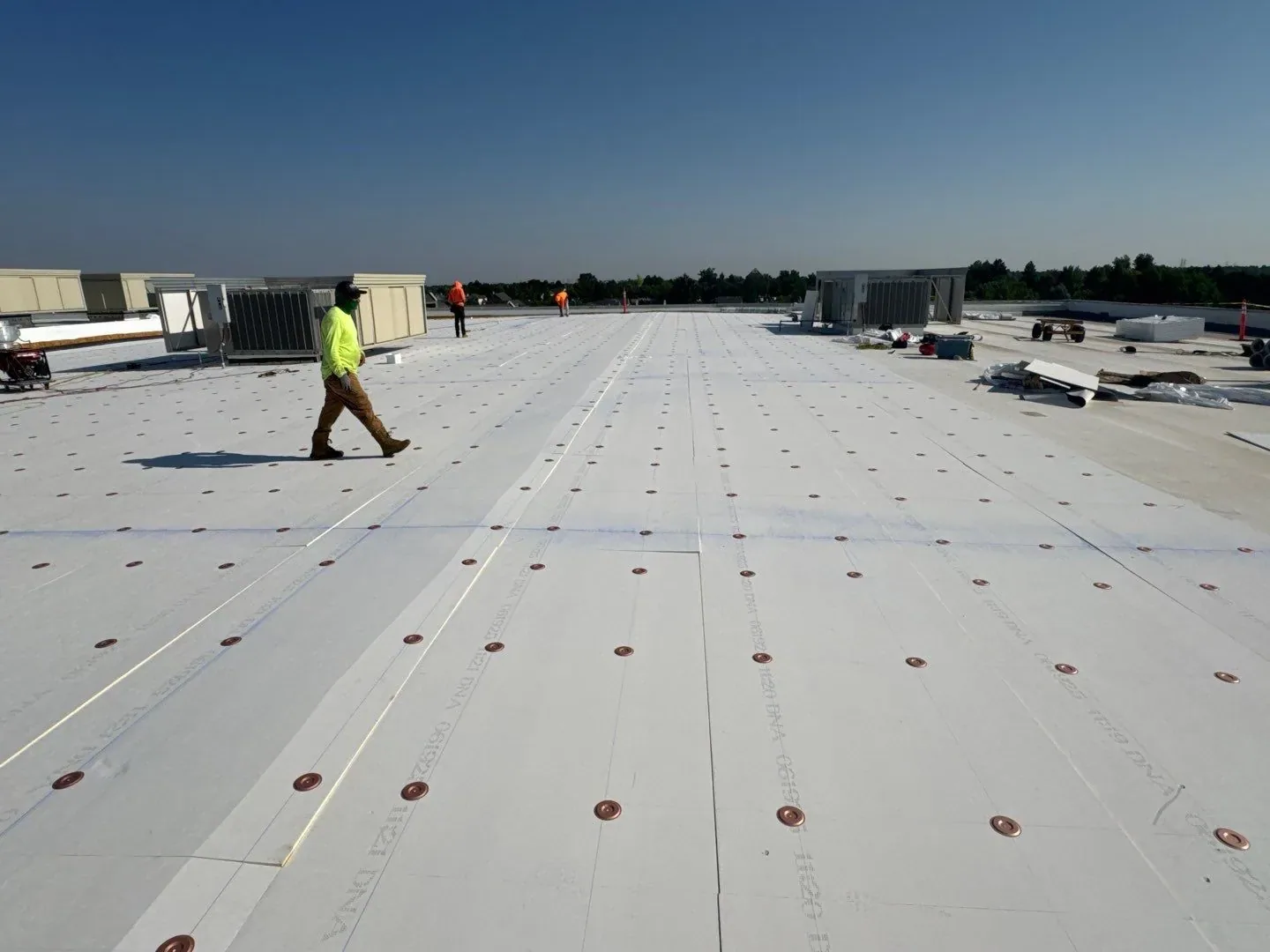
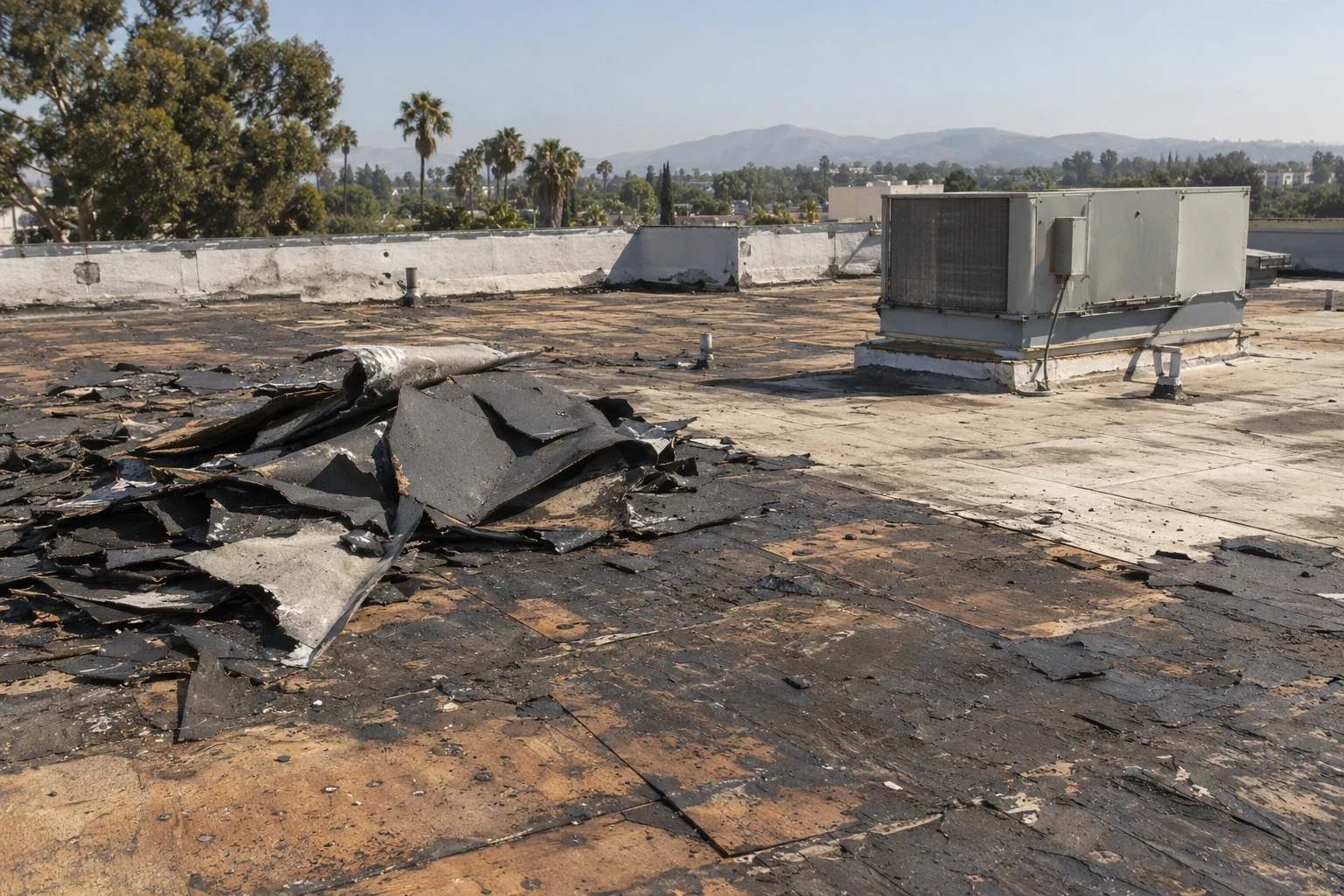
Recover feasibility depends on layer count, moisture, edge height, drainage, attachment, and project requirements. Replacement may call for removal to a suitable substrate and rebuilding with a specified assembly. A liquid coating does not correct a wet base or failed laps by itself. A recover evaluation records the existing assembly and boundary; a replacement scope sets removal, insulation, membrane, flashing, and temporary protection requirements.
Building owners comparing systems can review GAF commercial roofing and Carlisle SynTec systems alongside the verified Soprema assembly. Compare the actual construction, substrate, access, and maintenance needs rather than relying on a product family description. Retain approval, installed materials, photographs, changes, and follow-up check in the property's work-order trail.
Commercial Roofing Questions
How do you identify a Soprema roof assembly?
We compare project documents and repair records with visible labels, layers, seams, and flashing details. If the product or application remains uncertain, we identify the area and evidence needed before selecting a compatible repair.
Can an SBS membrane be patched with a liquid product?
Only where the product and assembly permit that detail and the substrate is properly prepared. We confirm the materials, repair boundary, and required reinforcement before proposing the work.
What should be checked before applying a roof coating?
Inspect membrane adhesion, laps, moisture, drainage, contamination, and the existing roof layers. We list repairs and preparation needed before a coating can be considered.
Does a blister mean the entire Soprema roof needs replacement?
No. We inspect the blister, adjacent layers, and moisture extent, then identify whether localized repair, testing, or broader renewal is supported by the findings.
How do Moreno Valley conditions change Soprema work timing?
Summer heat, winter rain, and regional Santa Ana winds affect safe access, exposed installation, and cure or protection intervals. We record field conditions and the roof findings as separate parts of the work plan.
Commercial Roofing Moreno Valley handles commercial roof repair, replacement, inspections, coatings and maintenance across Moreno Valley, Riverside and the Inland Empire. Request a roof assessment or call 555-555-5555.
Related Roofing Work
Document the Soprema assembly before authorizing work
Share product submittals, roof plans, previous repairs, leak locations, access limits, and the approval path. We can mark the inspected area and return a compatible repair or renewal scope.
Request a Roof Assessment555-555-5555