Which Carlisle SynTec assembly is on the roof, and which finding must be cleared before approval? Commercial Roofing Moreno Valley inspects Carlisle SynTec commercial roofing in Moreno Valley, CA, recording the building, roof zone, and work decision together. Carlisle lists Sure-Weld TPO, Sure-Flex PVC, and Sure-Seal EPDM among its single-ply systems, along with insulation and accessories. Those names help narrow the investigation, but project documents and visible construction must confirm the roof at hand.
Centerpointe Business Park and the SR-60 Business Park Area are separate employment areas in the City inventory. Their business activity can affect access and scheduling, while the site contact confirms the roof plan and operations. In the Inland Empire, summer heat, winter rain, and regional Santa Ana winds influence safe field timing. The inspection report distinguishes that planning context from the roof condition observed at each marked area.
Assembly record: identify the installed Carlisle system
Collect specifications, closeout documents, repair invoices, and any remaining membrane labels before selecting a repair material. We compare those records with exposed edges, seam construction, flashings, and attachment evidence. A Carlisle name in an old bid file may refer to one project phase and not later additions. If the installed system is not confirmed, the report describes the visible layer and lists what evidence would settle the product question. That step avoids applying a thermoplastic detail to EPDM or bonding to an unknown coating.
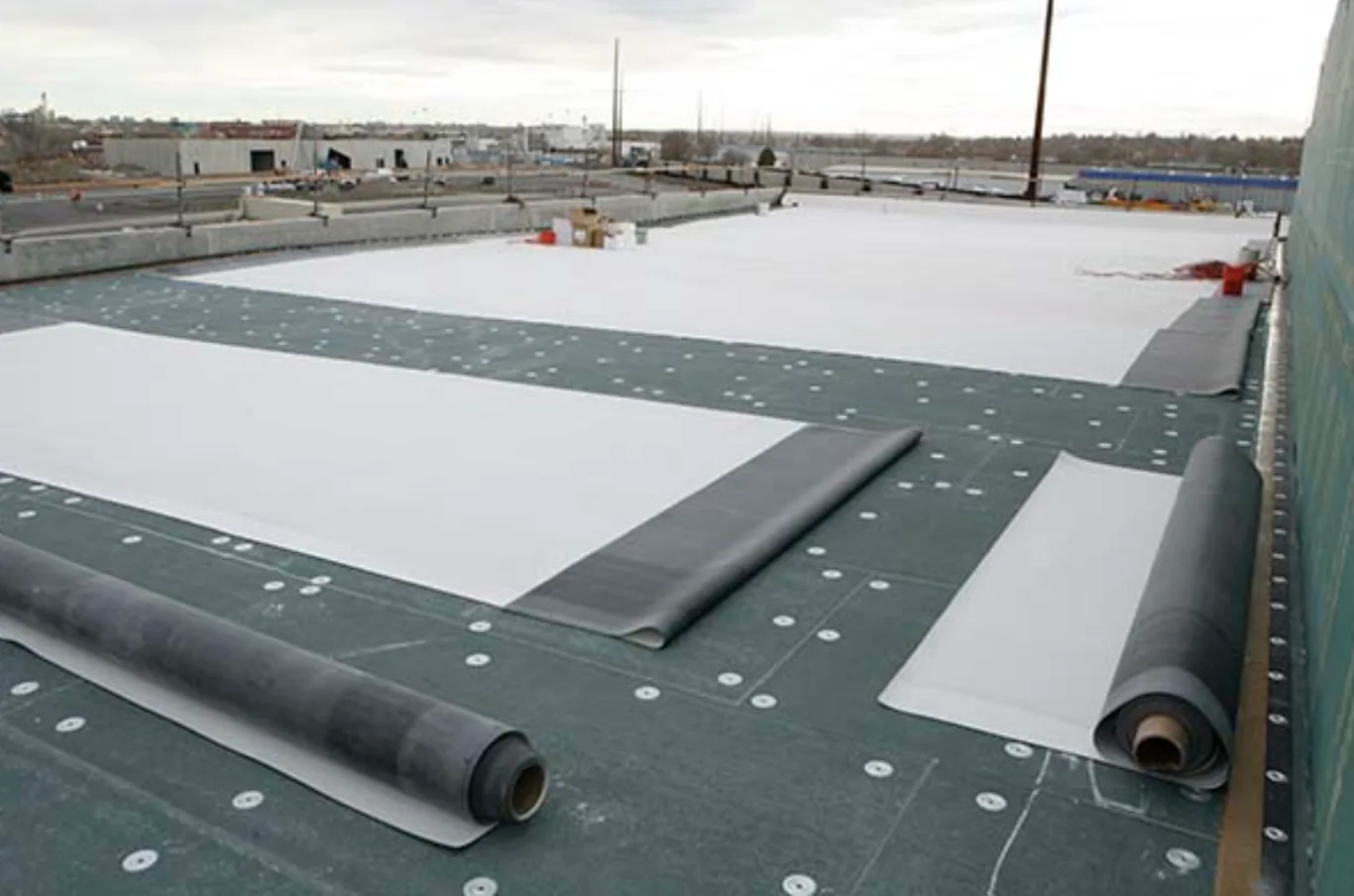
Carlisle's commercial range includes thermoplastic TPO and PVC membranes and EPDM products. The systems do not share every seam, flashing, or accessory method. TPO and PVC seams are heat welded; EPDM repairs use compatible adhesives or tapes as specified for the assembly. A TPO inspection checks the weld and the substrate around it, while the record for an EPDM roof must account for its lap and adhesive conditions.
Mark the area inspected against the roof plan and identify what could not be reached. Centerpointe's City inventory includes office as well as industrial space, so access requirements can differ between buildings. The facilities manager confirms escorts, roof entry, and active equipment. The roofing scope describes the assembly and details examined, then identifies testing or openings that require authorization.
Seams and transitions: inspect the connection
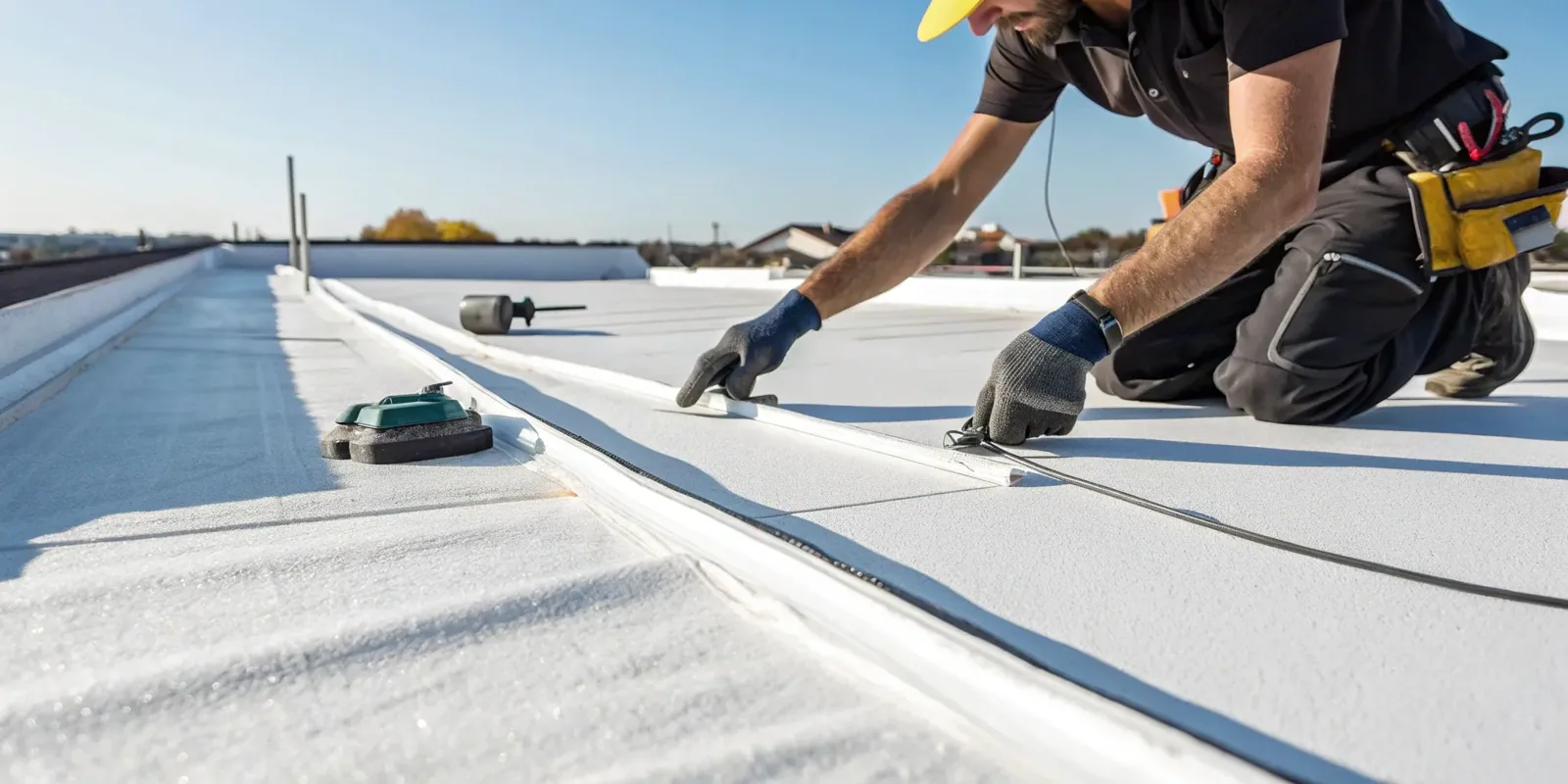
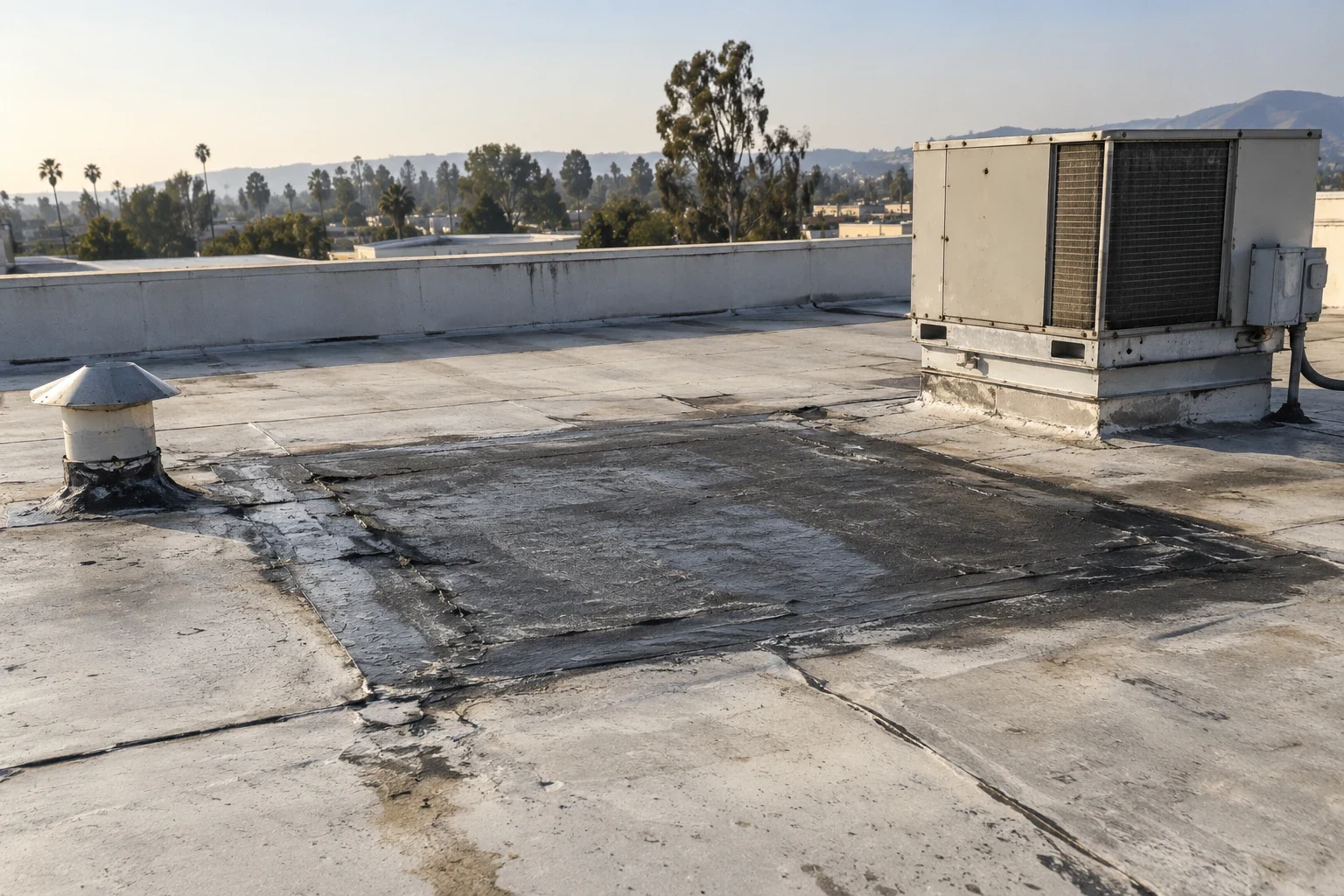
An open TPO or PVC weld needs examination along its length and at any wrinkle, corner, or change in plane nearby. We identify whether separation is local or part of a repeated pattern, then place marks and photographs on the condition map. EPDM laps call for a different review of adhesive, seam tape, surface preparation, and edge condition. A visible gap does not establish how far the repair should extend. We inspect adjacent material before setting a repair boundary.
Curbs, drains, pipes, parapets, and roof edges interrupt the field sheet and require compatible details. Previous sealant or coatings can hide an edge that should be cleaned or removed before a repair. If a mechanical service visit changed a curb, we coordinate the rooftop equipment task with the Carlisle membrane connection. The proposal identifies the roofing work, other-trade responsibilities, and inspection point after completion. Our repair scope records preparation and closeout rather than simply naming the product.
For an active leak, note the room, time, and current water status. We inspect the corresponding roof area and nearby transitions, since an indoor stain may be offset from the entry. A leak evaluation can distinguish a confirmed membrane defect from an equipment or wall issue that needs another trade. If evidence is incomplete, we identify a test area before opening material or extending the estimate.
Insulation and drainage: check what sits below the sheet
A surface repair will not correct loose cover board, saturated insulation, or a damaged deck below the membrane. We review accessible edges and project records, then test or open the roof only when the result will change the repair decision. Any sample location is marked and its layers are recorded before the opening is closed. If the exposed condition differs from the bid assumption, we pause at a safe boundary and provide the property manager a documented scope change.
A prior coating, repair tape, or cleaner can change adhesion and welding at the repair edge. We remove incompatible residue as required, expose a sound receiving surface, and test the detail before closing a larger area. Where the construction includes a fleece-backed membrane, the repair must account for that backing and the approved system detail rather than welding through the wrong layer. We record the preparation so a later service visit can understand how the repair was made.
Drainage also affects the system interface. We inspect outlets, scuppers, overflow paths, and low areas to separate debris from a damaged connection or a slope condition requiring design input. A recover can raise the surface and change the relationship between membrane, edge metal, and drain flange. Drainage correction may need to precede or accompany a Carlisle membrane repair, but the scope should state whether plumbing or engineering work is included. We note each outlet and overflow separately, then identify whether the roof detail can be repaired without changing slope or elevations.
The SR-60 and I-215 junction connects Moreno Valley to a wider distribution area, yet a delivery plan still depends on the facility's gate, staging space, and roof access. Summer heat can shorten safe hours for exposed work; winter rain may affect dry-in and seam conditions. We record the scheduled work window and protection plan beside the roof area rather than assuming the same method fits every visit.
Repair or renewal: choose from the documented condition
When the defect is confined and surrounding material is suitable, a localized Carlisle repair can preserve serviceable areas. A broader pattern, moisture findings, attachment movement, or repeated repairs can change the decision. The report lists confirmed conditions, additional evidence needed, and sections excluded from inspection. That lets an owner approve a defined repair or authorize the next test without treating a brand name as a condition assessment.
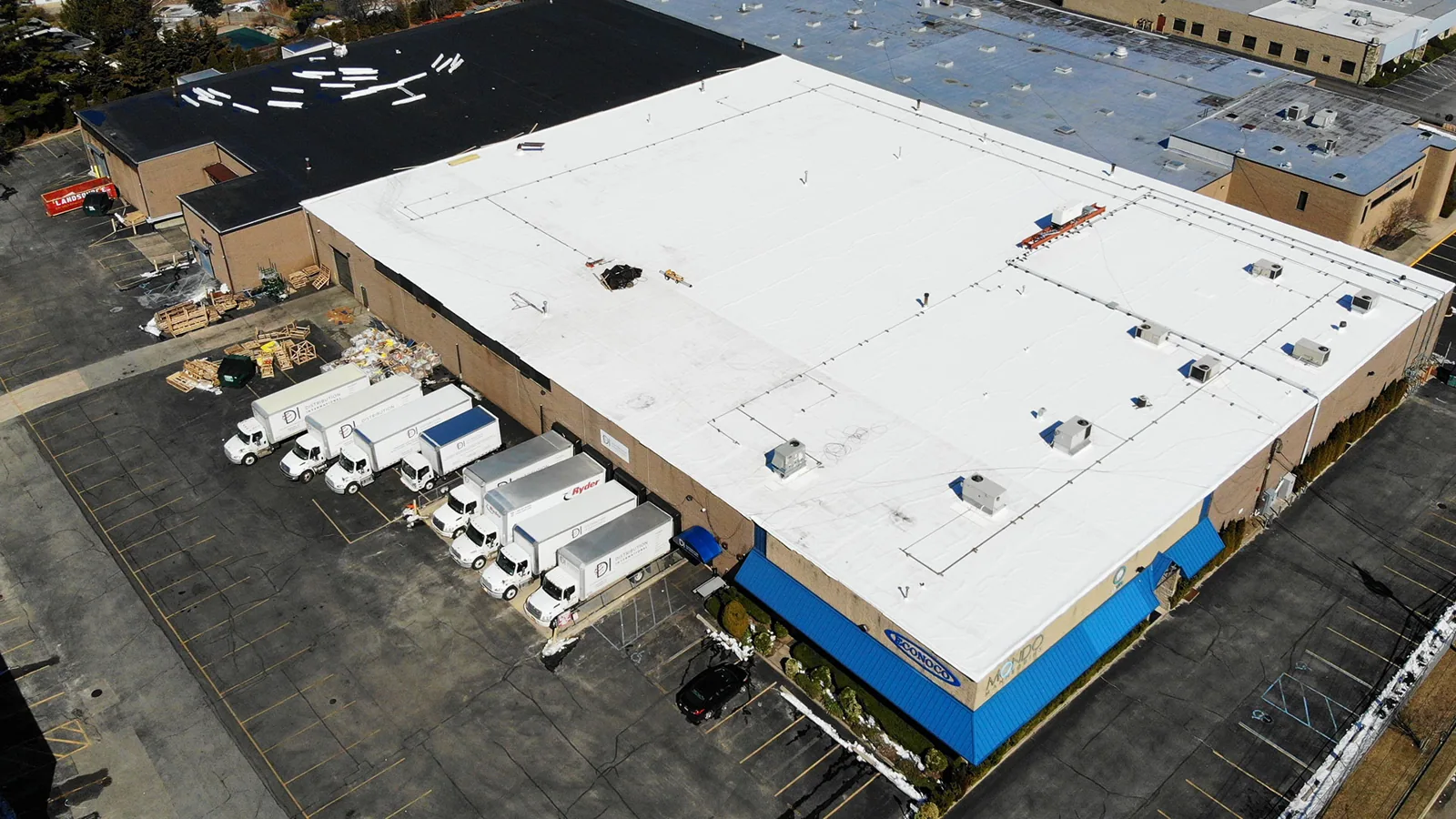
Carlisle product literature includes fleece-backed and other membrane configurations, with assembly details depending on the system. Selection depends on the roof design, substrate, attachment, transitions, and applicable project specification. We explain preparation and scope limits rather than promising a particular service life. A recover review considers existing layers, wet insulation, edge height, and drain clearance; replacement planning identifies removal and rebuilding steps.
Owners comparing manufacturers can review GAF commercial roofing and Versico roof systems alongside the current Carlisle assembly. Keep the comparison tied to project requirements, compatible details, and the measured repair area. Closeout should retain the system name when confirmed, completed work, photographs, approvals, and follow-up check for the next inspection.
Commercial Roofing Questions
How do you identify which Carlisle membrane is installed?
We compare submittals and work records with visible labels, seams, edges, and repair details. If the material is uncertain, the report identifies what is visible and what additional evidence would confirm it before a product-specific repair is selected.
Can one repair method serve TPO, PVC, and EPDM?
No. TPO and PVC are thermoplastic membranes with heat-welded seams, while EPDM uses different joining and repair materials. We confirm the system and prepare the receiving surface before work.
What does an open Carlisle seam mean for the scope?
We inspect the separation, adjacent sheet, substrate, and nearby details. A short opening may support a localized repair; multiple zones or moisture below the surface can require further testing and a broader option.
Can a Carlisle roof be recovered?
The existing layers, moisture, attachment, edge height, drainage, and project requirements determine whether a recover is appropriate. We inspect those conditions and document removal or correction needs before pricing the option.
What records should remain after a Carlisle repair?
Keep the confirmed assembly, marked repair zone, preparation, completed detail, photographs, approvals, and any follow-up item in the building work record. That lets the next inspection revisit the same location.
Commercial Roofing Moreno Valley handles commercial roof repair, replacement, inspections, coatings and maintenance across Moreno Valley, Riverside and the Inland Empire. Request a roof assessment or call 555-555-5555.
Related Roofing Work
Resolve the Carlisle system and roof decision
Share the specification, closeout records, roof plan, recent repairs, access limits, and approval contact. We can confirm the inspected assembly and return a documented repair or renewal scope.
Request a Roof Assessment555-555-5555