Which roof needs attention first, and what record supports that choice? A property manager needs more than a list of buildings. We create a roof-zone inventory that connects each building, inspected area, observed condition, repair history, and next decision. In Moreno Valley, CA, the City maps distinct employment properties, and SR-60 meets I-215 at the city. A portfolio record distinguishes buildings without assuming they share an assembly or condition.
Asset management gives owners a practical way to compare current repair needs with planned capital work. We start with available plans, maintenance orders, leak locations, and access rules, then reconcile those records with roof observations. The inventory shows what was examined, what remains unknown, and which approval or follow-up check is next. That lets a manager route a repair based on a marked roof zone rather than reconstructing the history from emails, invoices, and unlocated photographs.
Inventory: identify each roof
A roof record begins with a building identifier, plan or sketch, access point, and a clear division into zones. We label areas consistently so later photos, leak reports, and work orders return to the same place. If two additions have different layers, we keep their records separate until inspection confirms how they connect. The inventory notes membrane type only when plans, markings, or a suitable field check supports it. Unknown construction stays marked for verification rather than becoming an assumed fact.
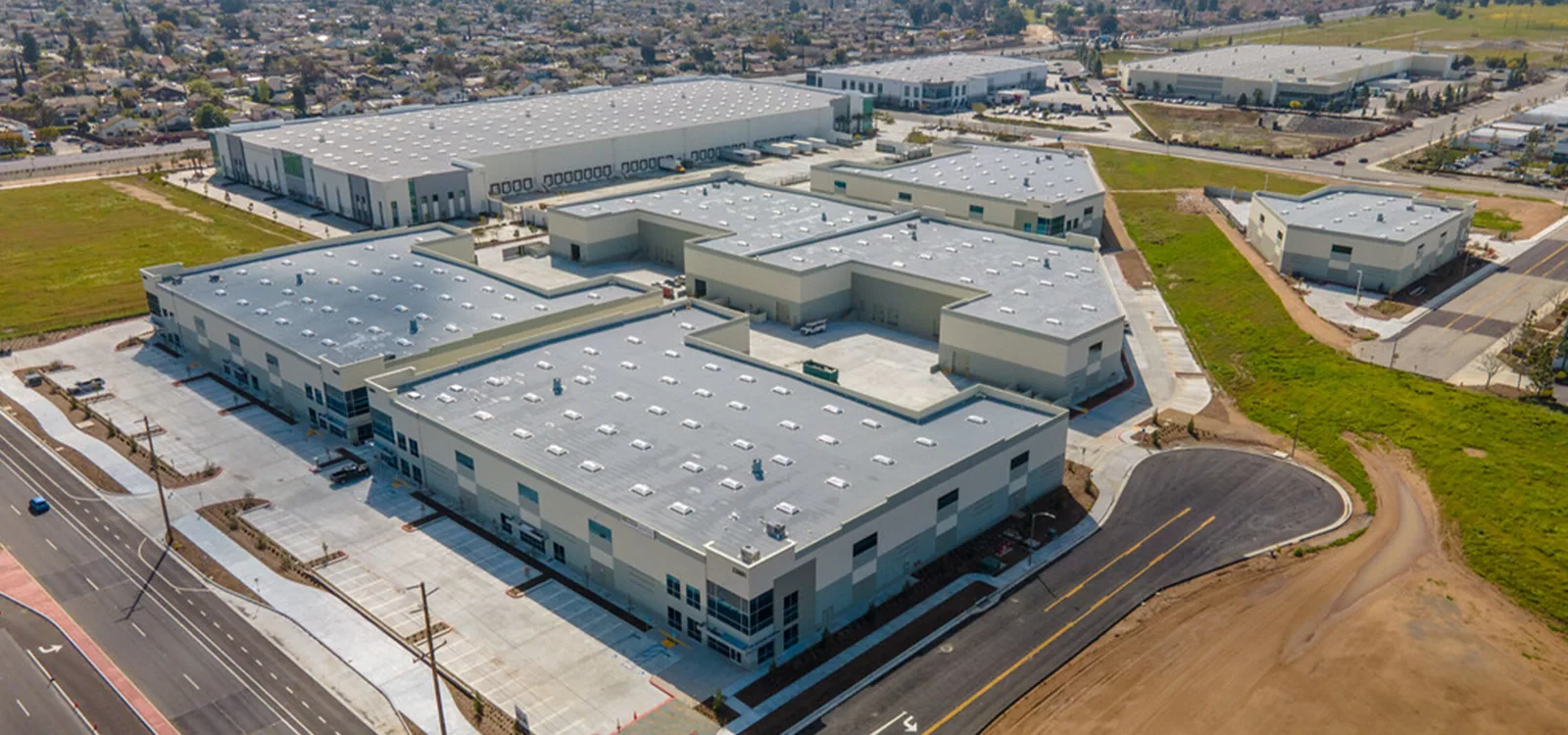
Moreno Valley's business information lists Amazon fulfillment, Skechers distribution, ALDI distribution, and Harbor Freight distribution among large employers in its 2021 table. Those names show the city's logistics and commercial context, but they do not establish roof details at any facility. For a building manager, the useful portfolio comparison is the recorded building use, access window, and maintenance responsibility. We can connect those operating fields to the roof zones the owner actually controls.
A Moreno Valley Industrial Area property may use a different access plan from an office or retail building in Centerpointe. The inventory stores current access instructions and loading restrictions beside the roof record, giving crews property-specific directions.
Condition map: record the roof evidence
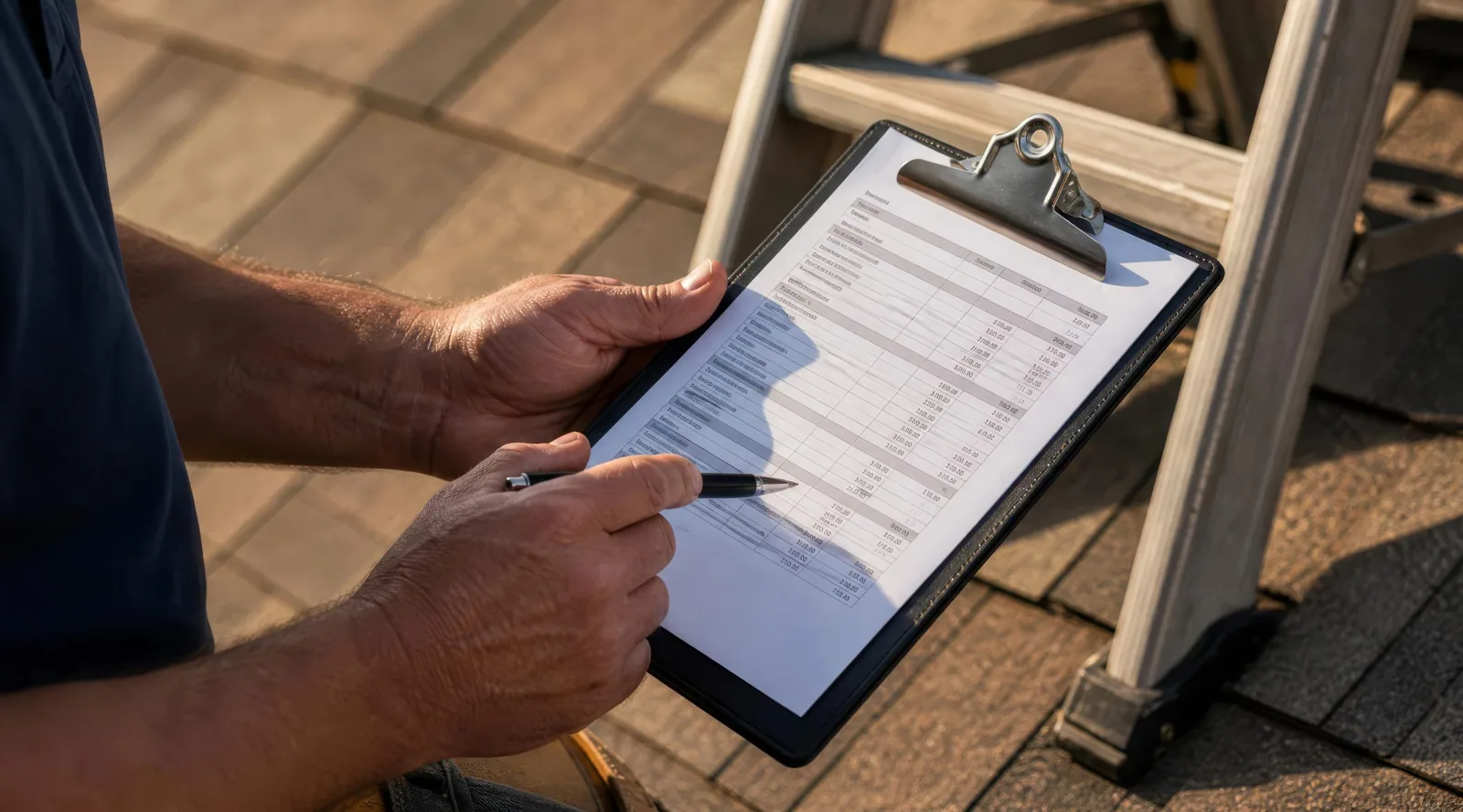
Inspection findings should describe a roof area, not just assign the building a general grade. We mark open seams, worn flashing, drainage conditions, penetrations, and areas that need testing. Photographs carry the same zone label, and the report notes whether a view is close-up, contextual, or limited by access. When moisture testing is performed, the map shows the tested boundary and result. Areas outside that boundary remain distinct so an owner does not mistake a sample for a whole-roof conclusion.
In Moreno Valley, heat is a field-planning consideration; the National Weather Service also describes regional winter rain and Santa Ana winds. These conditions can shape when crews inspect exposed details or schedule protection. They do not prove damage at a portfolio property. We record weather timing when it affects a work sequence, then keep the roof rating tied to inspected evidence.
A photo-supported condition report can carry the roof-zone index, observations, and recommended actions into the larger inventory. We distinguish routine maintenance from a repair request, testing need, or capital question. Each item has an owner, target decision date, and status supplied by the manager. That makes the list useful for the next budget review while keeping technical findings in the context where they were observed.
Work history: link each action to a zone
A repair invoice is more useful when it identifies the roof area and task completed. We add new work orders to the zone record with the date, observed condition, materials where known, photographs, and remaining follow-up. If an emergency visit stabilizes an opening but permanent work is pending, the two activities retain separate statuses. This prevents a temporary measure from reading as a completed correction and helps the manager schedule the return work that closes the item.
For a roof in Centerpointe Business Park or near the SR-60 and I-215 junction, access and material delivery can affect scheduling. We record the building's actual staging route and operating constraints, rather than assigning one schedule to an entire district. An authorized maintenance visit can update drain, flashing, seam, and equipment records. The manager sees which zones were included.
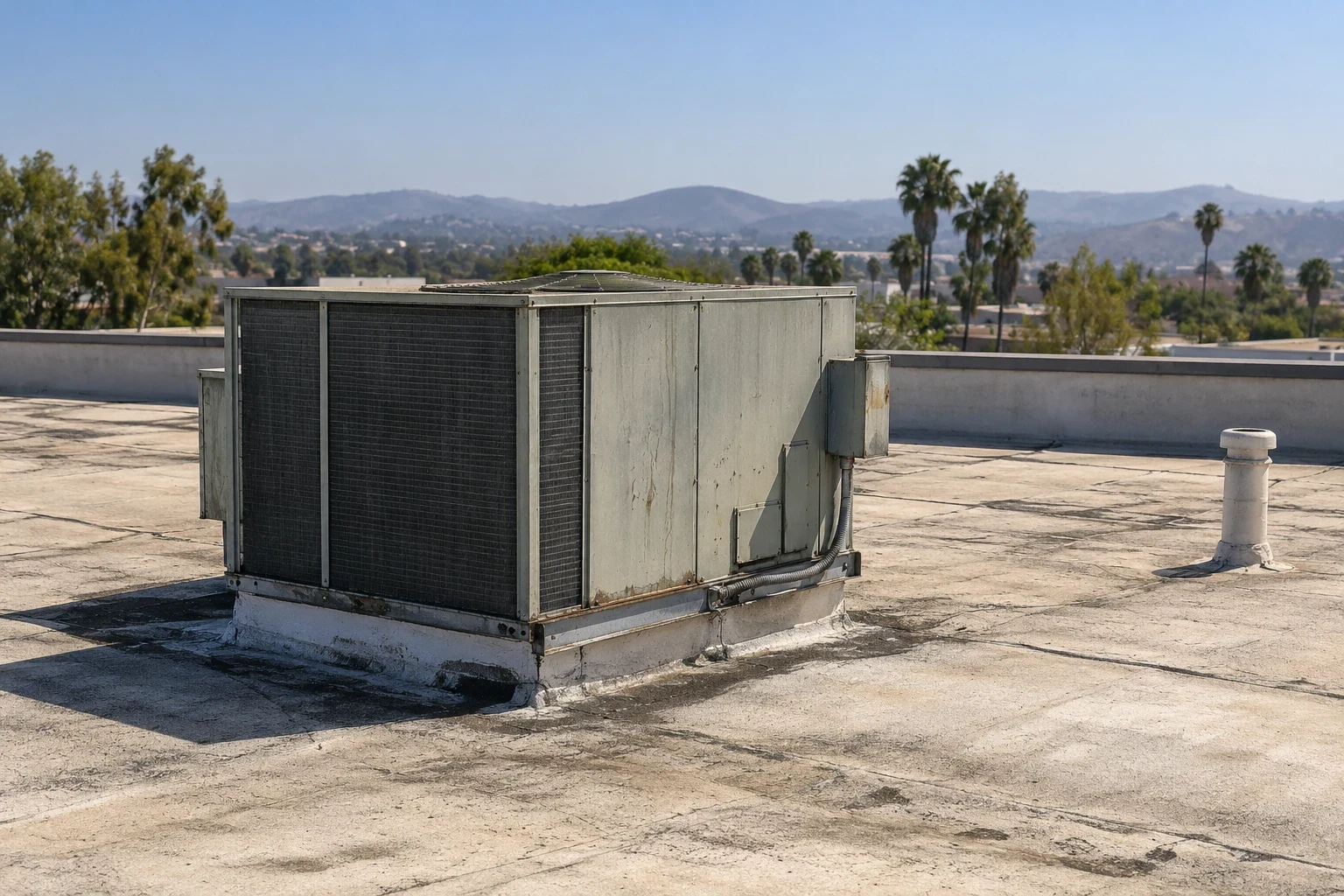
Changes to equipment, penetrations, or other roof interfaces also belong in the work history. The roofing record can describe the membrane connection and identify where a mechanical trade must finish its work. A planned alteration that could change drainage or attachment needs its own review before it becomes a completed asset record. The inventory preserves both the earlier condition and the revised detail, supporting future inspection against what was actually installed.
Priority: separate urgent work from capital
A priority list is strongest when urgency and long-term value appear as different fields. An active opening may need immediate protection; recurring seam separation may need a permanent repair; widespread deterioration may call for a capital study. We document the observation, consequence to operations, temporary action, and decision needed. The manager can then sort open items without treating every recommendation as an emergency or every roof question as a replacement proposal.
Capital planning considers assembly condition, repairability, access, operations, and the timing of other building work. We can compare roof-level options using the same documented zones, while the owner sets budget limits and approval dates. Roof capital planning can organize repair and replacement decisions into a staged view. Any cost estimate remains tied to its specific scope and inspection assumptions, rather than a portfolio-wide figure inferred from another building.
Moreno Valley's inventory includes commercial, industrial, office, and medical premises. That mix can create different protection and access needs when work is scheduled above active operations. The current operating plan identifies patient areas, production schedules, receiving hours, and trade access that control the work date.
Review cycle: keep the record current
Asset records need a return point. We review open recommendations, compare new observations with prior roof-zone photographs, and close completed work only when the specified task is recorded. A follow-up inspection can confirm a repaired detail or check an area left for monitoring. The inspection interval follows the condition, material requirements, and building activity. It should not be set from a generic claim that every roof needs the same visit schedule.
Owners can begin with a single building and expand the inventory as plans and inspections become available. We preserve each property's boundaries and label gaps for a later visit. For a new manager, the plan, work-order trail, approvals, and contacts transfer open decisions. A hands-on inspection or moisture survey can resolve an unknown that would change the budget decision.
For a regional group, each site can still have a local access plan and separate approval path. The final portfolio view summarizes what is active, what is scheduled, and what evidence supports the status. It gives the property manager a consistent way to discuss roofs across Moreno Valley while preserving the building-specific details that determine actual work.
Commercial Roofing Questions
What information belongs in a roof asset inventory?
Start with building and zone identifiers, plans, observed conditions, photos, repair orders, access notes, and open decisions. We mark unknown assembly details for verification rather than filling gaps by assumption.
Can a portfolio inventory identify which roof should be replaced first?
It can organize the evidence and timing factors. We document repairability, active exposure, operations, and remaining tests so the owner can compare roofs and set capital priorities.
How do you handle buildings with incomplete roof records?
We list what is available, inspect accessible areas, and label missing plans or assembly details. A targeted survey can fill gaps that would change a work or budget decision.
Does one Moreno Valley property set the standard for the others?
No. The city's business districts include varied building uses, and each roof needs its own marked condition record. We use consistent fields but keep construction and findings property-specific.
How are completed repairs reflected in the inventory?
We add the work date, zone, materials where known, close photographs, and remaining follow-up. Temporary stabilization keeps a separate status until permanent correction is documented.
Commercial Roofing Moreno Valley handles commercial roof repair, replacement, inspections, coatings and maintenance across Moreno Valley, Riverside and the Inland Empire. Request a roof assessment or call 555-555-5555.
Related Roofing Work

Build a roof record your team can use
Share the property list, available roof plans, repair orders, leak locations, access instructions, and approval contacts. We will organize the inspected zones, open work, and next decisions into a building-specific roof inventory.
Request a Roof Assessment555-555-5555