A grocery-store roof report should locate the affected aisle, stock area or equipment connection before the repair method is chosen. Commercial Roofing Moreno Valley examines grocery roofing in Moreno Valley, CA, and compares exterior conditions with the water timing and service activity reported inside. A membrane opening above merchandise may need a different correction from an equipment or upper enclosure problem. We explain the work supported by the findings and the contents protection needed at its actual position.
Grocery roof work can involve refrigeration and other equipment routes alongside local membrane, outlet or flashing repairs. The store establishes its handling and operating requirements for the affected spaces. Roofing defines removal, preparation and the finished weather connection, with qualified service contractors involved where the detail needs their work first. The manager receives a practical sequence for the specific task, rather than a broad assurance that every sales, storage and equipment area will remain unchanged under any selected construction method.
Indoor account: identify timing and recent activity
The report gives the water position and when it appeared, including relevant rain or equipment operation. We ask about recent repairs, service visits and changes around the roof detail. That information is compared with accessible exterior construction. A dry-weather drip can prompt an equipment or condensation check, but timing alone does not diagnose it. The manager sees the membrane finding and another useful examination needed where the route cannot yet be established from the roof visit.
A grocery-roof field inspection locates the suspected connection with a wider reference and close views. Room access may help compare the occurrence with the exterior positions, which the store contact arranges for the actual area. If equipment hides a detail, we explain the practical access needed and how it could change the estimate. The visit then supports a targeted correction instead of choosing another patch from the indoor mark without examining the component above it.
Equipment routes: check the disturbed connections
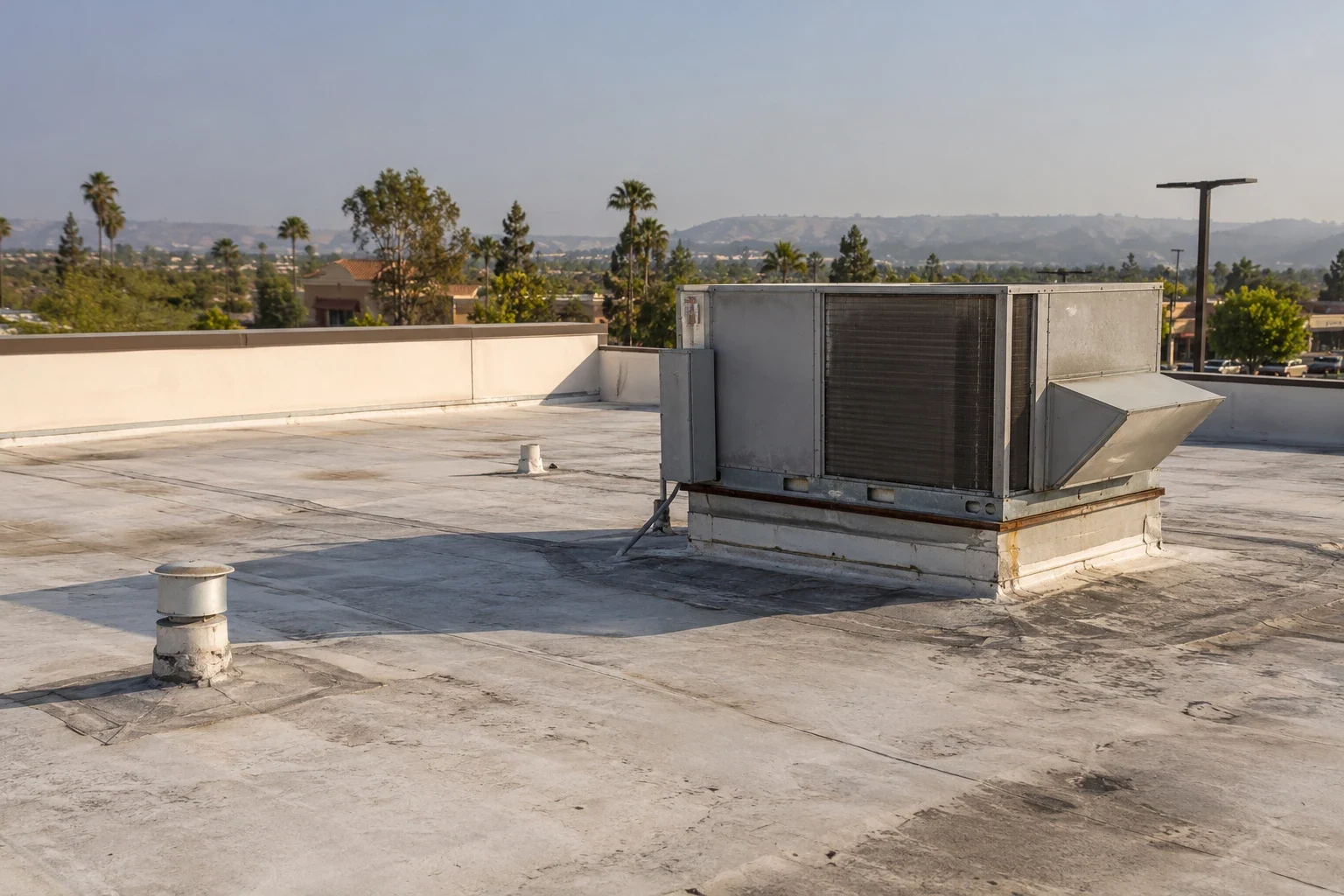
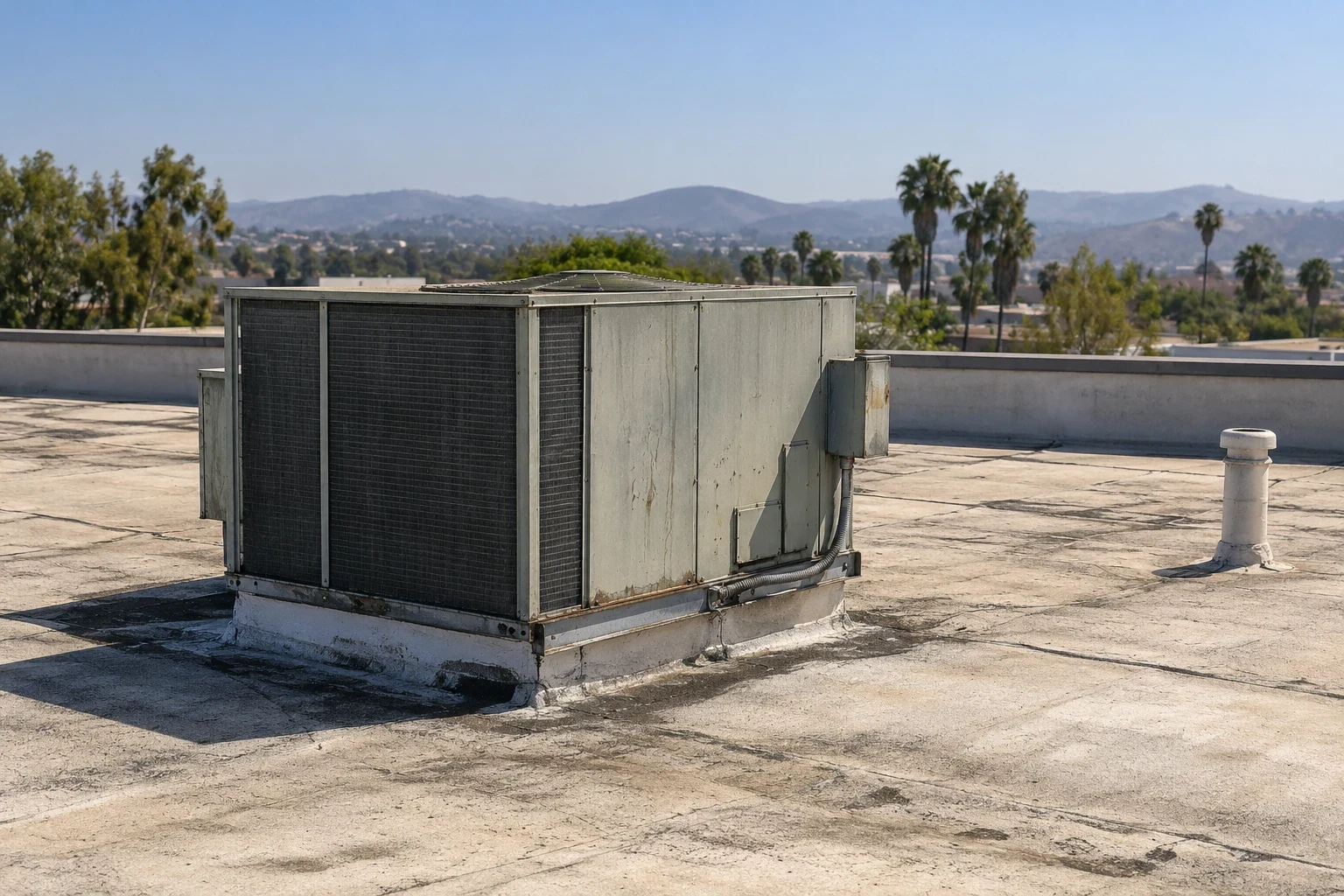
Technicians carrying tools or servicing rooftop units can disturb existing membrane and flashing. We inspect the reported positions and the route used to reach them, with service information where it helps locate a change. Suitable protection can be considered within the assembly's instructions for future access. Damaged roofing receives a compatible correction, while a loose pipe or support needs its service or design task. The manager can address the weather detail and the condition that may continue to disturb it.
The upper unit or cabinet can also need repair where water reaches the curb from above. We compare that connection with the lower flashing and identify the technician's correction. Roofing then joins prepared surfaces left accessible after the component work. If new layers alter curb height, the adjustment is established before placement blocks the detail. We show when the technician must finish the upper component and when roofing can join the prepared curb, so the manager can arrange both visits in a useful order.
Material preparation: finish the measured boundary
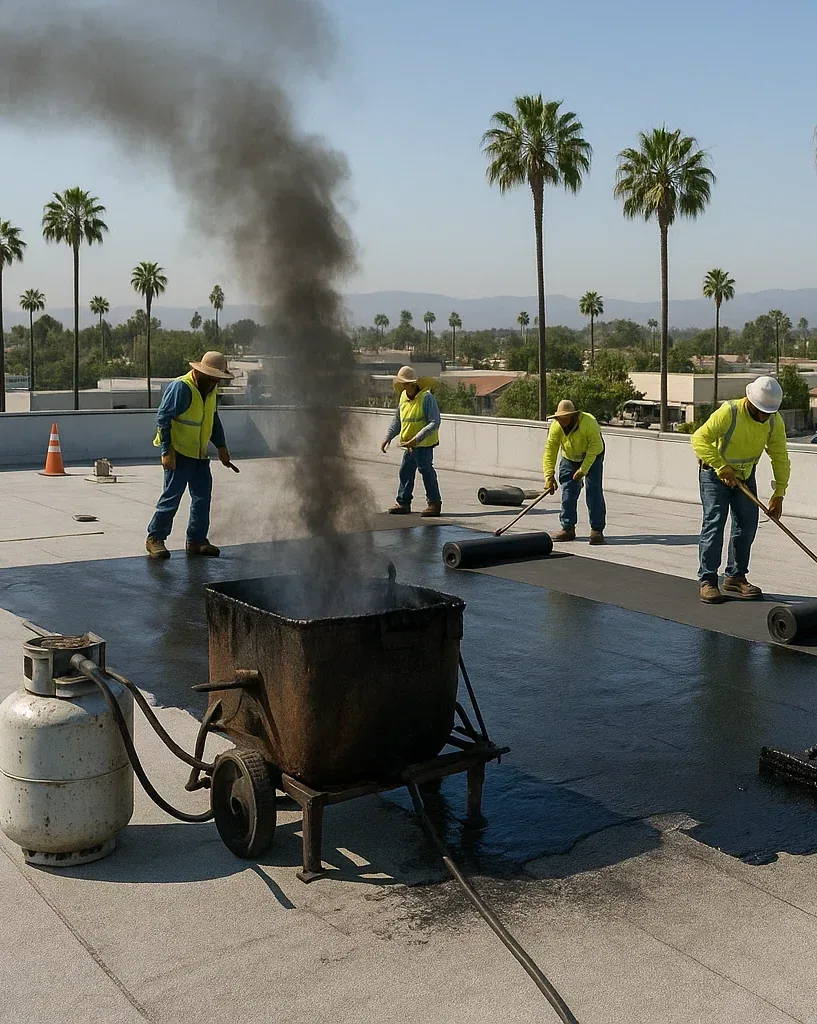
An older coating or patch can interfere with the surface a new repair must join. We identify the roof system and select the preparation and components appropriate to its condition. On a modified-bitumen grocery roof, the chosen layer and application arrangement follows its actual product requirements. Thermoplastic and rubber systems use other procedures. The manager receives the removal, cleaning or local rebuilding needed, with the correction measured at sound construction rather than only the visible split.
A repair beside several penetrations may need a different shaped detail from an isolated hole. We inspect spacing, movement and accessible surfaces before materials are selected. A replacement boot should receive stable geometry; the mechanical contractor handles a support correction where needed. The roofing amount then includes the completed weather connection and useful checks. The manager can see why preparation enlarges or changes the task without treating any accessory applied around an unstable component as a finished remedy.
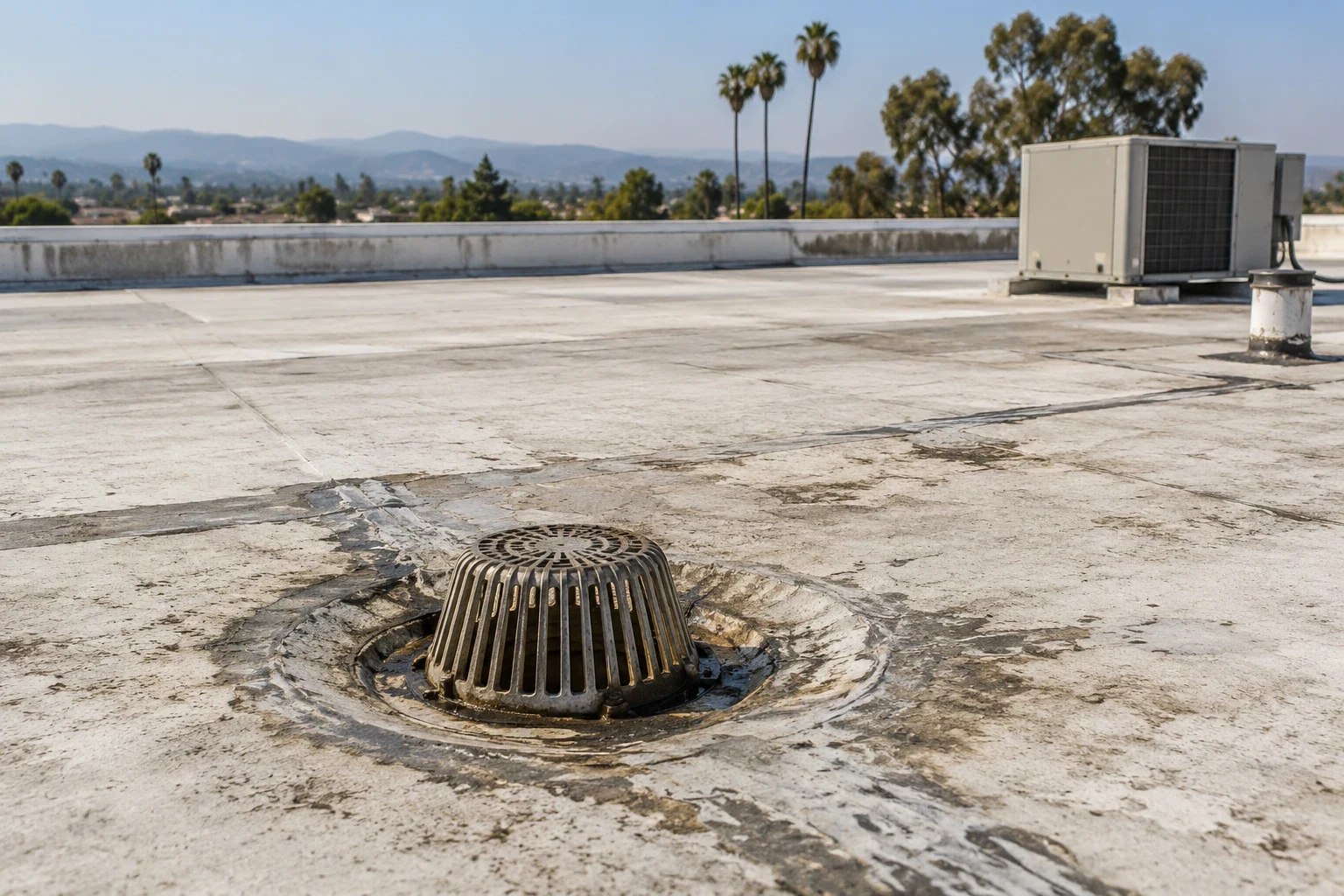
Drainage care: examine the outlet and approach
Debris near drains or scuppers can restrict discharge, while a failed junction or low area needs another correction. We examine the accessible route and levels where the proposed work depends on them. Grocery-roof outlet repairs are separated from suitable cleaning and concealed plumbing work. The manager knows which condition each operation changes. A new patch around a drain is not selected as a substitute for understanding the field geometry or service blockage that may remain nearby.
A curb or other obstruction can require a designed change in the water route. We compare the field and outlet relationships with the planned assembly and coordinate any necessary plumbing or component adjustment. Care after the drainage correction returns to the marked outlet and surrounding detail, with an interval suited to its condition and installed care requirements. This keeps ongoing cleaning useful while a designed rebuild or unresolved service concern retains its own work decision.
Sales and stock: match protection to the opening
A repair over an occupied aisle needs a different discussion from roof removal above a backroom receiving position. The manager identifies contents, staff and customer movement at the area involved. We explain the opening and preparation before arranging suitable protection and a practical route for materials. The selected operation must fit the store's actual handling instructions. Another interval or smaller section is included where those restrictions prevent the crew from preparing and completing the larger area proposed.
Qualified mechanical and electrical teams arrange any equipment operating change with the store, including restart responsibility. Roofing access does not independently release refrigeration or other services for interruption. We identify the specific preparation the service interval must allow, with the facility contact establishing its operating controls. The manager can coordinate the affected equipment and roof detail together, preserving a clear difference between a membrane correction, the technician's service action and the contents arrangements below the opening.
Local receiving: agree on the affected route
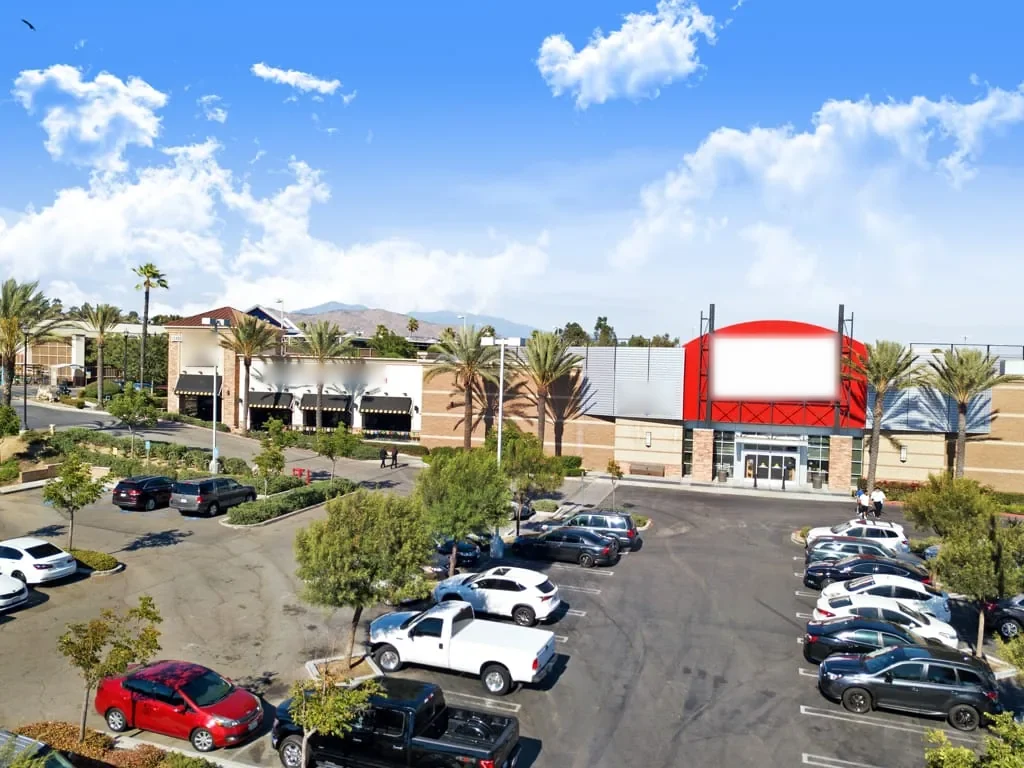
Towngate contains distinct commercial properties and office or medical space within its wider area. At a Towngate grocery-roof task, an outlet repair above a receiving entrance may need exterior protection without using the same route as customers. We locate the detail and discuss those approaches with the store contact. The estimate includes handling and setup required to complete that particular correction, rather than assume the whole commercial property supplies a continuously open staging area.
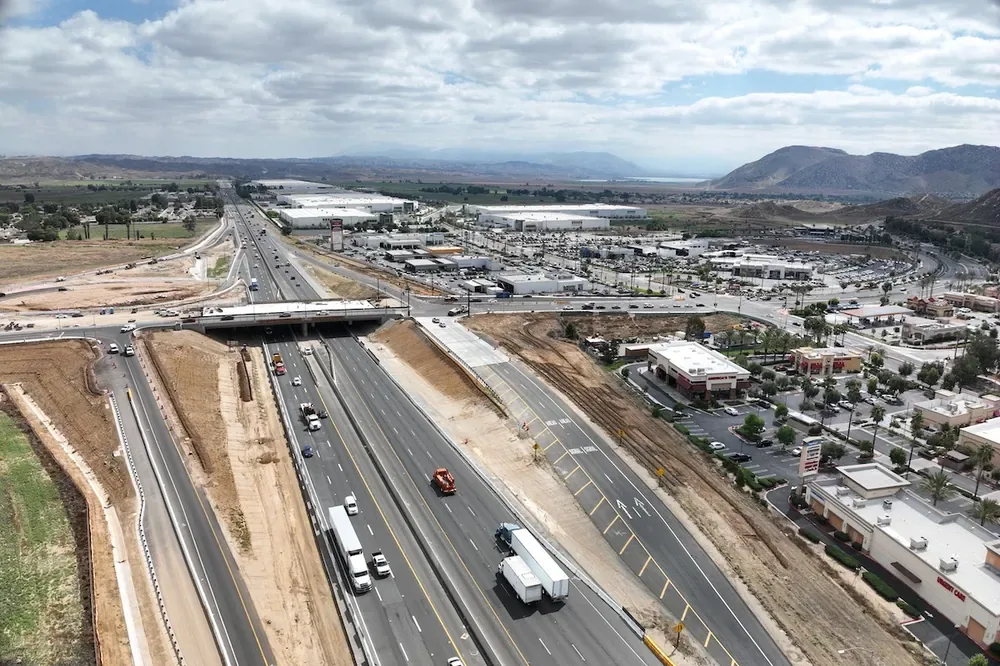
Along the Moreno Beach Drive Corridor, commercial activity near SR-60 can involve a separate period for grocery deliveries and roof supplies. We identify the actual access and the work above it before preparation begins. Regional heat, rain and wind affect exposed surfaces and material handling, so application is planned against current conditions and the chosen product instructions. The manager can arrange the useful interval for the detail, with contents and equipment needs stated for that specific position.
Wider option: compare the layers and operation
A cold-storage roof proposal can involve other enclosure questions, while big-box retail work may use different stock and sales-floor arrangements. For this grocery roof, the comparison retains its actual service and protection needs. We investigate retained construction adequately where a recover or restoration is proposed, including moisture and supporting review where necessary. Removal, insulation and finished detail levels stay visible with the upper membrane, making the estimate a complete construction option.
Applicable Moreno Valley requirements are reviewed for the planned alteration before final assembly selection. If preparation reveals added damage, we show its location and explain rebuilding, cost and protection before enlarging the work. Completion information identifies the repaired positions and components for future technicians. A return check compares the result with later water timing and service changes, helping the manager select the next useful examination from the roof evidence rather than repeat an older correction without checking what has changed.
Commercial Roofing Questions
Does a dry-weather grocery drip prove an equipment problem?
Examine the assembly and operating circumstances. Equipment, condensation and stored water may require different checks before the cause is settled.
What should distinguish aisle work from receiving-area repair?
Identify contents and current movement below the opening. Protection and the material route should fit the specific task and space involved.
Can roof entry authorize refrigeration interruption?
The qualified service team coordinates operation and restart with the store. Roofing explains the preparation needed within that agreed interval.
Why separate outlet cleaning from field-level correction?
They change different conditions. We inspect the discharge route and geometry before choosing the task the roof actually requires.
Commercial Roofing Moreno Valley handles commercial roof repair, replacement, inspections, coatings and maintenance across Moreno Valley, Riverside and the Inland Empire. Request a roof assessment or call 555-555-5555.
Related Roofing Work
Identify the grocery area and equipment concern
Share water timing, roof drawings and recent service activity. Include contents and receiving restrictions so we can inspect the detail and define the preparation, protection and coordinated roof repair needed.
Request a Roof Assessment555-555-5555