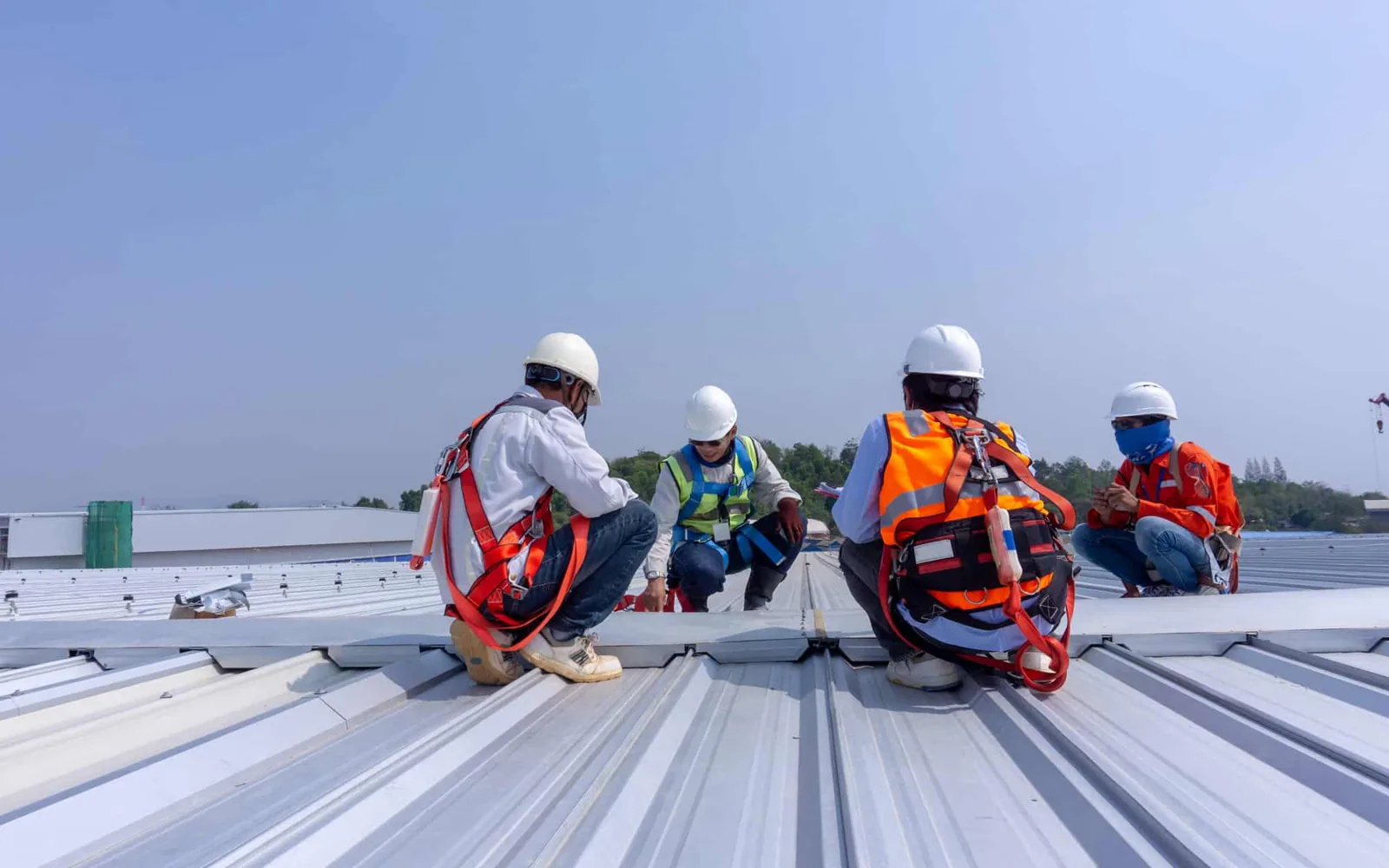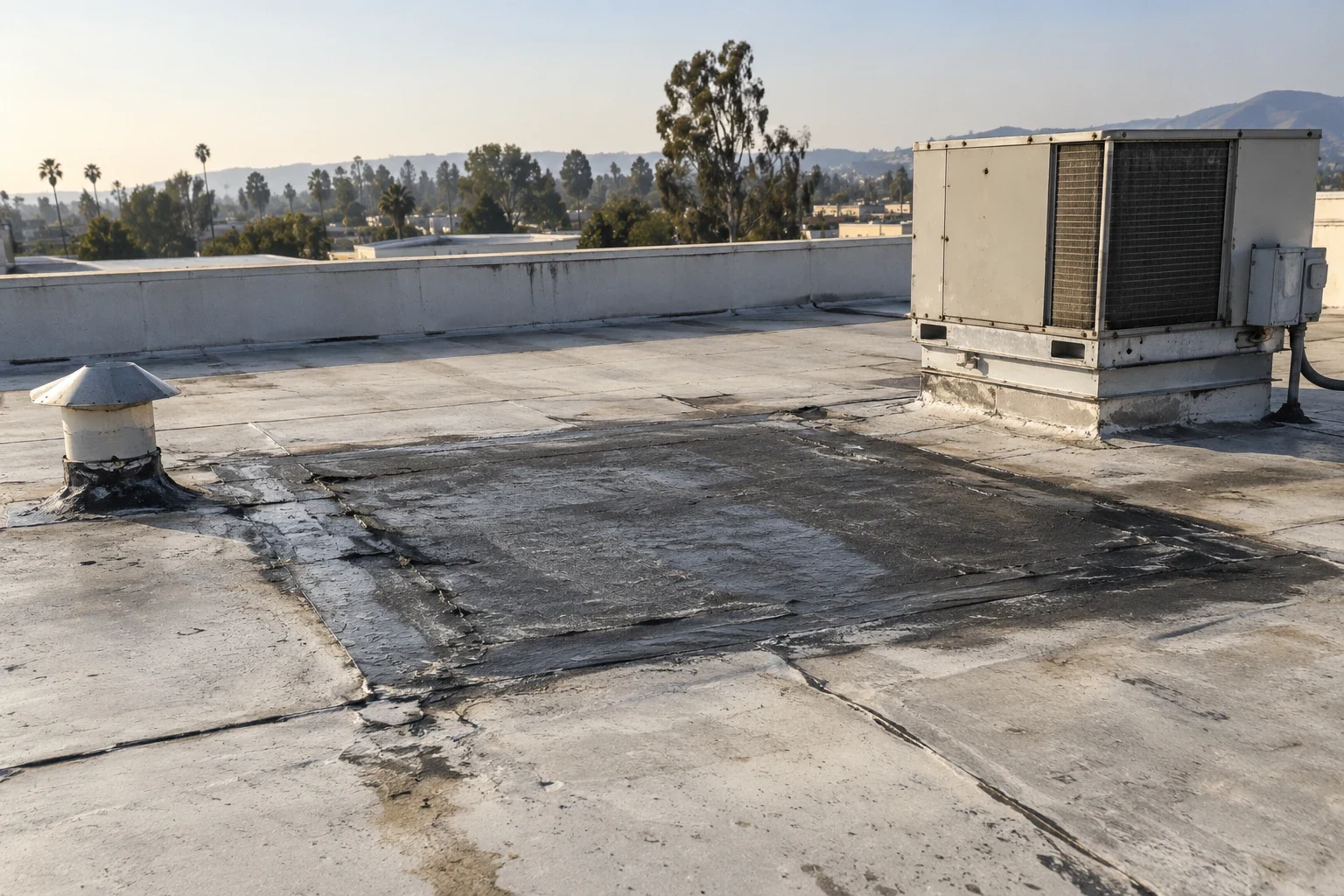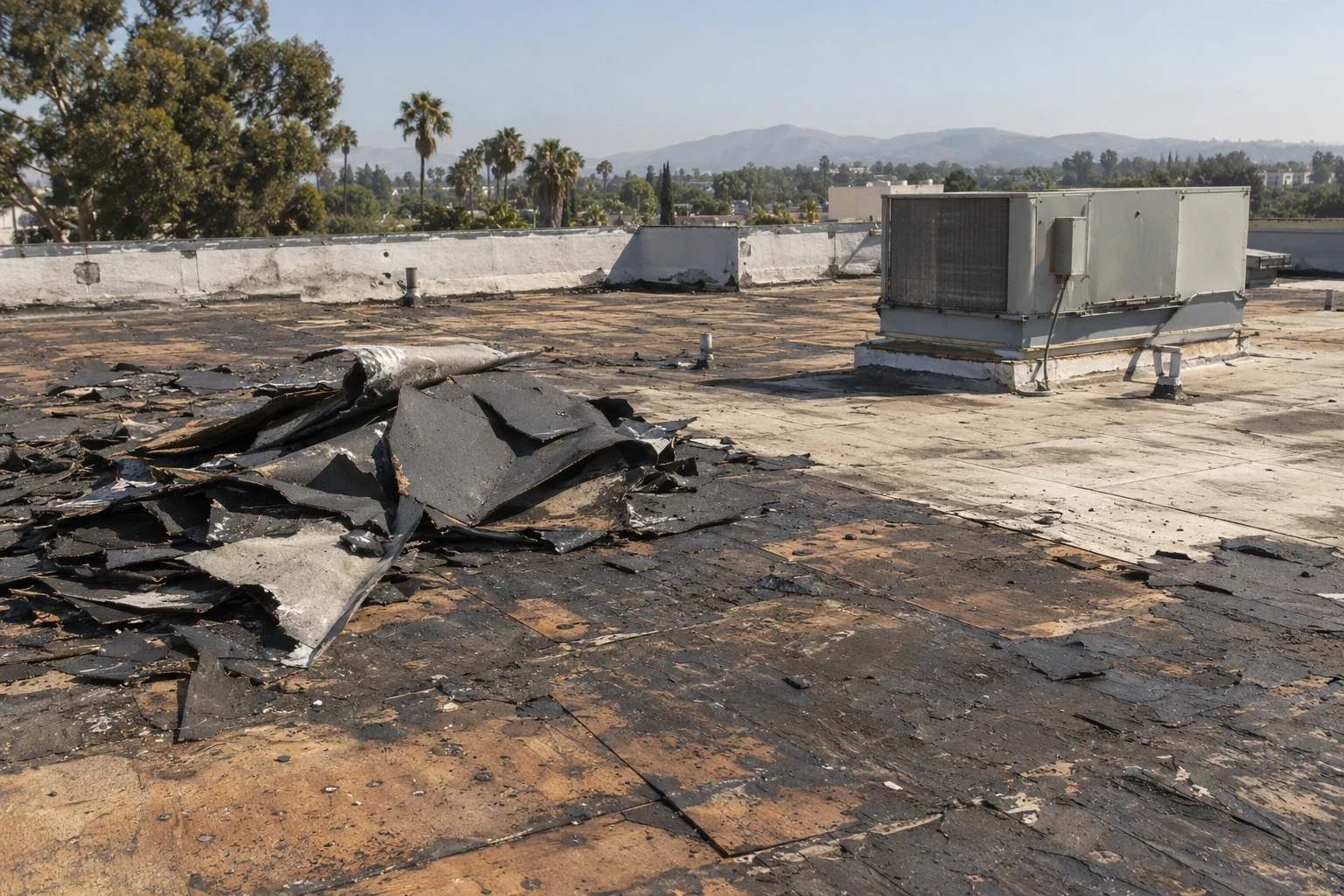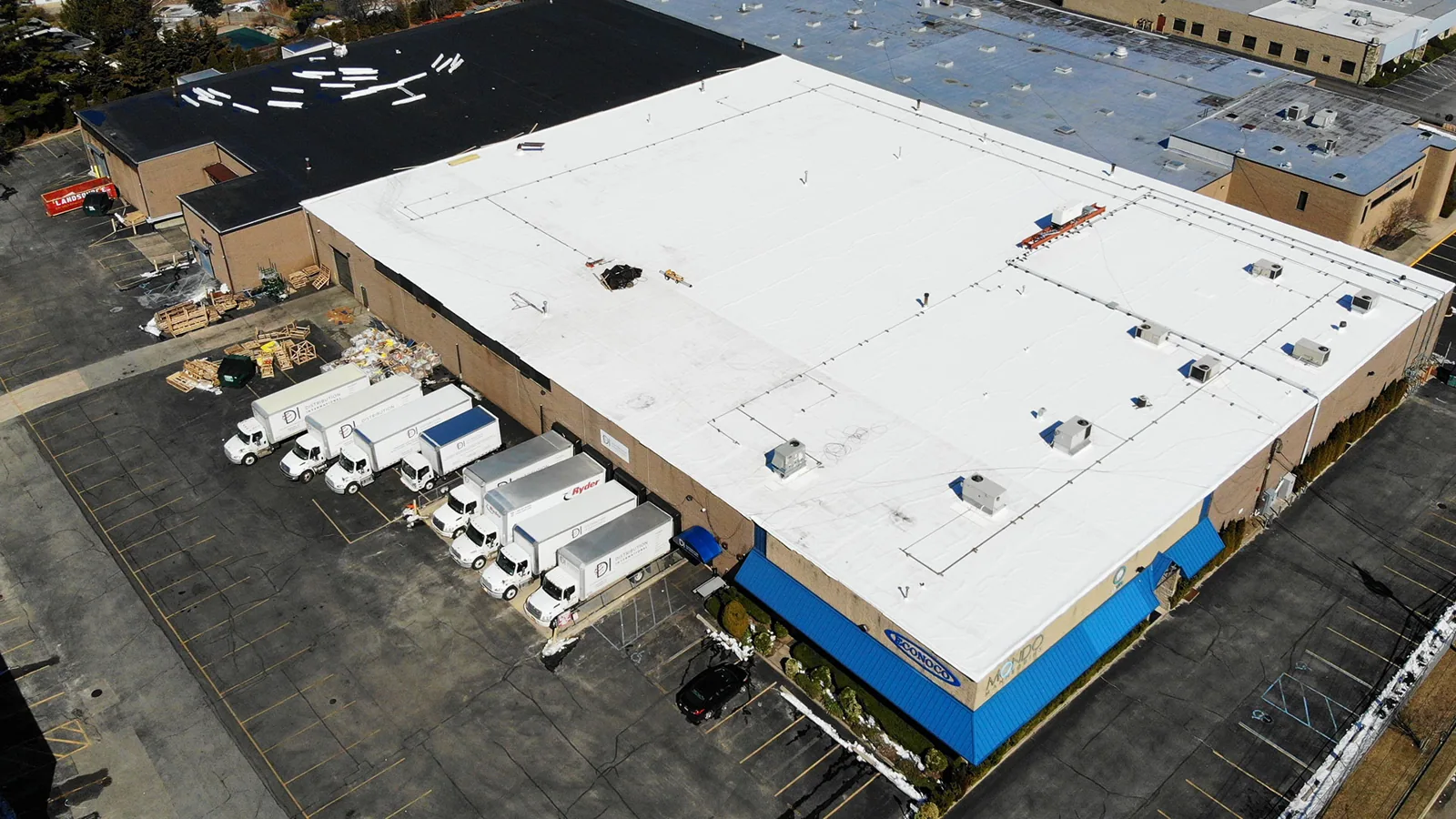
A dealership roof report should identify whether a leak is over the showroom, a service bay, parts storage, or a customer route. Commercial Roofing Moreno Valley evaluates auto dealership roofing in Moreno Valley, CA by marking the reported area and checking the roof conditions that could explain it. We document the observed defect, the proposed repair boundary, and access needs before a work order is priced.
These buildings combine public-facing space with work areas that have different ventilation, equipment, and protection needs. A roof plan should separate those functions rather than call the whole property one work zone. The Inland Empire's summer heat, winter rain, and regional Santa Ana winds affect field timing and exposure planning; they do not establish that a specific dealership has roof damage. The inspection record does that work, with photographs and locations that another reviewer can follow.
Building map: separate public, service, and storage zones
Start with the building outline and mark the showroom, offices, service bays, parts rooms, wash areas, and covered customer walkways. A ceiling mark near a bay door may relate to an opening, roof seam, curb, drain, or wall transition. Its position narrows the inspection but does not prove the source. We trace the area above, note nearby penetrations and prior patches, then compare the exterior condition with the interior report.
Showroom finishes and customer-facing displays may need protection even when the repair is confined to a small roof section. Service lanes bring different constraints: lifts, exhaust equipment, vehicle routes, and work in progress. The scope identifies bay clearance, overhead protection, and material movement needs. The property team controls vehicle and pedestrian access; the roofer defines the footprint and task duration.
Moreno Valley's broad employment map includes the Moreno Valley Industrial Area and Centerpointe Business Park, useful regional context for dispatch and commercial access. They do not describe the construction of an individual dealership. We verify the actual roof plan, entry instructions, and equipment layout at the property before assigning a crew or material drop.
Inspection: follow the water report to the roof detail
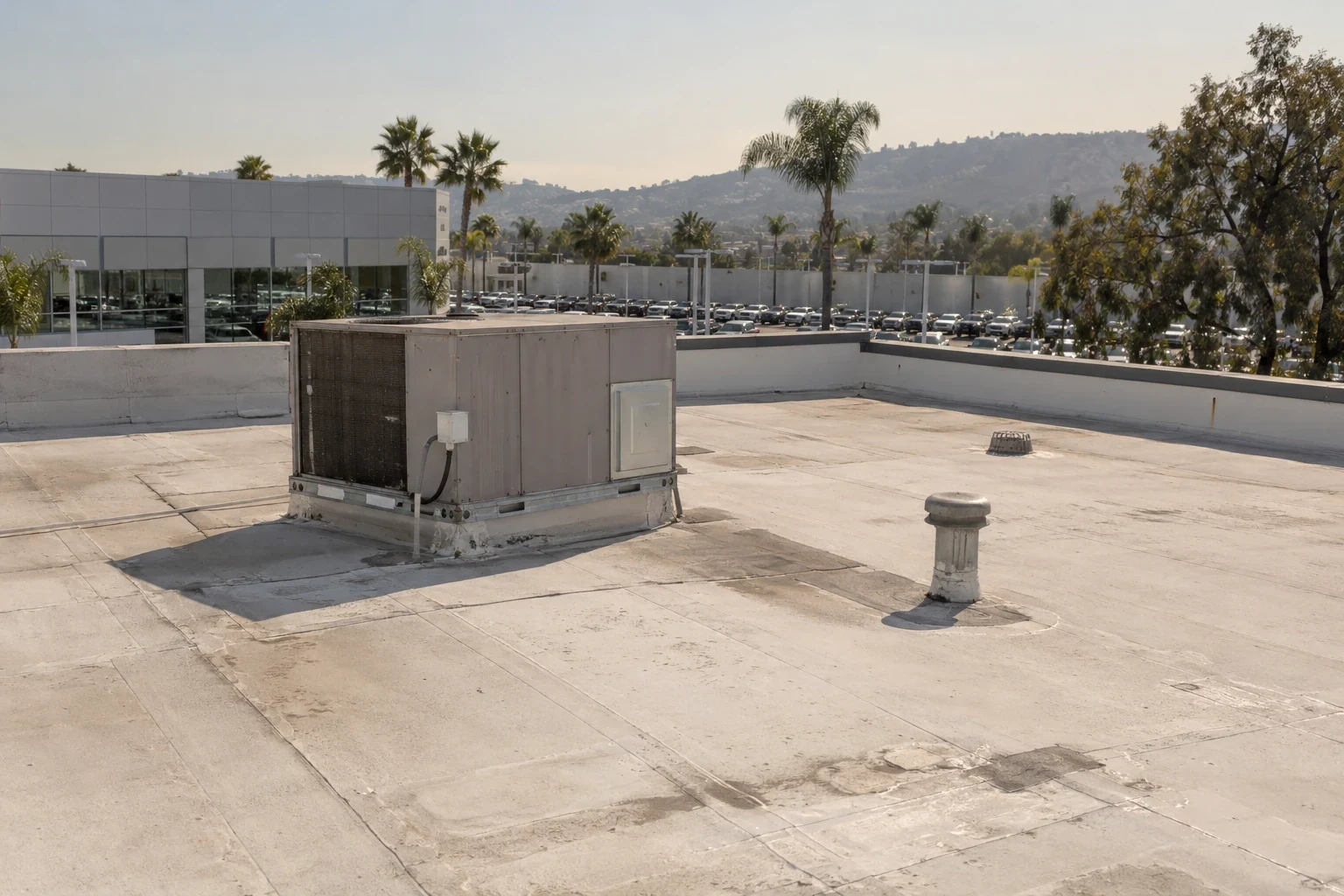
For active water, record the room or bay, the time noticed, recent weather, and whether the condition changes during operating hours. Mark each ceiling stain, drip, or damp area separately. On the roof, inspect the corresponding area and adjacent seams, penetrations, curbs, drains, and wall conditions. Water can travel before it appears indoors, so nearby roof features are clues, not a diagnosis.
A documented commercial roof inspection distinguishes visible conditions from items that need testing or access. If water is entering, leak repair begins with a defensible repair limit and a record of what remains outside it. Where several bays or offices report symptoms, compare each location against roof zones instead of assuming one broad failure. If the evidence points beyond an isolated detail, a replacement evaluation can address the larger assembly separately.
Photographs should show both a close detail and enough surrounding roof to locate it later. The written report should identify the roof section, material observed, repair performed or recommended, and any unresolved condition. That gives a facilities manager a record that can be compared with a future service call without relying on memory.
System review: identify the assembly before choosing materials
Dealerships may have several roof areas built or repaired at different times. Confirm the membrane or metal profile, insulation and deck information where available, slope, drainage layout, and prior repair materials. A coating is not a substitute for a compatibility check, and a new layer should not conceal moisture or an unresolved leak. If records are incomplete, note what is visible and what requires a test opening or other verification.
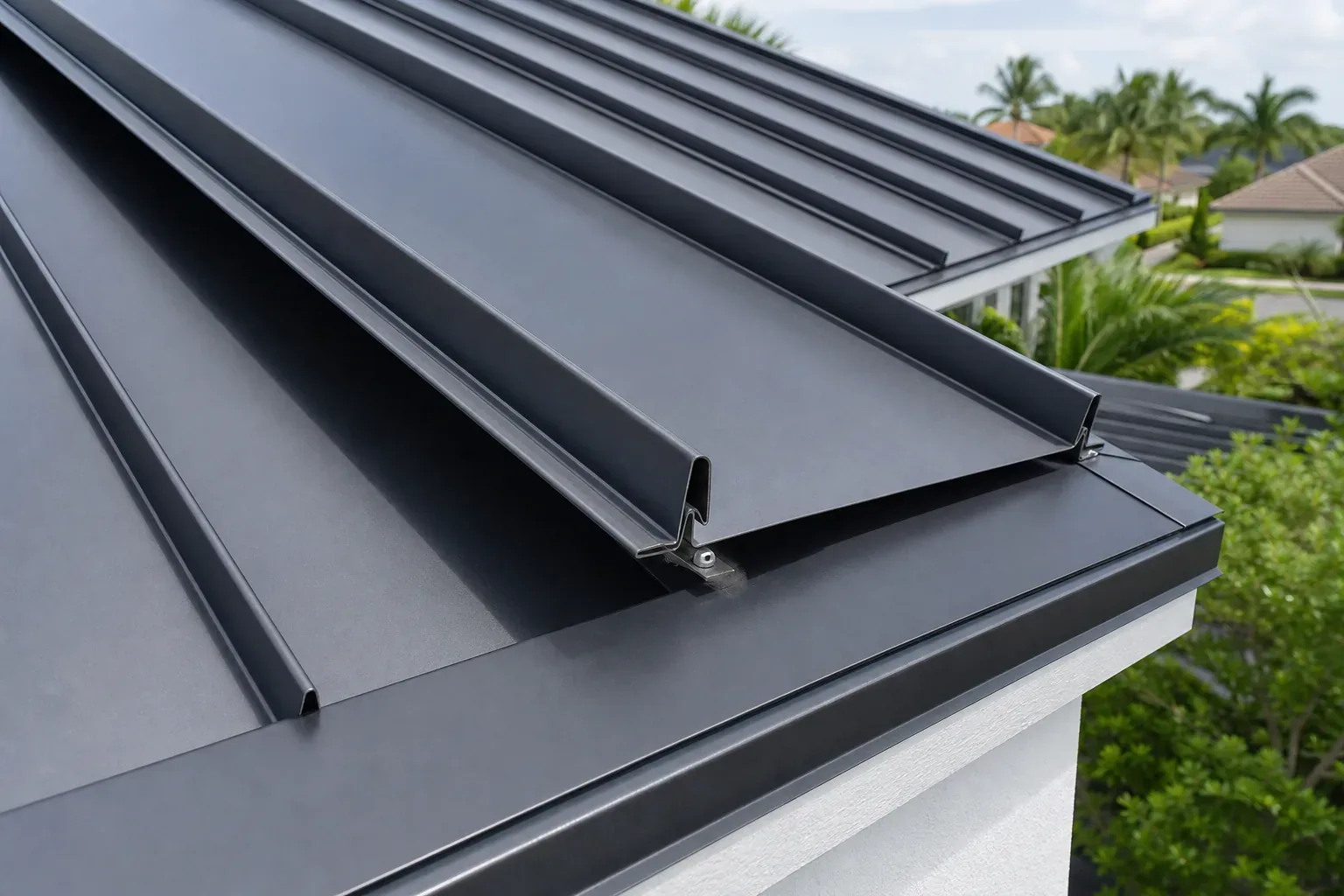
Our TPO roofing and standing-seam metal roofing work depends on the installed assembly and project requirements. The proposal should identify preparation, seams or transitions, penetrations, edge details, and how the finished work will be checked. If the property is considering a recover, the assessment must address existing layers, wet insulation, drainage, and applicable code review before describing it as an option.
Moreno Valley is at the SR-60 and I-215 junction, a useful way to orient regional service access. Road proximity does not establish delivery or staging conditions at a dealership. Confirm gate hours, vehicle circulation, overhead clearance, and the location approved for staging with the site contact.
Work plan: coordinate customer traffic and shop activity
Before mobilization, the property contact should identify open hours, service appointments, inventory movements, parts deliveries, and customer entrances that cannot be blocked. The roofing plan should show the work section and expected protection area, including any required lift or crane setup. Confirm where staff can route customers and whether service operations need to shift during work.
For a larger project, divide the roof into phases that correspond to the actual building and access plan. Keep the showroom entry clear where possible, and coordinate noisy or overhead tasks with the manager. Concealed damage requires photographs and approval before scope expands.
Where a dealership shares a larger commercial campus, roof access and staging still need to be confirmed at the individual building. A nearby warehouse roof may have similar loading concerns but a different tenant pattern; a distribution center can have a distinct truck schedule. Those comparisons help frame questions, not assume one property's layout applies to another. The site walk and facility contact establish the actual controls. A proposal should distinguish repair from replacement, identify the areas included, list exclusions, and state how the work will be verified. Ask for a marked roof plan, product and detail descriptions, protection steps, debris handling, and closeout records. Those items let managers compare bids against the same access assumptions.
Follow-up: retain a useful roof and repair record
After repairs, keep the marked roof area, date, photographs, materials, and completion notes with the property record. List any nearby condition that remains under observation and when it should be checked again. If a later ceiling report comes from the same bay or showroom section, compare it with that record before treating it as a new event. This supports a clear repair history while avoiding unsupported conclusions about the cause of a future report.
Routine preventive maintenance can track drains, seams, penetrations, edge conditions, and previous repair boundaries. Set intervals around roof condition, access, and operating calendar. Active water or a safety concern needs a separate assessment.
Moreno Valley's business areas include Centerpointe and the broader industrial area, but dealership footprints and operating practices vary. A current roof-zone index, access contact, and work-order trail make those property-specific differences visible to the next reviewer. The work is available across the Moreno Valley service area; each visit still begins with your specific building and access instructions. Send the roof plan if available, photos of reported areas, prior repair history, and any limits on vehicle or customer access. We will return findings and next steps tied to the actual roof and operating needs.
Commercial Roofing Questions
Can repairs be completed while the dealership remains open?
Continued operation may be possible, depending on the repair location, equipment, weather, and safe access. We mark the work zone and coordinate timing with the site contact. The dealership manages customer and vehicle routing; closures should be agreed before mobilization.
What should we send before an inspection?
Send a roof plan, reported room or bay, photographs, report timing, prior work orders, and access instructions. Include business hours, service activity, and roof controls. Those details help connect the symptom to a roof zone, then field inspection verifies it.
How do you distinguish a localized repair from replacement?
Documented conditions guide the choice. We inspect the reported area, nearby details, and broader assembly, then define a bounded correction or wider scope. Testing needs are stated. Replacement pricing identifies included roof sections and assumptions separately from repairs.
Can you work on showroom and service-bay roofs in one project?
Multiple sections can be priced as phases or line items. Showroom protection, vehicle movement, ventilation equipment, and service access may need different controls. We confirm them with the site contact and describe each footprint for review.
What is included in the closeout record?
Closeout records identify work locations, observed conditions, materials, photographs, and open items to monitor. Keep the record with the roof plan and work order. It gives the next facilities reviewer a factual starting point if a report returns.
Commercial Roofing Moreno Valley handles commercial roof repair, replacement, inspections, coatings and maintenance across Moreno Valley, Riverside and the Inland Empire. Request a roof assessment or call 555-555-5555.