
Which fabricated sheet or roof detail is part of the current Duro-Last work order? Commercial Roofing Moreno Valley inspects Duro-Last commercial PVC roofs in Moreno Valley, CA, identifying the area, membrane condition, and repair authorization together. Duro-Last describes a custom-fabricated PVC roofing system with factory-prepared deck sheets and accessories. That configuration can reduce some field seaming, but it does not eliminate the need to inspect transitions, edge connections, repairs, and areas where the roof changed after installation.
The City maps Centerpointe Business Park, Moreno Valley Industrial Area, and SR-60 Business Park Area as distinct employment locations. Their commercial and industrial operations can affect access, but a property contact supplies the building-specific roof plan and working schedule. Inland Empire summer heat, winter rain, and Santa Ana winds influence safe inspection and installation timing. We record those field conditions separately from the observed membrane condition.
Fabrication record: compare the plan with the installed sheets
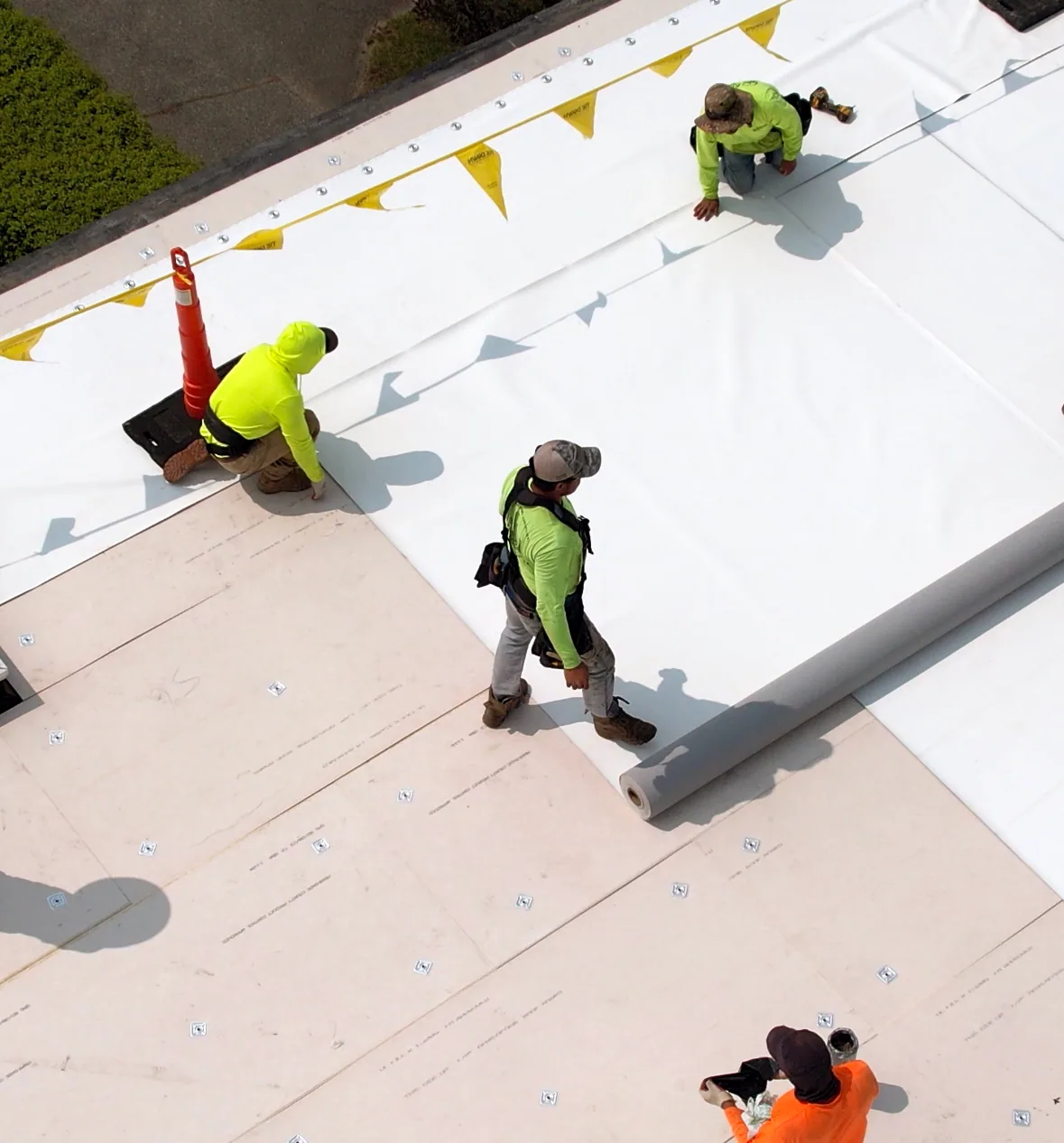
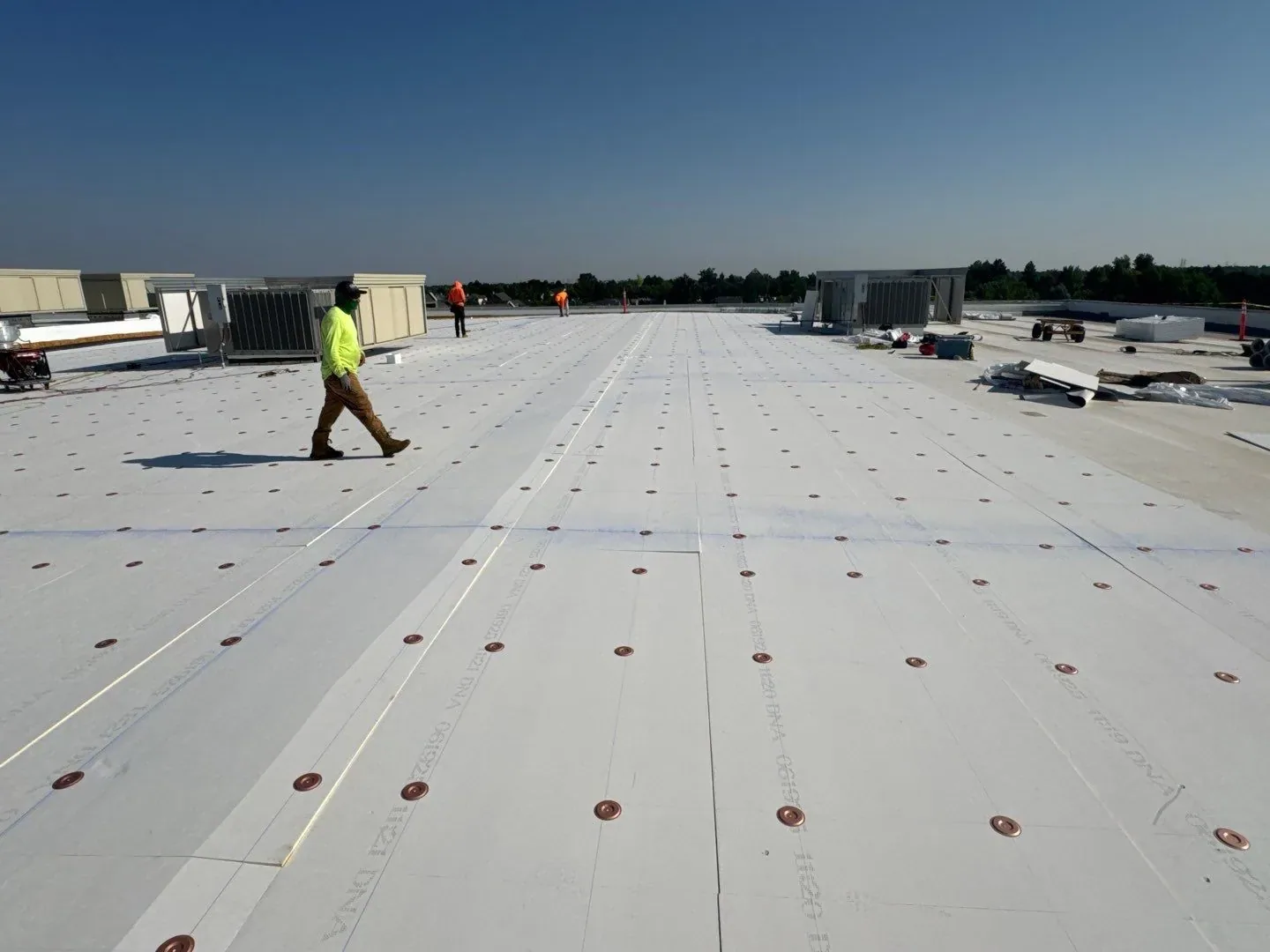
Start with the approved layout, submittals, closeout record, and available fabrication documents. We compare sheet boundaries and accessory locations with the roof. A factory-welded panel may cover a large area, while final field work still joins sheets, flashings, and perimeter details. Mark the installed layout where it can be confirmed, then record any difference created by equipment changes, additions, or previous repair. The result gives the manager an accurate basis for ordering material and planning a correction.
Duro-Last states that its custom-fabricated PVC system includes membrane sheets and system accessories designed to fit building specifications. The installed roof may also have standard roll goods or later additions. We identify the actual product and membrane edge before selecting a welding method. The PVC roof-system review checks the sheet, substrate, and tie-in details that will receive the repair. An old Duro-Last label does not confirm that every section of a multistage roof uses the same construction.
In the City inventory, Centerpointe has industrial and office components, while Moreno Valley Industrial Area is separately mapped. That local building mix helps orient the visit, not infer roof type. The property manager confirms current penetrations, access routes, and approved work areas. We mark those positions in the inspection record so an installer or future technician can distinguish the original layout from later changes.
Field seams and accessories: examine the connections
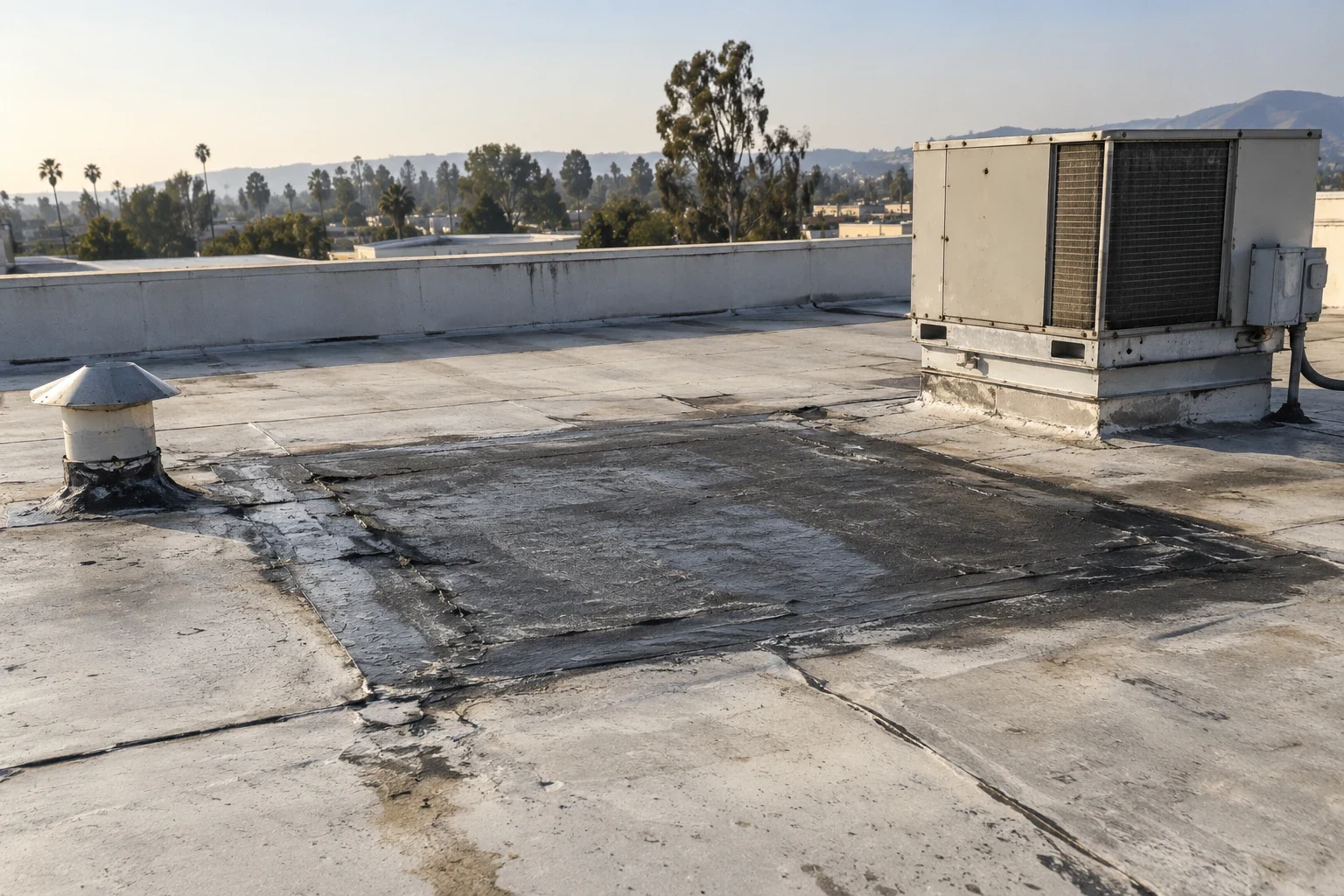
Factory fabrication changes where some seams occur, while field seams remain at panel joints, repair work, and transitions. We inspect weld continuity, contamination, wrinkles, surface wear, and stress near corners. A small opening can be repaired after the sheet and receiving surface are prepared. A repeat pattern or a defect at multiple junctions may point to a wider issue that needs inspection before the repair boundary is set. Photographs show the weld and a roof-plan reference.
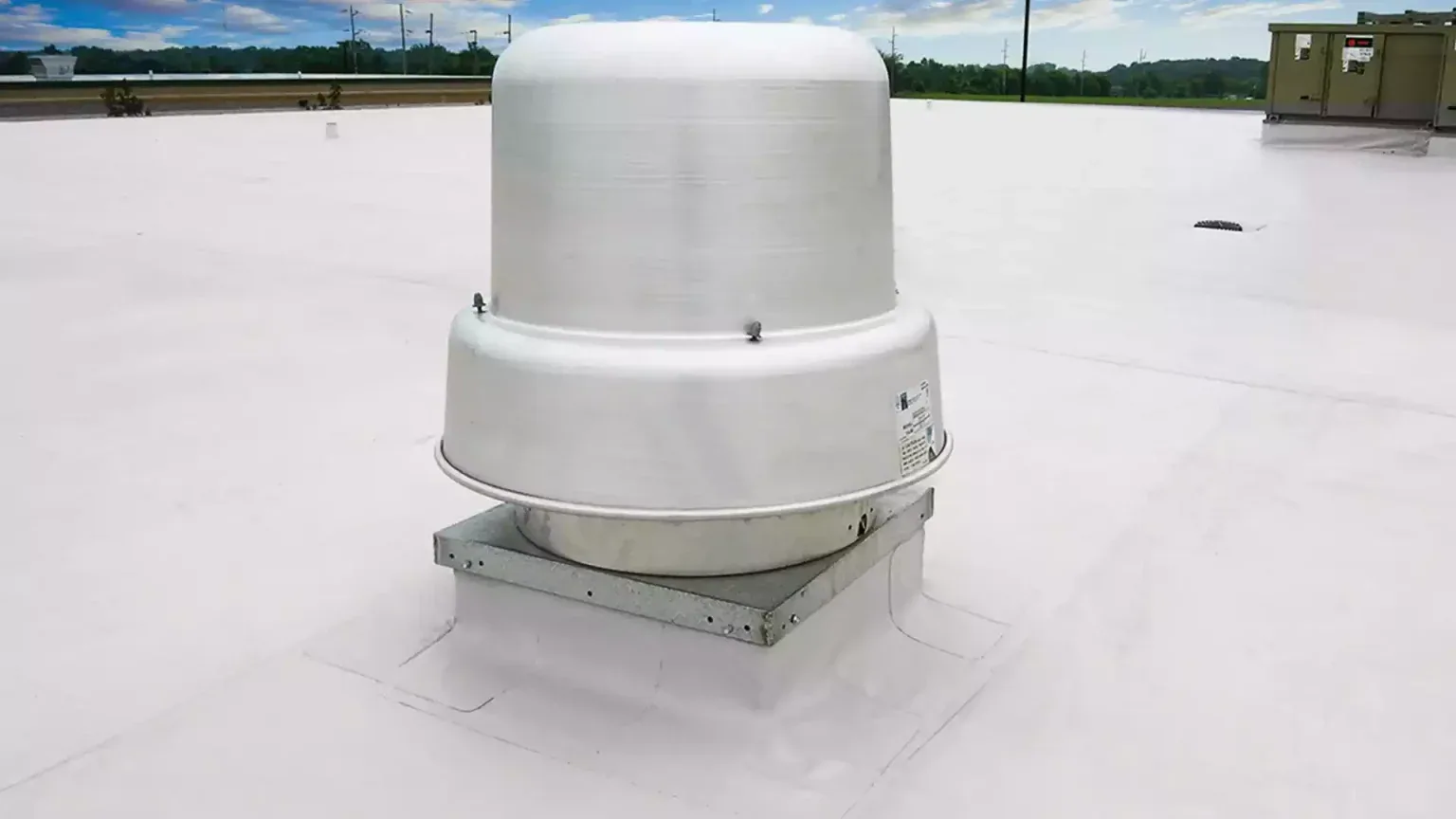
Prefabricated accessories can help form penetrations and other complex details, but an accessory must fit the curb, pipe, drain, or edge installed on the roof. We inspect whether the connection remains closed and whether an equipment change left an unused opening. The facilities manager identifies the mechanical or electrical provider responsible for any shutdown or relocation. Roofing and equipment scopes remain distinct, then meet at a final junction check. Our repair proposal names the material, preparation, attachment, and closeout at the marked detail.
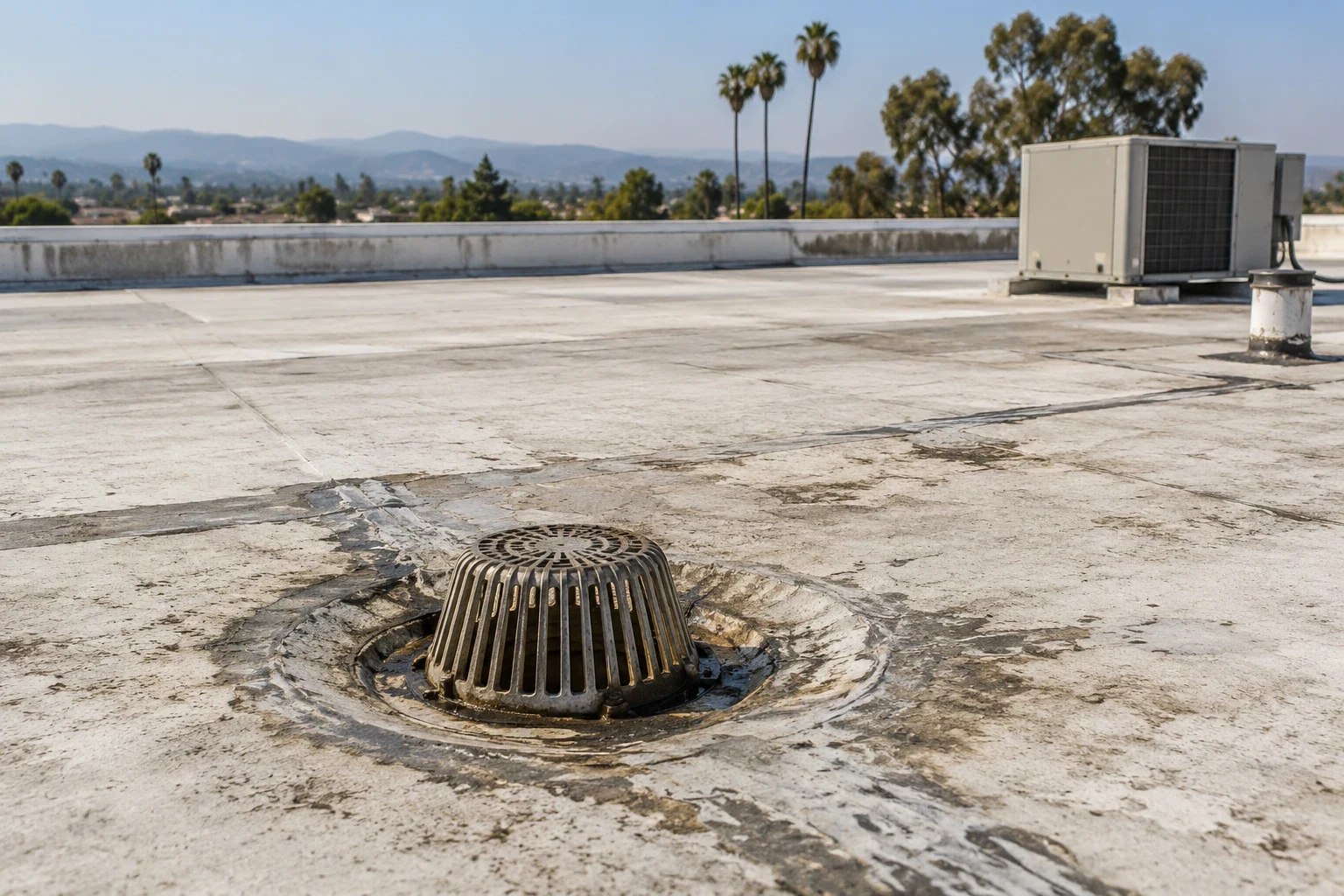
Drainage needs a separate look from seam integrity. We trace water toward drains, scuppers, and overflows, then distinguish debris from a damaged flange or low area that needs a designed correction. Added roof layers can alter those heights. The drain service can be coordinated with membrane work where the outlet connection is in scope, with any plumbing or design task identified separately.
Leak report: connect the interior location to the roof
A report should identify the room, time, active-water status, and recent rooftop work. We compare it with the roof plan and inspect nearby seams, penetrations, perimeter details, and equipment. The indoor mark can be displaced from the exterior entry point, so the field inspection establishes which Duro-Last area needs further attention. A commercial leak assessment records visible findings, access limits, and any test that could change the scope.
If a sheet is opened to check insulation or the deck, we identify the approved test area and photograph each layer before covering it. Wet material, unstable support, or an incompatible patch can change the estimate. We stop at a safe boundary, document the exposed condition, and provide the owner a scope change for review. A product name does not establish that the membrane can be welded over every coating, adhesive, or prior repair. Preparation and compatibility need to be checked at the receiving surface.
Moreno Valley sits at the SR-60 and I-215 junction, while businesses occupy multiple employment areas. Route proximity can guide dispatch; it does not replace the gate, staging, or rooftop access details for the specific building. Summer heat can affect safe roof hours, and winter rain or regional winds can alter temporary protection. The work record notes whether the inspection or repair needs a different interval because of those conditions.
Repair or renewal: weigh the condition and work sequence
We separate a localized seam or accessory repair from findings that need moisture testing, broader removal, or capital review. The report shows confirmed defects, inspected areas, and limitations. A repair may fit when adjacent material and substrate remain suitable. Repeated seams, widespread moisture, or changes around several curbs can require a broader comparison. The approval packet identifies the evidence and repair boundary for each option so a manager can authorize the next step with a clear scope.
Recover and replacement decisions depend on existing layers, moisture, attachment, drains, edges, insulation, and equipment clearance. Duro-Last offers PVC membrane configurations and system components, but the project requirements and existing assembly determine the selected construction. A recover assessment documents whether another layer can be added without leaving a concealed condition. A replacement scope defines removal, deck review, new insulation and membrane, transitions, and temporary protection.
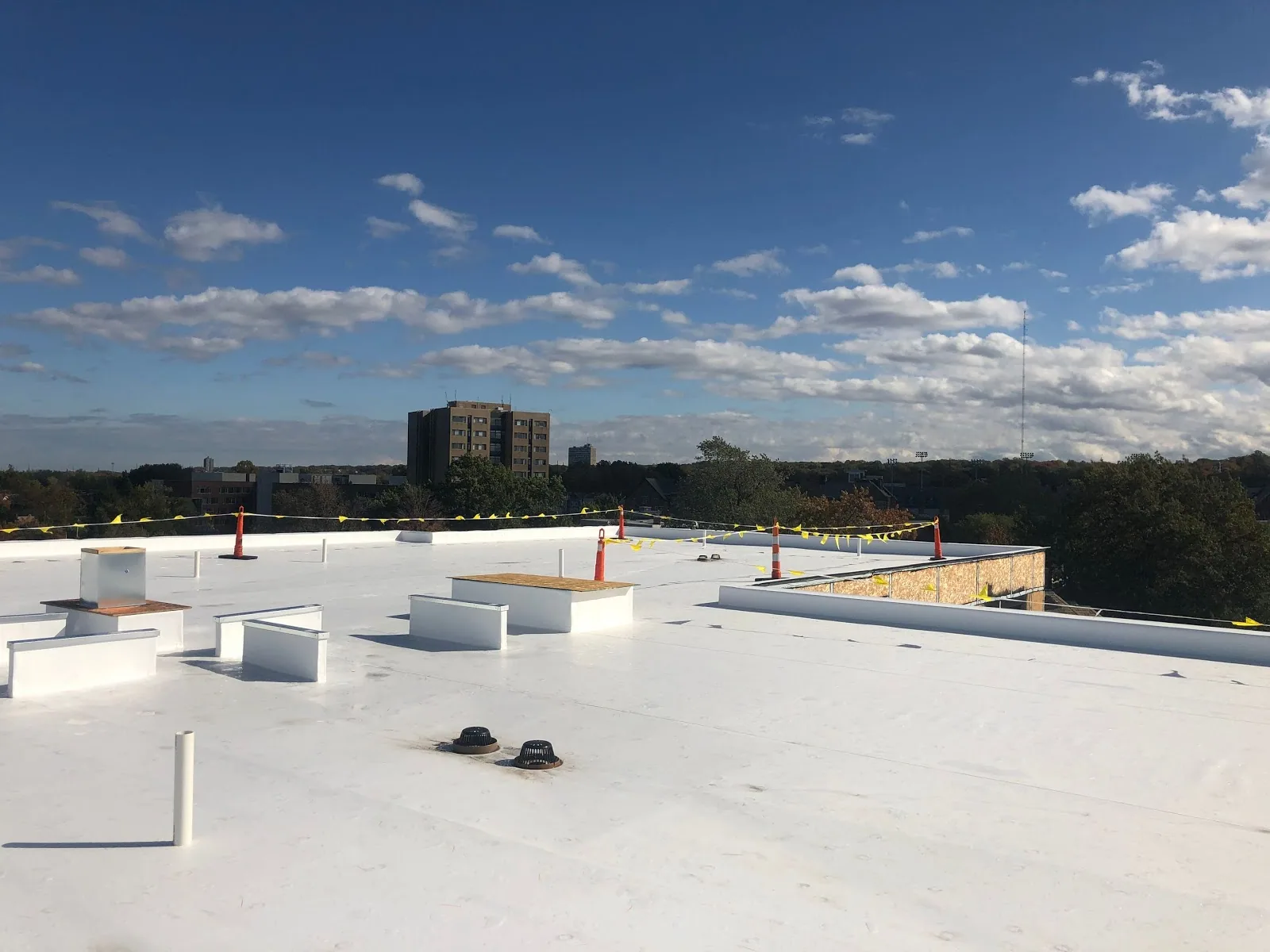
A custom layout also requires a record of roof changes made after the original fabrication. New curbs, conduit supports, solar equipment, or drain work can create field transitions not shown in the original drawing. We compare the current layout with the installed roof and note each changed location. A repair proposal then covers the present condition rather than reproducing an outdated fabrication assumption.
For a broader system comparison, managers can review Soprema commercial roofing and Sika Sarnafil PVC systems against the confirmed Duro-Last assembly. Compare the documented roof and transition details rather than assuming custom fabrication removes every field risk. Keep the layout, installed materials, approvals, photographs, and follow-up interval in the property work-order file.
Commercial Roofing Questions
Does factory fabrication eliminate all field seams?
No. It can reduce some field seaming, but panel joints, perimeter connections, repairs, and roof transitions still need inspection. We mark the actual seam layout and record completed work.
What documents help identify a Duro-Last roof?
Share the roof plan, approved submittals, fabrication layout, closeout files, and prior repair records. We compare those documents with accessible membrane edges and field details before choosing materials.
Can a Duro-Last accessory be reused after equipment changes?
We inspect the curb or penetration, accessory condition, and approved system detail before reusing it. We inspect the actual connection and coordinate any equipment modification before closing the roof.
What should happen if wet insulation is found below the PVC?
Mark and photograph the exposed area, then document the material and extent before covering it. We provide a scope change for removal or replacement needs and maintain temporary protection while approval is routed.
When should a Duro-Last roof be replaced instead of repaired?
We review the inspected membrane, substrate, moisture, repair history, and transition conditions. We show which findings support repair, further testing, or a replacement scope.
Commercial Roofing Moreno Valley handles commercial roof repair, replacement, inspections, coatings and maintenance across Moreno Valley, Riverside and the Inland Empire. Request a roof assessment or call 555-555-5555.
Related Roofing Work
Compare the Duro-Last layout with current roof findings
Share fabrication records, roof plans, repair history, leak locations, operating limits, and approval contacts. We can inspect the marked areas and return a scope for compatible repair or renewal.
Request a Roof Assessment555-555-5555